
Tag: nature based solutions
Turning Wood Waste into Valuable Resources
Goran Milic
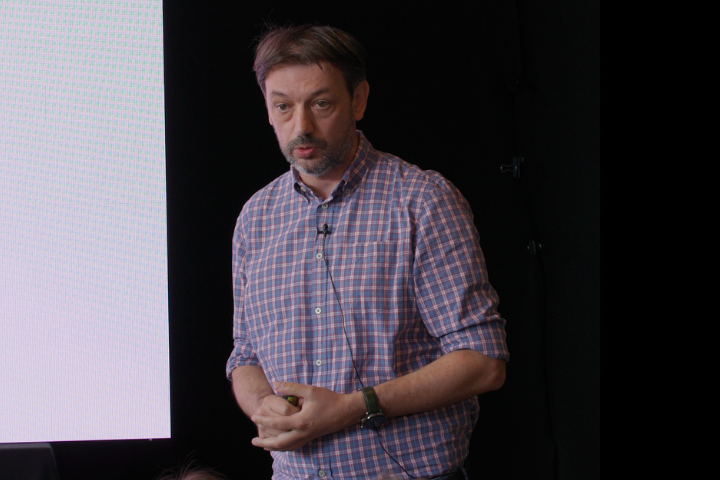
Expert in wood science and technology, with a focus on sustainable wood processing and hydrothermal treatments.
Dr. Goran Milic is a distinguished academic and researcher in the field of wood science. He earned his doctoral degree from the Faculty of Forestry, University of Belgrade, where he is currently teaching in the Department of Wood Science and Technology.
His expertise lies in primary wood processing, with a special focus on hydrothermal wood treatments such as drying, steaming, and thermal modification. His academic journey has taken him across Europe, enhancing his research through visits and collaborations in Austria, Germany, Finland, and Slovenia.
Beyond academia, Dr. Milic is a consultant for leading companies in the wood industry, providing expertise in wood technologies and serving as a court expert in wood technology cases. His ongoing research focuses on using the wood steaming condensate as a sustainable dye in industrial textile production.
Daniel Podmirseg

Committed to bringing food production back into daily urban life.
Daniel is an architect by training with a strong interdisciplinary background in urban innovation and sustainable design. Educated in Vienna, he studied at the University of Technology, the University of Applied Arts, and the Academy of Fine Arts, where he presented his diploma project on Vertical Farming for London in 2008. Driven by a passion for integrating architecture with ecological and energy-efficient solutions, he pursued a doctorate in technical sciences at Graz University of Technology. His doctoral research, conducted at the Institute for Buildings and Energy, explored the Contribution of Vertical Farms to Increasing the Overall Energy Efficiency of Cities.
Daniel thrives outside of his comfort zone, constantly learning and pushing boundaries through multidisciplinary collaborations. His work reflects a commitment to bringing food production back into daily urban life while reimagining cities as ecosystems that balance innovation, sustainability, and quality of life.
Mujō

Mujō’s products are made from a renewable resource: kelp, a fast-growing seaweed that doesn’t require additional water or agricultural land.
Kelp produces oxygen 20 times faster than trees and purifies ocean water, making it an environmentally sustainable choice. The cultivation potential for kelp is vast, about the size of the Amazon rainforest, making the product scalable.
Mujō’s focus is not only on the technology but also on the unique, novel material design and creating an exciting packaging experience for both B2B and B2C customers. Building a circular ecosystem of all stakeholders involved is key, from the producers and consumers to the decomposer.
Mujō is a Berlin-based biomaterial innovation company that develops innovative, seaweed-based packaging materials that biodegrade straight after use. It’s mission is to make a significant contribution to reducing plastic pollution by providing a sustainable and circular alternative to traditional packaging materials. Follow Mujō lab!
Birgit Lohmann

Bridging design, research, and curatorial innovation, Birgit continues to shape contemporary design discourse.
Foreseeing the impact of digital media, in 1999 she co-founded designboom, the world’s first online magazine, illustrating information on art, architecture, and technology.
Beyond her editorial work, Birgit has contributed as a design historian for international auction houses and justice departments, while continuously engaging with the design community through lectures and exhibitions, leveraging her extensive experience in design and product development.
As of now, Lohmann is involved with various initiatives, including her new project called “NOT COMPROMISED,” which debuted at Milan Design Week 2024. The exhibition challenged perspectives on sustainability, featuring works like Boonserm Premthada’s outdoor collection made from elephant dung. Advocating for non-anthropocentric coexistence, for a world where human presence protects rather than harms, while fostering education and public dialogue in contemporary art.
David Jablonski

David is an activist, designer and co-founder of the climate visualisation collective Klimadashboard.org. He believes that the crises of our time need radical paradigm shifts across politics, economics and the way we look at the world and our role in it.
Aimed at making these transformations tangible, David’s work tells stories about our future on screen and on stage, merging technology with arts and data with emotion. He studied in Graz, Berlin and London, is one of Austria’s youth delegates at COP28 and COP29 and is running his own design practice in Vienna.
“I see design as deeply connected to society, politics, and the environment. It shapes the way we live and must evolve to meet the urgent challenges of our time.“