
Tag: new materials
Period poverty and designing eco-friendly sanitary pads
Thami Schweichler
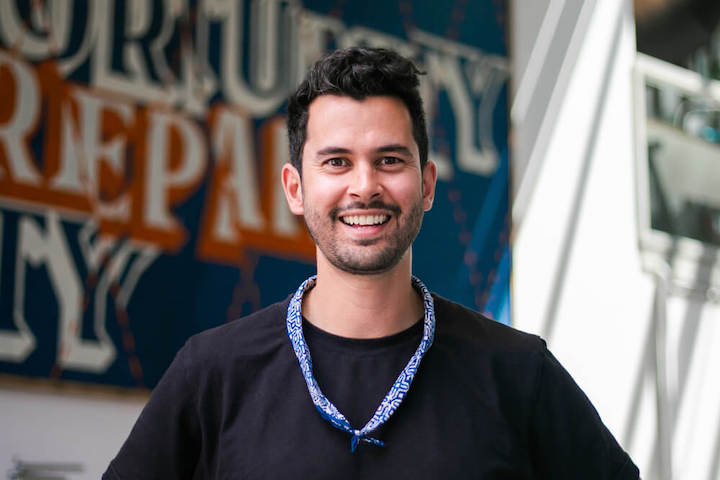
Social designer, entrepreneur, and impact leader based in Amsterdam, whose work sits at the intersection of circularity, social justice, and entrepreneurship.
As the founder and CEO of the United Repair Centre, he has pioneered a scalable B2B clothing repair model that partners with major fashion brands to extend the life of garments while simultaneously creating meaningful employment for people with limited access to the labour market, including newcomers and refugees.
Prior to this, Thami co-founded Makers Unite, a social enterprise that empowers refugees and local creatives through sustainable design projects and circular production. This initiative gained international recognition after winning the What Design Can Do Refugee Challenge in 2016. Thami’s vision challenges fast fashion by embedding repair, reuse, and inclusion into the industry’s infrastructure.
Mary Nyaruai Mureithi

Powerful advocate for dignity, gender equality, and a sustainable future by amplifying grassroots voices on global stages. Beyond Nyungu Afrika, she empowers the next generation of female entrepreneurs as a pan-African pitching and entrepreneurship trainer, helping young women confidently present their ideas and reach their full potential. For Mary, design is activism, and every product is a step toward systemic change.
Driven by an activist heart and firsthand exposure to the harsh realities of period poverty, where girls are forced to exchange sex for pads, use unsafe alternatives, or suffer health issues from poor-quality products, Mary designed a better solution. Through Nyungu Afrika, she pioneers a circular economy model that transforms agricultural waste, like pineapple leaves and maize husks, into a patent-pending, biodegradable, tree-free pulp for eco-friendly sanitary pads. Her innovation tackles both period poverty and the harmful impact of imported disposable pads on health and the environment.
Natasa Perkovic
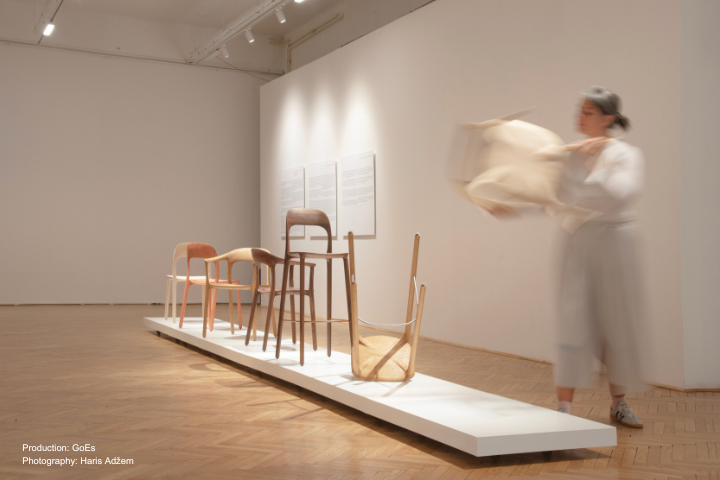
BLENDING AESTHETICS, INNOVATION AND A DEEP CONNECTION TO NATURE IN HER DESIGN PRACTICE.
Born in Sarajevo into a family in which her father and grandfather worked for the well- known Yugoslav-era wood industry, SIPAD, Natasa grew up surrounded by the scent of wood samples and an appreciation for wood crafts and industry. Though she once found furniture design uninspiring, her perspective shifted after studying Product Design at the Academy of Fine Arts, University of Sarajevo and gaining international experience.
Returning to Sarajevo in the early 2000s, she began teaching at her alma mater and built her design practice in a country still recovering from war and industrial decline. As the country’s furniture sector moved from exporting raw materials to developing its own products, Natasa established her studio and began collaborating with local manufacturers.
Today, she is a leading voice in Bosnia and Herzegovina’s design revival, dedicated to education, regional collaboration, and shaping a bold, innovative and sustainable design culture.
Turning Wood Waste into Valuable Resources
Goran Milic
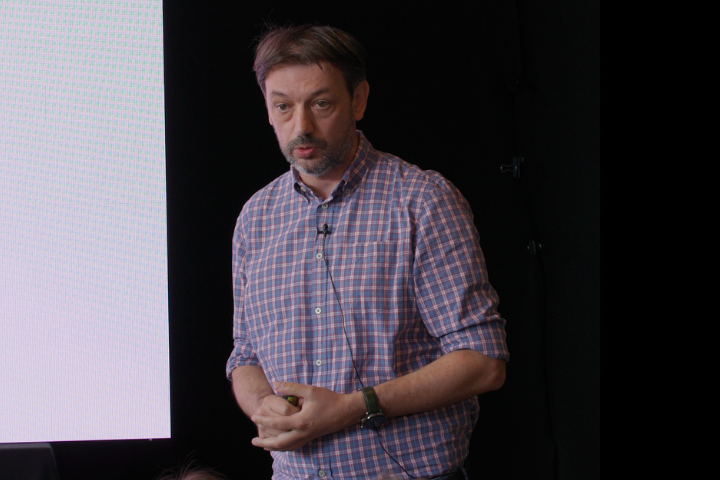
Expert in wood science and technology, with a focus on sustainable wood processing and hydrothermal treatments.
Dr. Goran Milic is a distinguished academic and researcher in the field of wood science. He earned his doctoral degree from the Faculty of Forestry, University of Belgrade, where he is currently teaching in the Department of Wood Science and Technology.
His expertise lies in primary wood processing, with a special focus on hydrothermal wood treatments such as drying, steaming, and thermal modification. His academic journey has taken him across Europe, enhancing his research through visits and collaborations in Austria, Germany, Finland, and Slovenia.
Beyond academia, Dr. Milic is a consultant for leading companies in the wood industry, providing expertise in wood technologies and serving as a court expert in wood technology cases. His ongoing research focuses on using the wood steaming condensate as a sustainable dye in industrial textile production.
Daniel Podmirseg

Committed to bringing food production back into daily urban life.
Daniel is an architect by training with a strong interdisciplinary background in urban innovation and sustainable design. Educated in Vienna, he studied at the University of Technology, the University of Applied Arts, and the Academy of Fine Arts, where he presented his diploma project on Vertical Farming for London in 2008. Driven by a passion for integrating architecture with ecological and energy-efficient solutions, he pursued a doctorate in technical sciences at Graz University of Technology. His doctoral research, conducted at the Institute for Buildings and Energy, explored the Contribution of Vertical Farms to Increasing the Overall Energy Efficiency of Cities.
Daniel thrives outside of his comfort zone, constantly learning and pushing boundaries through multidisciplinary collaborations. His work reflects a commitment to bringing food production back into daily urban life while reimagining cities as ecosystems that balance innovation, sustainability, and quality of life.
WASTEWARE

Every Year 90 million tons of food are thrown away in Europe. And, in the same period, disposable crockery accounts for a further 26 million tons of garbage. So why not connect these two topics and see what could be created in this scenario?
Wasteware, Experimental Tableware, by Austrian designer Barbara Gollackner consists of various pieces of tableware, all made from food waste, produced in different techniques, ranging from moulding over pressing up to 3D printing.
Learn more about Barbara Gollackner design.