
Month: October 2026
Where AI Meets Craft
ANNOUNCING: The Winners of Next Gen Design Barcelona Residency 2026
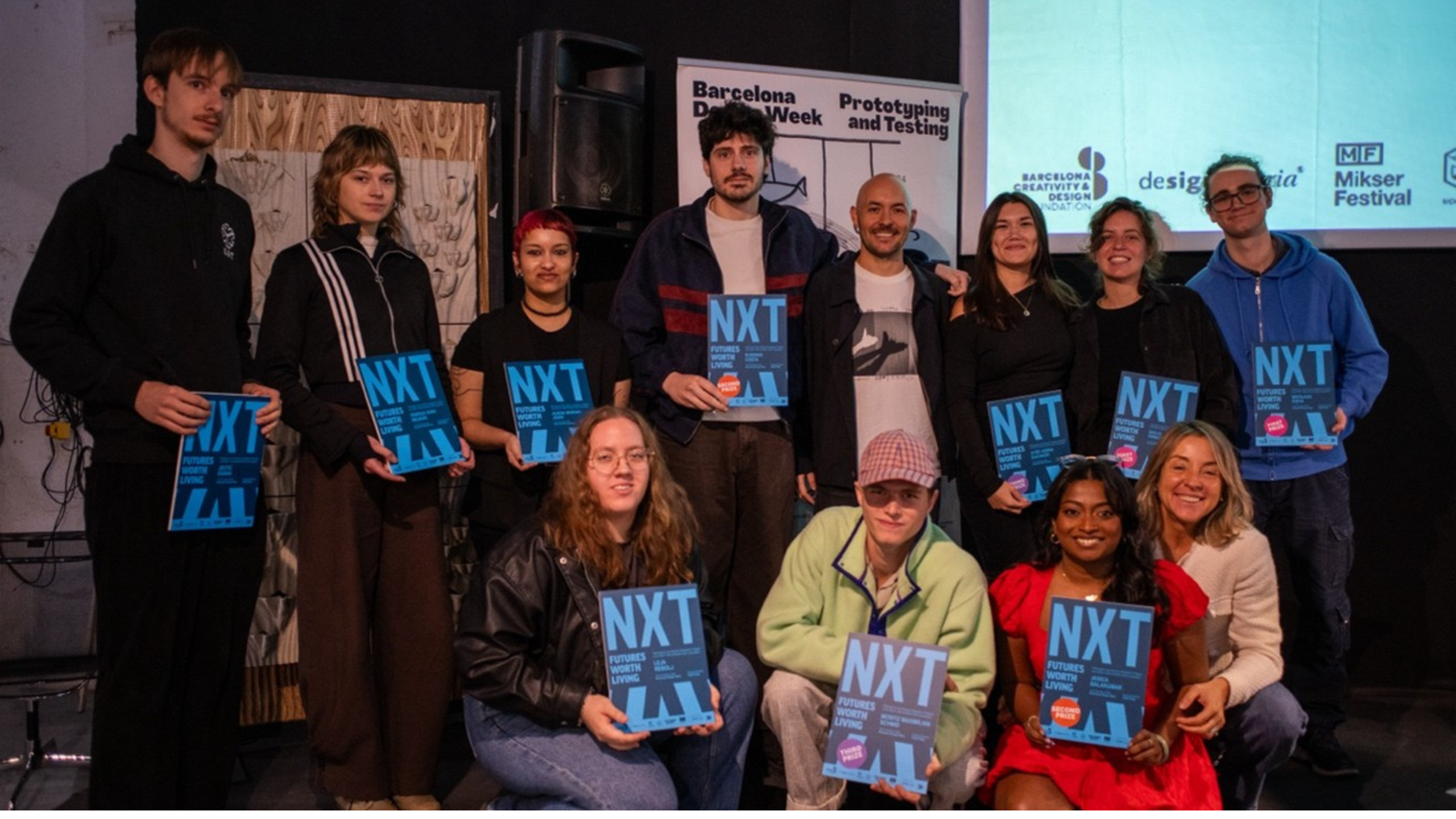
Ten young European creatives, five teams and one challenge: turning food waste into design that sparks conversation and social impact.
From 19 to 22 October, ten young designers from across Europe came together at IAAC / Fab Lab Barcelona for the Next Gen Design Barcelona Residency 2026, held during Barcelona Design Week and organised by the Barcelona Creativity & Design Foundation.
Over four intensive days, the residents worked in five international pairs, combining different disciplines, backgrounds and perspectives to respond to a real challenge around food waste, circularity and social impact.
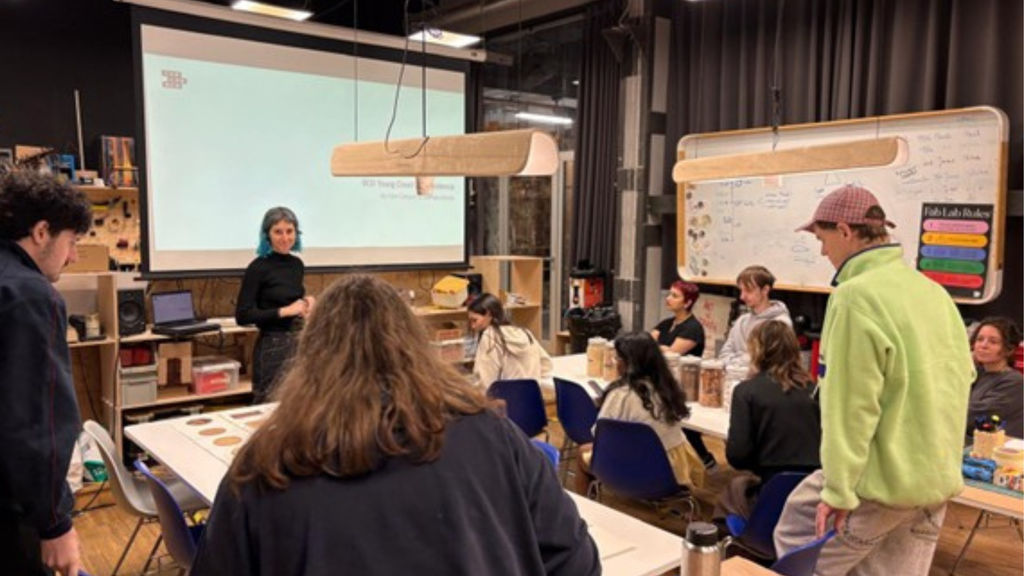
The challenge: bringing circularity to the table
This year’s challenge was proposed by the Institut de Gastronomia de Barcelona (IGB), a public vocational training centre where young people learn cooking, pastry and hospitality through hands-on experience.
At the heart of the challenge was BeGood, an initiative developed within IGB’s PFI programme that connects gastronomy, sustainability and the circular economy. Through BeGood, students work with companies, social organisations and local communities to transform food surplus and social needs into opportunities for learning and positive impact.
The residents were asked to explore a very tangible question:
How could the school’s own food waste be transformed into table elements for its restaurants — objects able to make BeGood visible and spark conversations with every guest?
The table became the starting point: a place where food, materials, people and stories meet.
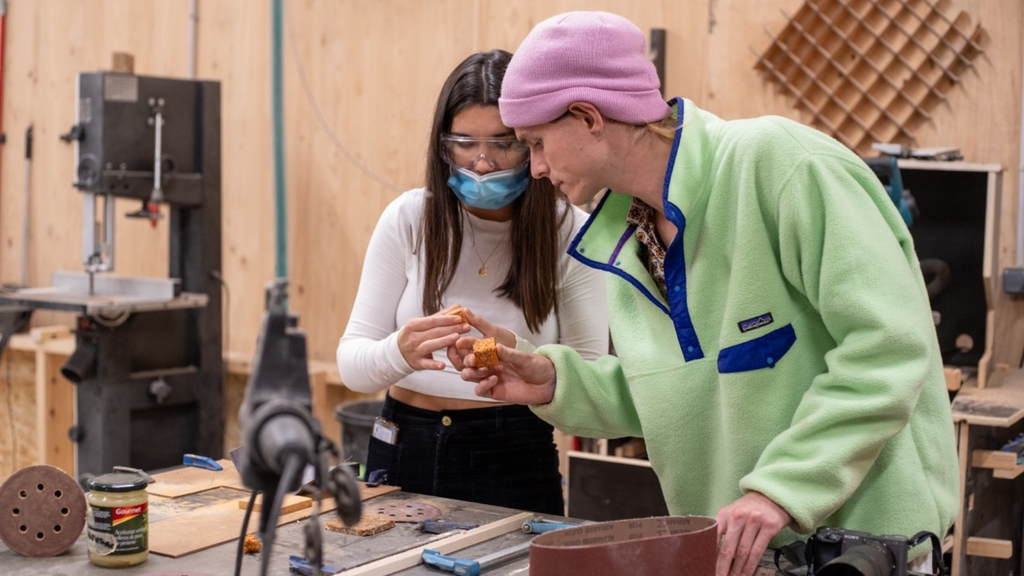
After four days of experimentation, material exploration and prototyping, the five teams presented their proposals to the jury.
The 2026 Barcelona Residency Winners
1st Prize: N-uovo by Giulia Principe (The Netherlands) + Niki Riehs (Austria)
N-uovo gives a second life to one of the institute’s everyday food residues: eggshells.
The project proposes a multifunctional tableware object made from eggshell ceramic, designed to work both as a napkin holder and a cutlery rest. By transforming an overlooked kitchen residue into a functional object placed directly on the restaurant table, N-uovo makes circularity tangible and visible as part of the dining experience.
2nd Prize: CIRCULTIVATE by Jesica Balakumar (United Kingdom) + Eugenio Costa (Italy)
CIRCULTIVATE reimagines the traditional placemat as an object with two lives.
Made from repurposed organic materials -including restaurant food waste, coffee grounds and coffee husks- the biodegradable placemat is designed to return to the restaurant’s garden after use, where its organic components can contribute to the soil and support future plant and food production.
From the table back to the soil, CIRCULTIVATE creates a tangible connection between people, food and nature, turning an everyday dining object into an invitation to engage with circular practices.
3rd Prize: ZERO WASTE, FIVE SENSES by Ayse Asena Bacaksiz (Italy) + Moritz Schmid (Germany)
What if food waste became the starting point for curiosity and conversation?
ZERO WASTE, FIVE SENSES is a sensory game that encourages people to reconnect with food, discarded materials and one another.
At its centre is a dice created from food-waste biomaterials. Each roll invites diners to engage through a different sense: smelling an aroma, sharing a taste, touching a texture, listening to a story or imagining what a discarded ingredient could become.
The project shifts the conversation around zero waste from information to experience, using play and interaction to encourage new ways of looking at the resources surrounding us.
Warmest Thank You to All Residency Participants
We extend our warmest congratulations to all five resident teams for their exceptional research and creative output:
KAVICA – Jevtić Dušan (Serbia) and Leja Rebolj (Slovenia)
N-uovo – Giulia Principe (The Netherlands) and Niki Riehs (Austria)
Weighted – Juana John (Germany) and Rebeka Majnár (Hungary)
ZERO WASTE, FIVE SENSES – Ayse Asena Bacaksiz (Italy) and Moritz Schmid (Austria)
CIRCULTIVATE – Jesica Balakumar (United Kingdom) and Eugenio Costa (Italy)
The Barcelona Residency is part of the wider Next Gen Design Residency Programme, connecting young European creatives through collaborative experimentation, rapid prototyping and real-world challenges across the project’s five partner festivals.
Congratulations to all ten residents — and to the three winning teams for turning food waste into new materials, experiences and conversations around the table.
Winners NEXT GEN DESIGN Residency Eindhoven 2026
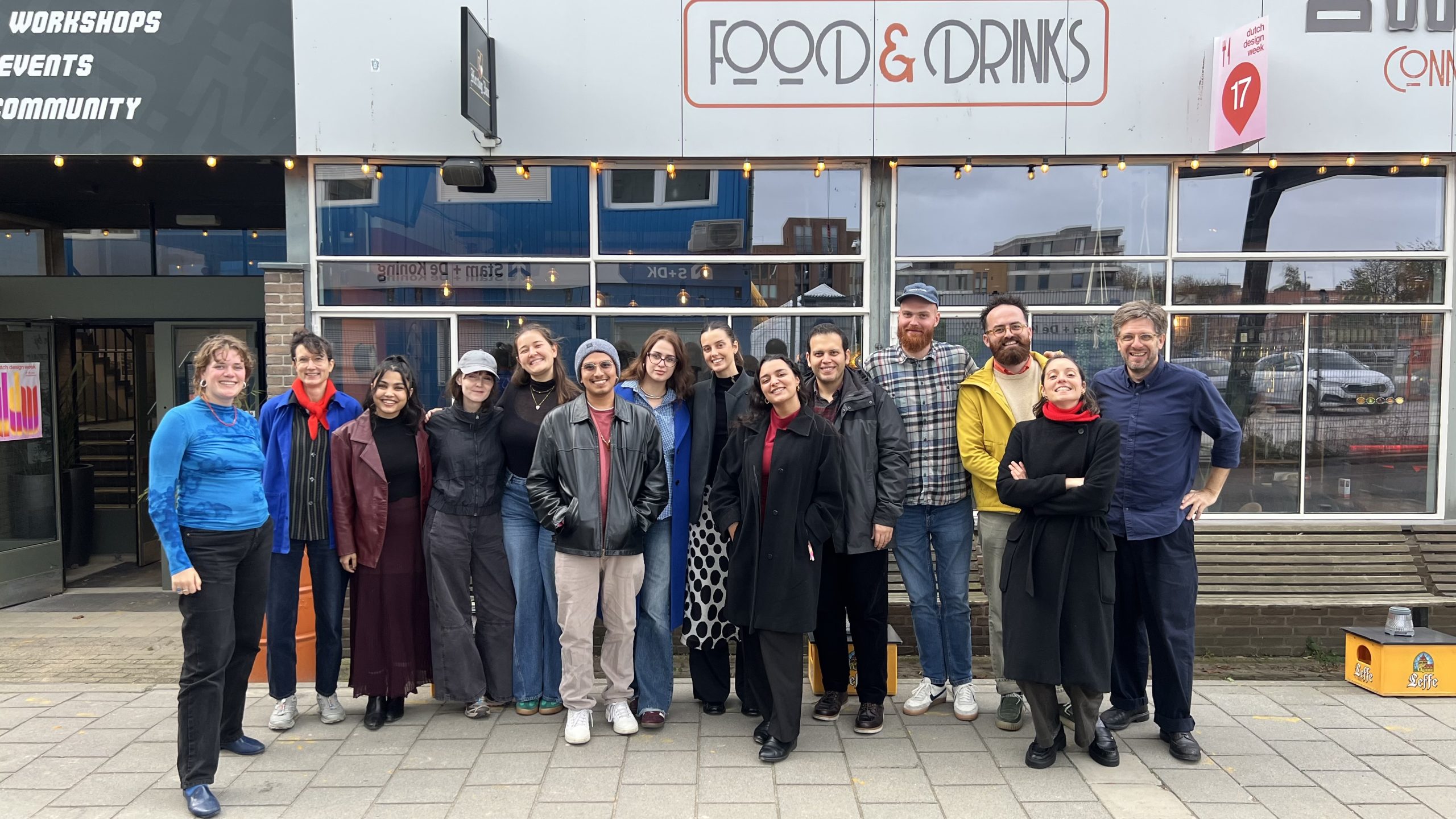
October 2026 · Eindhoven
Five days inside the Evoluon: NEXT GEN DESIGN Residency Eindhoven names its winners
Ten young European designers turned Next Nature Museum into their workspace during Dutch Design Week. Their brief: Sustainable Digital Futures.
While hundreds of Dutch Design Week visitors walked through Next Nature Museum, part of the building quietly became a working studio for the NEXT GEN DESIGN residents. From 19 to 23 October, ten designers from across Europe, all winners of the Next Gen Design Open Call, worked here in five international pairs.
Why Next Nature Museum
Few places fit the theme Sustainable Digital Futures better. Next Nature Museum explores where humans, nature and technology meet and challenge each other. For the residents, that meant the subject of their brief was all around them.
The week in five days
Monday 19 October — Arrive and explore. The residency kicked off with an introduction to the theme, a tour of Next Nature Museum and a welcome dinner.
Tuesday 20 October — Input. Two NEXT GEN DESIGN EDU Talks fed the brief. Artist and researcher Sondi spoke about worldbuilding and how power and narratives work in digital spaces and video games. Designer Vera van der Burg, winner of the Dutch Design Award for Emerging Talent 2025, showed how she treats AI as a creative material rather than a shortcut. Between the talks, the teams formed and started shaping their first ideas. The same day, the exhibition Futures Worth Living opened to the public.
Wednesday 21 October — Discovering Dutch Design Week. A day outside the studio to explore DDW and the city, with an optional tour of the Design Academy Eindhoven Graduation Show.
Thursday 22 October — Prototyping. Each team built an ‘artefact’ from the future it had imagined. In the afternoon, they tested their story on Elli Schindler (designaustria) and Pepijn Zurburg (What Design Can Do), then refined their projects for the final presentations.
Friday 23 October — Present. Each team had three minutes to present its project to the jury. After deliberation, the winners were announced at the closing ceremony, followed by a farewell lunch.
The Winners
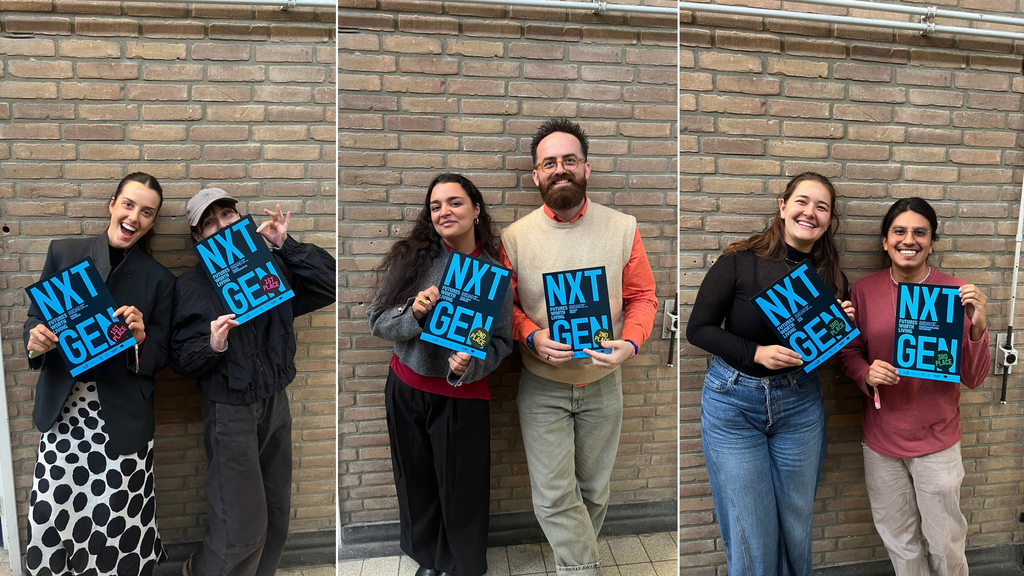
1st place – Marija Kucurski & Valdis Steinarsdottir — €1,000
2nd place – Vega Tapia Borrego & Ibrahim Beqiri — €600
3rd place – Lena Muri & Sebastian Melenge Valladares — €400
The jury, Elli Schindler (designaustria) and Pepijn Zurburg (What Design Can Do), chose the winners after the teams’ five-minute presentations.
The winning project: Boredom
Marija Kucurski and Valdis Steinarsdottir see boredom not as wasted time, but as a useful signal. Their project turns it into a device for healthier habits. It helps users recognise their own personal stages of boredom, use those moments to reflect, and translate each stage into a different way of working.
Five pairs working on sustainable design
The pairs were mixed on purpose: NEXT GEN DESIGN is about exchange between young designers from across Europe. In five days, each team had to find a shared language, divide the work and build something together. That spirit matched DDW’s 2026 theme, R.A.W. (Rebel Authentic Worth), which celebrates the unpolished and the experimental: first versions, works in progress, ideas still taking shape.
The residency in Eindhoven was made possible by
Poppy Robathon, workshop host
Elli Schindler (designaustria), jury member
Pepijn Zurburg (What Design Can Do), jury member
Sondi and Vera van der Burg, EDU Talk speakers
Next Nature Museum, host venue
What Design Can Do, organiser
The Art of Validation. Why Every Great Idea Needs a Prototype
Design Like a Renegade: Designing from Belief, Not a Brief
Vera van der Burg
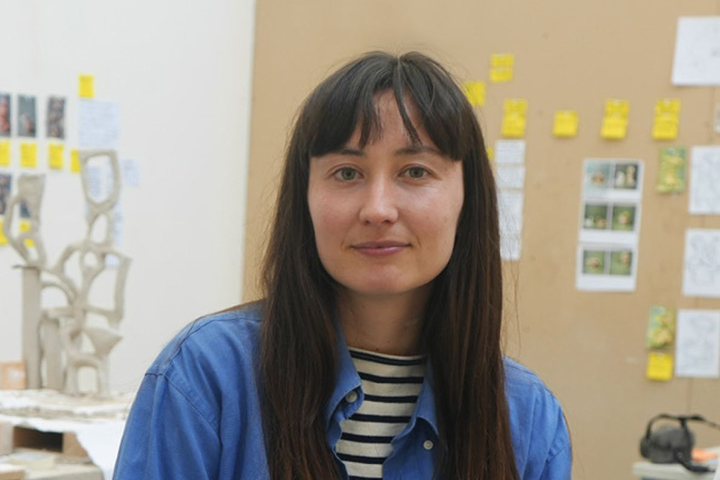
Vera’s practice involves AI in creative practices and how it may be used as a tool for self-reflection.
She is an artist and researcher with a doctorate from TU Delft as part of the Designing Intelligence Lab.
Sondi
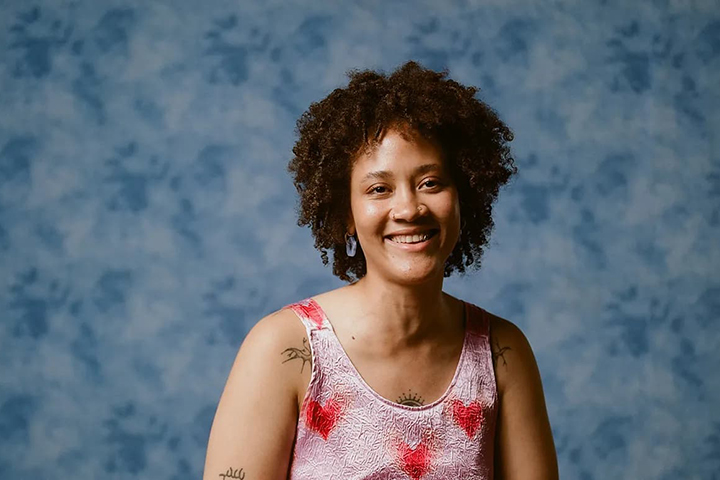
Sondi’s practice centers on worldbuilding and worlding, particularly within digital spaces and video games.
Born in Cameroon, raised in Germany and living in the Netherlands.
She examines how power and narratives operate within virtual environments, tracing encoded biases, algorithmic discrimination, game mechanics, and the portrayal of people, places, and ecologies, while crafting worlds that foreground marginalised voices and perspectives often excluded from our techno-futures.