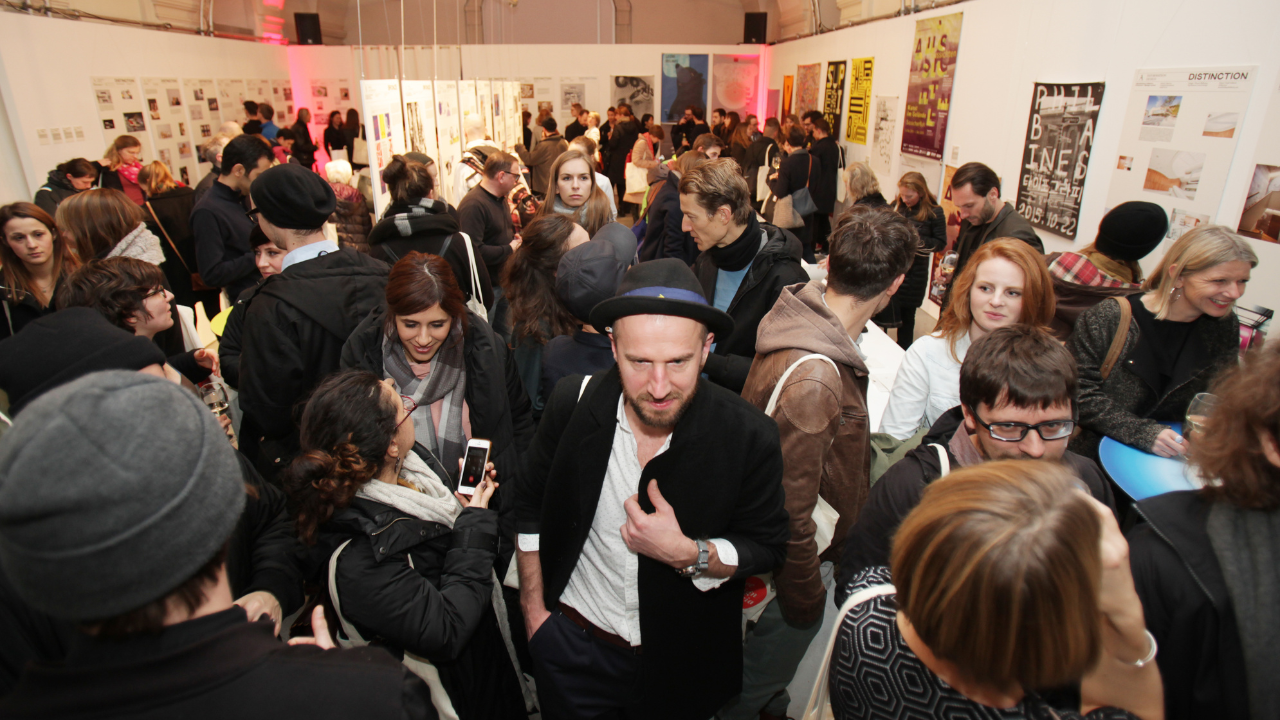
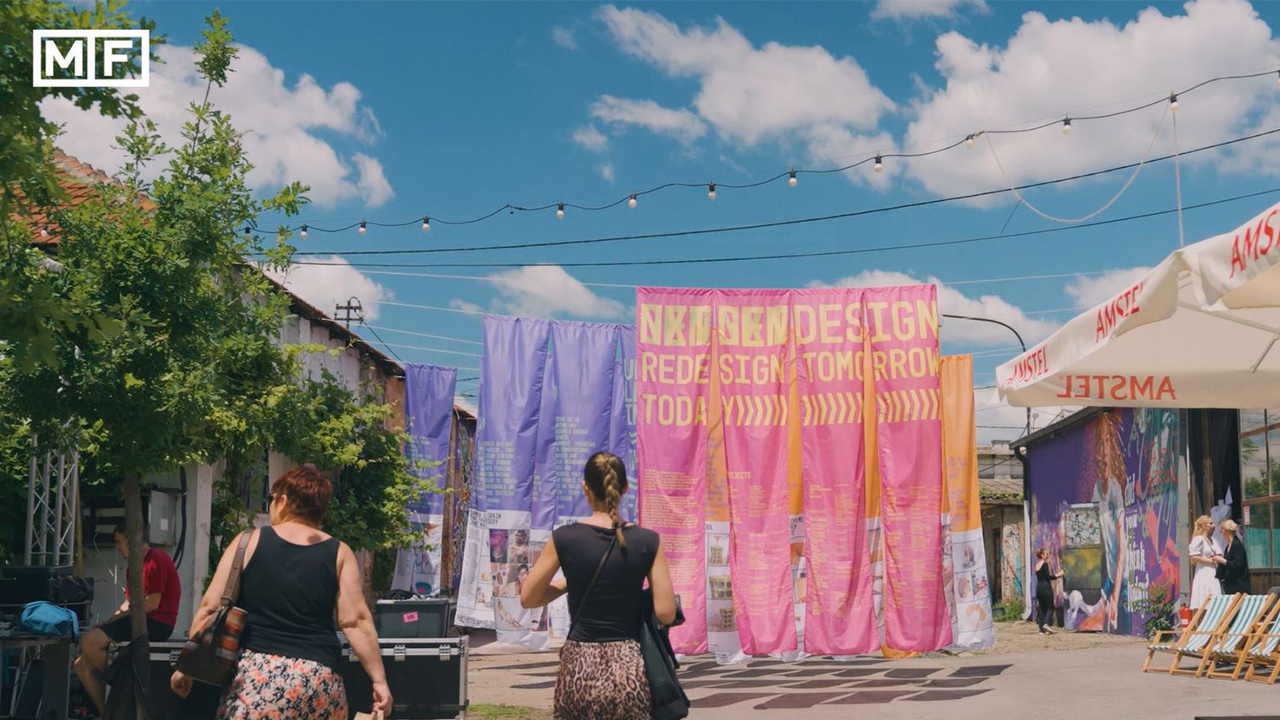
The 50 winning projects of the NEXT GEN DESIGN competition 2025 are on display during VIENNA DESIGN WEEK, showcasing a wide range of creativity, innovation, and visionary thinking from the next generation of changemakers in Europe. Each project is grounded in the principles of circular design and presents inspiring, forward-looking concepts that redefine our shared future through sustainable, inclusive, and impactful design.
The exhibition is touring major design festivals in Belgrade, Barcelona, Amsterdam, Vienna, and Skopje. It is supported by the European Commission as part of the New European Bauhaus initiative.
Save the Date: Friday, September 26, 2025 Next Gen Design Austrian Chapter with Evija Kraukle, Kerstin Pfleger, Lisa Stolz, and Therese Balslev Part of the VIENNA DESIGN WEEK
Couldn’t make it to the 2025 edition of Next Gen Design at Mikser Festival in Belgrade? Don’t worry we’ve captured the atmosphere and energy of this year’s edition in a short video that gives you a taste of how it was!
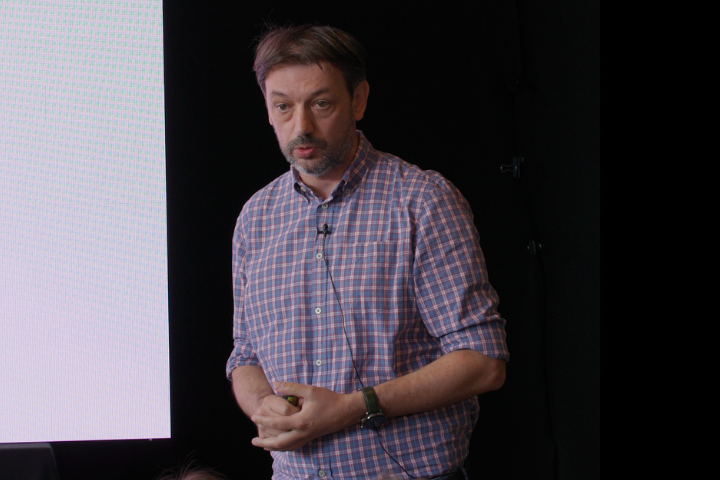
The video opens with Maja Lalic, project coordinator and founder of the Mikser organisation, who shares the inspiration behind the project. It continues with insights from jury member David Jablonski, who reflects on the evaluation process and the importance of empowering young designers to take on today’s complex challenges.
You’ll also meet 10 of the 50 talented designers selected through the Next Gen Design Open Call: “Redesign Tomorrow, Today.” These emerging creatives participated in a Residency programe in Belgrade, organised in collaboration with local furniture manufacturer GIR, focusing on sustainable, inclusive, and future-oriented design solutions in wood. Through hands-on prototyping, mentorship, and site visits including a tour of the GIR factory and showroom, they explored innovative applications of this natural material and finally offered their own ideas of its application.
The video wraps up with a sneak peek at the 2025 edition of the Next Gen Design Edu Talks, featuring inspiring speakers:
David Jablonski – Activist, designer, and co-founder of Klimadashboard.org (Austria)
Daniel Podmirseg – Architect and founder of the vertical farm institute (Austria)
Goran Milić – Professor at the University of Belgrade – Faculty of Forestry, Department of Wood Science and Technology (Serbia)
Nataša Perković – Associate Professor at the Academy of Fine Arts, University of Sarajevo; Creative Director at GoEs; and founder of Nataša Perković Design Studio (Bosnia and Herzegovina)
Expert in wood science and technology, with a focus on sustainable wood processing and hydrothermal treatments.
Dr. Goran Milic is a distinguished academic and researcher in the field of wood science. He earned his doctoral degree from the Faculty of Forestry, University of Belgrade, where he is currently teaching in the Department of Wood Science and Technology.
His expertise lies in primary wood processing, with a special focus on hydrothermal wood treatments such as drying, steaming, and thermal modification. His academic journey has taken him across Europe, enhancing his research through visits and collaborations in Austria, Germany, Finland, and Slovenia.
Beyond academia, Dr. Milic is a consultant for leading companies in the wood industry, providing expertise in wood technologies and serving as a court expert in wood technology cases. His ongoing research focuses on using the wood steaming condensate as a sustainable dye in industrial textile production.
Committed to bringing food production back into daily urban life.
Daniel is an architect by training with a strong interdisciplinary background in urban innovation and sustainable design. Educated in Vienna, he studied at the University of Technology, the University of Applied Arts, and the Academy of Fine Arts, where he presented his diploma project on Vertical Farming for London in 2008. Driven by a passion for integrating architecture with ecological and energy-efficient solutions, he pursued a doctorate in technical sciences at Graz University of Technology. His doctoral research, conducted at the Institute for Buildings and Energy, explored the Contribution of Vertical Farms to Increasing the Overall Energy Efficiency of Cities.
Daniel thrives outside of his comfort zone, constantly learning and pushing boundaries through multidisciplinary collaborations. His work reflects a commitment to bringing food production back into daily urban life while reimagining cities as ecosystems that balance innovation, sustainability, and quality of life.