
Tag: circular design
WASTEWARE

Every Year 90 million tons of food are thrown away in Europe. And, in the same period, disposable crockery accounts for a further 26 million tons of garbage. So why not connect these two topics and see what could be created in this scenario?
Wasteware, Experimental Tableware, by Austrian designer Barbara Gollackner consists of various pieces of tableware, all made from food waste, produced in different techniques, ranging from moulding over pressing up to 3D printing.
Learn more about Barbara Gollackner design.
Mujō

Mujō’s products are made from a renewable resource: kelp, a fast-growing seaweed that doesn’t require additional water or agricultural land.
Kelp produces oxygen 20 times faster than trees and purifies ocean water, making it an environmentally sustainable choice. The cultivation potential for kelp is vast, about the size of the Amazon rainforest, making the product scalable.
Mujō’s focus is not only on the technology but also on the unique, novel material design and creating an exciting packaging experience for both B2B and B2C customers. Building a circular ecosystem of all stakeholders involved is key, from the producers and consumers to the decomposer.
Mujō is a Berlin-based biomaterial innovation company that develops innovative, seaweed-based packaging materials that biodegrade straight after use. It’s mission is to make a significant contribution to reducing plastic pollution by providing a sustainable and circular alternative to traditional packaging materials. Follow Mujō lab!
David Jablonski

David is an activist, designer and co-founder of the climate visualisation collective Klimadashboard.org. He believes that the crises of our time need radical paradigm shifts across politics, economics and the way we look at the world and our role in it.
Aimed at making these transformations tangible, David’s work tells stories about our future on screen and on stage, merging technology with arts and data with emotion. He studied in Graz, Berlin and London, is one of Austria’s youth delegates at COP28 and COP29 and is running his own design practice in Vienna.
“I see design as deeply connected to society, politics, and the environment. It shapes the way we live and must evolve to meet the urgent challenges of our time.“
Zoran Jedrejcic

Zoran Jedrejcic has designed for many international brands, such as 3M, Artisan, Molteni&C, Dada Cucine, Fratelli Guzzini, Gir, Nambe’, Segis, Superfos, Volumen, Woak, and Zavar, among others.
He is an Industrial Designer and Art Director from Split, Croatia, with an Italian background. After seven years of fruitful cooperation with Ettore Sottsass, he established his own design studios in Milan and, more recently, in Belgrade.
He has won many awards, including Red Dot – Best of the Best, IF Design Award, Design Plus, German Design Award, Dezeen Award, and BIG SEE Award, and his works have been exhibited in prestigious museums such as MAK Wien, MART Rovereto, ICA Boston, MoMA NY, and Ozone Centre Tokyo among others. Recently, he has been awarded as BIG SEE Visionary for the year 2021.
Simultaneously with his career in design, he has been engaged as a visiting professor at ISIA-Florence, NABA-Milano, IAAD-Torino, and the Academy of Fine Arts-Belgrade.
Nikola Radeljkovic
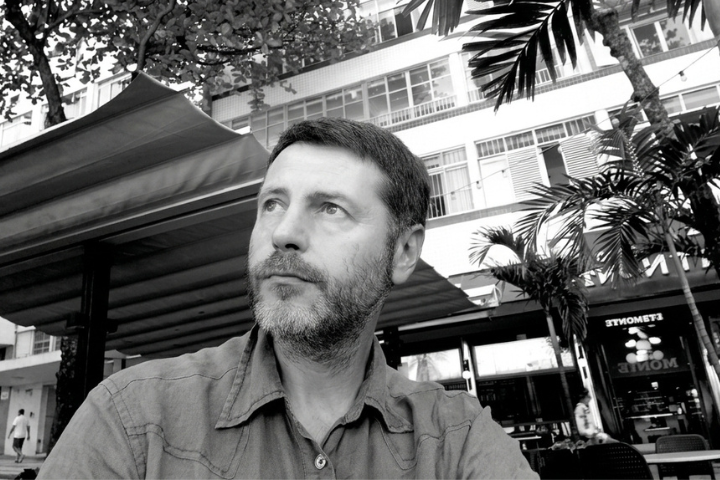
Beyond his global success, Nikola is dedicated to shaping the local design scene. As a creative director and brand strategist, he supports regional furniture companies while mentoring young designers, providing them with guidance and growth opportunities.
Nikola Radeljkovic is one of the most talented and prolific product designers in the Balkans. As a distinguished professional in furniture design and production, he has collaborated on numerous projects with prestigious international brands. He is also one of the three pillars behind the globally acclaimed multidisciplinary studio Numen / ForUse, known for its innovative and experimental approach to design.
By nurturing new generations of designers and strengthening collaborations within the industry, Nikola significantly contributes to the international recognition of the Balkan design scene. His work not only enhances local brands but also ensures that the region’s design identity continues to evolve and thrive on the global stage.
DON’T FEED ME PLASTIC

Don’t Feed Me Plastic represents the series of educational toys aiming to develop an emotional connection between the children and their environment.
Made out of reused fabric its infill contains an element of surprise. Inside each kiwi bird are several plastic caps which serve as a conversation starter. Through a tactile game and this element of surprise, we can teach the child about the negative influence we have on our environment and try, through playing, to suggest what are possible solutions.
Learn more about Maja Repotocnik
Squeeze the orange

Orange peels are a food waste residue abundant in the Mediterranean diet, and we can give them another life: many things are possible with what we consider “waste” today.
Squeeze the Orange is a research project on the reuse of orange peel to make biodegradable and compostable materials for the fashion industry.
Through the work and knowledge shared between makers and designers, they investigated orange waste to design a material that all fashion designers can use. The project was developed in collaboration with restaurants in the Poblenou neighbourhood in Barcelona. Its purpose is to manufacture a completely biodegradable or compostable waterproof bioplastic using dehydrated orange peel to produce clothing and accessories for the fashion industry.
matapalo

matapalo, by Unlable Design Studio, is a brand from Algiers that markets biophilic pots and installations made of flexible and innovative composite fabrics that stand out for their design, lightness, durability and recyclability.
The product was presented during Underground BDW, a new collective and immersive exhibition during the Barcelona Design Week 2024.