

Íris Ribeiro is a 23-year-old designer from the northern part of Portugal, with a background in science and technology, specializing in physics and biology. She decided to follow her passion for design and completed both a bachelor’s and master’s in product design at the Faculty of Architecture, University of Lisbon. She has been working in design studios and freelancing for several years. Her hobbies include gardening, IQ puzzle solving, sewing, and visiting museums—activities that she believes greatly influence her design process. These hobbies are reflected in her thoughtful and problem-solving approach to design.
Month: May 2025
Mujō

Mujō’s products are made from a renewable resource: kelp, a fast-growing seaweed that doesn’t require additional water or agricultural land.
Kelp produces oxygen 20 times faster than trees and purifies ocean water, making it an environmentally sustainable choice. The cultivation potential for kelp is vast, about the size of the Amazon rainforest, making the product scalable.
Mujō’s focus is not only on the technology but also on the unique, novel material design and creating an exciting packaging experience for both B2B and B2C customers. Building a circular ecosystem of all stakeholders involved is key, from the producers and consumers to the decomposer.
Mujō is a Berlin-based biomaterial innovation company that develops innovative, seaweed-based packaging materials that biodegrade straight after use. It’s mission is to make a significant contribution to reducing plastic pollution by providing a sustainable and circular alternative to traditional packaging materials. Follow Mujō lab!
Tarnur – Multifunctional Set
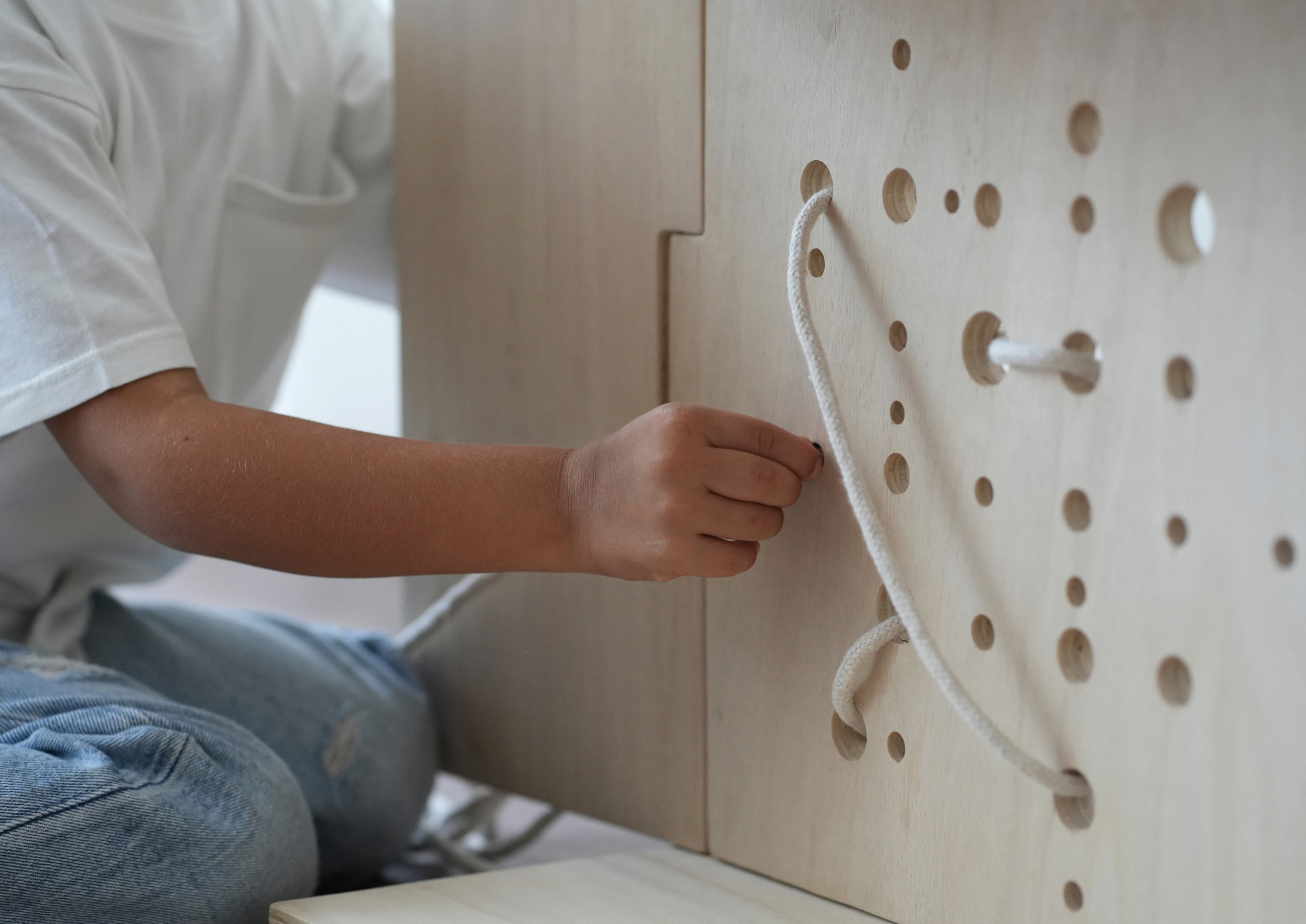
Tarnur is a modular system designed for toddlers that adapts to their changing needs, ensuring long-term use, sustainability, and flexibility through a multifunctional and user-driven design philosophy.
Define the problem/need you are solving or addressing with your project. How does it address the Open Call criteria, such as environmental impact, social engagement, circularity, user experience, resource efficiency, and community-driven solutions?
Tarnur tackles the scarcity of sustainable furniture options for preschool children by introducing a modular shelving system that evolves with their age and requirements. It promotes circularity and long-term use through tool-free assembly, repairability, and reconfigurability. Constructed from poplar plywood, a lightweight yet strong material, Tarnur minimizes ecological impact while facilitating easy packaging and transport. The design fosters interactive, educational play through tactile components that stimulate motor skills and creativity, making it suitable for homes, kindergartens, and shared learning spaces. The user-centered design process involved prototype testing with children, ensuring that their needs were prioritized. This project exemplifies sustainable design principles, environmental accountability, and community involvement, offering a versatile strategy that supports cognitive development while adhering to circular production practices.
Please describe your project, reflecting on the concept, inspiration, materials, technical aspects, methods and process(es).
Inspired by children’s natural curiosity and interaction with their environments, Tarnur emphasizes simplicity, sensory engagement, and spatial adaptability. Poplar plywood was selected for its natural texture, lightweight strength, and safety, aligning with environmental goals. Precision CNC machining was employed to produce perforated components that are both functional and educational. Early-stage prototyping involved full-scale cardboard models, tested with children to refine ergonomics and proportions. Insights gained influenced the creation of a tool-free assembly system that encourages intuitive use. Tarnur balances structure with open-ended functionality, empowering children to derive their own meaning from play. It accommodates multiple configurations suitable for various settings, including homes, kindergartens, and communal areas. More than just a product, Tarnur represents a research-based, human-centered design solution that nurtures creativity, inclusivity, and sustainable consciousness through a playful and adaptable approach.
What do you think makes your project innovative compared to the existing efforts and ideas in the field it addresses?
Tarnur distinguishes itself through its integration of modularity, sustainability, and child-centered adaptability into a cohesive system. Unlike traditional children’s furniture, which can be static and quickly outgrown, Tarnur evolves alongside the child, adjusting to changing developmental needs and spatial requirements. Its tool-free, reconfigurable design fosters independence and creativity, all while reducing waste and endorsing circular usage. The addition of tactile, perforated elements enhances the learning aspect, promoting motor skill development and sensory exploration—features often absent in conventional shelving. What makes Tarnur particularly innovative is its participatory design approach; early prototyping and testing with children directly influenced the design’s usability, safety, and scale. By seamlessly adapting to environments like homes, kindergartens, or shared learning spaces, Tarnur serves as not just a functional object but also as a dynamic learning companion facilitating emotional, cognitive, and social growth throughout childhood.
Does it impact or reflect young people need(s) and how?
Tarnur reflects children’s fundamental needs by acknowledging that learning and development extend beyond desks and classrooms—they thrive through play. This project empowers children to shape their surroundings actively, fostering independence and spatial awareness from a young age. The open-ended design invites exploration and experimentation, allowing children to assign their own purpose—whether as a shelf today or a play zone tomorrow. This adaptability respects their imaginations and need for change while supporting their evolving functions as they grow. Beyond the confines of traditional children’s furniture, Tarnur offers a comprehensive, long-term solution catering to various stages of development, fostering confidence and autonomy. By embracing children’s creativity and competence, Tarnur articulates a language of curiosity, flexibility, and discovery, ultimately aligning with the modern young person’s desire for engaging, meaningful experiences in their learning environments.
HIPCARE

Hipcare is a 3D-printed and customizable splint for treating hip dysplasia in babies, replacing traditional plaster casts with a lightweight, breathable, and sustainable alternative that improves babies’ quality of life and reduces medical interventions.
Define the problem/need you are solving or addressing with your project. How does it address the Open Call criteria, such as environmental impact, social engagement, circularity, user experience, resource efficiency, and community-driven solutions?
Hipcare addresses the limitations of traditional plaster casts that often cause skin irritation and hygiene issues while requiring repeated anesthesia for replacements. Our innovative solution promotes comfort and hygiene with a customizable, breathable, and hygienic 3D-printed splint. This design ensures optimal hip positioning for effective treatment while crafted from lightweight PLA mixed with copper particles, enhancing hygiene and sustainability. The design streamlines the application for medical professionals, alleviating strain on healthcare systems. Our approach aligns with Open Call criteria by advancing resource efficiency through sustainable materials, embracing circularity via 3D printing, enhancing user experience with superior comfort and hygiene, and promoting community-driven solutions that meet the needs of infants, parents, and healthcare providers.
Please describe your project, reflecting on the concept, inspiration, materials, technical aspects, methods and process(es).
Hipcare is a groundbreaking treatment for hip dysplasia, featuring a 3D-printed splint designed with comfort and hygiene in mind. Made from polylactic acid (PLA) mixed with copper particles, the material ensures antimicrobial properties. The splint utilizes results from 3D scans and digital modeling to create a personalized fit that maintains the correct treatment position for the baby’s hip. Using additive manufacturing optimizes sustainability and production efficiency while allowing for easy application compared to traditional casting methods. Hipcare minimizes the need for general anesthesia and enhances hygiene, promoting breathability while reducing skin irritation and facilitating diaper changes. Additionally, babies can bathe, which supports better hygiene practices and eases care routines. Overall, Hipcare offers a patient-centered, sustainable approach that modernizes hip dysplasia treatment, providing an innovative and adaptable solution that improves the well-being of babies and their families.
What do you think makes your project innovative compared to the existing efforts and ideas in the field it addresses?
Hipcare differentiates itself from traditional treatments like plaster casts by employing 3D-printing technology, producing customized and lightweight splints tailored for each infant. This ensures superior comfort and effectiveness, as the PLA’s glass transition temperature and malleability at high temperatures allow for precise adaptation to the baby’s body. The modular design incorporates breathable lattice structures, optimizing material usage while enhancing flexibility. Our clip-based locking system prevents unauthorized adjustments while simplifying medical application, ensuring effective hip stabilization. Unlike alternatives such as the Pavlik harness or Milgram Brown splint, Hipcare provides exceptional rigidity for stabilization while reducing the need for frequent anesthesia, replacements, and extensive hospital resources. This results in a cost-effective and sustainable orthopedic solution, revolutionizing hip dysplasia treatment and providing substantial benefits for infants, families, and healthcare providers.
Does it impact or reflect young people need(s) and how?
Hipcare profoundly affects babies diagnosed with Developmental Dysplasia of the Hip (DDH), a condition that can lead to long-term mobility challenges if not properly addressed. Traditional plaster casts often create discomfort and hygiene issues, which can distress both infants and caregivers. Hipcare enhancements focus on comfort—allowing regular bathing and reducing skin complications—while minimizing exposure to general anesthesia, thus lowering medical risks for young patients. By improving the overall treatment experience, Hipcare significantly enhances well-being for infants and their families, promoting awareness of advanced orthopedic solutions and encouraging a new standard in pediatric healthcare. For young parents, caregivers, or medical professionals, Hipcare simplifies the treatment process while ensuring greater efficiency and sustainability, making it an essential advancement in modern pediatric care.
Penapalne

Penapalne transforms fallen leaves into biodegradable, cruelty-free accessories, replacing animal/synthetic leather. Our toxin-free process preserves nature’s beauty while empowering artisans through fair wages—proving sustainability and elegance can coexist in ethical, planet-positive design.
Define the problem/need you are solving or addressing with your project. How does it address the Open Call criteria, such as environmental impact, social engagement, circularity, user experience, resource efficiency, and community-driven solutions?
Penapalne addresses the dual crises of animal leather—linked to deforestation, toxic chromium pollution (110kg CO2e/m²), and excessive water use (12,370L per boot)—and synthetic leather, which perpetuates fossil fuel dependency and microplastic waste. By upcycling fallen leaves through a toxin-free, low-resource process, we eliminate reliance on these industries while prioritizing circularity: biodegradable materials return nutrients to ecosystems, and artisanal craftsmanship ensures zero-waste production. Our model embeds social engagement by partnering with local communities, guaranteeing fair wages and preserving traditional skills, thus decentralizing sustainability benefits to uplift marginalized groups. Products merge elegance with functionality—lightweight, water-repellent, and uniquely textured—to meet eco-conscious consumers’ demand for individuality and ethical transparency (aligning with Gen Z’s values). The project directly aligns with the Open Call’s pillars, from resource efficiency (minimal water/energy inputs) to community-driven solutions, proving fashion can harmonize planetary health with human dignity through regenerative, inclusive design. By redefining waste into luxury, we deliver user-centric innovation.
Please describe your project, reflecting on the concept, inspiration, materials, technical aspects, methods and process(es).
Penapalne reimagines sustainable fashion by crafting elegant, eco-conscious accessories from naturally fallen leaves—a visionary alternative to traditional leather. Each leaf is ethically sourced and revitalized through a plant-based preservation process, free of toxic chemicals or synthetic dyes. This innovative technique enhances durability while honoring the leaf’s innate textures and organic beauty, resulting in lightweight, water-resistant products built to endure daily life without compromising sophistication.
Every piece is a testament to artistry and ethics. Skilled artisans hand-dye and sculpt each leaf into distinctive wearable creations, ensuring no two items are alike. By collaborating closely with local communities, we foster fair wages and sustainable livelihoods at every stage—from leaf collection to craftsmanship. When you choose Penapalne, you embrace more than a cruelty-free, vegan accessory: you champion a movement that harmonizes style with planetary stewardship, empowering both people and nature to thrive.
What do you think makes your project innovative compared to the existing efforts and ideas in the field it addresses?
Penapalne’s innovation lies in addressing the severe environmental and ethical toll of both animal and synthetic leather industries. Animal leather production drives deforestation (80% of Amazon deforestation links to cattle ranching), consumes excessive water (e.g., 12,370 liters per leather boot), and relies on toxic chemicals like chromium, contaminating waterways and harming tannery workers (e.g., leukemia rates 5x higher near tanneries). It also generates 110kg CO2e per square meter, surpassing landfill emissions. Synthetic leather, often petroleum-based (PU/PVC), depends on fossil fuels, releases microplastics, and uses toxic dyes, creating long-term pollution. While marketed as eco-friendly, many “vegan” options blend plant materials with plastics, hindering biodegradability. Penapalne circumvents these issues by upcycling fallen leaves via a toxin-free process, eliminating deforestation, water waste, and hazardous chemicals. Our method seamlessly merges circularity with artisanal craftsmanship, offering durable, biodegradable alternatives that outperform both industries in sustainability and ethics—proving luxury need not cost the Earth.
Does it impact or reflect young people need(s) and how?
Penapalne aligns with the values of Gen Z and Millennials, who prioritize sustainability and ethical consumption. Studies indicate that 22% of Gen Z and 20% of Millennials exclusively purchase from brands that reflect their values, with 57% and 53% respectively considering sustainability alongside other factors. Our plant-based, cruelty-free accessories resonate with their rejection of environmentally harmful industries and synthetic materials contributing to pollution. Statista Young consumers also seek authenticity and individuality. Each handcrafted leaf piece is inherently unique, reflecting their desire for personalized, story-driven fashion. Collaborations with local artisans and transparent sourcing appeal to their insistence on ethical labor practices and social justice. By offering stylish, durable alternatives that empower conscious choices, Penapalne enables youth to align their lifestyles with their activism. Shared actively on social media, these accessories become symbols of a progressive identity, inspiring peers to join a movement where fashion contributes to environmental healing and systemic change
Bias-Unbias
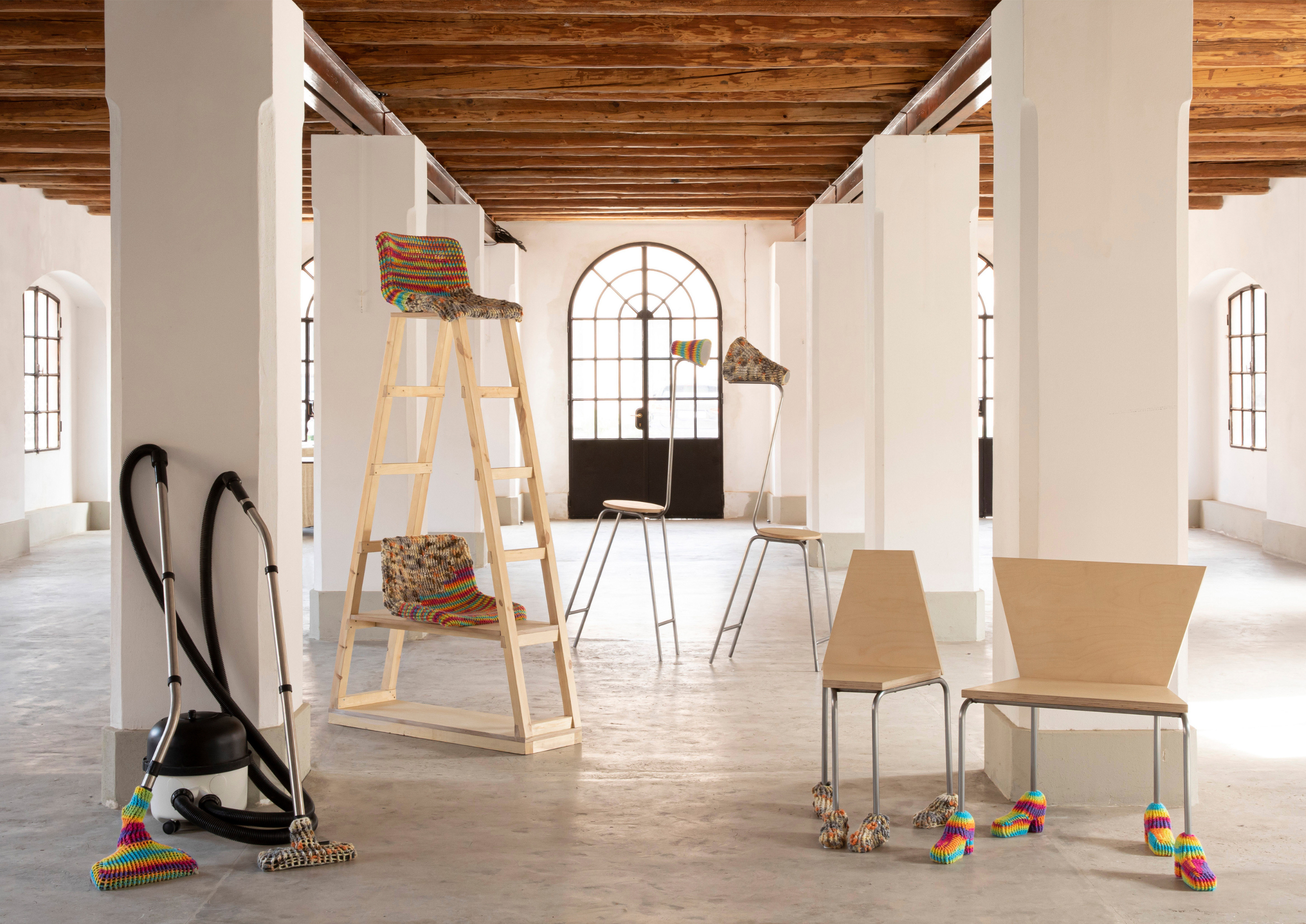
Bias-Unbias is a collection of five interactive furniture pieces that challenge gender inequalities, inviting people to question societal norms through playful engagement and design.
Define the problem/need you are solving or addressing with your project. How does it address the Open Call criteria, such as environmental impact, social engagement, circularity, user experience, resource efficiency, and community-driven solutions?
‘Bias-Unbias’ highlights the gender data gap and the systemic biases that define our everyday lives. In a world where men are often seen as the default, this project challenges gender roles and power dynamics through interactive design. Each piece invites users to physically experience and reflect on these imbalances, fostering dialogue and social engagement. The collection is made using upcycled materials and resource-efficient processes, aligning with principles of circularity and sustainability. By addressing gender inequality—an issue deeply tied to social justice—the project resonates with the Open Call’s focus on inclusivity and community-driven solutions. Inspired by SDG 5 (Gender Equality), ‘Bias-Unbias’ demonstrates how design can be an agent for awareness and empowerment.
Please describe your project, reflecting on the concept, inspiration, materials, technical aspects, methods and process(es).
The project emerged from personal experiences of gender disparities in daily life. Through literature review, ethnographic research, expert interviews, and focus groups, I explored how gender roles are socially constructed and learned from birth. ‘Bias-Unbias’ translates these insights into physical objects that engage users in reflection and discussion. The collection is crafted from upcycled wood and steel, combining craftsmanship with conceptual storytelling. Each piece features hand-knitted elements created in collaboration with artisans Fatma Bakare and Remziye Koyunc, adding layers of materiality and symbolism. The designs encourage playful interaction—challenging spatial biases, domestic labor divisions, and everyday gender norms. Exhibited at London Design Week and SaloneSatellite, ‘Bias-Unbias’ has been recognized for its innovative approach to social design.
What do you think makes your project innovative compared to the existing efforts and ideas in the field it addresses?
While gender inequality is often tackled through campaigns and policy discussions, ‘Bias-Unbias’ takes a unique approach by embedding these conversations into physical, interactive objects. Unlike traditional awareness initiatives, this collection engages users on a sensory and experiential level, making abstract biases tangible. It combines elements of critical, performative, and interactive design, inviting people to participate in shifting power dynamics rather than passively consuming information. The humoristic yet thought-provoking nature of the pieces differentiates them from conventional advocacy tools, making the topic more accessible. The project’s use of design as a medium for discourse—rather than just functionality—opens new avenues for addressing societal challenges in a creative and impactful way.
Does it impact or reflect young people need(s) and how?
Gender inequality remains deeply ingrained, influencing young people’s education, career choices, and social interactions. ‘Bias-Unbias’ encourages critical thinking and cooperative problem-solving, empowering young audiences to recognize and challenge these biases. By fostering collaboration, pieces like ‘A Vacuum for Two’—a vacuum cleaner with dual suction tubes—challenge domestic labor stereotypes, while ‘Body and Space’ redefines personal space dynamics through seating design. These interactive elements resonate with young people, who seek engaging, hands-on ways to explore social issues. The project also serves as a valuable tool for educational workshops, sparking discussions in schools and workplaces. Through design, ‘Bias-Unbias’ transforms everyday objects into catalysts for change, giving young people a tangible way to reflect on and reshape societal norms.
Startbahn+ “Ruhsack”
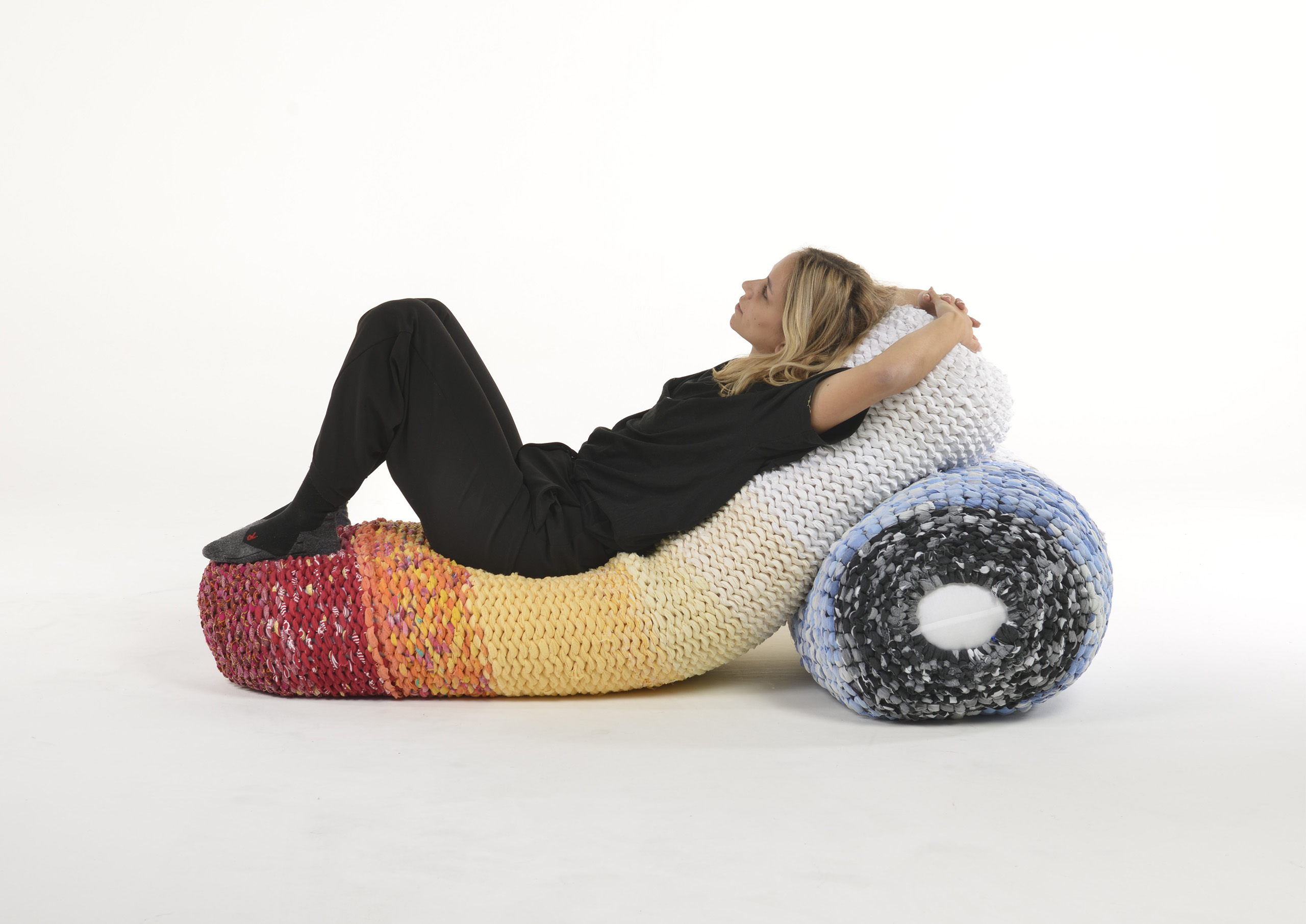
The beanbag “Ruhsack” combines social and ecological requirements through the self-empowerment and support of young people left behind, who independently produce a versatile seat cushion from discarded and recycled textiles in an artisanal process.
Define the problem/need you are solving or addressing with your project. How does it address the Open Call criteria, such as environmental impact, social engagement, circularity, user experience, resource efficiency, and community-driven solutions?
The Caritas organization “Startbahn Feldkirch” offers young people who have dropped out of the education system or been excluded a low-threshold temporary job. At its essence, it is about encouraging and empowering these very different individuals with the aim of preparing them for the job market.
In the “Startbahn+” project, product proposals are developed in collaboration and close exchange with students from the Industrial Design Linz degree program. Various work steps should cover the different needs of the young people. The Caritas organization „carla Tex” offers the opportunity to reuse a valuable material by collecting and sorting used textiles.
Florian Steidl developed the “Ruhsack” beanbag. In a circular knitting process, old bed sheets are knitted into an upholstery while recycled cushions are used as filling. The combination of this circular material flow with the reintegration of young people who have been left behind characterizes this socially and ecologically sustainable project.
Please describe your project, reflecting on the concept, inspiration, materials, technical aspects, methods and process(es).
Crafts offer the opportunity to physically experience learned skills. Experiencing this moment of success is empowering to create something by hand. This awakens intrinsic motivation and strengthens self-esteem.
Circular knitting is often taught on a small scale with yarn in primary school. For the “Ruhsack”, the same process is used on a large scale. Instead of yarn, a textile strip made from old bed sheets is used which was originally processed into carpets in the austrian rural context.
The individual work steps, such as preparing the base material, knitting the textile cover or sewing and filling the inner bag, require different skills. While some prefer varied tasks with a high level of concentration, others choose repetitive processes to clear their heads.
Together they create a high-quality handcrafted product that will always be unique due to the choice of materials and its colours.
What do you think makes your project innovative compared to the existing efforts and ideas in the field it addresses?
The focus of the project is on the young people who find work at “Startbahn Feldkirch” for a range of reasons. Being part of a demanding and valued craft production should encourage and empower them. In this environment, there is space for an orientation towards the future, which opens up the door to a self-determined life.
In addition to the local impact of this social project, a responsibility for the society must also be borne when manufacturing products. With “carla Tex”, the largest used clothing sorting plant in the German-speaking region, there is an organization in the immediate vicinity of “Startbahn Feldkirch” that makes “reuse” and “recycle” possible through highly differentiated sorting.
In this way, a responsible and circular product is produced independently in a social and inclusive work program.
Does it impact or reflect young people need(s) and how?
Unfortunately, our education system is not made for everyone. Some find it difficult to find their own goals, others are unable to keep up in regular education owing to a lack of language skills or physical impairments. All of this can lead to a hopeless and frustrating situation due to a lot of discouragement and repeated negative results.
It is therefore particularly important to offer these young people an opportunity for self-development and personal success. The “Ruhsack” is the result of a collaborative and sustainable handicraft process and is as a creatively usable seat cushion a valuable and meaningful product.