NATURE’S DUAL DELIGHT

By reconnecting with nature and learning from its sustainable balance, we will find solutions to today’s challenges.

Define the problem/need you are solving or addressing with your project. How does it address the Open Call criteria, such as environmental impact, social engagement, circularity, user experience, resource efficiency, and community-driven solutions?

Floods have become a growing problem in Europe, causing serious economic losses, destroying infrastructure and endangering people’s lives. Our project offers a sustainable solution for future generations who want to avoid overcrowding in urban areas and the increasing cost of housing, and to live in harmony with nature. We propose the development of areas along rivers, lakes and forests that, despite their beauty and potential, have suffered flooding and economic damage due to unsuitable hydrological and geomorphological characteristics. Our goal is to create new ecological and social centers that not only reduce the pressure on overcrowded urban areas, but also bring long-term benefits to the environment and the community.

Please describe your project, reflecting on the concept, inspiration, materials, technical aspects, methods and process(es).

The concept is designed as a living space for two adults. The house is laid on a wooden plateau made up of six interconnected pontoons that are attached to the ground with chains. This innovative system allows the house to be raised as the water level rises, thus remaining at a safe-higher level in the event of a flood, while the chains will ensure stability and prevent the house from being swept away. The house is designed as a passive house, which means it is extremely energy efficient. Electricity is produced via solar panels, and water is collected through a rainwater collection system, which is then filtered into a tank. Maintenance of the wastewater system is also solved in a sustainable way. Heating is provided by a biomass fireplace, which is an environmentally friendly heat source.

What do you think makes your project innovative compared to the existing efforts and ideas in the field it addresses?

While many flood protection systems and sustainable design are based on static structures or large infrastructure investments, this concept offers a dynamic solution that adapts to changes in the environment, such as rising water levels. The house is built on pontoons, which allows it to independently adjust to the water level without the need for expensive and complex modifications. Also, the integration of all sustainable technologies – allows for completely energy-independent living

Does it impact or reflect young people need(s) and how?

Young people increasingly value independence, minimalism and sustainability, and this project offers just that: a house that is energy-independent, environmentally friendly and adaptable to changes in the environment. The concept also allows for living in close connection with nature – something that is increasingly important for young generations who want to reduce their negative impact on the environment. Given that young people often seek flexibility and do not want to be tied to large financial obligations, this project offers a solution that is more affordable, while at the same time offering a high quality of life. This allows young people to live in accordance with their values, while at the same time having access to nature and safe living conditions.

Carolien Weerstand

Carolien Roosmarijn Weerstand is an artist who works with different everyday objects. A major area of ​​interest is circularity and the way we interact with the (material) world around us. Creating a collection of (utility) objects is a key part of the visual process. When she has collected enough, she starts funneling through this collection. With her works, Carolien often wants to respond to her environment and uses everyday experiences and subjects that appeal to her personally as a starting point. By using everyday objects in her work, Carolien shows the absurdity of the relationship between man and thing. Instead of forcing an opinion on the viewer, Carolien prefers question (the behavior of) the viewer with her works.


Beatriz Isca

Beatriz Isca (PT, 1998) is a multidisciplinary designer and researcher passionate about sustainability and textiles. Her background in product design has led her to question the ways we design, produce, and consume, often disconnected from nature and ignoring its boundaries. Inspired by craft practices and post-humanistic theories, she works holistically to explore narratives that enhance the interdependence between humans and nonhuman nature. Her work is sensitive and poetic, stemming from meaningful collaborations with local communities.


Tando

The open-source app Tando empowers communities in economically disadvantaged regions to provide themselves with essential goods and fosters collaboration, independence and economic growth by using locally available resources, sharing instructions and passing on craft techniques.

Define the problem/need you are solving or addressing with your project. How does it address the Open Call criteria, such as environmental impact, social engagement, circularity, user experience, resource efficiency, and community-driven solutions?

Tando emerged from exchanges with a Tanzanian doctor, highlighting the need for affordable, locally producible solutions as imports often aren’t available, affordable or repairable. In economically disadvantaged regions like Tanzania, most people own a smartphone, making an online platform widely accessible. Tando’s open-source app fosters social engagement by connecting stakeholders and allowing users to share new designs, exchange and contribute to a global knowledge base by passing on craft techniques. Tando supports circularity, resource efficiency, accessibility and cost-efficiency by encouraging the use of locally abundant resources, reuse of materials, modularity and repair options. New job opportunities are created through visual instruction manuals, also for illiterates. Crowdfunding and community-driven projects like building public playgrounds or donating for items like wheelchairs further strengthens collaboration and inclusivity. Tando’s user-friendly interface, customisable features, and active community engagement ensure a positive user experience, driving independence, economic growth and sustainable local development.

Please describe your project, reflecting on the concept, inspiration, materials, technical aspects, methods and process(es).

Tando is a globally scalable, open-source platform that empowers communities in economically disadvantaged regions to create and exchange locally producible goods. Inspired by a Tanzanian doctor’s insight into the need for affordable, accessible solutions, Tando utilizes locally available base materials such as wood, bamboo, straw, textiles or metal pipes. The platform’s app allows users to search for designs, place enquiries for specific items and share instructions. Visual manuals make production accessible. The modular, repairable products are designed to be customisable, reducing waste and fostering circularity. Technical aspects include user-friendly features, like a map for connecting stakeholders and a community chat for collaboration. Crowdfunding enables community-driven projects such as public sports stations or the donation of items. The process is driven by collaboration, allowing users to preserve traditional knowledge, contribute new ideas, refine designs, and improve instruction manuals, which makes the system adaptable and sustainable for various regions and needs.

What do you think makes your project innovative compared to the existing efforts and ideas in the field it addresses?

„Development aid” often relies on imports and measures imposed by foreigners. Tando, however, doesn’t try to implement „one-fits-all” solutions but customises them driven by the individual communities themselves. The concept was created in close cooperation with affected locals and focuses on locally available options. The open-source approach makes the app inclusive and adaptable since users can customise the features and design to their needs. The app’s visual manuals make it accessible to a wide range of users, while the modular, repairable products foster long-term usability and resource efficiency. Users aren’t only encouraged to consume, but to create themselves. Tando’s emphasis on community-driven projects and crowdfunding highlights social impact and responsibility. The platform fosters collaboration among stakeholders, allowing for continuous refinement and innovation. This approach not only enhances user engagement but also creates a self-sustaining ecosystem where communities are empowered to drive their own economic growth and social development.

Does it impact or reflect young people need(s) and how?

Tando impacts young people by providing opportunities for skill development, entrepreneurship and social engagement. Through the platform, young users can access visual instruction manuals to learn how to create and repair essential goods, fostering practical skills that are valuable in both local economies and global markets. The app encourages creativity, allowing young people to contribute ideas, refine designs, and collaborate on community projects, enhancing their sense of agency and leadership. Tando also supports young entrepreneurs by offering a platform to showcase services, sell products, and connect with other stakeholders, enabling them to start their own businesses. Furthermore, by promoting affordable, locally producible solutions, Tando empowers young people in economically disadvantaged regions to become self-reliant and active contributors to their communities. The engagement with technology, software development, education and social innovation also helps bridge the digital divide, equipping youth with the tools needed in the modern economy.

Barbara Rakovska

 Barbara Rakovská is a Prague-based multidisciplinary designer whose work merges art, fashion, and material innovation. Her approach explores the relationship between design and the body, experimenting with new materials while emphasizing ethics, sustainability, and health. After earning her Master’s degree in design, Barbara continued her studies in Barcelona by joining Fabricademy, a program specializing in textile innovation and biomaterials. This experience led her to focus on root-based materials. Presently, she is advancing her research on these materials while exploring additive manufacturing technologies in the fashion and textile industry. Barbara investigates the intersection of traditional local materials with emerging technologies, aiming to inspire a new generation of designers to lead in sustainable and thoughtful design.


Balint Ligeti

I started photography at 13, then became a nightlife photographer at 16. At 21, craving something new, I learned full-stack development and worked as a frontend developer in Budapest. A year later, I deepened my UX/UI skills in a product design bootcamp. While building applications was exciting, I wanted something more visual—where art meets technology. This led me to study media design in Budapest, where I blend 3D art, AI, and creative coding in my projects.

Amnon Direktor

Amnon Direktor is an architect, journalist, and urban researcher based in Brussels. Holding master’s degrees in both Architecture and Urban Studies, he has built a multidisciplinary career at the intersection of design, research, and storytelling. His work spans urban planning, architectural practice, and journalism, allowing him to explore the intricate relationship between cities, society, and the built environment. With a keen eye for detail and a research-driven approach, he translates complex urban dynamics into insightful designs and compelling narratives. Through his writing and architectural work, Amnon seeks to bridge theory and practice, shaping spaces and discussions that reflect the evolving nature of contemporary urban life.  

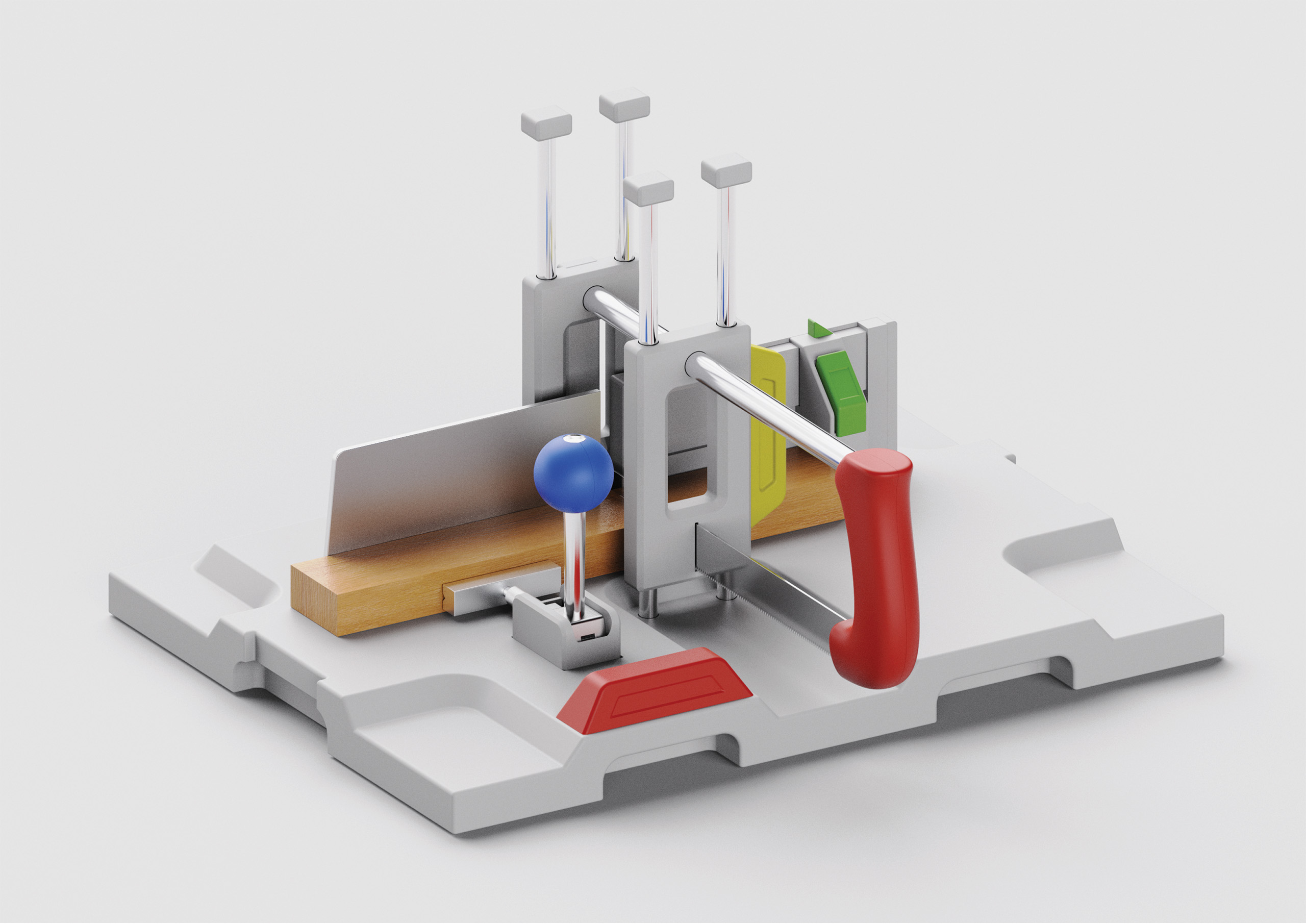
Step by Step

Step by Step is a children’s saw that encourages safe, hands-on crafting with wood from an early age while supporting motor skills, creativity, and a sense of autonomy and achievement through independent making.  

Define the problem/need you are solving or addressing with your project. How does it address the Open Call criteria, such as environmental impact, social engagement, circularity, user experience, resource efficiency, and community-driven solutions?

Children today spend more time on screens and less time exploring their physical environment. This leads to underdeveloped fine motor skills, reduced creativity, and a disconnect from real-world, hands-on learning. Step by Step responds to this issue by introducing a safe, intuitive tool that encourages early engagement with tactile materials like wood. The design supports autonomy, giving children trust and responsibility while learning to craft and create independently. Beyond using renewable materials, the project sees sustainability as a mindset – helping raise a generation that values making, repairing, and using tools with confidence. Its safety-focused design, including color-coded steps and guided 2-handed operation, reduces risk and frustration, making it accessible to a wide range of users. The saw empowers young makers, enhances user experience through clarity and structure, and provides a foundation for lifelong creative confidence.

Please describe your project, reflecting on the concept, inspiration, materials, technical aspects, methods and process(es).

Step by Step is a children’s saw designed to make hands-on crafting accessible, intuitive, and safe for kids aged four and up. The design simplifies woodworking into four clear steps: measuring, inserting wood, clamping, and sawing. Each step is color-coded to guide the process and help children work independently. Every action requires both hands in designated, safe positions to ensure that no hand can end up in a risky area. The saw uses guided mechanics to keep the cut precise and prevent slipping, reducing frustration while working. With materials chosen for their durability, the development process included multiple rounds of prototyping and testing to refine ergonomics, usability, and safety.

What do you think makes your project innovative compared to the existing efforts and ideas in the field it addresses?

Unlike most children’s tools, which are either overly simplified or completely non-functional, Step by Step bridges the gap between real tool use and age-appropriate safety. Its innovation lies in how it supports full independence without compromising on safety – children can carry out the complete woodworking process by themselves. The structured, step-by-step design with color-coded elements provides clarity and reduces the potential for mistakes, while guided mechanics and two-handed operation ensure safe use throughout. Many existing solutions focus either on imitation or protection, often removing the child from the experience of real making. This saw aims to maintain the authenticity of the task while adapting it to the needs and abilities of young users. By building confidence and familiarity with tools and materials like wood, it not only supports creativity in the present, but also prepares children to repair, build, and engage with sustainable practices in the future.

Does it impact or reflect young people need(s) and how?

Step by Step reflects a core need among young people: the desire to explore, create, and feel capable. In a world that increasingly encourages passive digital consumption, it offers a rare opportunity for physical engagement and independent action. By making woodworking safe, approachable, and rewarding, it gives children a sense of ownership and agency. They are trusted with a real task, not just a simulation, and that builds confidence and curiosity. The project also recognizes that meaningful making can start early. When children are given tools that match their abilities, they begin to understand materials, develop coordination, and experience the satisfaction of shaping something themselves. This early connection to creating and repairing supports both personal development and a mindset of self-reliance that can grow with them into the future.

Zhong-Wei Lin

Zhong-Wei Lin is a designer dedicated to sustainability, specializing in product, brand, and packaging design. He is currently pursuing a Master’s degree in Design Products at the Royal College of Art in London. With extensive experience in sustainable design, he has collaborated with Taiwan’s Ministry of Education, the Environmental Protection Administration, and private enterprises, focusing on circular material innovation and social design. Sustainability and social impact are at the heart of his work, earning him multiple international awards, including the Red Dot: Best of the Best, International Design Excellence Awards (IDEA), and the A’ Design Award. He is also a recipient of the 2nd Chia Hsin Sustainability Scholarship and the 2024-2025 Chevening Delta Climate Scholarship..