Squeeze the orange

Orange peels are a food waste residue abundant in the Mediterranean diet, and we can give them another life: many things are possible with what we consider “waste” today.

Squeeze the Orange is a research project on the reuse of orange peel to make biodegradable and compostable materials for the fashion industry.

Through the work and knowledge shared between makers and designers, they investigated orange waste to design a material that all fashion designers can use. The project was developed in collaboration with restaurants in the Poblenou neighbourhood in Barcelona. Its purpose is to manufacture a completely biodegradable or compostable waterproof bioplastic using dehydrated orange peel to produce clothing and accessories for the fashion industry.


matapalo

matapalo, by Unlable Design Studio, is a brand from Algiers that markets biophilic pots and installations made of flexible and innovative composite fabrics that stand out for their design, lightness, durability and recyclability.

The product was presented during Underground BDW, a new collective and immersive exhibition during the Barcelona Design Week 2024.

UrbanGuard

The vision was to create a product that combines functionality with style. The lattice ensures optimal air circulation, making it ideal for prolonged use.

The volumetric lattice, a three-dimensional structure made of interconnected cells, is carefully engineered using advanced materials and precision techniques. Each cell is designed to absorb and distribute
impact forces evenly, providing optimal protection. Rigorous testing, including simulated crash scenarios and stress analysis, ensures its effectiveness while maintaining a lightweight and comfortable design.

With the potential integration of smart technologies like LED lights and impact sensors, this helmet showcases how technology and design can create innovative solutions for urban challenges.


MOMENTS Sidetable

MOMENTS Sidetable by studio re.d is dedicated to the recycling of leftover panels, such as cutouts from stoves and sinks, that are left over from the production of ceramic kitchen worktops. The design emphasizes the value of the remaining panels as a central element of the side table

In order to save work steps, the processing of the remaining panels is implemented into existing production processes. The ceramic plates are connected to sheet steel elements using screws, which means that the furniture can be easily dismantled at the end of its usage cycle and returned to the circular economy. 

Reef Rocket

ReefCycle has developed biologically-grown cement-like material that mimics the chemical structure of reefs, re-growing vital material in days that take millennia to form in nature. The production process combines plant-based enzymes with crushed waste, like culinary shells and glass, to grow a mineral glue that binds waste material together.

Reef Rocket is a bio-cement structure that mimics the naturally occurring oyster reefs that protect shorelines from flooding, filter seawater and promote biodiversity. Nature has the unique capacity to grow durable material without polluting its surrounding environment. Reefs grow to withstand extreme wave energy and corrosive water for hundreds of years.

MOWO, move with wood

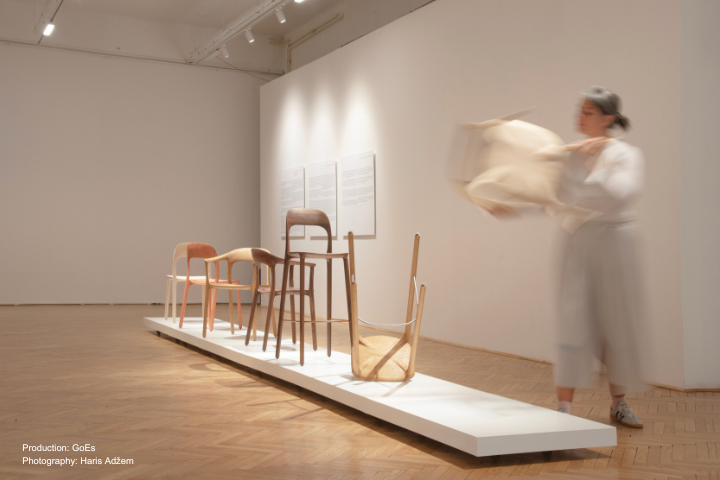
MOWO, move with wood, uses wood in a completely new way, using it as an elastic, flexible material that allows movement when sitting. All products are made from molded plywood and do not require any metal or plastic – the wooden elements are connected solely by cords, which combine stability and flexibility.

MOWO uses the FSC-certified veneers. The certificate that ensures that the wood products come from forests that are managed according to the strict standards of the Forest Stewardship Council (FSC). These standards ensure that the wood is sourced from forests managed sustainably, respecting ecosystems, biodiversity, workers’ rights, communities, and economic sustainability. Follow MOWO, move with wood!

Bobby Kolade

Kolade’s brand first collection is titled Return to Sender, and is made entirely out of waste textiles sourced from second-hand markets across Uganda. Each piece is redesigned and redistributed to the Global North, where the raw materials were originally bought and discarded.

Bobby Kolade is a fashion designer from Uganda who started his career in Berlin and Paris, cutting his teeth at major companies like Maison Margiela and Balenciaga. In 2018, he returned to his hometown of Kampala and was struck by the severe decline of the country’s textile industry. Today, he is the creative powerhouse behind BUZIGAHILL, an independent label that brings attention to this issue through art, clothing and activism.

As co-host of the podcast Vintage or Violence, Kolade further examines the true cost of the global fashion industry and the impact that waste colonialism has on local communities and ecosystems.

Matej Fegus

Fergus’s approach emphasizes that design should go beyond aesthetics, creating meaningful value for society, employees, and the environment through innovative business models, new materials, and advanced technologies.

Matej Fegus is a Slovenian entrepreneur, innovator, and advocate of sustainable design and circular economy. As the director of Donar d.o.o., he has transformed the company into a globally recognized leader in sustainable manufacturing.

Fegus received numerous awards, including CEED Global Entrepreneur of the Year 2014, Red Dot Award 2016, and Green Product Award 2018. His work with the Nico Less chair by Primoz Jeza earned the title Design of the Year 2017. In addition to Donar, he co-founded and co-owns several businesses focused on planning, communication, and sales. He was a co-organizer of the 1st conference on Sustainable Design for Transition to Circular Economy.