NEXT GEN DESIGN OPEN CALL 2026 LAUNCHED: “FUTURES WORTH LIVING” 

Five leading European design platforms invite young European designers to disrupt with purpose. 
The second edition of the Next Gen Design Competition has launched its 2026 Open Call, inviting young creatives across Europe to engage with a world in flux and address urgent global challenges through bold, regenerative, and inclusive design. Under the theme “Futures Worth Living,” the competition calls on young creatives from 18 to 35 who are born, studying, or living in Europe to challenge outdated systems and propose human-centered innovations that protect the environment, strengthen social cohesion, and reimagine how we live together.

Exceptional Opportunities for Winners

From all submissions, the jury will select 50 winning projects to join the Next Gen Design Cohort 2026, gaining outstanding opportunities for international visibility and professional development. 

The selected works will be presented through the Next Gen Design Traveling Exhibition, reaching international audiences and industry leaders. The exhibition will premiere at the Mikser Festival in Novi Pazar in June 2026, before continuing to What Design Can Do Live, Vienna Design Week, Barcelona Design Week, and Skopje Design Week later that year.

Selected designers will participate in fully funded residency programs in one of the five partner cities. During intensive 4–5 day design sprints, participants will collaborate in teams to tackle local challenges and present their solutions to expert juries. Travel, accommodation, and daily expenses are fully covered.

At each residency location, three projects will receive monetary awards from a €2,000 regional prize fund (1st Prize: €1,000; 2nd Prize: €600; 3rd Prize: €400), supporting further education and project development in circular design.

International Jury of Change-makers

Submissions will be evaluated by a diverse panel of forward-thinking innovators, social change-makers, and leading practitioners of sustainable and social design: Henriette Waal – Designer, researcher, co-founder of Atelier Luma, and artistic leader of Veenweide Atelier (The Netherlands); Juan Umbert – Entrepreneur, CEO, innovator, and creative soul (Barcelona, Spain); Nikola Radeljković – Industrial designer, Numen / ForUse (Croatia); Elli Schindler – Managing director of designaustria and designforum Wien (Austria); and Emile Smeenk – Designer, entrepreneur, and founder of Cool Bricks and Nature Nomads (The Netherlands).

How to Apply & Deadline

The call is currently open. For more information, full evaluation criteria, and submission guidelines, visit the competition page: www.nextgendesign.eu/open-call-2026/ 

Eligible designers must submit their applications, including project descriptions and visual materials, via the online form at www.nextgendesign.eu/application-form

Deadline for submissions is midnight on March 24, 2026.

For competition-related inquiries, please contact competition@nextgendesign.eu

—————————————————————

FOR THE EDITORS

For photos, visual assets and other press materials, please visit the Next Gen Design Press Pack.

For any press enquiries or more information regarding Nex Gen Design, please contact comms@whatdesigncando.com

—————————————————————

ABOUT NEXT GEN DESIGN

Next Gen Design is a three-year, multinational program that brings together research, competitions, and public events to encourage the European design sector — particularly emerging designers — to create, adopt, and promote sustainable design solutions aligned with the European Green Deal. 

Five major international design platforms and annual festivals – Skopje Design Week (North  Macedonia), Mikser Festival (Serbia), designaustria (Austria), What Design Can Do (the Netherlands), and Barcelona Creativity & Design Foundation / Barcelona Design Week (Spain) — have joined forces to launch Next Gen Design collaborative initiative aimed at strengthening youth participation in the design sector while advancing a shift toward circular, socially responsible design practices across Europe.

The initiative emerges at a moment when the world is facing intensifying climate and social challenges. Across the globe, young people have responded with remarkable energy and creativity, raising their voices and calling for more ambitious action to protect their future. Yet a clear gap persists between acknowledging these concerns and translating them into meaningful change. Next Gen Design responds directly to this challenge by creating opportunities for young designers to actively participate in shaping more sustainable and inclusive systems.

At the core of the project is the development of an innovative educational and engagement platform embedded within leading European design festivals. Combining physical and digital formats, the platform expands the role of festivals beyond cultural events, positioning them as spaces for learning, experimentation, and collaboration around circular economy principles. 

Through annual design competitions in 2025 and 2026, open calls, research surveys, events, and international residencies, the program encourages young creatives to explore how design can address environmental and social issues while imagining more resilient futures.

The partnership also highlights the role that emerging designers can play in advancing the goals of the European Green Deal. By supporting designers aged 18–35 across Europe, the project seeks to nurture a generation of professionals who view sustainability, circularity, and social responsibility as integral to their practice. In doing so, it aims to harness the creativity and innovation of young talents while fostering a deeper sense of responsibility toward communities and the planet.

The project is co-funded by the European Union through the Creative Europe Program.

Austrian Federal Ministry for Housing, Arts, Culture, Media and Sport Recognises Next Gen Design as a Creative Europe “Best Practice”

The Creative Europe Desk Austria, operating under the Austrian Federal Ministry for Housing, Arts, Culture, Media and Sport, has selected Next Gen Design – Young Designers for Next Generation Europe as one of the Best Practice Projects of the EU Creative Europe programme (2021–2027).

Among all Austrian coordinators and project partners, Next Gen Design was highlighted as an exemplary project for illustrating the programme’s core themes and long-term development. The recognition underlines the project’s strong contribution to European cultural cooperation, sustainability, and the empowerment of emerging creative professionals.

Next Gen Design – Young Designers for Next Generation Europe brings together five leading international design platforms and festivals:
Barcelona Design & Creativity Foundation, What Design Can Do (Amsterdam), Skopje Design Week, Mikser Festival (Belgrade), and designaustria, Austria’s knowledge centre and professional representation for design, based at designforum Wien.

By combining their expertise and networks, the consortium supports young designers across Europe, fostering sustainable design practices, professional collaboration, and meaningful participation of the next generation in shaping a greener and more responsible Europe.

As part of the Creative Europe Desk Austria’s Best Practice initiative, the project is documented on www.creativeeurope.at, contributing to a representative overview of outstanding Creative Europe projects. This highlights the diversity of approaches and themes addressed by the programme, including green and digital transition, design and creativity, audience development, inclusion and gender equality, international cooperation, and capacity building.

The consortium welcomes this recognition as an important milestone and as encouragement to continue strengthening transnational collaboration and the role of young designers in Europe’s future.

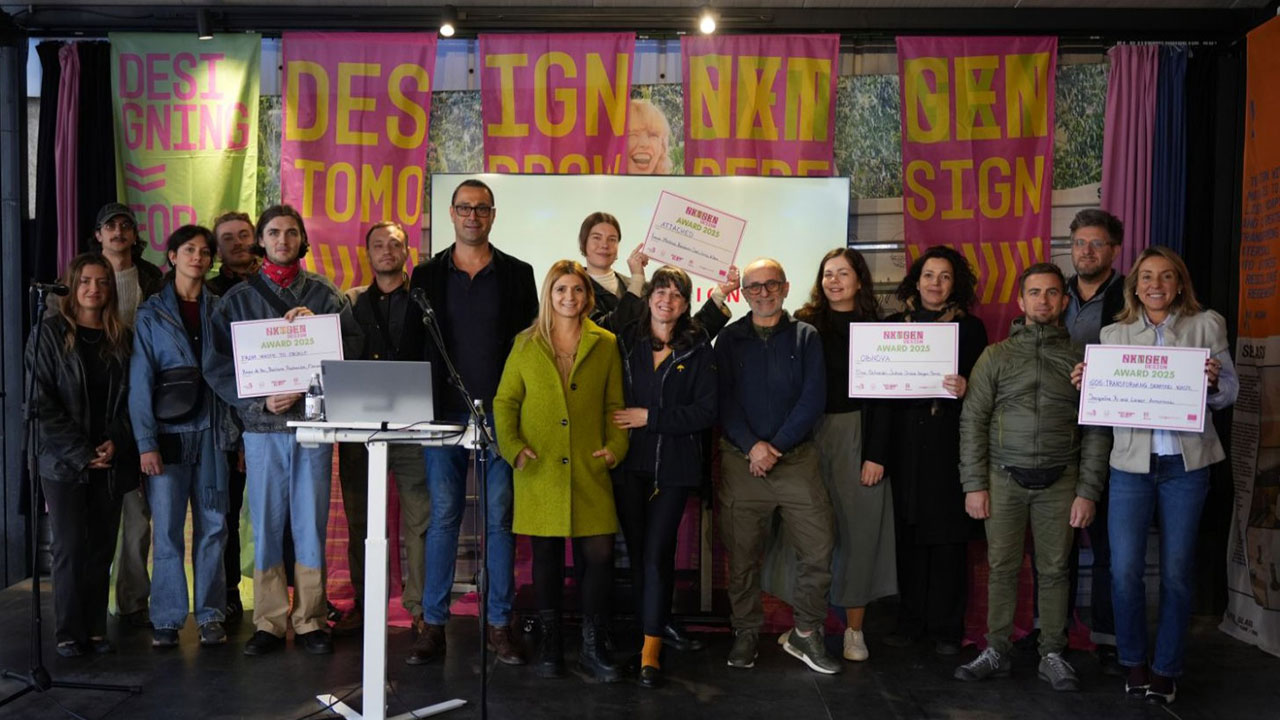
Next Gen Design Residency Award Winners 2025 Announced at Skopje Design Week

Marking the culmination of one of the most dynamic phases of the Next Gen Design program, the winners of the Next Gen Design Residency Award were announced during a hybrid award ceremony hosted by Skopje Design Week.

Following the open call and selection for the Next Gen Design exhibition by a world-renowned international jury—including Birgit Lohmann, Laura Clèries, Zoran Jedrejcic, David Jablonski and Amanda Pinatih —more than 50 young designers from across Europe continued their journey through the Next Gen Design Residency Program.

Hosted at five partner festivals in Belgrade, Amsterdam, Barcelona, Vienna and Skopje, the residencies brought together around ten designers per city for an intense, five-day collaborative experience. In just a few days, participants immersed themselves in local contexts, interacted with local designers, experts and organizations, and tackled real design challenges. Working in culturally and geographically diverse teams, they developed brand-new concepts and pitched them to local juries. Beyond the outcomes, the residencies sparked new friendships, fresh perspectives and lasting inspiration, showing how powerful design collaboration can be when it is dynamic, open and grounded in place.

The Next Gen Design Residency Awards recognized one standout residency project per festival, each supported by a €2,000 prize intended to help winning teams continue learning, exploring and developing their ideas.

Meet the Next Gen Design Residency Award Winners for 2025:  


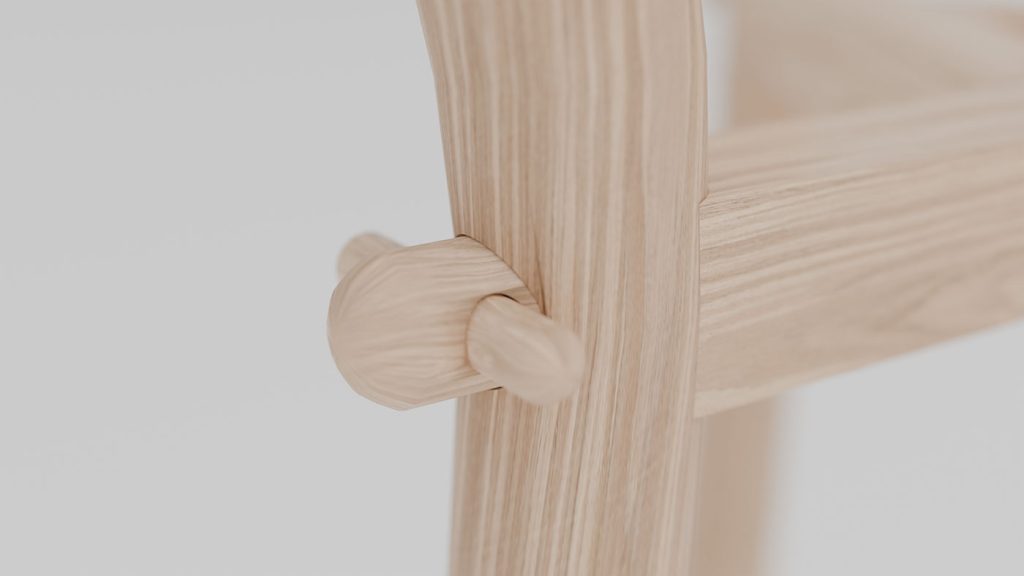
In Belgrade (Mikser Festival), the award unanimously went to the project Obnova by Elisa Schneider (Germany) and Justine Oriana Vargas Parra (Spain), which proposed a modular system that transforms oak furniture waste into elegant solutions for urban gardening.

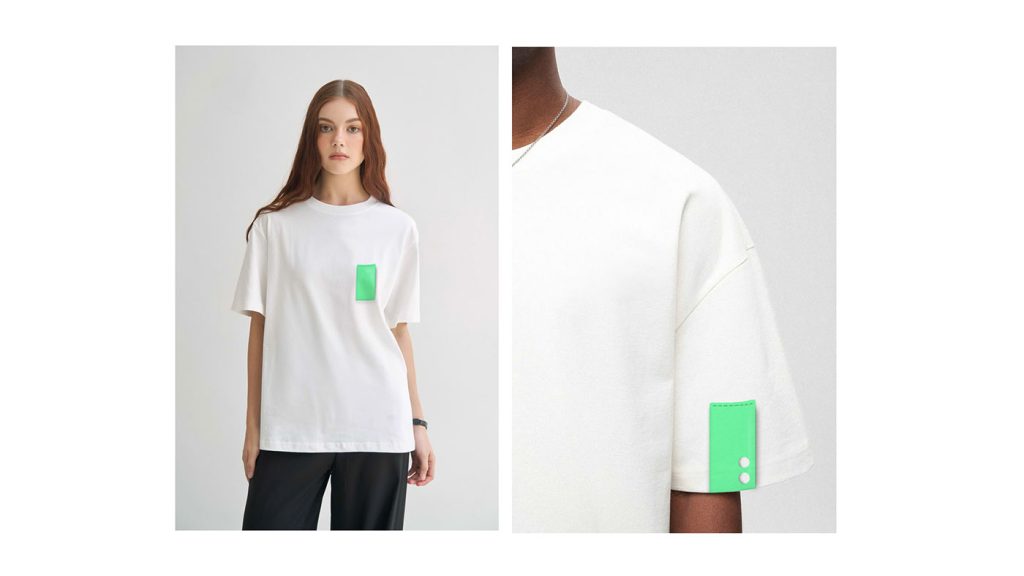
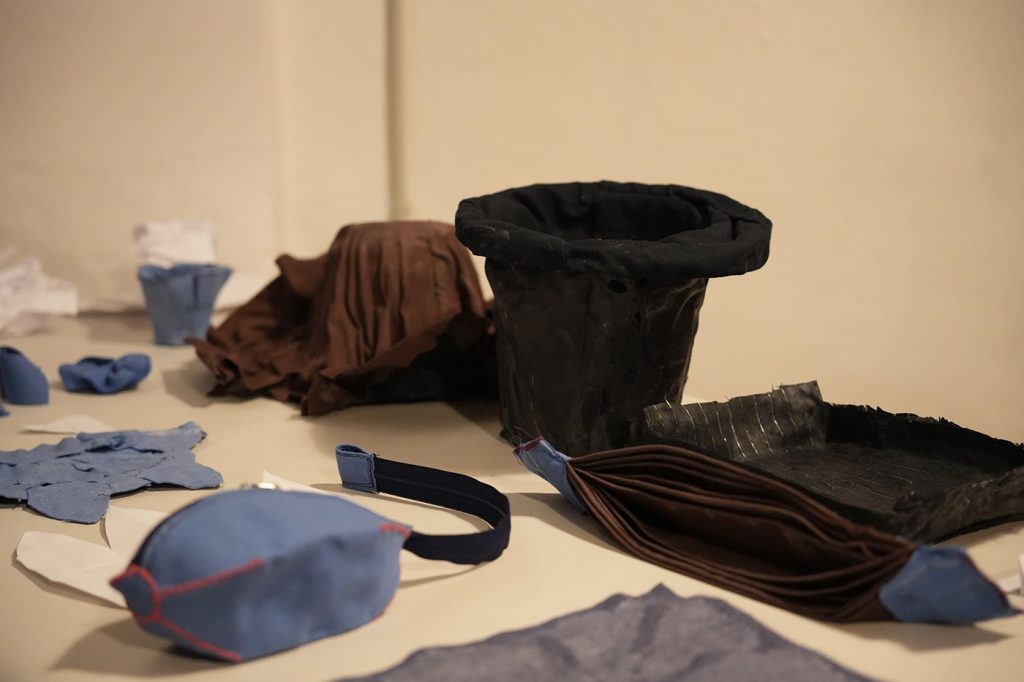
In Amsterdam (What Design Can Do), the jury selected Attached by Emily Klein (Austria), Emina Murtezić (Bosnia and Herzegovina) and Konstantin Diehl (Germany), introducing a second-hand clothing labelling system that reveals hidden stories and deepens emotional attachment to garments.

In Barcelona (Barcelona Design Week),the awarded SOS project by Jacqueline Yu (UK), Lazar Avramovski (North Macedonia) and Boldizsár Csongor Nagy (Hungary) reimagined discarded seashells as refined serving trays, merging sustainability with poetic design expression.

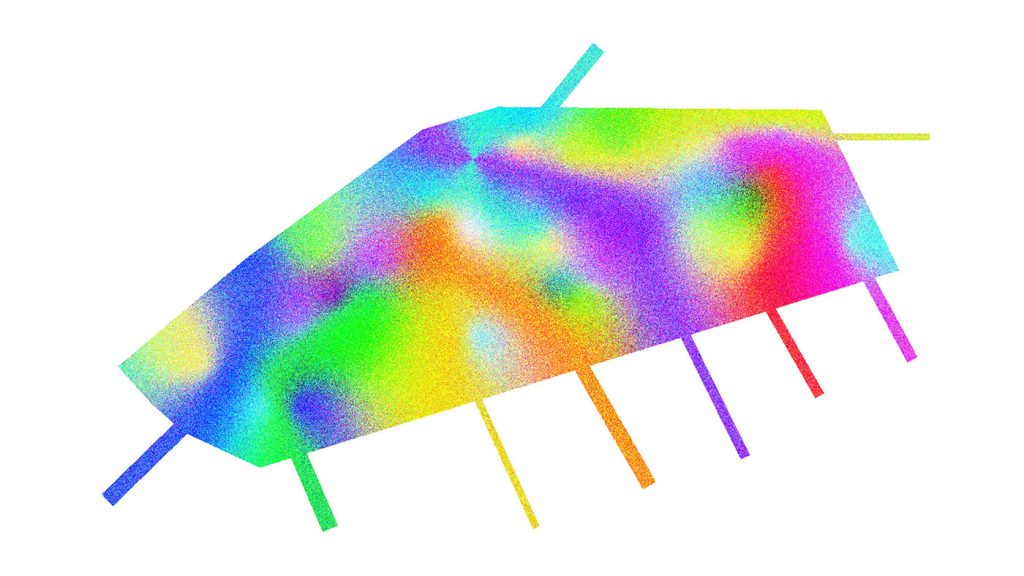
In Vienna (designaustria / MQ Wien), the winning solution Mailing Quartier by Amnon Direktor (Belgium), Arthur Guilleminot (The Netherlands) and Janine Kerscher (Germany) created a postcard exchange system that encourages interaction and shared memories among visitors of Vienna’s MuseumsQuartier.

In Skopje (Skopje Design Week), the festival jury selected the residency project From Waste to Objects by Barbara Rakovska (Czech Republic), Bram de Vos (The Netherlands) and Florian Steidl (Austria), proposing an open-source product development tool that turns textile waste from North Macedonia’s textile sector into innovative new products.

As we celebrate the winners, we extend our heartfelt thanks to all residents! Your commitment, openness, and inspiring creativity made this edition truly unforgettable.

To all next-generation designers: stay tuned for our next open call in 2026!

NEXT GEN DESIGN Vienna 2025: A Celebration of Inclusive,Circular, and Collaborative Design

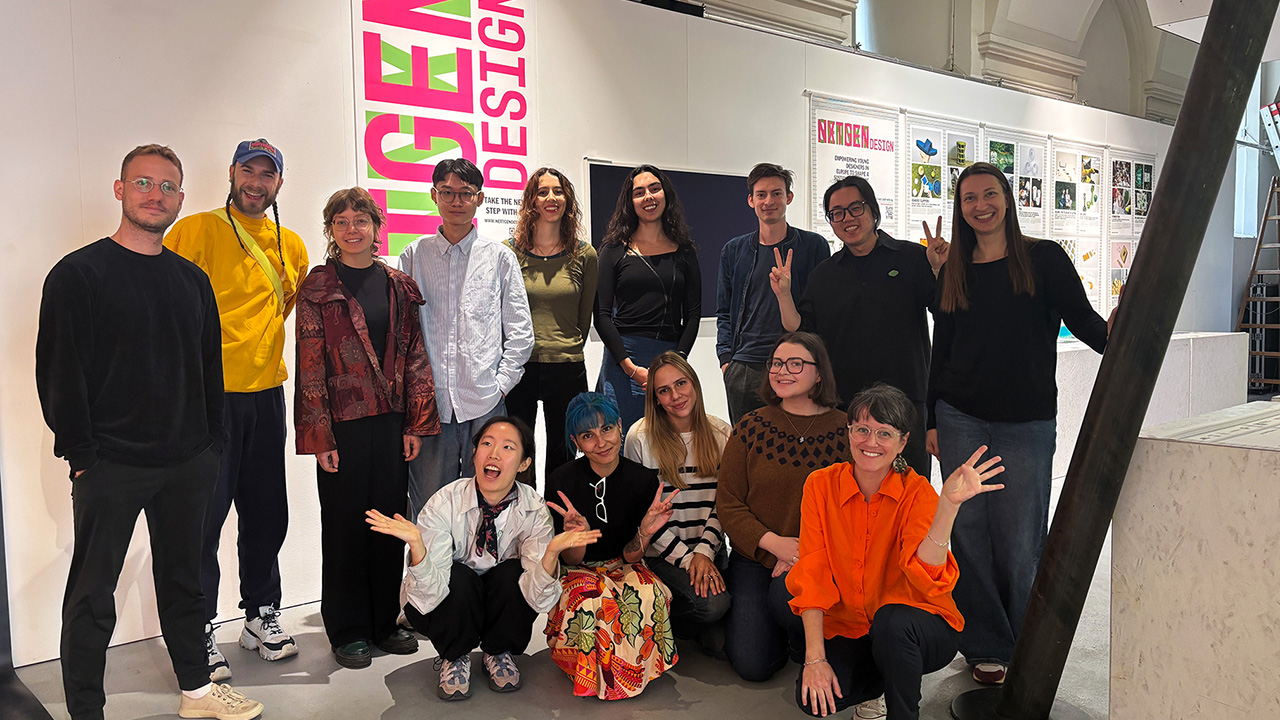
NEXT GEN DESIGN 2025 in Vienna drew hundreds of visitors to designforum Wien, where they
explored the winning projects, met the designers in person, and joined guided tours during VIENNA
DESIGN WEEK and ORF Long Night of Museums. The exhibition offered a unique opportunity to
experience Europe’s next generation of changemakers in action that sparks conversation about a
sustainable future.

From 26 September to 5 October 2025, the winning projects of the NEXT GEN DESIGN 2025
competition were on display at designforum Wien in the MuseumsQuartier during VIENNA DESIGN
WEEK, and particularly during the ORF Long Night of Museums on 4 October. The exhibition
attracted more than 800 visitors, who had the opportunity to gain fresh insights into a vibrant spectrum
of creativity, and vision from Europe’s next generation of designers. Each winning project
embraced circular design principles, presenting sustainable, inclusive, and impactful concepts that
engaged audiences and sparked conversations about the future of design.

Alongside the exhibition, a residency for young design professionals and a complementary
program fostered networking, exchange, and inclusive design practices. The residency was mentored
by Sigrid Bürstmayr, author, designer, and lecturer for sustainable design at the FH Joanneum,
Institute of Design and Communication, who guided the participants through group assignments. The
central residency task combined best-practice inclusive design with the unique local context of the
MuseumsQuartier, asking participants:

“Every day, many different people come together at the MuseumsQuartier – museum visitors, tourists,
locals, employees, café guests, and passers-by. They all use the space in very different ways. How
can it be made visible and tangible that collaboration achieves more than individual effort?

Christoph Pauschitz, managing director of industrial design company GP design partners, co-
mentored the residency, sharing insights from his 30+ years of industrial design practice with global
clients, emphasizing strategies for inclusiveness. David Jablonski, designer, climate activist, and
board member of designaustria, also supported the residency as a co-mentor.

Severin Filek, managing director of designaustria, led a masterclass on intellectual property rights
and copyright calculations. He emphasized that a professional, business-oriented approach is a key
skill alongside creativity for sustaining a designer’s career.

The residency program combined site visits, workshops, concept development, presentations, guided
tours through the exhibition, and many inspiring interactions with new people.
As a knowledge centre and interest association, designaustria underlined during these days that
the future of design depends not only on professional expertise but also on social skills and empathy –
essential competences for Europe’s next generation of designers. The NEXT GEN DESIGN 2025
exhibition and residency exemplified how the New European Bauhaus principles of sustainability,
inclusivity, and aesthetics can come to life through collaboration and experimentation.

We hope to see you in Vienna in Autumn 2026!