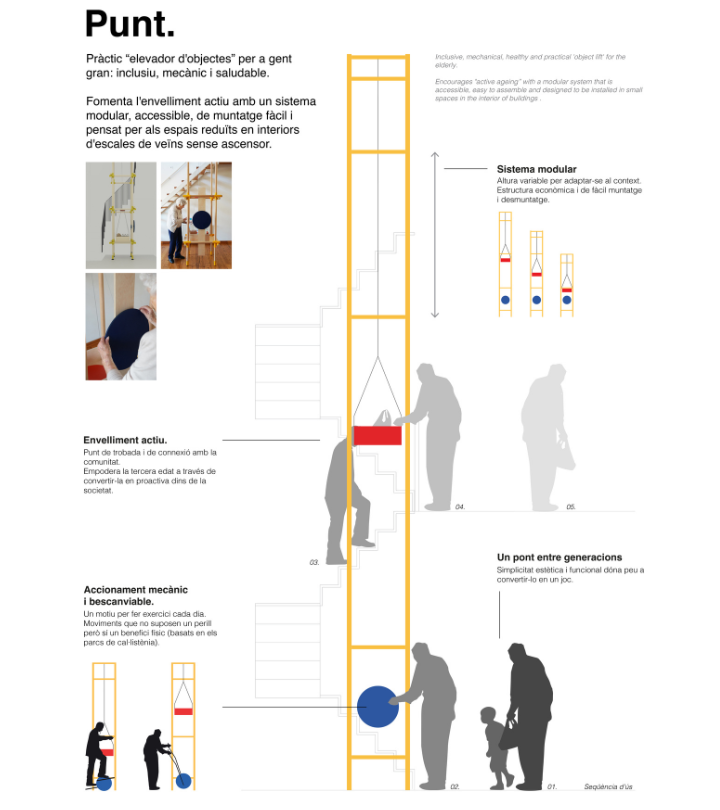
Modular mechanical object lift for elderly users, promoting active ageing through everyday movement. Designed for stairwells without elevators, it combines accessibility, simplicity, and social connection in a compact, inclusive system.
Define the problem/need you are solving or addressing with your project. How does it address the Open Call criteria, such as environmental impact, social engagement, circularity, user experience, resource efficiency, and community-driven solutions?
Commercial printers burden students with high ink costs, e-waste from unrepairable “black boxes,” and dependency on proprietary parts, creating financial stress and environmental waste in shared student spaces. Bojan addresses this by being a fully open-source DIY inkjet printer: students assemble it from affordable, off-the-shelf components like NEMA17 motors, ESP32, and 3D-printable parts, understanding every mechanism, from printhead movement to paper feed. Environmental impact through repairability (no proprietary cartridges, refillable HP302) and reduced e-waste; circularity via modular, upgradable design; social engagement and community-driven solutions by inviting hacks and workshops; user experience with customizable print widths and intuitive touchscreen control; resource efficiency using standard parts (~€150 total) for low ongoing costs. Bojan empowers student makers to experiment, collaborate, and sustain their own printing ecosystem.
By combining environmental feedback with collective decision-making, the project proposes a community-driven framework where urban form evolves through continuous negotiation rather than top-down control.
Please describe your project, reflecting on the concept, inspiration, materials, technical aspects, methods and process(es).
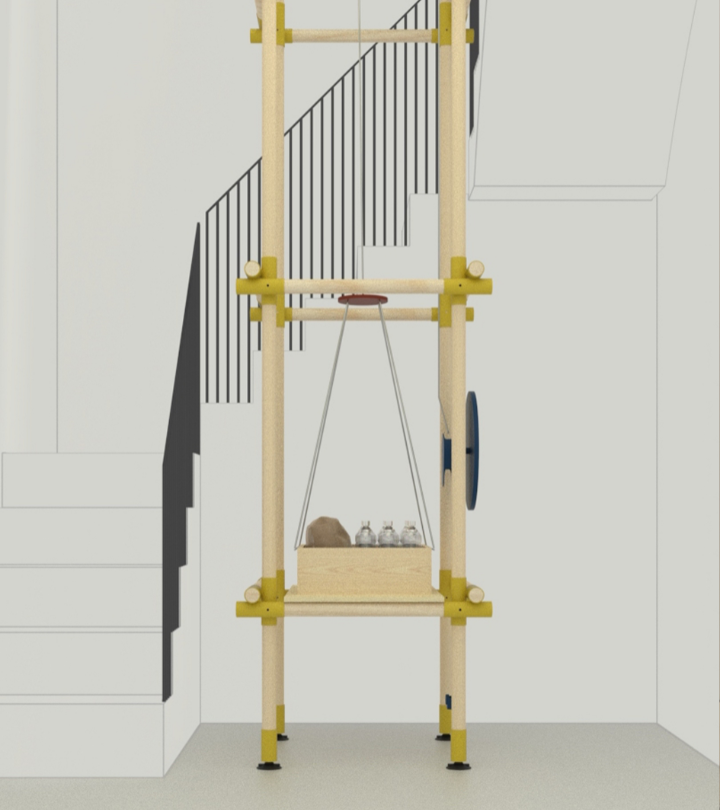
PUNT is a modular, mechanical object lift designed for buildings without elevators. It emerges from observing informal, improvised systems—such as ropes and buckets—used to move goods between floors, translating them into a safe, functional, and dignified product.
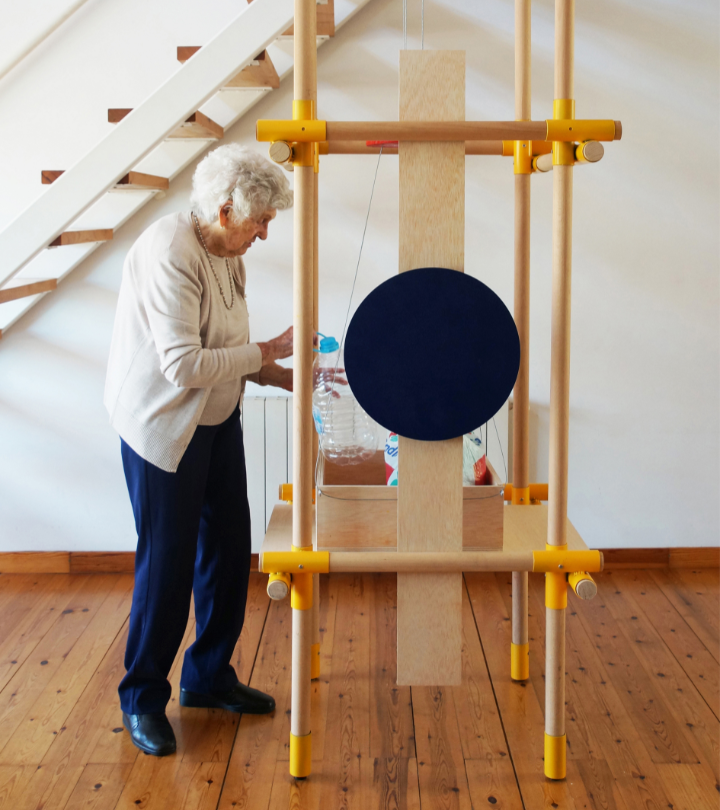
The project combines a scaffold-like structure with simple mechanical principles, making it intuitive and accessible for elderly users. Built from standard, affordable materials, it is lightweight, easy to assemble, and adaptable to different stairwells.
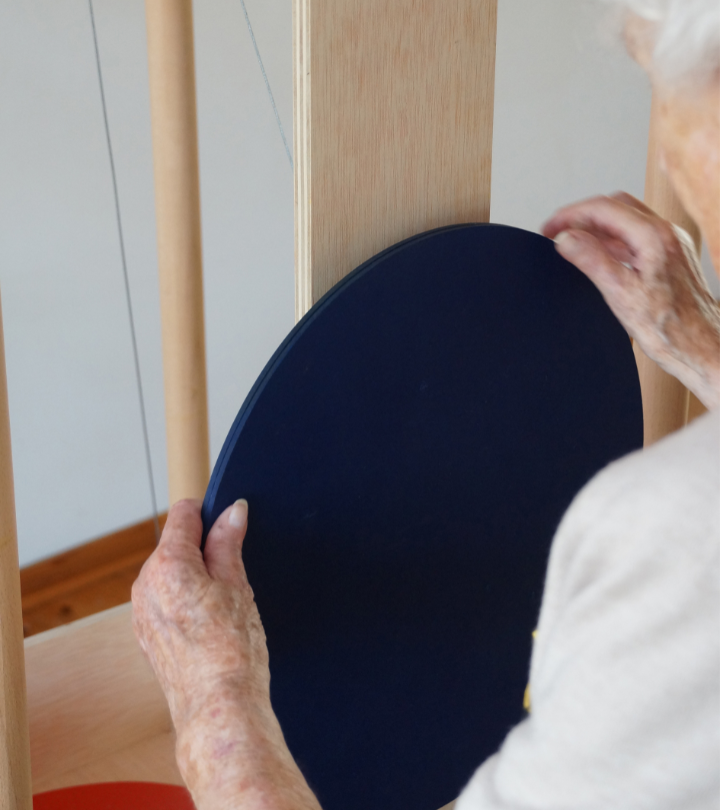
Its manual activation, inspired by calisthenics movements, transforms a daily task into light physical activity. The design process focused on simplicity, usability, and real contexts, integrating technical feasibility with social and spatial awareness.
What do you think makes your project innovative compared to the existing efforts and ideas in the field it addresses?
PUNT rethinks accessibility by avoiding complex, expensive, and fully automated solutions such as elevators or stair lifts. Instead, it proposes a low-tech, mechanical alternative that complements rather than replaces human movement.
Its innovation lies in combining accessibility with active ageing: users remain physically engaged while reducing effort and risk. The system is modular, non-invasive, and adaptable to existing buildings, overcoming spatial, economic, and regulatory limitations typical of elevator installations.
Additionally, PUNT reframes assistive design through a non-medicalized, playful aesthetic, reducing stigma and encouraging acceptance. By transforming an individual need into a shared infrastructure, it also introduces a community-based approach rarely present in comparable solutions.
Does it impact or reflect young people need(s) and how?
While primarily designed for elderly users, PUNT also reflects broader needs relevant to younger generations, particularly around accessibility, affordability, and collective living.
In cities where housing conditions are increasingly constrained, it offers an adaptable, low-cost solution that can benefit diverse users, from families to people with temporary mobility limitations. Its modular and repairable nature aligns with younger generations’ growing interest in sustainable, circular design.
Moreover, PUNT encourages community interaction by creating shared moments of cooperation within residential spaces. It reframes infrastructure as something participatory rather than invisible, promoting values of mutual care, social connection, and collective responsibility—key concerns for younger people today.