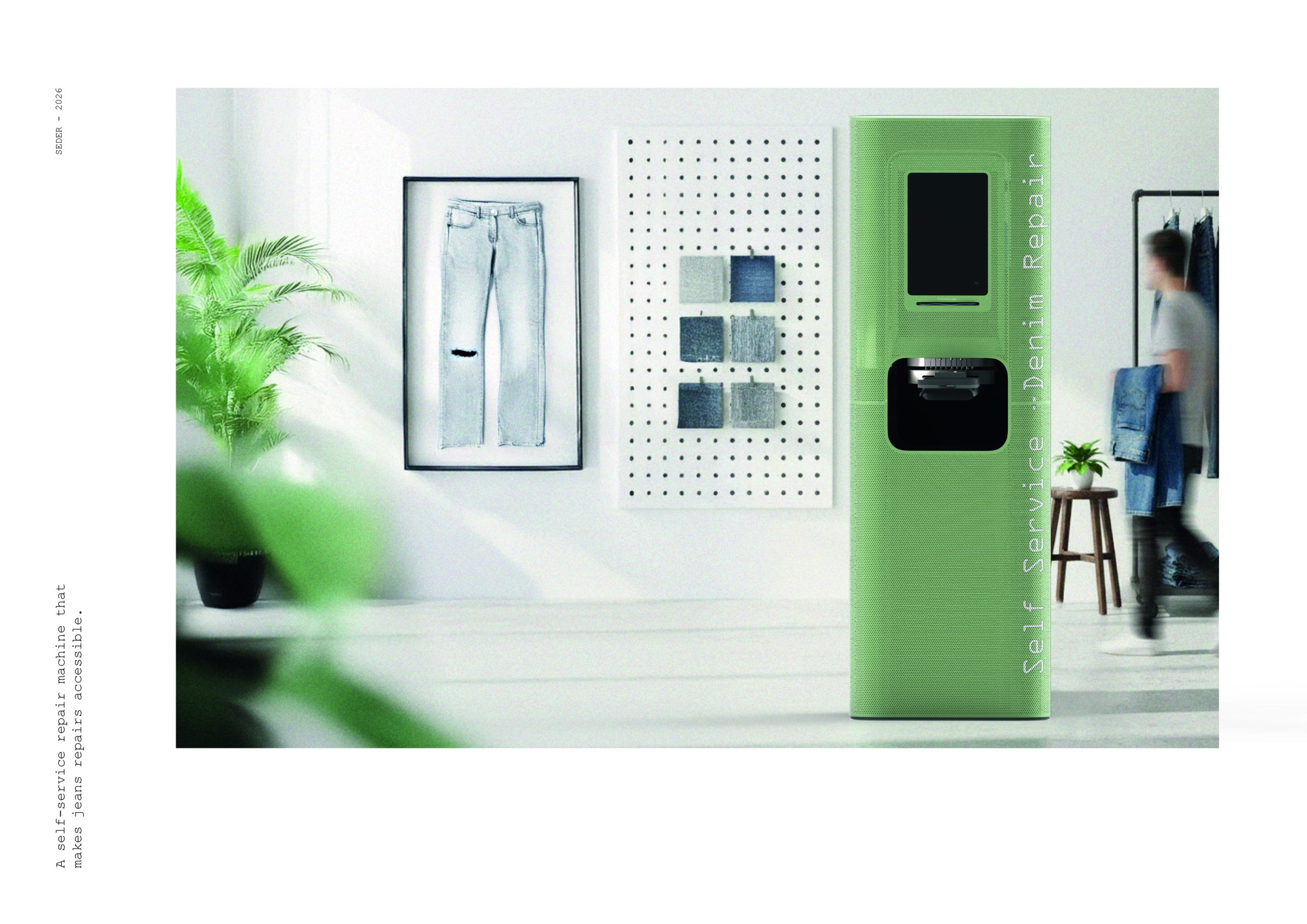
Give people the power to fix their jeans faster by using embroidery technology instead of buying a new pair.
Define the problem/need you are solving or addressing with your project. How does it address the Open Call criteria, such as environmental impact, social engagement, circularity, user experience, resource efficiency, and community-driven solutions?
Fast fashion has normalised immediate consumption while making clothing repair increasingly obsolete. Well-fitting but damaged jeans are often stored instead of repaired, due to a lack of repair knowledge, especially among younger generations, and limited access to tailors with unclear costs and long waiting times. This leads to unnecessary resource use, textile waste, and the gradual loss of repair craftsmanship.
SEDER addresses this gap by making repair accessible, understandable, and immediate. It supports circular practices by extending garment lifespans and reducing demand for new production. The system lowers barriers to participation through a guided, intuitive user experience and enables self-repair without prior skills. By decentralising repair into a self-service solution, it encourages community-based engagement with maintenance and care. This contributes to environmental responsibility, resource efficiency, and a cultural shift towards more sustainable and conscious consumption habits.
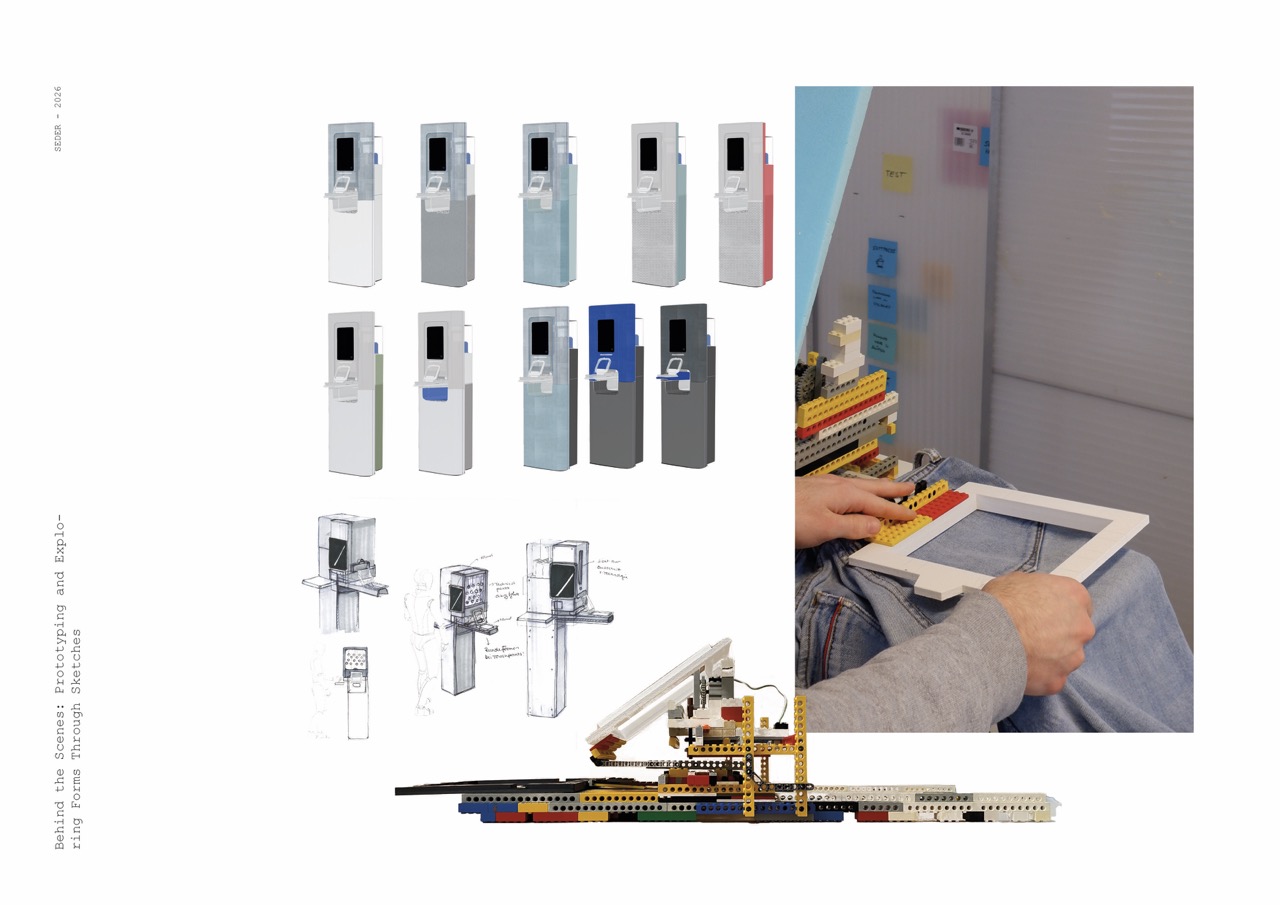
Please describe your project, reflecting on the concept, inspiration, materials, technical aspects, methods and process(es).
The Self-Service Denim Repair Station is a user-centred system that enables people to repair their jeans independently using embroidery technology. The concept is inspired by my own experience of repeatedly repairing my favourite jeans, and by observing how others store damaged garments with the intention to fix them later. However, many are hindered by the required craftsmanship, lack of knowledge, and limited access to tools.
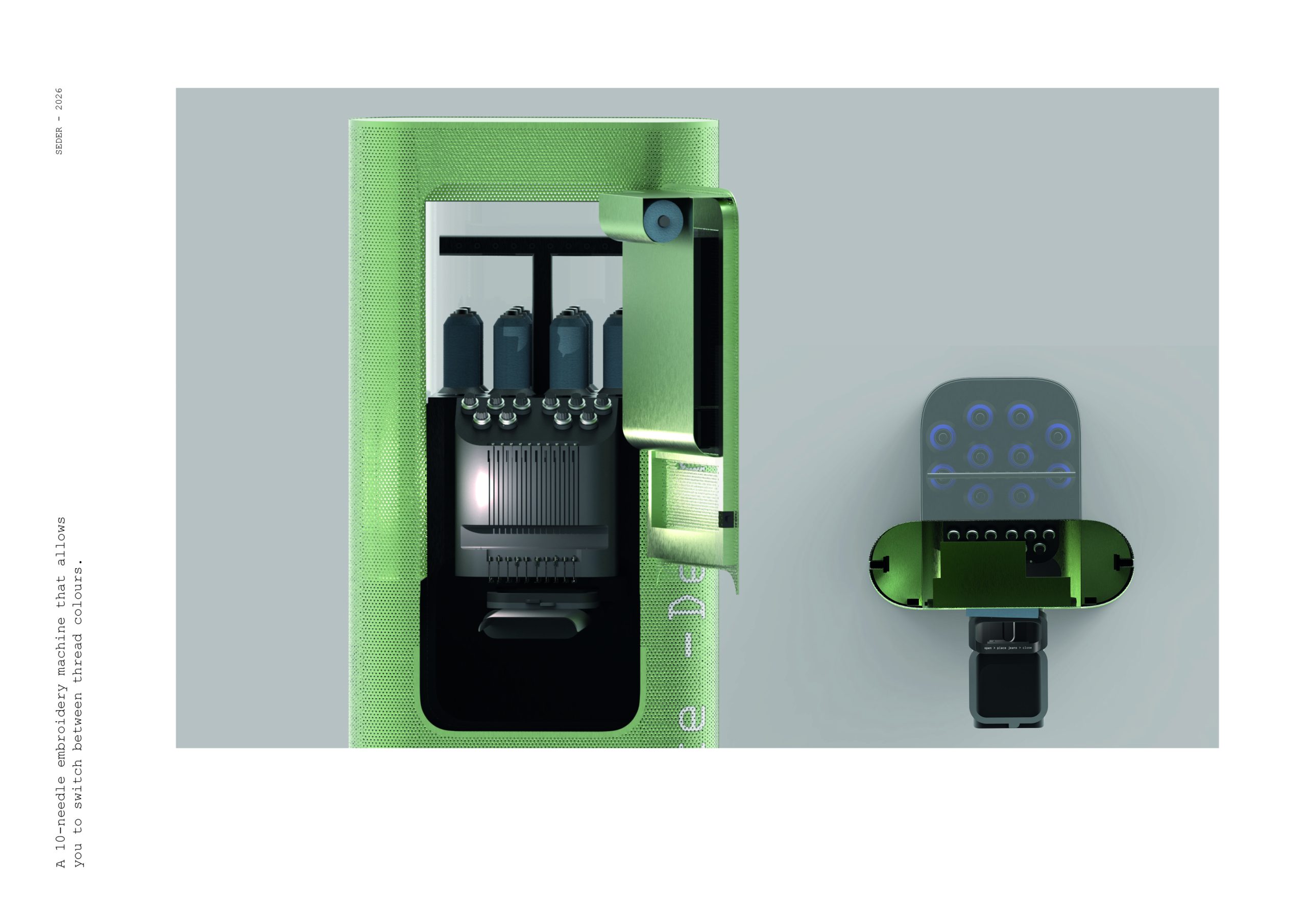
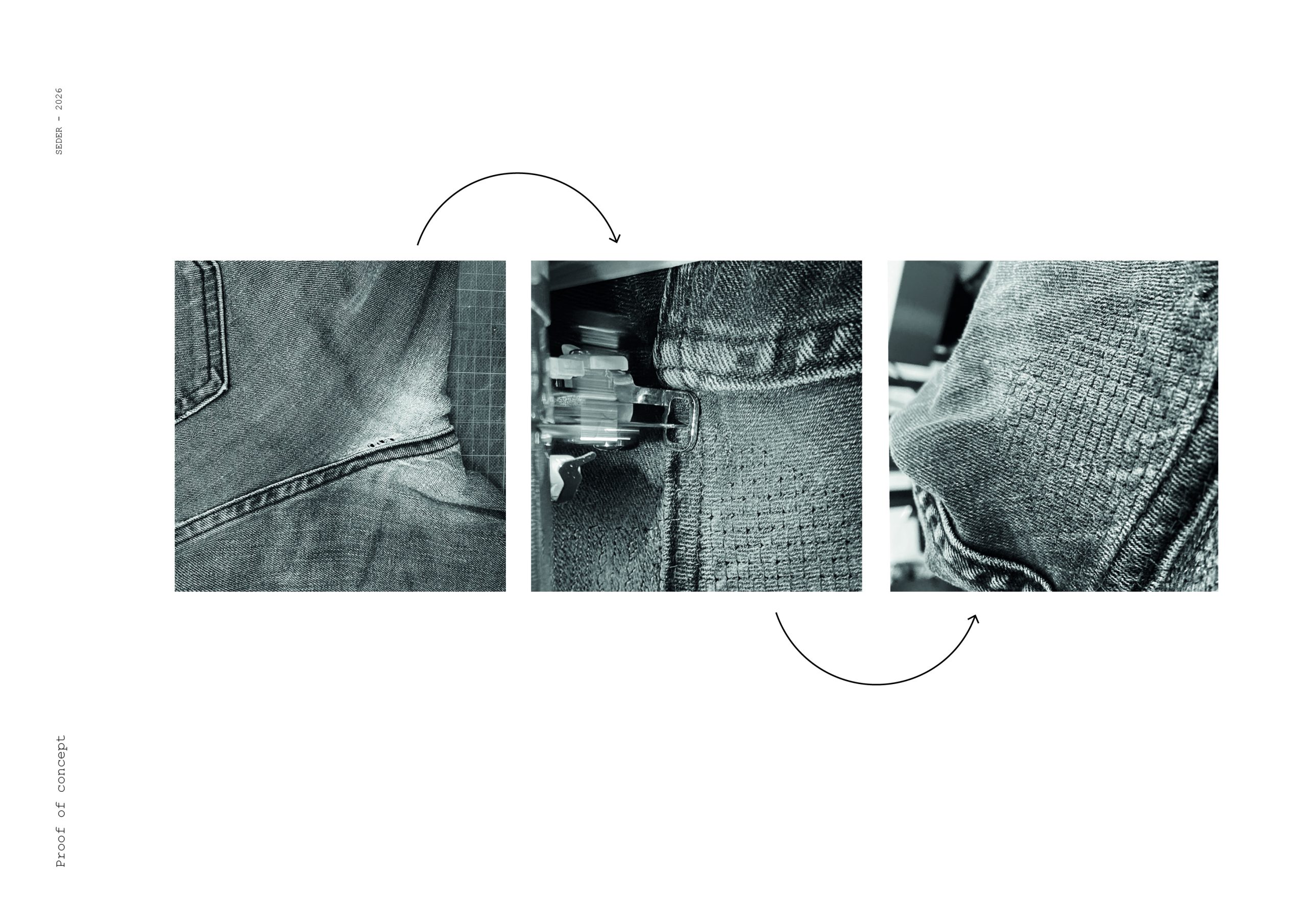
As a trained seamstress, I believe repair can be made more accessible. SEDER is a physical terminal that guides users step by step through a simplified darning process. A built-in camera detects fabric damage and translates it into an embroidery pattern that reinforces the textile. The repair is executed automatically without prior sewing knowledge.
The system combines digital interface design, image recognition, and automated embroidery, transforming repair into an intuitive, time-efficient experience while reconnecting users with contemporary repair practices.
What do you think makes your project innovative compared to the existing efforts and ideas in the field it addresses?
SEDER introduces a new approach by combining self-service principles with textile repair, shifting the process from expert-based craftsmanship to accessible user interaction. Unlike traditional tailoring or DIY repair kits, it removes the need for prior knowledge while maintaining a high-quality outcome through automated embroidery.
The innovation lies not in a completely new technology, but in the meaningful integration of existing ones—camera-based damage detection, guided interfaces, and embroidery systems—into a coherent, user-friendly repair experience. This reinterpretation challenges the current repair paradigm, which is either inaccessible (tailors) or skill-dependent (DIY).
By making repair immediate, transparent, and approachable, SEDER repositions it as a viable alternative to consumption. It also contributes to preserving repair culture by translating craftsmanship into a contemporary, technology-mediated practice, rather than replacing it entirely.
Does it impact or reflect young people need(s) and how?
SEDER directly responds to the needs and behaviours of younger generations, who are strongly influenced by fast fashion systems but often lack the knowledge and access required to engage in repair practices.
Younger users are accustomed to intuitive, guided digital interfaces and expect fast, accessible solutions. SEDER adopts these interaction patterns, making repair feel familiar and achievable rather than complex or time-consuming. This lowers the threshold for engagement and encourages active participation in garment care.
At the same time, the project addresses a growing awareness among young people regarding sustainability and responsible consumption. By offering a practical, immediate alternative to buying new clothing, SEDER supports the translation of values into action.
It empowers users to take responsibility for their belongings, fosters skill-building through experience, and reconnects a generation with practices of care, longevity, and resource-conscious living.