
Tag: biomaterials
Goran Milic
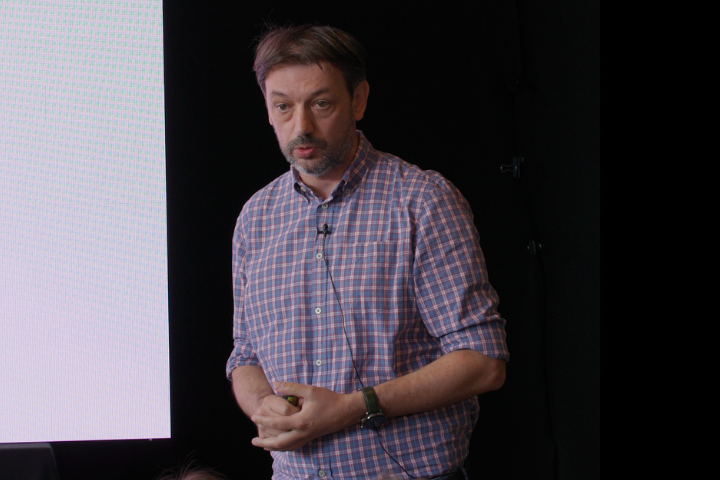
Expert in wood science and technology, with a focus on sustainable wood processing and hydrothermal treatments.
Dr. Goran Milic is a distinguished academic and researcher in the field of wood science. He earned his doctoral degree from the Faculty of Forestry, University of Belgrade, where he is currently teaching in the Department of Wood Science and Technology.
His expertise lies in primary wood processing, with a special focus on hydrothermal wood treatments such as drying, steaming, and thermal modification. His academic journey has taken him across Europe, enhancing his research through visits and collaborations in Austria, Germany, Finland, and Slovenia.
Beyond academia, Dr. Milic is a consultant for leading companies in the wood industry, providing expertise in wood technologies and serving as a court expert in wood technology cases. His ongoing research focuses on using the wood steaming condensate as a sustainable dye in industrial textile production.
Daniel Podmirseg

Committed to bringing food production back into daily urban life.
Daniel is an architect by training with a strong interdisciplinary background in urban innovation and sustainable design. Educated in Vienna, he studied at the University of Technology, the University of Applied Arts, and the Academy of Fine Arts, where he presented his diploma project on Vertical Farming for London in 2008. Driven by a passion for integrating architecture with ecological and energy-efficient solutions, he pursued a doctorate in technical sciences at Graz University of Technology. His doctoral research, conducted at the Institute for Buildings and Energy, explored the Contribution of Vertical Farms to Increasing the Overall Energy Efficiency of Cities.
Daniel thrives outside of his comfort zone, constantly learning and pushing boundaries through multidisciplinary collaborations. His work reflects a commitment to bringing food production back into daily urban life while reimagining cities as ecosystems that balance innovation, sustainability, and quality of life.
Mujō

Mujō’s products are made from a renewable resource: kelp, a fast-growing seaweed that doesn’t require additional water or agricultural land.
Kelp produces oxygen 20 times faster than trees and purifies ocean water, making it an environmentally sustainable choice. The cultivation potential for kelp is vast, about the size of the Amazon rainforest, making the product scalable.
Mujō’s focus is not only on the technology but also on the unique, novel material design and creating an exciting packaging experience for both B2B and B2C customers. Building a circular ecosystem of all stakeholders involved is key, from the producers and consumers to the decomposer.
Mujō is a Berlin-based biomaterial innovation company that develops innovative, seaweed-based packaging materials that biodegrade straight after use. It’s mission is to make a significant contribution to reducing plastic pollution by providing a sustainable and circular alternative to traditional packaging materials. Follow Mujō lab!
Laura Clèries

With 25 years of international experience, Laura combines expertise in materials science, cultural anthropology, and design futures.
She has worked across academia (NYU, UToronto, IED, Elisava), industry, and think tanks (PantoneView, WGSN), holding roles as a professor, researcher, and design leader.
Laura has curated exhibitions, conferences, and publications, contributing successfully to innovation in the Cultural and Creative Industries. She holds a PhD in Materials Science, is fluent in English, French, Catalan, and Spanish, and has received numerous awards for her work. Her research focuses on content curation, innovation strategies, and color, material, and finish (CMF) design.
Design as an Enabler of Hope: The Curious Case of Ecosystem Restoration
Squeeze the orange

Orange peels are a food waste residue abundant in the Mediterranean diet, and we can give them another life: many things are possible with what we consider “waste” today.
Squeeze the Orange is a research project on the reuse of orange peel to make biodegradable and compostable materials for the fashion industry.
Through the work and knowledge shared between makers and designers, they investigated orange waste to design a material that all fashion designers can use. The project was developed in collaboration with restaurants in the Poblenou neighbourhood in Barcelona. Its purpose is to manufacture a completely biodegradable or compostable waterproof bioplastic using dehydrated orange peel to produce clothing and accessories for the fashion industry.
Ressaca

Ressaca is an immersive installation that takes the viewer into a dystopian world where humanity’s only remaining natural resources are its own waste and dross. Broken and sharp glass is the main construction element of what we intuit to be an eccentric room that sparkles with danger. Vila pushes to the limit a set of semi-utilitarian furniture that threatens and provokes, invites and prohibits in equal parts, an exercise in speculative design that reflects on the future of society.
Founder and Head Designer of Aparentment, Josep Vila Capdevila (1976) is a multidisciplinary designer that has been linked to fashion, advertising, photo-journalism and even music. In 2012, he launched his first collection of objects, Marblelous, which had an impact nationally and internationally. Since then, he has followed a design path towards experimentation and innovation working with noble, robust and lasting materials.
matapalo

matapalo, by Unlable Design Studio, is a brand from Algiers that markets biophilic pots and installations made of flexible and innovative composite fabrics that stand out for their design, lightness, durability and recyclability.
The product was presented during Underground BDW, a new collective and immersive exhibition during the Barcelona Design Week 2024.