Bleh! Ode to the Tongue

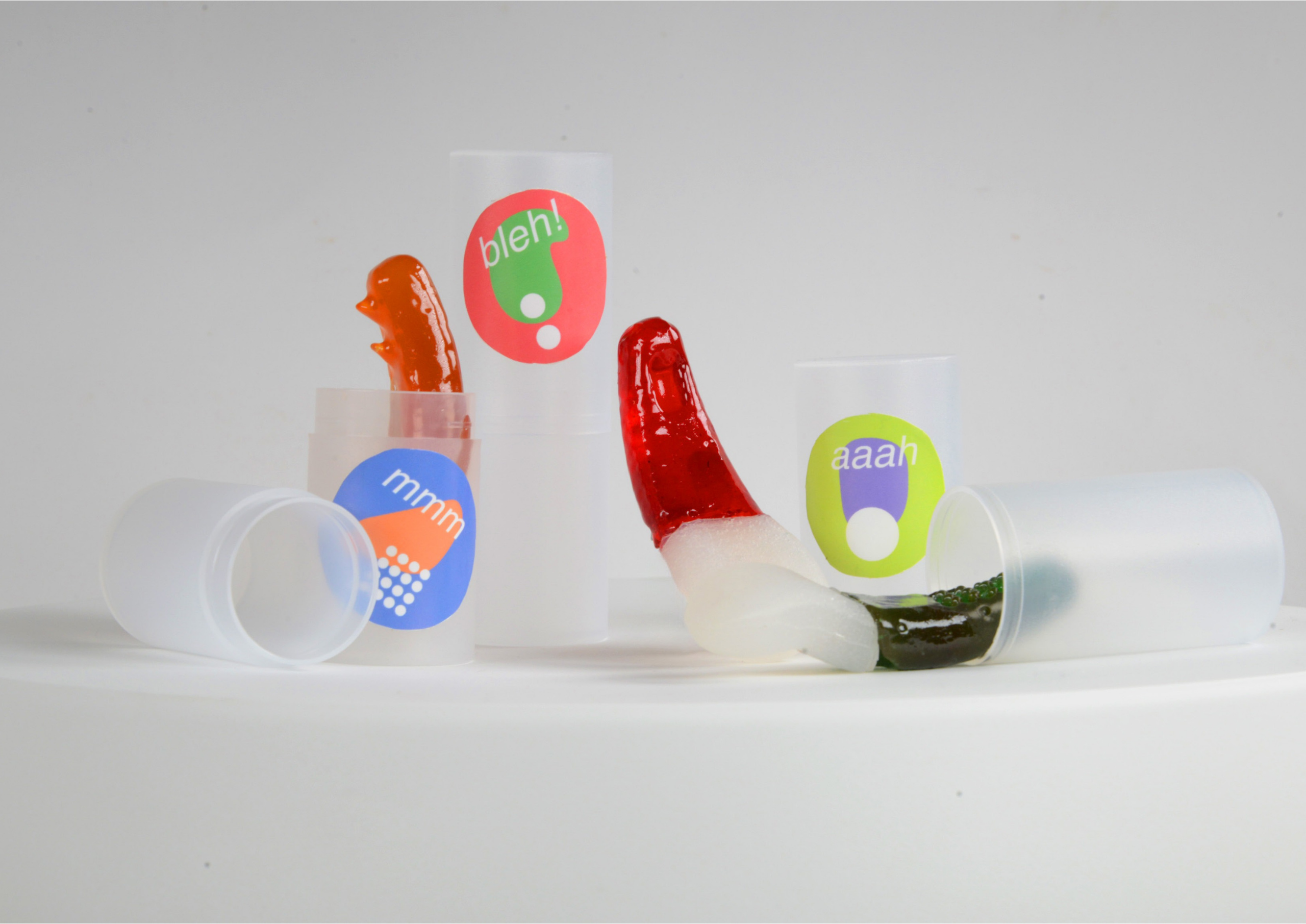
Bleh! is a collection of therapeutic candies designed to stimulate tongue proprioception in children with macroglossia and tongue hypotonia, transforming oral therapy into a playful sensory experience through food design, graphic language, and affective interaction.

Define the problem/need you are solving or addressing with your project. How does it address the Open Call criteria, such as environmental impact, social engagement, circularity, user experience, resource efficiency, and community-driven solutions?

Children with Down syndrome often face macroglossia and protrusion of the tongue, which can lead to dental issues, social discomfort, and challenges in oral motor development. My project, Bleh! Ode to the Tongue, addresses these needs by creating playful, therapeutic candies that encourages safe tongue movement, proprioception, and sensory engagement. By combining food design with inclusive design principles, the project fosters social interaction, promotes awareness, and improves daily oral care routines. Materials are food-safe, visually appealing, and produced with minimal waste, emphasizing circularity and resource efficiency. The process integrates co-creation with children and caregivers, ensuring user-centered solutions. This approach stimulates community engagement, as families and educators participate in the development and testing of prototypes. The project merges art, science, and design to create a socially conscious, sustainable, and multisensory solution for a traditionally overlooked area of health and inclusion.

Please describe your project, reflecting on the concept, inspiration, materials, technical aspects, methods and process(es).

Bleh! Oda a la lengua is inspired by the overlooked role of the tongue in communication, expression, and sensory experience. The project explores how playful, colorful confectionery can function as a tool for oral stimulation, proprioception, and social interaction. Materials include natural colorants derived from fruits, vegetables, and spices, combined with safe, malleable, and biodegradable bases. The design process merges research in food science, therapy techniques, and inclusive design, involving iterative prototyping with children, caregivers, and experts. Technical methods include molding, textural experimentation, and visual storytelling through packaging and branding to enhance engagement. Each piece is designed to encourage different tongue movements, while the visual language and tactile experience aim to make therapy enjoyable and socially engaging. The process emphasizes accessibility, sustainability, and co-creation, making each product a hybrid between functional therapy, playful interaction, and artistic expression, reinforcing the significance of the tongue in daily life and social bonding.

What do you think makes your project innovative compared to the existing efforts and ideas in the field it addresses?

Bleh! Ode to the Tongue innovates by transforming a deeply personal, real-life challenge (my little sister’s experience with macroglossia) into a design solution that blends therapy, play, and food. Unlike conventional interventions, which are often clinical or obligatory, this project uses confectionery to turn necessary oral exercises into a desirable, engaging, and multisensory activity. The personal, nostalgic foundation grounds the project in lived experience, ensuring empathy and relevance, while the candy format transforms obligation into desire, encouraging consistent participation. By combining color, texture, taste, and playful shapes, it stimulates oral proprioception while promoting social interaction and inclusion. Sustainability, co-creation, and user-centered design are embedded throughout, making it a holistic approach. This unique mix of intimacy, play, and functional therapy positions the project as a pioneering intervention that is both emotionally resonant and socially impactful, bridging art, design, and inclusive health in ways existing tools do not.

Does it impact or reflect young people need(s) and how?

Yes, it directly impacts young people’s needs. Addresses the physical, social, and emotional needs of children with Down syndrome. By offering playful, therapeutic confectionery, it encourages safe tongue movement, improving oral motor skills, proprioception, and dental health. The interactive and visually appealing design fosters curiosity, engagement, and enjoyment, transforming therapy into a positive, daily experience. Beyond physical benefits, the project promotes social inclusion by enabling shared experiences between children, families, and peers, reducing stigma around oral differences. The creation process allows young people to influence design decisions, empowering them and valuing their perspective. Additionally, the multisensory approach enhances cognitive, tactile, and gustatory exploration, supporting broader learning and developmental skills. By addressing functional, emotional, and social aspects simultaneously, the project responds holistically to young people’s needs, demonstrating that care routines can be enjoyable, inclusive, and creatively enriching.

Lara Djolovic, Anja Djordjevic, Dusan Jevtic

Lara, Anja, and Dusan are architects and Master’s students at the University of Belgrade, Faculty of Architecture, whose collaboration emerged through joint academic work and participation in regional design initiatives. Their work is grounded in sustainable and socially responsible architectural practice, with a shared interest in adaptive reuse, public architecture, and energy-efficient design. Through involvement in platforms such as NextGen Design, Design Link, Young Balkan Designers and the Mikser Festival, they have developed a research-oriented and collaborative approach that connects conceptual thinking with practical implementation. Each member brings complementary experience in architectural design, scenography, public space projects, and professional internships in architectural studios. Together, they aim to create context-sensitive, innovative solutions that respond to environmental challenges while fostering meaningful spatial and social interactions.

 Rebeka Majnár

As an architect, I enjoy working with manual methods such as sketching, painting, and model making when creating my projects. These techniques help me organize my thoughts and unfold the creative process. At the same time, I find it essential to integrate digital tools, as they allow for more precise detailing. In architecture, I am particularly drawn to systematic thinking, where the harmony of individual elements and the development of complex structures hold the most excitement for me. Lately, my interest has shifted towards adaptive reuse projects where the main focus is on the creative use of our existing assets and resources.

 Marija Kucurski

Is an industrial designer originally from Sombor, Serbia. She completed her Bachelor’s degree at the Faculty of Applied Arts (FPU) in Belgrade and is currently pursuing a Master’s at the Umeå Institute of Design in Sweden. Her work focuses on human-centered design that responds to the challenges of contemporary life without being driven by what society dictates or passing design trends. She is particularly interested in creating thoughtful, sustainable solutions that balance environmental responsibility with real user needs. Alongside this, she explores how design can generate meaningful business value, bridging creativity with strategic thinking. Her projects combine functionality, clarity, and strong visual identity, aiming to improve everyday experiences through well-considered, impactful design.

Marina Guzman

I’m Marina Guzmán, a product designer and industrial engineer born and raised in Barcelona. I’m 26 and hold a double degree in Industrial Engineering and Product Design from ELISAVA, Barcelona School of Design and Engineering. I currently run my own product design studio, CERCLE Studio, as a freelance designer. Together with a multidisciplinary team, I collaborate with a wide variety of clients. From concept to manufacturing, we develop products such as kitchen appliances, toys for children and pets, packaging, and camping equipment. My work has been recognized with several awards, including First Prize at the Catalonia Eco-Design Awards 2025 and the Siemens Kitchen Appliances Design Award 2022.

Moritz Schmid

I grew up in the south of Germany and was raised with a strong focus on consistent, sustainable decisions. We often spent time in nature and the Alps, which helped me develop a humble attitude and a desire to preserve the environment.
I graduated from a design-focused high school, where I developed an understanding of beauty, craftsmanship, and the arts. After graduation, I began an apprenticeship in a small ecological bistro kitchen, where I discovered my interest in local cuisine and sustainable food practices.
This led me to work in restaurants in Iceland and London that follow radical approaches to local sourcing and zero-waste production. These experiences inspired me to explore circular products and pursue industrial design.

Asena Bacaksiz

Asena graduated in Industrial Design in Istanbul, with studies in Portugal and Italy, and recently completed her Master’s degree in Eco-Social Design in Italy. With a background in spatial design and material research, she combines conceptual thinking with hands-on making. Her work focuses on collaborative processes that connect design, materials, and social systems to foster regenerative futures. Her recent exhibition at the Porto Design Biennale explored biomaterials as storytelling tools through participatory installations. Using ecological materials derived from food waste, she invited audiences to engage with transformation processes, reframing waste as a shared resource and positioning design as an open, collective practice rooted in care, responsibility, and ecological awareness.

Lena Muri

I am an curious industrial design student with a passion for exploring user needs, understanding complex systems, and creating new processes. My background in innovation and product management, as well as my studies at fashion school, has taught me to view product development holistically, from initial concept to final market launch. An internship at a world-leading healthcare company in prosthetics showed me the way to pursue a bachelor’s and finally a master’s degree in industrial design. Since then, I have been working intensely on exploring design solutions, focusing on developments with people, for people, and for the planet.