

I am driven by a passion for biodiversity and urban planning, striving to integrate sustainability into architecture and urban development. My early experiences in sea turtle conservation and reforestation campaigns in Mexico shaped my local-to-global mindset, inspiring me to research sustainable architecture and bio-based materials. Pursuing my master’s in Architecture and Planning Beyond Sustainability at Chalmers has deepened my interdisciplinary skills, focusing on urban strategies with global impact. My thesis on Urban Mycelium Farms redefines waste-resource flows in cities. Passionate about knowledge-sharing, I have spoken at the Nobel Week Dialogue and student ceremonies, encouraging future change-makers to shape resilient, sustainable communities.
Author: 9ve8c
Ala Talebian

Ala Talebian is an architect and urban designer specializing in sustainable urban development and circular design. She holds a Master’s in Architecture and Planning Beyond Sustainability from Chalmers University, with studies at TU Berlin. Her thesis, “Urban Mycelium Farms,” explored the integration of sustainable production in city centers. Ala has worked on revitalizing historical sites, circular urban design, and participatory planning, focusing on environmental and community resilience. Her expertise in spatial design, urban systems, and storytelling allows her to create user-centered environments. With a background in content development and technical communication, she translates complex ideas into clear, impactful designs.
Okara

Edible Okara spoons reduce plastic waste and sugar intake by upcycling soy byproducts into flavorful, compostable utensils that enhance the taste of unsweetened foods—merging sustainability with healthier eating habits in one simple innovation.
Define the problem/need you are solving or addressing with your project. How does it address the Open Call criteria, such as environmental impact, social engagement, circularity, user experience, resource efficiency, and community-driven solutions?
This project tackles two critical challenges—plastic waste and excessive sugar consumption—by creating edible spoons made from Okara, a nutrient-rich soy byproduct of the tofu production. These spoons replace disposable plastic cutlery while naturally enhancing the sweetness of foods like yogurt or ice cream through added flavors, reducing the need for added sugars. By upcycling Okara, an abundant agricultural byproduct, the solution prevents food waste and eliminates plastic pollution, as the spoons are entirely compostable and edible. The production process requires minimal energy and no synthetic additives, making it far more resource-efficient than manufacturing conventional plastic utensils. At the same time, the spoons’ ability to amplify perceived sweetness encourages healthier eating habits by allowing consumers to enjoy naturally low-sugar desserts without sacrificing taste. This dual approach—diverting food waste from landfills while reducing sugar intake—demonstrates a scalable circular economy innovation that addresses both environmental and public health concerns through a simple utensil.
Please describe your project, reflecting on the concept, inspiration, materials, technical aspects, methods and process(es).
This project transforms Okara—the fiber and protein-rich pulp from soy milk production—into edible spoons through an innovative baking process. After extensive testing, I developed a dough formula combining dried Okara with whole-grain spelt that achieves the perfect balance between durability and edibility. The spoons maintain structural integrity during use while remaining fully compostable.
By adding natural sweeteners to the dough, consumers can choose unsweetened natural products like Yoghurts without sacrifice. Nutritionally, Soypulp provides valuable dietary fiber and complete plant-based proteins from the Okara. The result is a functional utensil that holds up to regular use while offering nutritional benefits. Unlike plastic cutlery, these spoons create zero waste—they can be eaten after use or will quickly biodegrade.
This circular solution upcycles agricultural byproducts into utensils that support both environmental sustainability and healthier eating habits.
What do you think makes your project innovative compared to the existing efforts and ideas in the field it addresses?
The project breaks new ground by creating edible spoons that actively improve both sustainability and nutrition—going far beyond simply replacing plastic utensils. While most edible cutlery offers single-use alternatives, we’ve developed a multifunctional tool from upcycled Okara that enhances food flavor while delivering nutritional benefits. The innovation lies in our unique material formulation that transforms a food industry byproduct into nutrient-rich utensils with promising properties. In addition, the sweetened spoons can reduce sugar cravings while providing valuable fiber and plant protein. Unlike conventional solutions that address either waste or health separately, Okara tackles both challenges simultaneously. What truly sets the spoons apart is their active role in improving eating habits. They’re not just passive containers but functional tools that make healthy foods more enjoyable.
Does it impact or reflect young people need(s) and how?
This project speaks directly to young people who care about the environment and want to make a difference. The edible spoons made from Okara (soy pulp) offer a smart solution that fits their lifestyle in three key ways:
1. The project shows how creative science can solve real-world problems. It demonstrates how food byproducts can be transformed into something useful, which could inspire young innovators interested in science, technology, or environmental careers.
2. They give young, environmentally conscious consumers an easy way to ditch plastic utensils while enjoying their favorite snacks like yogurt or ice cream. It’s a practical step toward reducing waste that matches their green values.
3. The spoons actually make healthy eating easier. They’re packed with natural fiber and protein from the Okara, and their special design enhances flavors so foods taste sweeter without extra sugar—perfect for health-focused young adults.
yarn
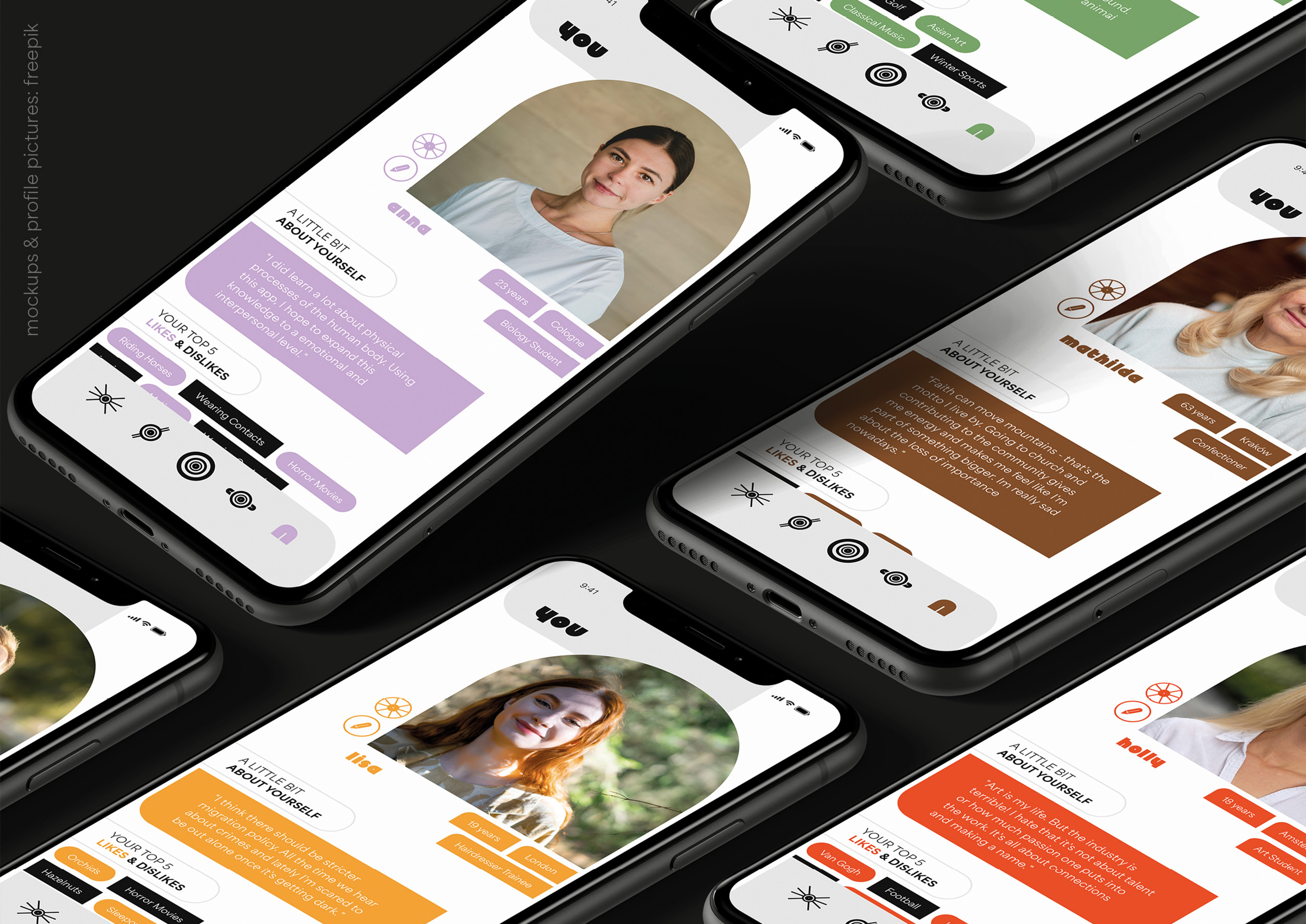
I designed an app that “mismatches” people, giving them the opportunity to meet someone from another “bubble.” It’s a playground that teaches respectful conversations despite differences—a celebration of ambiguity and otherness.
Define the problem/need you are solving or addressing with your project. How does it address the Open Call criteria, such as environmental impact, social engagement, circularity, user experience, resource efficiency, and community-driven solutions?
My project is grounded in concern over growing societal polarization. As philosopher Hanno Sauer puts it, our opinions don’t differ as much as we think—we just hate each other. We pigeonhole before even getting to know one another, missing out on the chance to connect and collaborate. Yet, history, biology, and the humanities show that cooperation is essential for sustainable life. Addressing societal fragmentation, “yarn” connects people from different backgrounds, encouraging dialogue and tolerance of ambiguity. By embracing otherness instead of fearing it, users learn to engage meaningfully with diverse perspectives. This project fosters social engagement, community-driven solutions, and resource efficiency by leveraging existing digital infrastructure to create new opportunities for connection.
Please describe your project, reflecting on the concept, inspiration, materials, technical aspects, methods and process(es).
A huge inspiration was Tyson Yunkaporta’s “Sand Talk” and the Aboriginal tradition of “yarning”—a practice of sitting together, talking, and listening with respect. The app functions similarly to dating apps like Tinder but instead matches users with people outside their typical “bubble.” The goal isn’t romantic connection but rather breaking down prejudices and fostering meaningful conversations. By engaging with differing perspectives, users develop open-mindedness and appreciation for other ways of thinking. The design visually reflects these conceptual ideas through contrasting forms and a symbolic language inspired by Aboriginal culture. The name “yarn” also refers to the handicraft, where individual threads are woven into a whole, representing the way human connections create intricate, meaningful patterns.
What do you think makes your project innovative compared to the existing efforts and ideas in the field it addresses?
Many existing discussion formats bring together people with differing worldviews but often frame differences as purely negative obstacles to consensus. While agreement is important, this oversimplified approach can actually deepen polarization. “Yarn” takes a different approach, embracing differences as valuable perspectives that broaden understanding. Inspired by the Aboriginal practice of yarning, the app fosters mutual respect and encourages learning from one another—so long as conversations remain grounded in facts and shared ethical values. It’s not about debating or winning arguments but rather practicing the art of meaningful dialogue. By shifting the narrative from conflict to collaboration, “yarn” makes the process of engaging with diverse perspectives feel less like a battle and more like an opportunity for growth.
Does it impact or reflect young people need(s) and how?
The issues of polarization and digital echo chambers particularly impact young people. Social media, while a primary space for connection, often distorts reality, fueling division rather than dialogue. Extremist groups exploit growing insecurities and discontent, reinforcing a sense of “us vs. them.” At the same time, young people crave meaningful connections, a need heightened by the pandemic. “Yarn” meets them where they are—online—while challenging them to step outside their comfort zones. By keeping the process fun and lighthearted, the app lowers the barriers to engaging in unfamiliar conversations. It enables young people to connect with “the other” in a safe, structured way, fostering understanding instead of fear. This exposure to diverse perspectives helps build resilience against misinformation, strengthens critical thinking skills, and ultimately empowers young people to navigate an increasingly complex world with confidence and curiosity.
KTR: Scalable Shelving System Made from Reused Cable TraysTrio
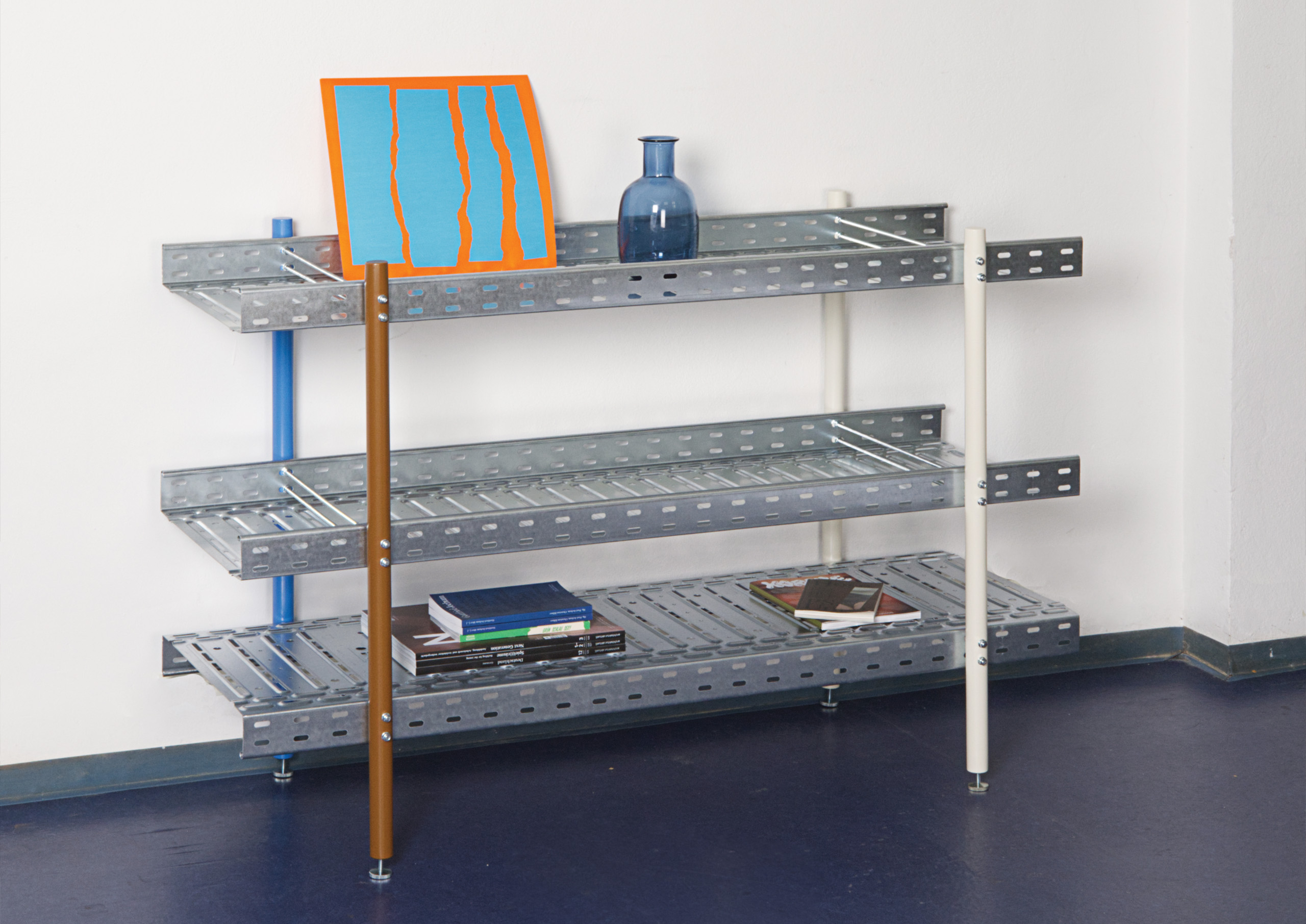
Focused on circular economy practices, KTR transforms cable trays into a modular shelving system, advocating reuse, reducing waste, and driving systemic change in the construction industry.
Define the problem/need you are solving or addressing with your project. How does it address the Open Call criteria, such as environmental impact, social engagement, circularity, user experience, resource efficiency, and community-driven solutions?
Cable trays are vital for contemporary electrical installations but often outlast the buildings they serve. When decommissioned, dismantling and reinstallation processes are rarely economically viable, leading to the common practice of recycling them as scrap metal. KTR addresses this issue by proposing an alternative reuse approach. Extending product lifespans is a core principle of circular economy, where recycling is a last resort following repair, reuse, and repurposing. Collaborating with BauKarussell, social enterprises can bridge labor market gaps by providing valuable services such as dismantling, cleaning, and adapting cable trays, as well as assembling the resulting products. This initiative not only supports sustainable practices but also creates positive social impact, ultimately redefining how we think about construction waste.
Please describe your project, reflecting on the concept, inspiration, materials, technical aspects, methods and process(es).
KTR showcases the overlooked potential of building elements and products during demolition or renovation. Unlike traditional design processes, this project emphasizes continuous research, with form-finding playing a lesser role. Insights were garnered through literature reviews, site visits, interviews, and analysis of technical datasheets. By reusing the materials and their inherent modularity as a design principle, KTR results in a modular shelving system that can be adjusted for various widths and extends in any direction. The design is reinforced with threaded rods typically used to suspend cable trays, while the vertical tubes’ color palette is inspired by standard electrical engineering wire colors. The project adheres to Circular Design Rules, ensuring it provides a genuinely sustainable and circular solution for the repurposing of cable trays.
What do you think makes your project innovative compared to the existing efforts and ideas in the field it addresses?
KTR provides a scalable and adaptable solution that differentiates it from artistic, specialized upcycling designs. By emphasizing reuse and repurposing, it aligns with the core principles of the circular economy. The focus on responsible repurposing—considering repairability and minimal adjustments—ensures a thoughtful approach to sustainability. The method used to develop KTR can be replicated with various materials and challenges, promoting collaborative efforts among communities and designers to accelerate progress in the field. Moreover, the design highlights the necessity of large-scale practices for reusing building components. Ideally, KTR would become obsolete, as the standard practice would be to reuse all cable trays as originally intended until they are no longer functional.
Does it impact or reflect young people need(s) and how?
The building sector in the EU accounts for 40% of emissions and generates nearly one-third of all waste, establishing an unsustainable model that endangers ecosystems. Millennials and Gen Z will likely bear the brunt of these linear approaches’ consequences. Any solution that promotes a shift from linear to circular practices aligns with the interests of younger generations. KTR directly addresses the challenges of reusing functional materials. With an appealing design that conveys this crucial message, it fosters an optimistic narrative to tackle a complex issue. By championing sustainable practices and providing viable alternatives to traditional wasteful systems, KTR not only meets the immediate needs of young people but also empowers them to participate in a more sustainable future, equipping them with the knowledge to advocate for responsible consumption and production patterns.
Tera Mira

We are developing a bio-based, compostable alternative to elastane, replacing a fossil-fuel-dependent material in fashion with a sustainable, circular solution that is non-toxic, high-performing, and compatible with existing manufacturing processes to drive industry-wide change.
Define the problem/need you are solving or addressing with your project. How does it address the Open Call criteria, such as environmental impact, social engagement, circularity, user experience, resource efficiency, and community-driven solutions?
Fashion’s reliance on fossil-fuel-based elastane contributes to resource depletion, pollution, and waste. Traditional elastane production is energy-intensive, sheds microplastics, and clogs recycling systems—persisting in landfills for centuries. Meanwhile, textile workers face exposure to toxic chemicals, and coastal communities struggle with declining livelihoods. Our bio-based, compostable alternative replaces elastane with a circular, non-toxic fiber sourced from seaweed—eliminating petroleum use, reducing carbon emissions, and preventing microplastic pollution. It supports monomaterial garment designs that improve recyclability and reduce end-of-life waste. Beyond its environmental impact, our solution enhances social sustainability by creating safer workplaces, supporting coastal economies through sustainable seaweed harvesting, and enabling size-inclusive, adaptive fashion. Brands benefit from no trade-off between sustainability and performance while complying with upcoming EU waste regulations. By connecting designers, manufacturers, recyclers, and policymakers, we’re pioneering a net-positive, regenerative textile system—where fashion works with nature, not against it.
Please describe your project, reflecting on the concept, inspiration, materials, technical aspects, methods and process(es).
Inspired by biomimicry and circularity, our project reimagines stretch fibers using the natural properties of seaweed. Our biofabricated fabric mimics elastane’s elasticity while being fully compostable, non-toxic, and compatible with existing textile production methods. We utilize invasive seaweed, reducing pressure on agricultural land and freshwater resources, while supporting coastal communities through regenerative aquaculture. Our technical aspects ensure that the stretch and recovery are comparable to elastane, ensuring comfort, durability, and size inclusivity. The fabric is compostable in home-composting conditions, eliminating microplastic pollution, and can be seamlessly integrated into existing supply chains, lowering industry adoption barriers. Developed through low-impact biofabrication, we reduce energy use and carbon footprint, enabling brands to transition to circularity without sacrificing performance. By leveraging nature’s genius, we’re not just replacing elastane; we’re redefining how stretch textiles are made, used, and disposed of.
What do you think makes your project innovative compared to the existing efforts and ideas in the field it addresses?
Existing elastane alternatives still rely on fossil fuels, virgin plastics, non-renewable resources (like natural rubber), or resource-intensive agriculture (such as corn), limiting their true sustainability and circularity. Our fiber is the first 100% compostable, fossil-fuel-free stretch material designed for seamless integration into the industry and large-scale adoption. Unlike competitors requiring industrial breakdown processes, our fiber is striving to be home-compostable, ensuring a truly circular end-of-life. By harnessing invasive seaweed as a regenerative raw material, we avoid petroleum, land use conflicts, and biodiversity loss while actively restoring marine ecosystems. Additionally, no existing alternative meets the unique performance needs of the underwear market, where durability, comfort, and washability are essential. Our innovation provides a stretch solution without sacrificing sustainability, positioning us to revolutionize intimate apparel before expanding into broader applications. By bridging circularity, scalability, and regenerative sourcing, we are setting a new industry standard.
Does it impact or reflect young people need(s) and how?
Young people care deeply about sustainability but face limited access to truly circular fashion. Stretch textiles are essential for activewear, lingerie, and adaptive clothing; however, current options rely on polluting, petroleum-based elastane. Our solution empowers sustainable consumers with a circular fashion alternative that does not sacrifice comfort, durability, or performance. It demonstrates to activists and designers how regenerative materials can replace fossil-fuel textiles, shifting the industry toward net-positive solutions. Additionally, it encourages future innovators to engage in cross-disciplinary collaboration—ranging from biomaterials to digital design—to rethink fashion’s impact. By addressing the needs and values of younger generations, we help them access products that align with their environmental and societal concerns, fostering a community-focused mindset toward creating a sustainable future.
Boldizsar Csongor Nagy

Boldi is a versatile visual artist engaged in a wide range of projects, from visual storytelling to immersive multimedia experiences. Currently pursuing a Master’s in Media Design at Moholy-Nagy University of Arts and Design, he excels in problem-solving and thrives on learning, adeptly navigating diverse
Nora Gulya

Graduating from the Textile Design MA program at MOME, Nora now works as a research intern at the MOME Innovation Center while also developing her own projects. Her work centers on sustainability and innovation, with a focus on materials like textiles, biopolymers, and natural dyes. Passionate about the intersection of design and eco-conscious practices, she aims to push the boundaries of sustainable development and bring circular solutions to everyday life.
Trio
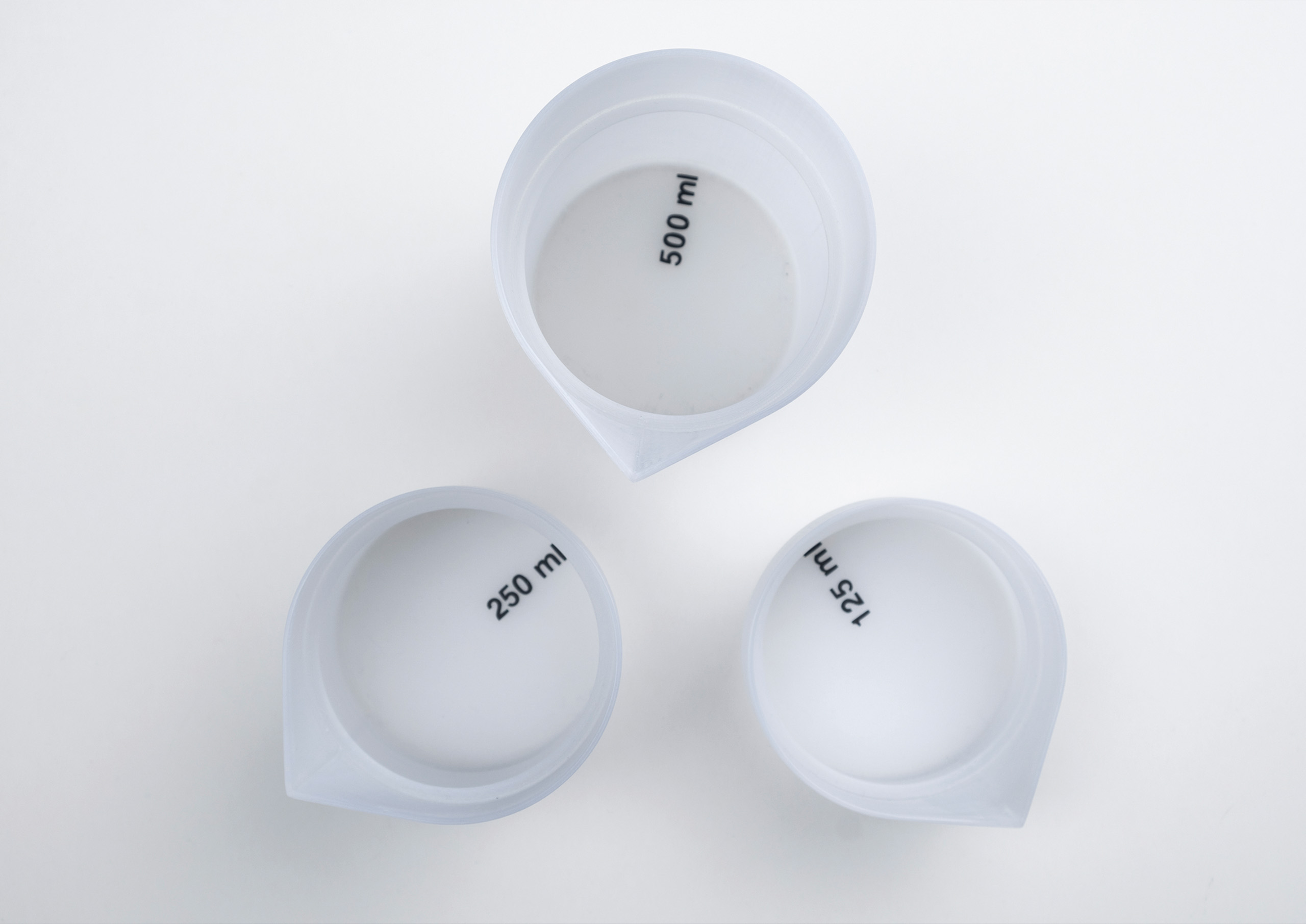
This project focuses on designing an inclusive measuring cup eliminating the need for a scale and communicating the final measurement through its shape – a barrier-free, minimalist solution for both visually impaired and sighted individuals.
Define the problem/need you are solving or addressing with your project. How does it address the Open Call criteria, such as environmental impact, social engagement, circularity, user experience, resource efficiency, and community-driven solutions?
Traditional measuring cups are often unsuitable for visually impaired individuals, as visual scales can be difficult or impossible to read. This project addresses this issue with an inclusive set of measuring cups (125ml, 250ml, 500ml) that communicate the fill level through their shape instead of a scale. This allows for intuitive, barrier-free use.
The project enhances social participation and user experience by making an essential kitchen tool accessible to everyone, regardless of ability. Its minimalist and durable design promotes resource efficiency and circularity by reducing material consumption and extending the product’s lifespan. Additionally, the project emphasizes community-oriented solutions, as inclusive design benefits all. By combining aesthetics and functionality, it creates a product that is not only practical but also destigmatizing and universally usable.
Please describe your project, reflecting on the concept, inspiration, materials, technical aspects, methods and process(es).
TRIO is an inclusively designed set of three measuring cups for visually impaired individuals, ensuring intuitive, barrier-free use. Instead of a scale, the cups feature a specially shaped inner edge with a tactile and visual shadow gap to indicate the fill level. The design was optimized through iterative testing of different shapes to maximize detectability.
Made from durable, recyclable PET plastic, the cups are dishwasher-safe and resistant to shocks and scratches. Their matte, velvety surface provides a pleasant tactile experience. With an ergonomic 8 cm diameter, the cups are easy to handle and stack neatly for space-saving storage. The set includes three sizes (125ml, 250ml, 500ml). The prototype was 3D printed, and future production will use injection molding. Case studies with visually impaired individuals directly informed the design. The minimalist design ensures TRIO is not perceived as an assistive tool, reducing stigma while promoting self-determined use for everyone.
What do you think makes your project innovative compared to the existing efforts and ideas in the field it addresses?
This project is innovative because it reimagines the basic design of measuring cups, enhancing both functionality and aesthetics. While existing solutions often rely on hard-to-read, small markings or are designed solely for fully blind individuals, this measuring cup integrates a tactile system specifically optimized for visually impaired users. The structured shape allows users to determine the fill level by touch, with clear inner and outer edges that make orientation easier. This eliminates the need for poorly visible markings or makeshift solutions like personal marks with pens or notches. Additionally, the design avoids the stigmatization of many assistive tools, as its minimalist style blends discreetly into any kitchen. By combining intuitive use with aesthetic design, our measuring cup minimizes frustration and promotes the autonomy of visually impaired individuals in daily life.
Does it impact or reflect young people need(s) and how?
Yes, it addresses and reflects the needs of young people. Accessibility ensures that they can independently use their environment and participate in daily life without restrictions. Many young people have vision problems – ranging from mild impairment to blindness – which is why inclusive products are essential. Especially in the kitchen, a central part of daily life, tasks like measuring liquids should not present a challenge. This measuring cup enables precise, barrier-free use through tactile markings and an intuitive design. As a result, the cooking process is significantly eased without the need for visual aids. Additionally, the minimalist design blends discreetly into any kitchen, without indicating that the user has a vision impairment. In this way, it promotes independence and equal opportunities by making everyday tasks easier and more inclusive for young people with visual impairments.