

Lale Bermadinger, born in Salzburg, Austria, began her design education at HTL Salzburg, focusing on interior design, surfaces, and textiles. After earning a Bachelor’s degree in Manual & Material Culture at NDU St. Pölten, she supported the design studio ante up and explored circular economy practices at the Czech startup Cyrkl. As of 2023, she has been part of BauKarussell, a collaboration dedicated to deconstructing large-scale buildings with social enterprises. In 2024, Lale founded “blass & orange,” where she creates products, materials, and scenographies in her Vienna studio. Last year, she was awarded the Startstipendium Design by the Federal Ministry of Austria. Her work is research-oriented, aiming to create holistic solutions for obsolete or wasted resources.
Month: May 2025
Janine Kerscher

I was born 22 years ago in Lower Bavaria, where I grew up surrounded by nature. Early on, I fell in love with creative work—drawing, painting, crafting, writing. As I got older, my urge to create was accompanied by the goal of contributing to a better world. This led me to Cologne, where I studied Sustainable Design at the ecosign academy. This year, I graduated with a bachelor’s degree and am now building my career as a freelance communication designer and illustrator.
Jan-Elias Kronberger

After graduating from the Higher Technical School in Hallstatt for Interior Design and Furniture Construction, I completed my civil service in a retirement home and gained experience working in an architecture firm for six months. Currently, I am in my fourth semester of studying Industrial Design in Linz. My passion for design started early. After buying a 3D Printer and creating numerous prototypes, I was inspired to explore Industrial Design further. Throughout my studies, I have been particularly fascinated by conceptual work, research around topics like circularity, material research, and human-centered Design. With my background in interior design, furniture construction, and interest in industrial design, I try my best to create meaningful, user-centered solutions.
Rewild Farming
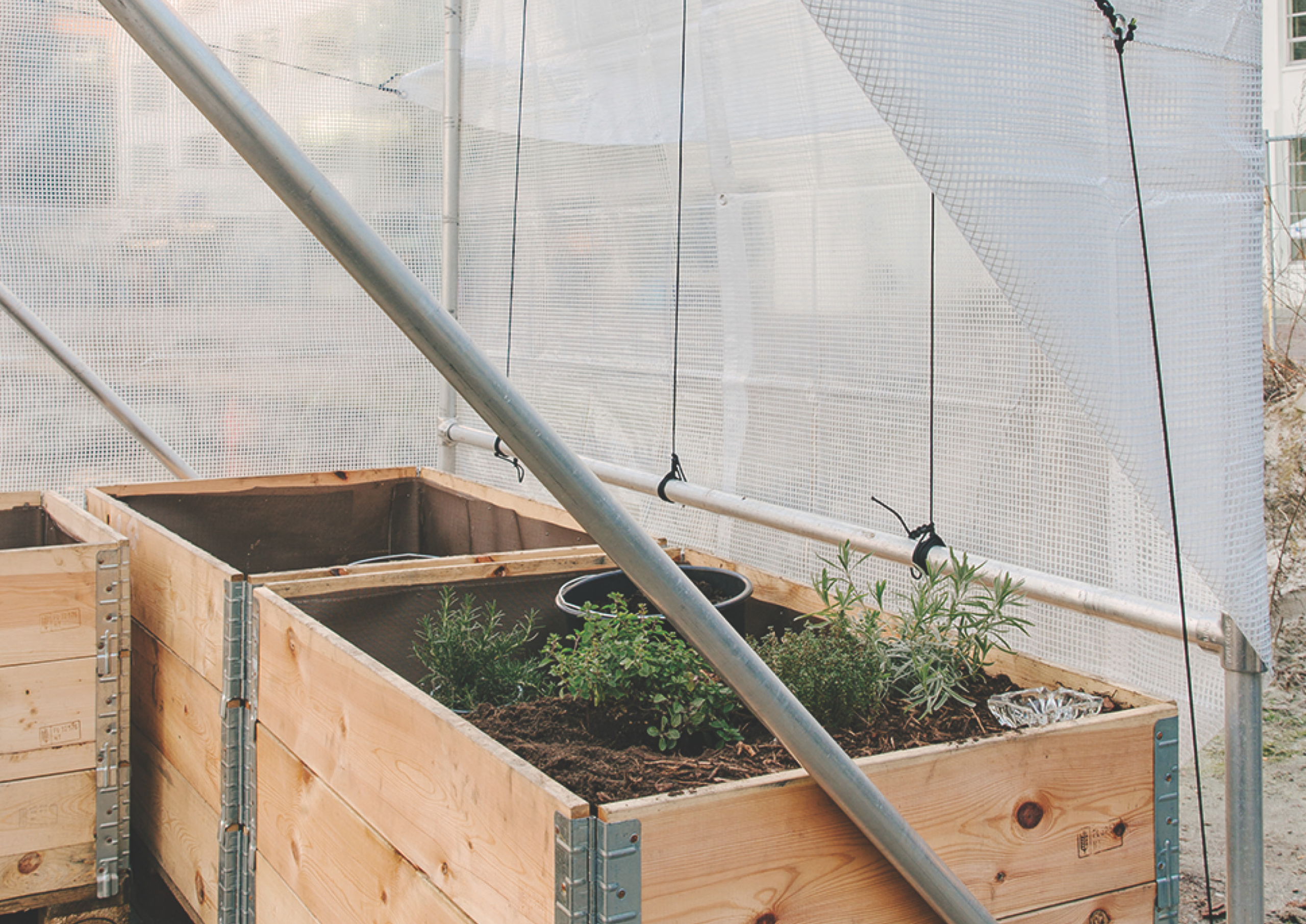
Rewild Farming is an organization that creates possibilities for regenerative agriculture and community-driven ecosystem restoration by repurposing shipping containers into comprehensive starter kits for small-scale regenerative projects.
Define the problem/need you are solving or addressing with your project. How does it address the Open Call criteria, such as environmental impact, social engagement, circularity, user experience, resource efficiency, and community-driven solutions?
Rewild Farming addresses the urgent need for sustainable and resilient food systems through regenerative agriculture. By transforming shipping containers into practical starter kits, we enable small-scale farming projects that diversify the agricultural sector and positively impact food systems and the environment. Our initiative empowers communities to kickstart hands-on projects without initial barriers, promoting social engagement and community-driven solutions. Circularity and resource efficiency are central to our approach as we repurpose shipping containers, which are returned through a deposit system, encouraging users to build context-specific infrastructure once they have established themselves on-site. Eco-productive and restorative land management is pivotal to our project. We aim to create a knowledge-sharing network to enhance community engagement and collective learning via digital tools, reaching a wider audience and supporting project initiators in becoming part of the regenerative agriculture movement.
Please describe your project, reflecting on the concept, inspiration, materials, technical aspects, methods and process(es).
Rewild Farming offers entry points for beginners in agricultural practices through a dual approach. Firstly, we provide a digital service: a platform and database for exchanging topic-specific knowledge and creating community connections. Secondly, we offer a product—repurposed shipping containers serving as comprehensive starter kits for regenerative agriculture, providing modular workspace infrastructure. Key features include the installation of wooden beams with integrated electrical components and versatile attachments that allow for workspace customization. All elements are disassemblable, enabling users to tailor their workspace to specific contexts. Once established, users can return the container through a deposit system, emphasizing adaptability. Our goal is to offer new entrants a quick and profound dive into farming practices, maximizing flexibility while focusing on long-term visions. Therefore, users can grow and transform their projects with ease.
What do you think makes your project innovative compared to the existing efforts and ideas in the field it addresses?
Rewild Farming introduces accessibility to sustainable farming by providing comprehensive solutions for practitioners in regenerative agriculture, emphasizing collaboration and the initial phases of project development. We identified a common need for essential infrastructure components—such as space, storage, and utilities—during initial implementation. Our starter kits are designed to be adaptable across various geographical and cultural contexts, while our digital service fosters a global perspective and interconnectedness among projects. The combination of physical infrastructure in our starter kits and a robust knowledge-sharing network allows land-based projects to flourish, focusing on groundwork rather than limited infrastructural capabilities. Our digital platform facilitates connections between established operations and emerging initiatives, enhancing knowledge exchange within the agricultural community. The innovative aspect lies in the inter-project community connection that broadens engagement and creates collaboration beyond individual capacity while maintaining local relevance.
Does it impact or reflect young people need(s) and how?
Rewild Farming empowers young people by removing barriers to regenerative agriculture, offering hands-on opportunities to start farming. As many young individuals are leaving rural areas in Europe due to a lack of options, our initiatives highlight new perspectives on community-driven farming. The project offers diverse applications while reinforcing local connections. Urban youth, collectives, groups of friends, or young families can collaboratively engage in land-based projects, accessing flexible workspace and participating in food systems without sacrificing their urban lifestyles. In addition to practical engagement, we create online opportunities for young people to connect with like-minded individuals and contribute to an evolving knowledge base in sustainable agriculture and ecosystem restoration. This serves to incorporate them into a larger movement, promoting active participation and a sense of community in the transition to sustainable practices.
ReLEAF
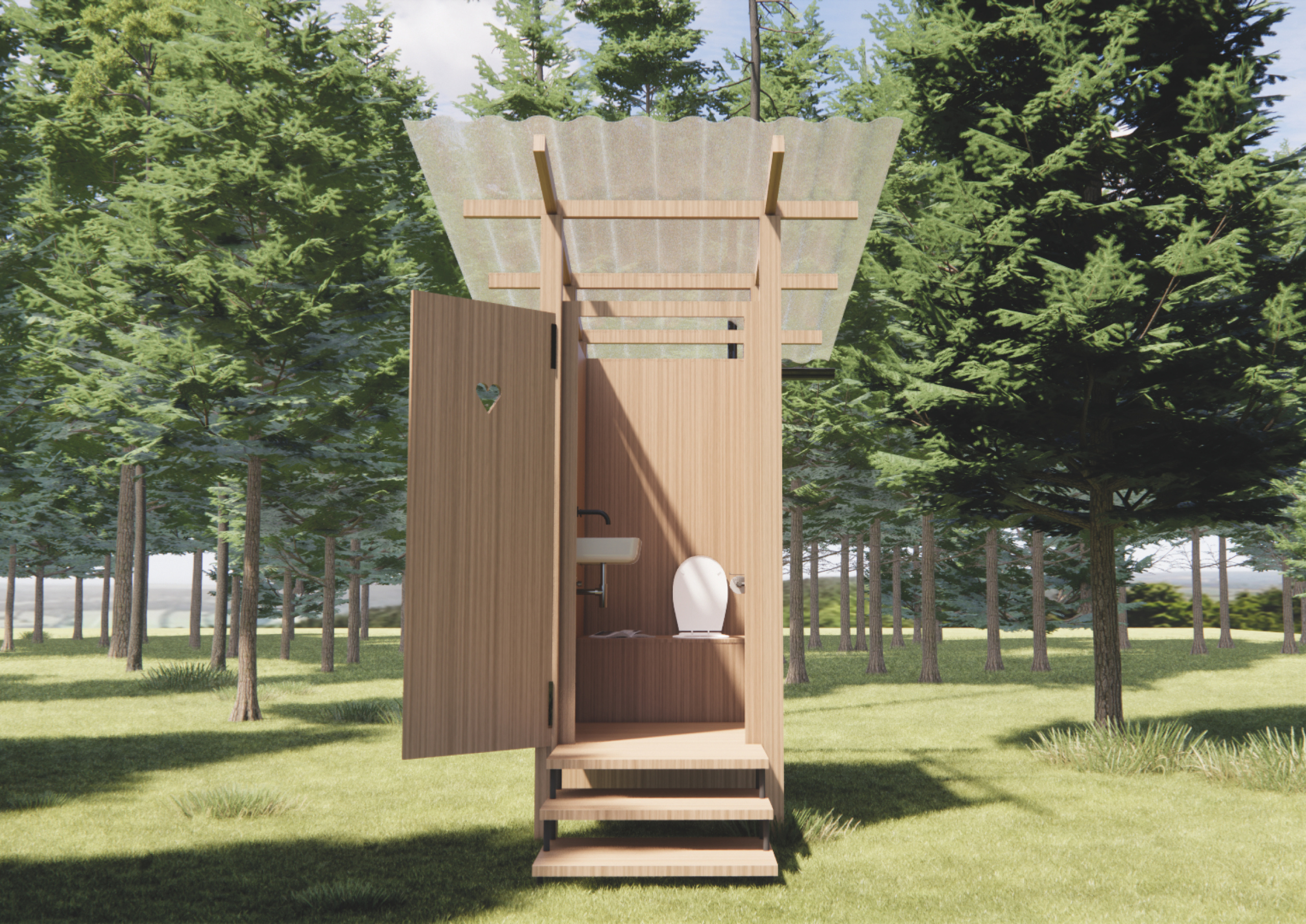
ReLEAF is an innovative dry toilet that eliminates the need for flushing by utilizing a composting system for waste and a urine separation system for irrigation, offering a sustainable and resource-efficient sanitation solution.
Define the problem/need you are solving or addressing with your project. How does it address the Open Call criteria, such as environmental impact, social engagement, circularity, user experience, resource efficiency, and community-driven solutions?
Water scarcity is a pressing global issue, yet traditional flush toilets waste significant amounts of clean water each day. In remote or resource-limited areas, access to proper sanitation remains a challenge, leading to environmental pollution and health hazards. ReLEAF addresses these challenges by introducing a dry toilet equipped with a composting and urine separation system. This innovative design eliminates water use for flushing, conserving precious resources while transforming waste into compost and natural fertilizer, thereby promoting circularity. The system is easy to implement in off-grid communities, enhancing sanitation access and fostering self-sufficiency. Designed with user comfort in mind, it integrates seamlessly into various environments, reducing maintenance and odors. ReLEAF aligns with environmental impact goals, improves public health, and encourages community-driven solutions by empowering users to manage waste responsibly, redefining sanitation as eco-friendly, resource-efficient, and socially engaged.
Please describe your project, reflecting on the concept, inspiration, materials, technical aspects, methods and process(es).
ReLEAF reimagines sanitation with a water-free dry toilet that combines composting and urine separation to provide a sustainable waste management system. Inspired by nature’s closed-loop cycles, the design transforms waste into valuable resources while minimizing environmental impact. The urine separation system enhances efficient composting by preventing excess moisture, which accelerates decomposition and reduces odors. Rainwater collected from the roof is used for handwashing and directed into a container where it mixes with urine for dilution before being utilized for irrigation. Solid waste is deposited into a chamber, which is then covered with sawdust, humus soil, or ash after each use to promote decomposition and control odors. Once full, the contents are transferred to an external compost pile for complete composting before being used as fertilizer. The system is constructed using natural materials and designed for simplicity and modularity, ensuring it remains user-friendly and easily adaptable to diverse environments
What do you think makes your project innovative compared to the existing efforts and ideas in the field it addresses?
ReLEAF is unique in its combination of urine separation with a water-free, modular dry toilet system that eliminates water waste while promoting efficient composting. Unlike basic dry toilets that often resemble mere holes in the ground, this system provides a thoughtful solution that transforms an unpleasant resource into a valuable cycle. By separating urine and using it along with collected rainwater for dilution, ReLEAF accelerates composting, reduces odors, and prevents excess moisture. Instead of merely hiding or burying waste, this project addresses the often-taboo subject of human waste by reimagining it as a resource. The system’s modular design guarantees ease of use, adaptability, and minimal maintenance, making it suitable for various settings, including off-grid communities. Built from natural materials, this innovative solution embraces circularity by turning waste into compost and fertilizer, thus offering a sustainable, user-centered approach to waste management.
Does it impact or reflect young people need(s) and how?
ReLEAF reflects the needs of young people by addressing their concerns regarding sustainability, environmental impact, and resource conservation. As younger generations become increasingly aware of eco-friendly solutions, this composting toilet system contributes to reducing water waste, highlighting a significant global issue. It encourages them to rethink daily habits; for instance, many flush toilets without acknowledging the volume of water being consumed and its broader ecological impact. By transforming human waste into fertilizer, the system promotes sustainability and self-sufficiency. Its modular, simple design makes it accessible for eco-conscious individuals, whether they reside off-grid or in urban settings. By fostering a mindset of circularity and responsibility toward the environment, ReLEAF empowers young people to adopt greener lifestyles and reconsider the everyday actions they take that contribute to a larger ecological footprint.
Uitgelezen / Finished Reading
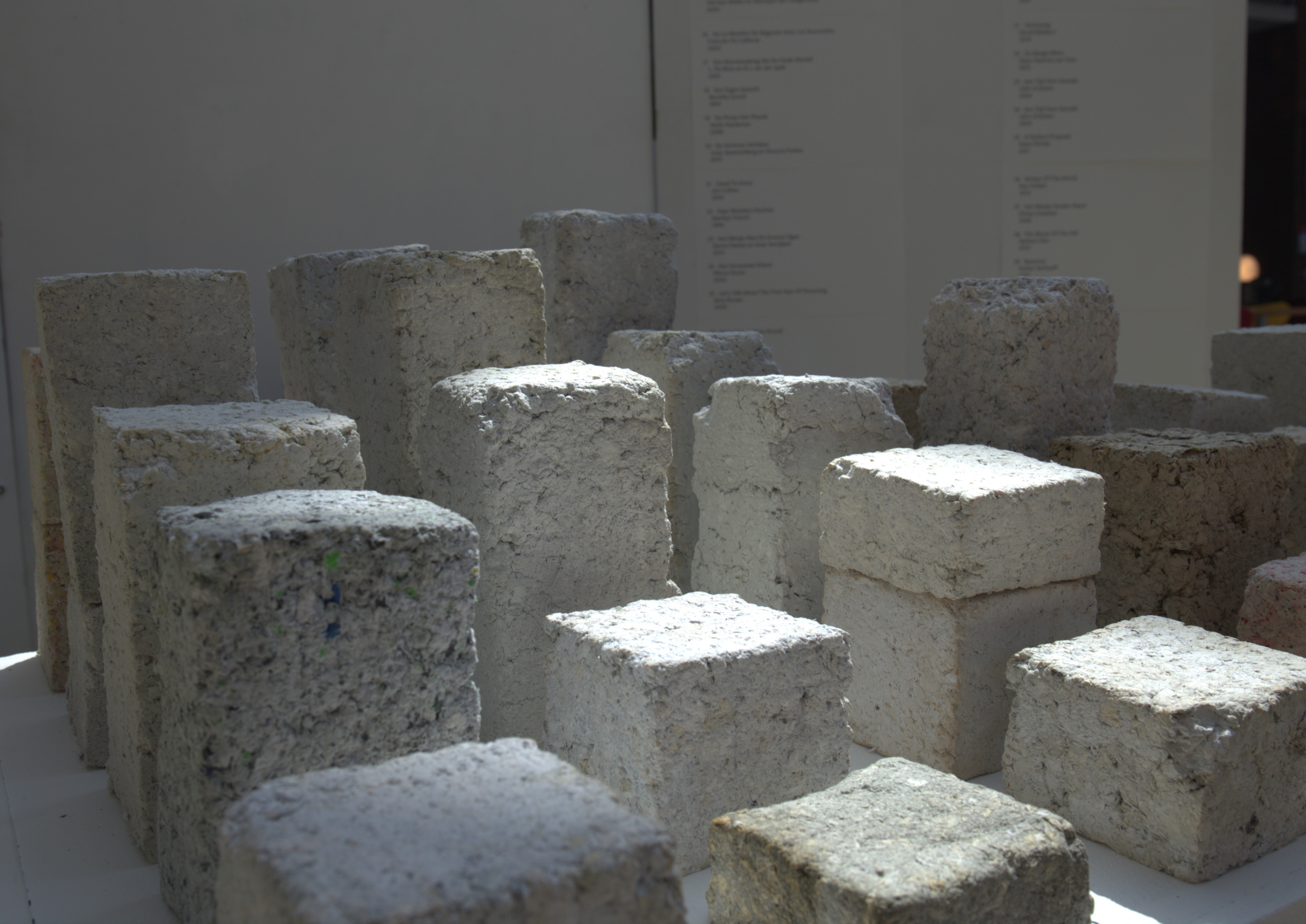
A new building material created out of discarted books.
Define the problem/need you are solving or addressing with your project. How does it address the Open Call criteria, such as environmental impact, social engagement, circularity, user experience, resource efficiency, and community-driven solutions?
I am adressing the question of wht happens to books once they are no longer desired for their contents? This works showcases the power of reuse and is an example of creating circularity for an un-circular object.
Please describe your project, reflecting on the concept, inspiration, materials, technical aspects, methods and process(es).
For this project, i designed a process where old books can be remade into building blocks. The project reflects my vision on our relationship to everyday objects and invites the viewer to widen their view towards objects they would cinsider as ‘trash’. The proces only uses natural added materials and no heat, which makes it environmentally friendlier. The method is also made to be used by everyone, so the blocks could be produced by social workshops.
What do you think makes your project innovative compared to the existing efforts and ideas in the field it addresses?
I think this project is inovative because it shines light on the bigger issue of waste and the lack of circularity within our everyday objects, through a smaller, understandable lense. The blocks itself can be multipurpose and used for examples like: interior architecture, funiture, sounds absortion or just as a design object. the process is also inovative because it shows circularity can also mean inclusivity (anyone can make them).
Does it impact or reflect young people need(s) and how?
I think it show young people a different way of dealing with the waste issue. When you throw something away, it is never really gone. This project shows the possibilities of what you can do with an already excisting material.
Monja Simon

My name is Monja Simon, an alumna of Social Design from Design Academy Eindhoven, and I am an interdisciplinary spatial practitioner challenging human-centered notions through a critical feminist lens. Using embodied methods like fermenting with microbial bodies, my practice critiques and expands traditional spatial design, creating fluid boundaries between spaces and bodies. Through storytelling, I uncover the often-invisible interspecies care structures that sustain life, revealing how materials and organisms shape one another. My work includes future food research, participatory fermentation workshops, performative dinners, and activism. The project Fermentors exemplifies my community work by building a queer feminist network of human and microbial connections that emphasizes mutual nourishment and coexistence.
Sofia Petrova

Sophia Petrova is a Game & Event Designer on a mission to remind people that they have free will. Passionate about education, sustainability, and social entrepreneurship, she crafts experiences that challenge assumptions, inspire action, and foster meaningful connections. As the organiser of Comfort Zone Crusher events, she designs experiences that push people beyond their limits and encourage personal growth. Her work blends interactive storytelling, behavioural psychology, and playful design to engage audiences in thought-provoking ways. Deeply committed to the power of experiential learning, she is always exploring new ways to create impactful, transformative experiences that leave a lasting impression.
Pavel Pavlov

Pavel Pavlov is a type designer living between Plovdiv, Bulgaria and Berlin, Germany. He loves drawing letters, especially Cyrillic, carving words in stone and experimenting with coding. Since returning from the Hague he is freelancing as a type designer and considering planning a future foundry. He has been working as a type and graphic designer for studio PUNKT for 8 years. When he is not working on letters, he loves trekking, playing bass and birdwatching. His favourite color is green and his favourite projects are the ones making people feel better.