Author: 9ve8c
Edu Talk: From Pazar with Love
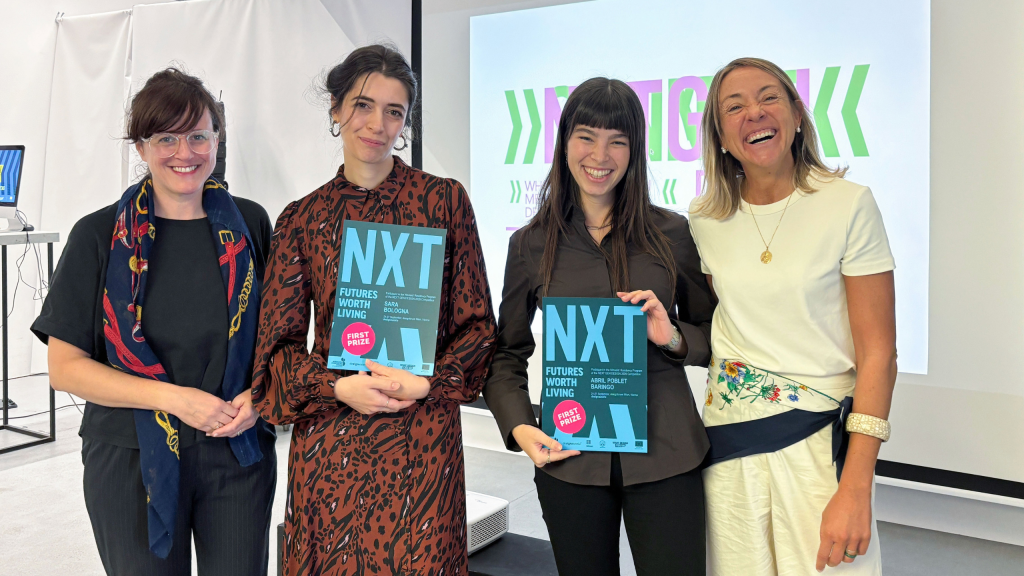
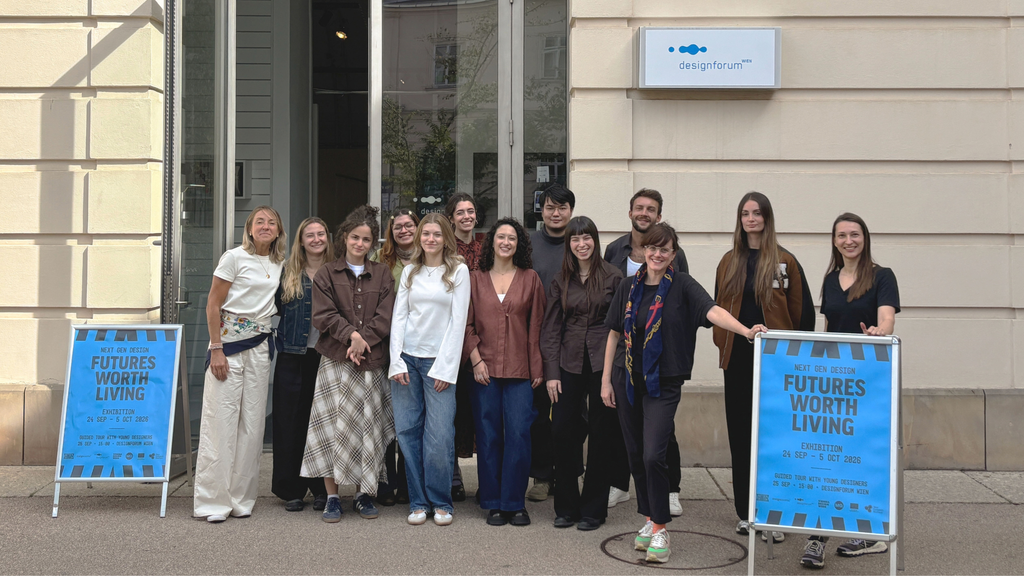
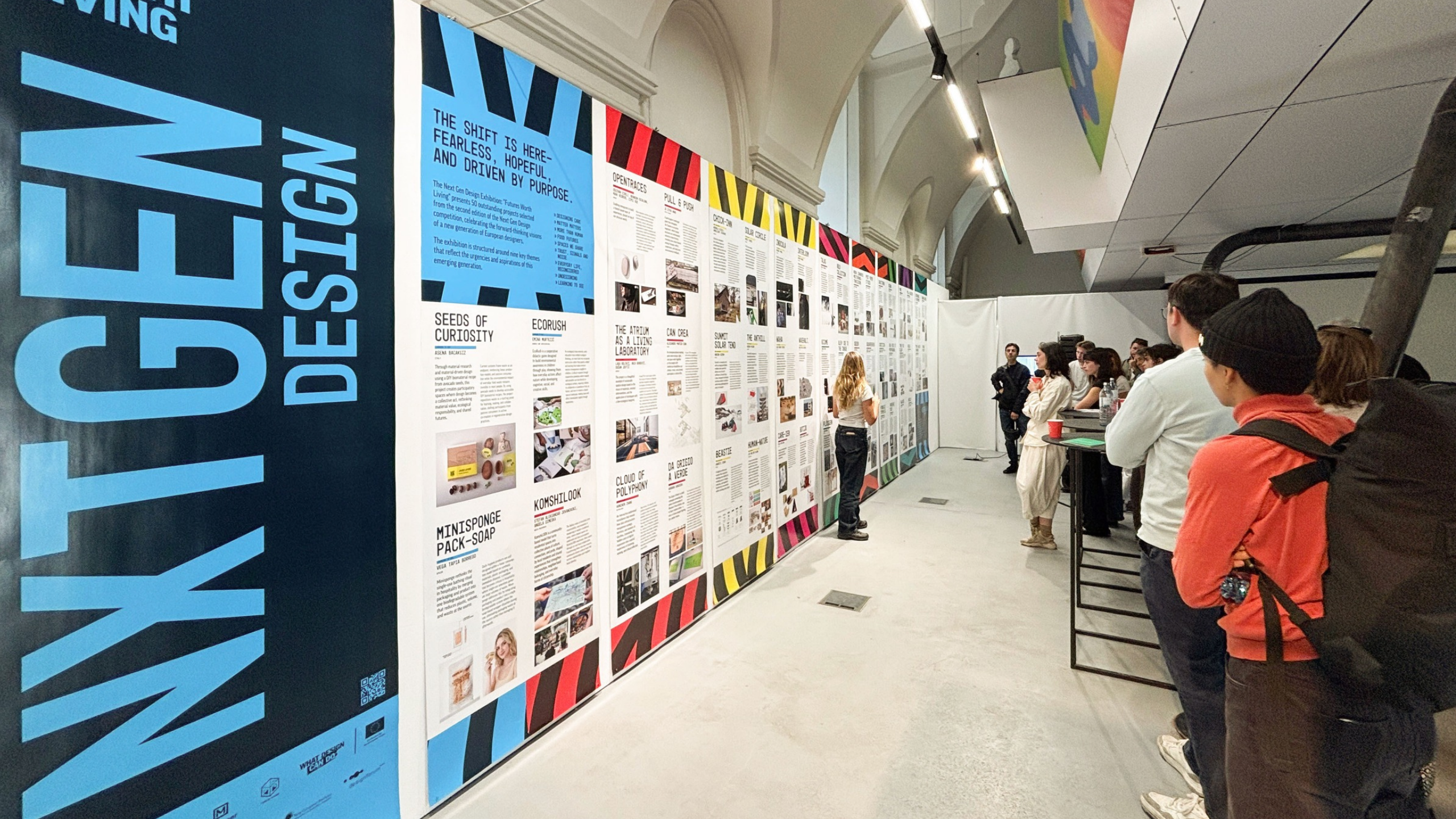
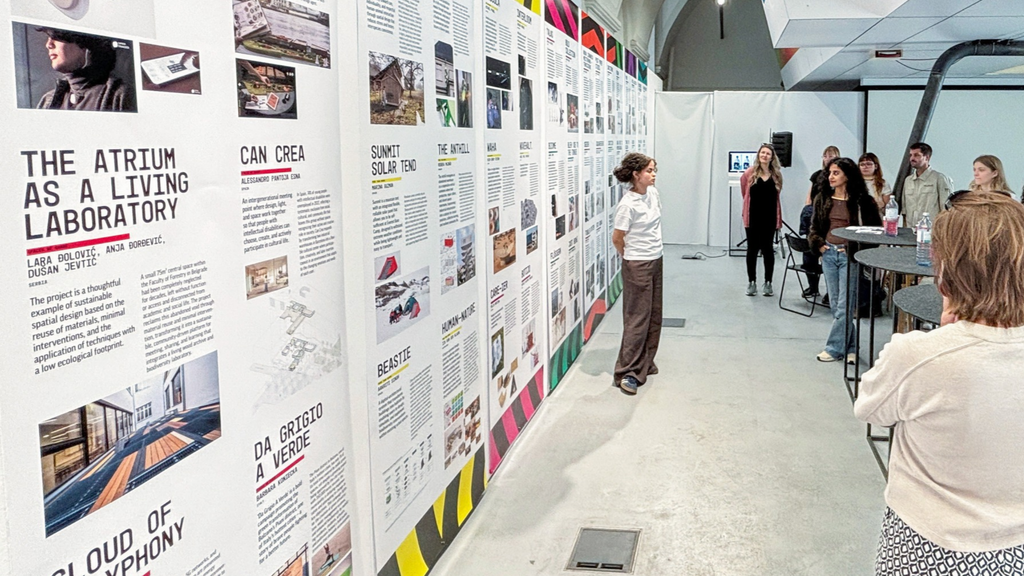
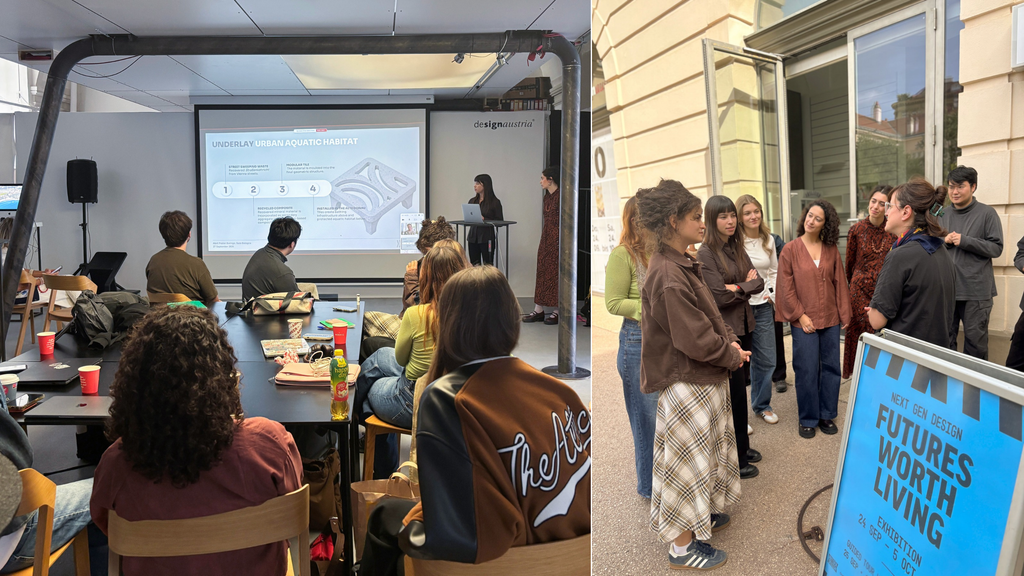
Next Gen Design EXHIBITION Opening
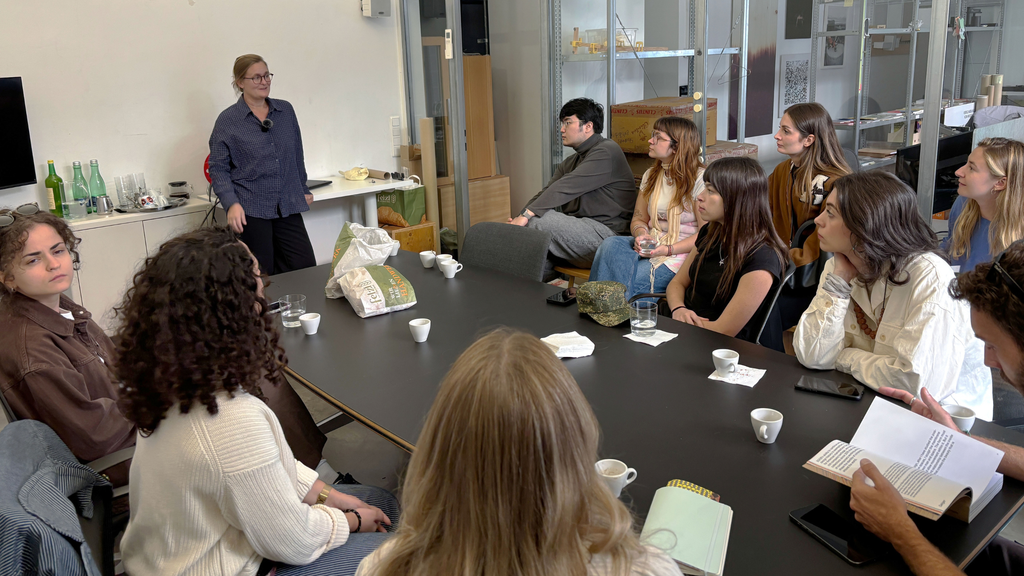
Edu Talk: Bioregional design
Edu Talk: The good, the bad, and the Ugly AI
Ethical use of AI in the design process
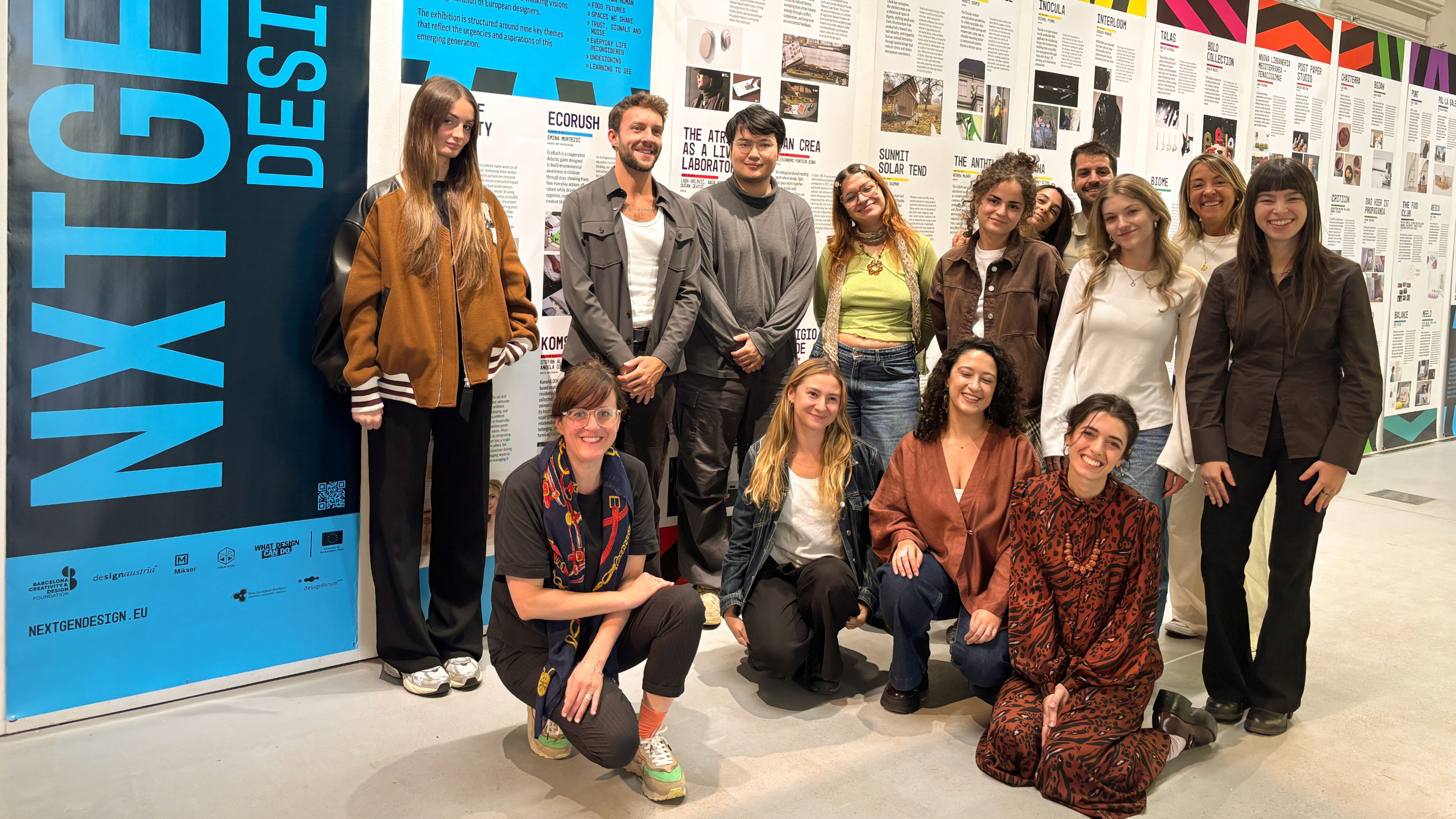
Kick off of the Next Gen Design Residency
Aescu – Analogue self-medication error prevention for older adults with polypharmacy living at home
aescu consists of three functional aids that support and simplify preparation and intake of daily medication by focusing on essential information and offering clear visual and haptic orientation.
Define the problem/need you are solving or addressing with your project. How does it address the Open Call criteria, such as environmental impact, social engagement, circularity, user experience, resource efficiency, and community-driven solutions?
Up to 75% of older patients taking five or more medications daily regularly make self-medication errors at home, including dosage miscalculations, wrong timing or drug mix-ups, due to complex regimens, confusing brand-focused packaging, limited health literacy and age-related cognitive and motor decline. These errors lead to adverse events, an increase in hospital admissions and reduced quality of life. Many manage alone without structured support for routines or information sharing with caregivers and emergency services. This strains healthcare resources through preventable complications. Solutions must prioritize patient safety, accessibility, everyday compatibility and low-threshold design to enhance autonomy and support social equity.
Please describe your project, reflecting on the concept, inspiration, materials, technical aspects, methods and process(es).
aescu is an analogue support system that structures three key steps of home medication management: identification, preparation and intake. It was inspired by user interviews and observations, emergency medical service experience, and self-medication error research. Packaging uses a strict information hierarchy and pictograms to emphasize only the active ingredient, dosage and timing—inspired by mid-20th century Swiss pharmaceutical design. Brand names are omitted completely as they are irrelevant for patients. The sorting aid combines a printed paper schedule from the electronic health record with a transparent thermoformed tray. This allows direct tablet placement, visual checking and seamless transfer to the pillbox. The pillbox features four separately openable compartments with differently sized radii for clear haptic and visual orientation. Development included cardboard and foam models, thermoforming prototypes and 3D-printed functional models to optimize usability, manufacturability and everyday cleaning.
What do you think makes your project innovative compared to the existing efforts and ideas in the field it addresses?
aescu contributes to a shift in perspective away from medications as consumer goods shaped by market-driven design, towards functional aids that support patients in everyday use. Instead of adding another digital or electronic solution, the project deliberately focuses on simple, analogue, low‑cost tools that can be used without training and integrate into existing routines. Its innovation lies in tightly linking information design, product design and real‑life household workflows: from standardised, active‑ingredient‑centred packaging layouts to a sorting aid whose geometry mirrors the medication schedule, and a pillbox that is filled directly from the sorted tray. aescu also considers interfaces between patients, pharmacies and emergency services, for example through an integrated emergency data sheet and medication lists based on the electronic health record. This creates a systemic approach that combines safety, autonomy and clarity in home medication management.
Balance – Break Management System for Healthcare Teams
Balance is a non-intrusive break management system for hospital teams that makes break times visible and easier to coordinate through an analog overview board, clip-on trackers, and NFC pause points – supporting care without surveillance.
Define the problem/need you are solving or addressing with your project. How does it address the Open Call criteria, such as environmental impact, social engagement, circularity, user experience, resource efficiency, and community-driven solutions?
In hospitals, breaks are essential but often the first thing to disappear. Long shifts, emergencies, staff shortages, and a strong sense of responsibility make it difficult for healthcare workers to step away, even when recovery is urgently needed. Over time, this affects wellbeing, focus, and the quality of care.
Balance responds to this everyday challenge by turning breaks into something visible, shared, and easier to support within the team. Instead of treating recovery as a private issue, it creates a gentle structure that helps colleagues stay aware of each other and coordinate pauses more fairly. The system is deliberately low-threshold and non-intrusive, using simple physical interaction instead of another screen-based layer. In this way, the project proposes a quieter, more caring approach to workplace support – one that values human limits, strengthens team culture, and offers a realistic intervention for high-pressure environments.
Please describe your project, reflecting on the concept, inspiration, materials, technical aspects, methods and process(es).
Balance is a hybrid analog system made up of three elements: a shared overview board, a personal clip-on tracker, and NFC pause points placed in suitable break areas. At the start of a shift, each team member sets a planned break time on the board and takes their color-coded tracker. When the time arrives, the tracker gives a gentle reminder. Placing it on a pause point marks the break on the board; removing it signals the return to work.
A central idea of the project is form fit. Work time and break time are translated into physical shapes that visually relate to each other: when a break is taken, the composition reaches balance, when it is missed, a visible imbalance remains. This makes the status understandable at a glance, without numbers or pressure. The concept was developed through literature research, interviews, observation, iterative prototyping, and exchange with hospital staff.
What do you think makes your project innovative compared to the existing efforts and ideas in the field it addresses?
What makes Balance innovative is its decision to step away from the usual logic of optimization, tracking, and digital oversight. Many existing approaches rely on apps, scheduling tools, or performance-oriented systems. Balance instead works through tangible interaction, shared visibility, and calm feedback embedded in the space itself.
Its innovation lies in how it communicates: the form-fit principle makes break status readable through physical balance rather than data, metrics, or alerts. This creates awareness without exposing individuals or turning recovery into something measurable. The project also shifts the focus from individual compliance to collective responsibility. In a hospital setting, where one person’s pause is closely tied to the rhythm of the whole team, that social dimension matters.
By combining analog clarity with minimal digital support, Balance offers a different kind of workplace technology: one that is quiet, respectful, and designed to strengthen trust, dignity, and everyday cooperation rather than control.
Does it impact or reflect young people need(s) and how?
Balance reflects the reality many young people encounter as they enter professions marked by high demands, emotional strain, and increasing pressure to keep functioning no matter what. In healthcare, younger workers often begin their careers in systems where exhaustion is normalized and self-care can feel secondary to responsibility. The project responds to that condition by making recovery part of the work culture rather than something left to individual negotiation. It supports an environment in which taking a break is not a sign of weakness, but a recognized part of sustainable teamwork. This speaks to a broader generational need for workplaces that are not only productive, but also humane, fair, and conscious of mental and physical wellbeing. Beyond healthcare, Balance also reflects a wider shift in values among young people: away from constant optimization and toward forms of working and living that leave room for care, boundaries, and shared responsibility.
BEASTIE: Biodiversity Enhancement and Support Tool for Individuals and Ecosystems
A digital-architectural system that transforms buildings into habitats by enabling users to design, simulate, and implement biodiversity interventions within existing urban spaces.
Define the problem/need you are solving or addressing with your project. How does it address the Open Call criteria, such as environmental impact, social engagement, circularity, user experience, resource efficiency, and community-driven solutions?
Cities are expanding while biodiversity is rapidly declining, largely due to fragmented habitats and underutilized urban surfaces. Existing approaches often remain either large-scale ecological planning or isolated architectural gestures, lacking tools that connect users to actionable, small-scale interventions. BEASTIE addresses this gap by enabling individuals, communities, and stakeholders to actively participate in biodiversity enhancement. The platform integrates environmental data, species requirements, and spatial conditions to generate targeted interventions, improving ecological connectivity, environmental quality, and microclimate. It promotes resource-efficient strategies by retrofitting existing structures rather than replacing them, supporting circular and low-impact urban transformation. By making biodiversity design accessible and interactive, BEASTIE fosters community-driven ecological engagement and empowers users to contribute to resilient urban ecosystems.
Please describe your project, reflecting on the concept, inspiration, materials, technical aspects, methods and process(es).
BEASTIE is a biodiversity design tool that translates ecological data into architectural interventions. The system operates through a structured workflow: mapping biodiversity hotspots, identifying species-specific requirements, generating spatial solutions, and simulating their impact. Users select a species and an available urban space, after which the platform proposes modular interventions such as nesting units, planter systems, and water features. These solutions are evaluated using a Habitat Suitability Index (HSI), measuring their impact on biodiversity, environmental quality, and microclimate. The platform visualizes transformations directly onto user-provided images, enabling informed decision-making. Designed as a scalable and adaptable system, BEASTIE bridges ecological science and architectural practice, transforming buildings into distributed habitat networks across the city.
What do you think makes your project innovative compared to the existing efforts and ideas in the field it addresses?
BEASTIE shifts architecture from designing isolated objects to creating an ecological operating system. Unlike conventional approaches that treat biodiversity as an afterthought, it integrates species-specific data, environmental metrics, and spatial design into a unified, interactive platform. Its key innovation lies in combining simulation with architectural application—allowing users to test, visualize, and evaluate interventions before implementation. The use of a Habitat Suitability Index (HSI) introduces measurable performance into biodiversity design, bridging the gap between ecological science and design practice. Additionally, BEASTIE operates at the scale of everyday urban elements—balconies, facades, courtyards—making it scalable and accessible. By transforming users into active participants, it redefines architecture as a participatory and data-informed ecological system.
Does it impact or reflect young people need(s) and how?
BEASTIE directly addresses the growing demand among young people for tools that enable meaningful environmental action. It transforms passive awareness into active participation by allowing users to design and visualize biodiversity interventions within their own spaces. The platform is intuitive, accessible, and adaptable, making it relevant for students, young designers, and communities seeking to engage with climate and ecological challenges. By combining digital tools with real-world impact, BEASTIE aligns with the way younger generations interact with technology—interactive, visual, and data-driven. It also promotes collaborative decision-making, enabling communities to collectively improve their environments. In doing so, it empowers young people to become active contributors to urban resilience and ecological restoration.