Tera Mira

We are developing a bio-based, compostable alternative to elastane, replacing a fossil-fuel-dependent material in fashion with a sustainable, circular solution that is non-toxic, high-performing, and compatible with existing manufacturing processes to drive industry-wide change.

Define the problem/need you are solving or addressing with your project. How does it address the Open Call criteria, such as environmental impact, social engagement, circularity, user experience, resource efficiency, and community-driven solutions?

Fashion’s reliance on fossil-fuel-based elastane contributes to resource depletion, pollution, and waste. Traditional elastane production is energy-intensive, sheds microplastics, and clogs recycling systems—persisting in landfills for centuries. Meanwhile, textile workers face exposure to toxic chemicals, and coastal communities struggle with declining livelihoods. Our bio-based, compostable alternative replaces elastane with a circular, non-toxic fiber sourced from seaweed—eliminating petroleum use, reducing carbon emissions, and preventing microplastic pollution. It supports monomaterial garment designs that improve recyclability and reduce end-of-life waste. Beyond its environmental impact, our solution enhances social sustainability by creating safer workplaces, supporting coastal economies through sustainable seaweed harvesting, and enabling size-inclusive, adaptive fashion. Brands benefit from no trade-off between sustainability and performance while complying with upcoming EU waste regulations. By connecting designers, manufacturers, recyclers, and policymakers, we’re pioneering a net-positive, regenerative textile system—where fashion works with nature, not against it.

Please describe your project, reflecting on the concept, inspiration, materials, technical aspects, methods and process(es).

Inspired by biomimicry and circularity, our project reimagines stretch fibers using the natural properties of seaweed. Our biofabricated fabric mimics elastane’s elasticity while being fully compostable, non-toxic, and compatible with existing textile production methods. We utilize invasive seaweed, reducing pressure on agricultural land and freshwater resources, while supporting coastal communities through regenerative aquaculture. Our technical aspects ensure that the stretch and recovery are comparable to elastane, ensuring comfort, durability, and size inclusivity. The fabric is compostable in home-composting conditions, eliminating microplastic pollution, and can be seamlessly integrated into existing supply chains, lowering industry adoption barriers. Developed through low-impact biofabrication, we reduce energy use and carbon footprint, enabling brands to transition to circularity without sacrificing performance. By leveraging nature’s genius, we’re not just replacing elastane; we’re redefining how stretch textiles are made, used, and disposed of.

What do you think makes your project innovative compared to the existing efforts and ideas in the field it addresses?

Existing elastane alternatives still rely on fossil fuels, virgin plastics, non-renewable resources (like natural rubber), or resource-intensive agriculture (such as corn), limiting their true sustainability and circularity. Our fiber is the first 100% compostable, fossil-fuel-free stretch material designed for seamless integration into the industry and large-scale adoption. Unlike competitors requiring industrial breakdown processes, our fiber is striving to be home-compostable, ensuring a truly circular end-of-life. By harnessing invasive seaweed as a regenerative raw material, we avoid petroleum, land use conflicts, and biodiversity loss while actively restoring marine ecosystems. Additionally, no existing alternative meets the unique performance needs of the underwear market, where durability, comfort, and washability are essential. Our innovation provides a stretch solution without sacrificing sustainability, positioning us to revolutionize intimate apparel before expanding into broader applications. By bridging circularity, scalability, and regenerative sourcing, we are setting a new industry standard. 

Does it impact or reflect young people need(s) and how?

Young people care deeply about sustainability but face limited access to truly circular fashion. Stretch textiles are essential for activewear, lingerie, and adaptive clothing; however, current options rely on polluting, petroleum-based elastane. Our solution empowers sustainable consumers with a circular fashion alternative that does not sacrifice comfort, durability, or performance. It demonstrates to activists and designers how regenerative materials can replace fossil-fuel textiles, shifting the industry toward net-positive solutions. Additionally, it encourages future innovators to engage in cross-disciplinary collaboration—ranging from biomaterials to digital design—to rethink fashion’s impact. By addressing the needs and values of younger generations, we help them access products that align with their environmental and societal concerns, fostering a community-focused mindset toward creating a sustainable future.

 Nora Gulya 

Graduating from the Textile Design MA program at MOME, Nora now works as a research intern at the MOME Innovation Center while also developing her own projects. Her work centers on sustainability and innovation, with a focus on materials like textiles, biopolymers, and natural dyes. Passionate about the intersection of design and eco-conscious practices, she aims to push the boundaries of sustainable development and bring circular solutions to everyday life. 

Trio

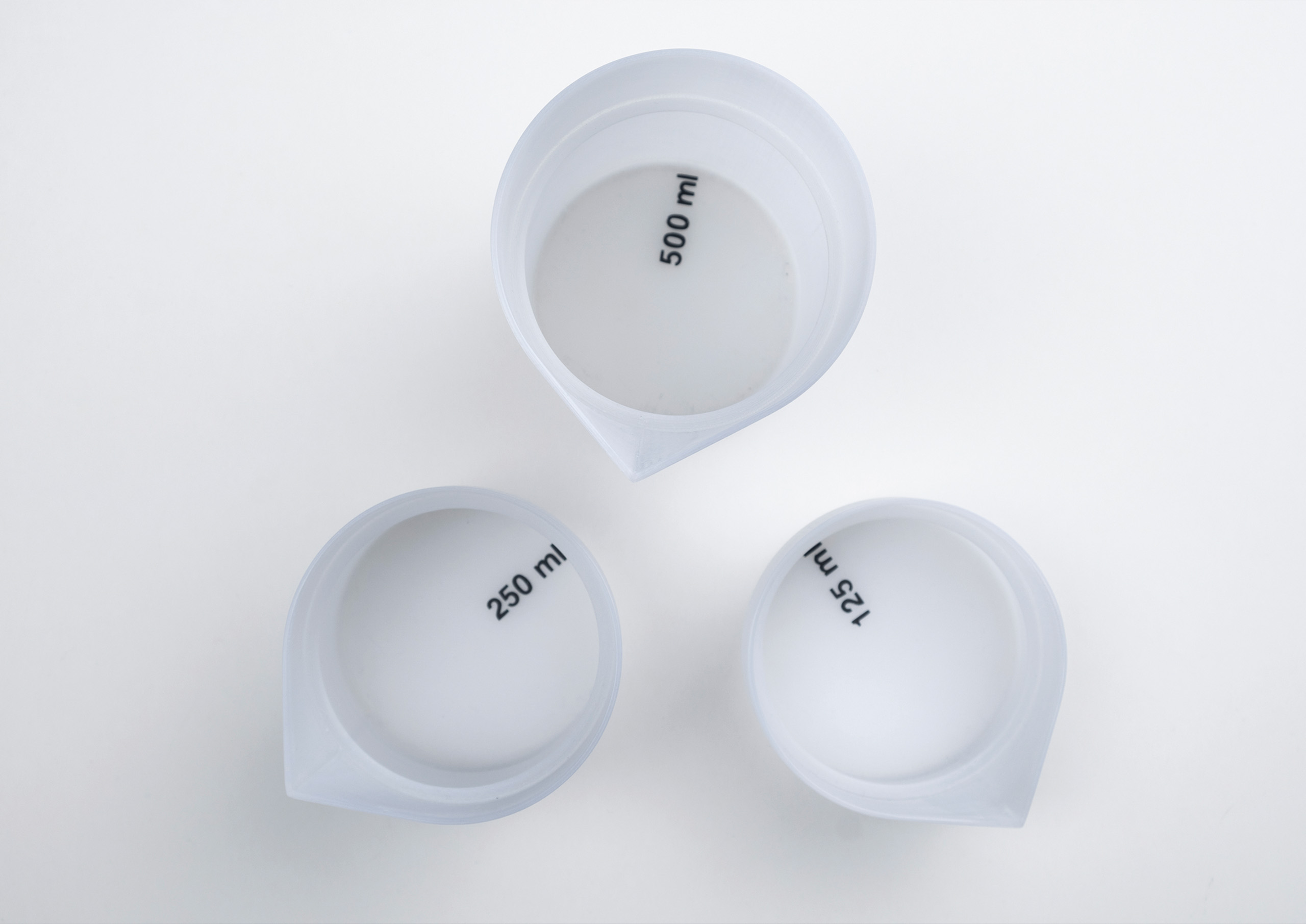
This project focuses on designing an inclusive measuring cup eliminating the need for a scale and communicating the final measurement through its shape – a barrier-free, minimalist solution for both visually impaired and sighted individuals.

Define the problem/need you are solving or addressing with your project. How does it address the Open Call criteria, such as environmental impact, social engagement, circularity, user experience, resource efficiency, and community-driven solutions?

Traditional measuring cups are often unsuitable for visually impaired individuals, as visual scales can be difficult or impossible to read. This project addresses this issue with an inclusive set of measuring cups (125ml, 250ml, 500ml) that communicate the fill level through their shape instead of a scale. This allows for intuitive, barrier-free use.

The project enhances social participation and user experience by making an essential kitchen tool accessible to everyone, regardless of ability. Its minimalist and durable design promotes resource efficiency and circularity by reducing material consumption and extending the product’s lifespan. Additionally, the project emphasizes community-oriented solutions, as inclusive design benefits all. By combining aesthetics and functionality, it creates a product that is not only practical but also destigmatizing and universally usable.

Please describe your project, reflecting on the concept, inspiration, materials, technical aspects, methods and process(es).

TRIO is an inclusively designed set of three measuring cups for visually impaired individuals, ensuring intuitive, barrier-free use. Instead of a scale, the cups feature a specially shaped inner edge with a tactile and visual shadow gap to indicate the fill level. The design was optimized through iterative testing of different shapes to maximize detectability.

Made from durable, recyclable PET plastic, the cups are dishwasher-safe and resistant to shocks and scratches. Their matte, velvety surface provides a pleasant tactile experience. With an ergonomic 8 cm diameter, the cups are easy to handle and stack neatly for space-saving storage. The set includes three sizes (125ml, 250ml, 500ml). The prototype was 3D printed, and future production will use injection molding. Case studies with visually impaired individuals directly informed the design. The minimalist design ensures TRIO is not perceived as an assistive tool, reducing stigma while promoting self-determined use for everyone.

What do you think makes your project innovative compared to the existing efforts and ideas in the field it addresses?

This project is innovative because it reimagines the basic design of measuring cups, enhancing both functionality and aesthetics. While existing solutions often rely on hard-to-read, small markings or are designed solely for fully blind individuals, this measuring cup integrates a tactile system specifically optimized for visually impaired users. The structured shape allows users to determine the fill level by touch, with clear inner and outer edges that make orientation easier. This eliminates the need for poorly visible markings or makeshift solutions like personal marks with pens or notches. Additionally, the design avoids the stigmatization of many assistive tools, as its minimalist style blends discreetly into any kitchen. By combining intuitive use with aesthetic design, our measuring cup minimizes frustration and promotes the autonomy of visually impaired individuals in daily life.

Does it impact or reflect young people need(s) and how?

Yes, it addresses and reflects the needs of young people. Accessibility ensures that they can independently use their environment and participate in daily life without restrictions. Many young people have vision problems – ranging from mild impairment to blindness – which is why inclusive products are essential. Especially in the kitchen, a central part of daily life, tasks like measuring liquids should not present a challenge. This measuring cup enables precise, barrier-free use through tactile markings and an intuitive design. As a result, the cooking process is significantly eased without the need for visual aids. Additionally, the minimalist design blends discreetly into any kitchen, without indicating that the user has a vision impairment. In this way, it promotes independence and equal opportunities by making everyday tasks easier and more inclusive for young people with visual impairments.

Santa Carxofa – The tradition of a land made into beer

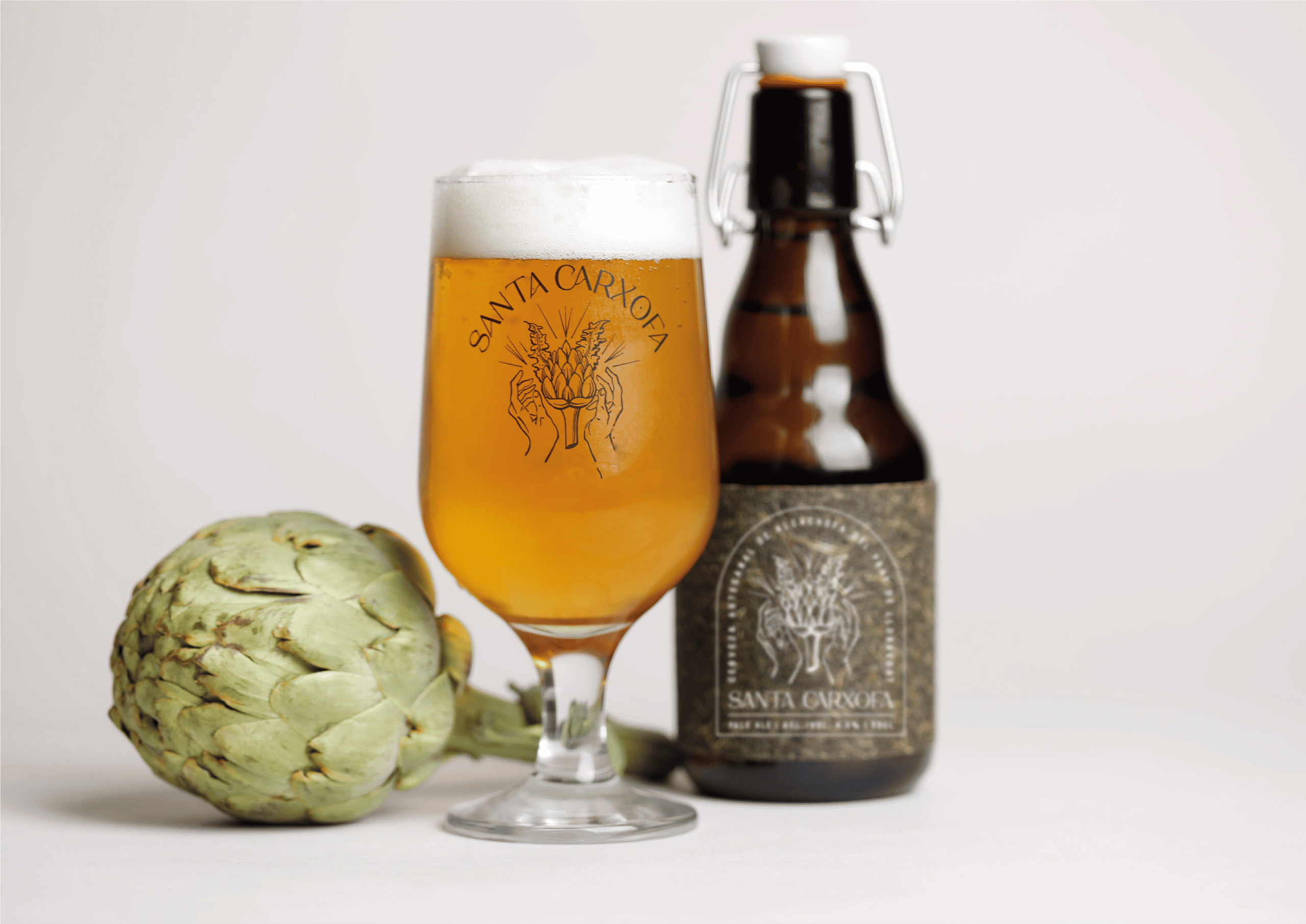
Santa Carxofa connects the past and the future, both in constant tension. Innovation and tradition come together to rethink the identity of the artichoke in a craft beer, creating short waste recirculation channels.

Define the problem/need you are solving or addressing with your project. How does it address the Open Call criteria, such as environmental impact, social engagement, circularity, user experience, resource efficiency, and community-driven solutions?

The transition to new agroeconomic models has already begun. There must be ways to move from a dominant industrial model to one of multiple autonomous and diversified systems that strengthen the food chain, support generational change and local development. The Prat carxofa (artichoke), with almost 100 years of history, is the queen of crops, representing 90% of the current harvest in Prat de Llobregat in Catalonia, a place that has been able to preserve its rural identity despite the exogenous pressures that the city of Barcelona has exerted on it. In recent years there has been an overproduction and losses of this product due to climatic changes and the poor adaptation of farmers, the artichoke surplus is discarded, donated, incinerated or sometimes transformed into compost still retaining its characteristics, so it’s necessary to reuse this healthy and versatile product that brings great potential for food exploration in a new one.

Please describe your project, reflecting on the concept, inspiration, materials, technical aspects, methods and process(es).

The new paradigms of consumption symbolize the need as humans for our roots, territoriality and culture, that is, for interaction. Santa Carxofa is a beer creation designed for people looking to experience new flavors, with a very clear objective, to transport you to Prat de Llobregat just by tasting it. It promotes the territorial capital to revalue the natural and cultural resources (the artichoke and its heritage) in the municipality, creating a link between the people belonging to the territory and its tourists. The project proposes a strategy of articulation between food processing and other economic activities such as agro-tourism that vindicates the work of farmers, promotes closer links between producers and consumers and allows the reactivation of agro-traditions. Santa Carxofa is a local, proximity and seasonal product, which is part of a regenerative solution from the consumption and strengthening of more sustainable communities, which are more resistant to crises.

What do you think makes your project innovative compared to the existing efforts and ideas in the field it addresses?

Santa Carxofa transmits the heritage of the land by connecting generations, takes advantage of an native material to enrich a community, developing short waste recirculation channels that generate greater added value. It manages to create synergies between the actors involved, making available to them the experience in circular economy and craft beer culture. It makes the population aware of the farmers’ difficulties and how their choice of a beer inspired, produced and marketed in the territory builds identity, cultural roots and a more sustainable future. In functional terms, the beer is brewed using the remaining part of the artichoke head (not the heart) and the label is artichoke paper made from the green matter of the plant (stems and leaves), a biomaterial screen-printed with the brand and the carxofa route on the back, a rural tourism activity through the artichoke crops that evokes historical and ancestral moments.

Does it impact or reflect young people need(s) and how?

The device of a craft beer fulfills its function by approaching young adults and capturing their interest in business models that are the fruit of their own territory, in this way, the new generations of farmers will preserve their crops and will have local autonomy as a factor of sustainability and development. Food is culture and values. Defending the fact that each people has the right to control their food (food sovereignty) is fundamental because we will not only maintain self-sufficient fields supported by traditional knowledge and experiences, but also facilitate decision-making when consuming a local product, because the ultimate goal is not the beer in situ but the local and relational dynamics that this can generate within the territory, as this drink puts into practice small cooperative economies, real, tasty, conscious and artisanal that claim the good values in youth.

Handrail Series

The Handrail Series transforms industrial stainless steel components into sculptural design objects, showcasing how rethinking purpose—not material—can lead to new forms without requiring new resources or manufacturing.

Define the problem/need you are solving or addressing with your project. How does it address the Open Call criteria, such as environmental impact, social engagement, circularity, user experience, resource efficiency, and community-driven solutions?

The Handrail Series utilizes prefabricated elements from a modular stainless steel railing system originally designed for architecture. By reinterpreting these components, the project creates a table lamp and a table clock without introducing new materials or tooling. This approach reduces resource consumption, avoids waste, and operates within existing production frameworks. Conceptually, the series challenges conventional notions of what needs to be “new” for a product to emerge. It provides a timely design response that aligns with evolving perspectives on production and consumption, resulting in a precise and minimal collection that emphasizes clarity, material honesty, and sustainability—not through sacrifice but through a shift in perspective. The project supports circularity, promotes social engagement, and encourages critical design thinking.

Please describe your project, reflecting on the concept, inspiration, materials, technical aspects, methods and process(es).

The Handrail Series comprises two pieces: the Stadia Clock and the Mini Handrail Lamp, both crafted from unmodified components originally designed for stainless steel railings. These industrial parts are repurposed through careful selection and composition to create bold, sculptural objects. Instead of altering the material, the design reframes it, revealing aesthetic potential in typically utilitarian elements. The process is founded on material research and theoretical exploration, emphasizing transformation through context. Manufacturing remains minimal, allowing the objects to be fully disassembled and recycled, reflecting an efficient, low-impact design methodology that demonstrates new possibilities in object culture.

What do you think makes your project innovative compared to the existing efforts and ideas in the field it addresses?

The innovation of the Handrail Series lies in its method: it doesn’t design new parts but reinterprets existing ones, challenging traditional notions of innovation in design. This series shifts the designer’s role from creator to curator, from form-giver to storyteller. The focus is not on what can be produced, but rather on how existing materials can be reframed. This perspective is ecologically responsible and culturally relevant, critiquing conventional product culture while providing an alternative that values context, function, and reimagination over mere novelty. Situated within the contemporary discourse on circular design, material reuse, and reduced production complexity, the Handrail Series is a compelling showcase of what can be achieved by innovative thinking applied to everyday materials.

Does it impact or reflect young people need(s) and how?

The Handrail Series resonates with a generation that prioritizes conscious design and meaningful consumption, reflecting a mindset focused on sustainability, transparency, and questioning the status quo. Instead of advocating for more, the project presents a thought-provoking “what if”—what if we produce less but think more critically about our choices? The transformation of architectural elements into sculptural everyday objects highlights how reduction and reuse can ignite creativity. It encourages young people to view design as both a means of expression and a form of reflection. The resulting pieces are not only functional but also philosophical, addressing a shift in how younger generations engage with objects and systems, driving home the importance of intentionality in design and consumption in pursuit of a sustainable future.

SONO

Environmental protection needs reliable data, especially in remote areas that are difficult to access. The bioacoustic sensing device SONO enables cooperation between science and volunteering in the collection of environmental and biodiversity data.

Define the problem/need you are solving or addressing with your project. How does it address the Open Call criteria, such as environmental impact, social engagement, circularity, user experience, resource efficiency, and community-driven solutions?

NGOs and environmental protection programs in remote areas face challenges due to a lack of widespread and reliable data on local biodiversity. Issues like illegal logging, poaching, and species extinction due to climate change necessitate data-driven analysis for efficient intervention. To address this, effective design must be integrated into a feasible operational system. SONO facilitates collaboration between scientists and volunteers in collecting vital environmental and biodiversity data. By encouraging collective data gathering, it transforms environmental protection into a community-driven endeavor, promoting social engagement and civic action in regions that are typically difficult to access. Additionally, SONO raises awareness among travelers about nature and wildlife conservation, fostering a deeper connection between people and their environment.

Please describe your project, reflecting on the concept, inspiration, materials, technical aspects, methods and process(es).

SONO addresses the urgent need for reliable environmental data in hard-to-reach areas. This bioacoustic sensing device monitors sound waves to gather information about illegal activities like poaching and logging and to assess species populations, using existing software-driven analysis methods. Contextualized within a sharing system, it empowers outdoor enthusiasts and volunteers to engage in environmental initiatives. The sensor can be attached to outdoor equipment via a multifunctional mount made from laser-cut spring steel or positioned stationary in nature. Volunteers collect data and maintain the sensors through data transfers and battery replacements. SONO’s technology is rooted in the citizen science initiative Soundscapes2Landscapes and developed in collaboration with Open Acoustic Devices, making it accessible and effective in promoting community involvement while gathering critical ecological data.

What do you think makes your project innovative compared to the existing efforts and ideas in the field it addresses?

SONO distinguishes itself from existing bioacoustic sensors by adopting a mobile and decentralized approach, making it innovative in its design and functionality. Unlike traditional large and high-cost installations, SONO can be mass-produced for under 100 euros, encouraging widespread usage and significantly increasing the sample size of data collected. Its large-scale distribution is facilitated through collaborations with local communities, hostels, and initiatives, enabling seamless integration into various environments. Innovative screw joints and snap-in fittings allow for easy disassembly, promoting recycling, repair, or replacement of its open-source components. This sustainable manufacturing and operational model challenges the status quo, making data collection not only scalable but also environmentally responsible, thereby aligning with contemporary needs for accessible and effective environmental protection tools.

Does it impact or reflect young people need(s) and how?

SONO resonates with young people’s aspirations for sustainable travel and their increasing awareness of environmental issues. As outdoor activities like backpacking become popular among youth seeking a balance to digital life, they face challenges regarding the carbon footprint associated with their travels. This generation is seeking ways to minimize their impact while positively contributing to the environments they explore. SONO provides answers to these pressing questions: it turns travel into an opportunity for active ecological engagement, fostering stewardship among travelers. By enabling users to collect crucial biodiversity data, SONO empowers them to make meaningful contributions to the conservation of the areas they visit. It aligns with young people’s desire to innovate sustainable tourism practices while cultivating a sense of responsibility towards nature and wildlife, thus promoting eco-friendly adventures that respect and protect the planet.

ReTurn

A deathbed that rethinks traditional practices, saves material, and creates reusable parts for a positive environmental impact.

Define the problem/need you are solving or addressing with your project. How does it address the Open Call criteria, such as environmental impact, social engagement, circularity, user experience, resource efficiency, and community-driven solutions?

The current funeral culture in Germany often follows outdated traditions and conservative practices, overlooking sustainability. ReTurn introduces a new burial approach that respects nature while ensuring an ecological farewell. Our solution addresses critical environmental concerns by eliminating airtight coffins, thus reducing material and energy consumption and preventing wax corpse formation. By utilizing a biodegradable wool shroud and mycelium, we enhance decomposition and enrich the soil instead of contributing to its pollution. This project promotes circularity and resource efficiency, igniting a community-driven shift toward sustainable burial practices. By offering an alternative that is both respectful and environmentally responsible, ReTurn encourages rethinking conventional methods and inspires a more eco-conscious relationship between life, death, and the natural world.

Please describe your project, reflecting on the concept, inspiration, materials, technical aspects, methods and process(es).

ReTurn reinterprets burial traditions by creating a sustainable alternative that reintegrates the body into the biological cycle. Inspired by nature’s decomposition processes, we designed a biodegradable deathbed featuring a wool shroud and mycelium. The wool allows for breathability and promotes natural decomposition, while mycelium accelerates organic breakdown, enriching the soil rather than contaminating it. Our concept incorporates locally sourced materials and straightforward manufacturing techniques, ensuring accessibility while minimizing environmental impact. We also consider cultural sensitivities surrounding death as we foster ecological awareness within funeral practices.

What do you think makes your project innovative compared to the existing efforts and ideas in the field it addresses?

Unlike conventional burial methods that rely on sealed coffins and slow decomposition, ReTurn offers a fully biodegradable alternative that actively supports soil health. While there are other sustainable burial concepts, our approach uniquely combines a wooden stretcher, woolen shroud, and mycelium to create an effective, affordable, and respectful solution. By eliminating the need for heavy, resource-intensive coffins, we significantly reduce material consumption and minimize environmental impact. Additionally, our method seeks to challenge the funeral industry’s reliance on expensive, energy-intensive solutions, paving the way for a more conscious and accessible approach to funerals

Does it impact or reflect young people need(s) and how?

Young people today increasingly prioritize sustainability and seek environmentally responsible choices in all aspects of life, including death. ReTurn presents an alternative that aligns with contemporary values of ecological awareness and aims to minimize environmental footprints. This innovative solution provides younger generations the opportunity to rethink traditional funeral practices and advocate for more sustainable options. By engaging communities in discussions around natural burial, ReTurn encourages social change and empowers young people to make informed, eco-conscious decisions for themselves and future generations. This project fosters intergenerational dialogue and catalyzes a shift toward practices that resonate with a shared commitment to protecting the planet for the future.

JeanEase Slippers

Giving old fabric a second life by transforming it into slippers—without using new materials. This project reduces textile waste, minimizes environmental impact, and promotes sustainability through creativity and responsible consumption.

Define the problem/need you are solving or addressing with your project. How does it address the Open Call criteria, such as environmental impact, social engagement, circularity, user experience, resource efficiency, and community-driven solutions?

Fast fashion has led to massive textile waste, with millions of tons of discarded clothing ending up in landfills each year. Many fabrics are non-biodegradable, polluting the environment for decades. The production of new textiles consumes vast amounts of water, energy, and chemicals, further harming the planet. This project offers a sustainable solution by transforming old jeans-fabrics into slippers. Instead of using new materials, discarded textiles receive a second life. The process significantly reduces waste and minimizes environmental impact. With a low-energy, eco-friendly production method, comfortable and stylish slippers are created while promoting responsible consumption. Choosing upcycled products takes a stand against waste and fast fashion, proving that sustainability and creativity can go hand in hand. Every pair of slippers saves fabric from landfills and contributes to a greener future.

Please describe your project, reflecting on the concept, inspiration, materials, technical aspects, methods and process(es).

The materials used consist primarily of jeans with a high cotton content. The core of the sole is made from three-dimensionally pressed denim fibers. Small pieces of denim are shredded in a Hollander beater, and the fibers are opened. The resulting fiber pulp is mixed with a natural binding agent and pressed into a sole mold. The binding agent gives the mixture the necessary stability and allows it to harden. A layer of denim fabric is applied to the top of the sole to protect the fiber core from abrasion. The straps are also made from denim and are glued or stapled to the underside of the sole. Finally, the rubber or leather sole is glued on. Recycled materials are used here as well, such as old leather furniture, bags, or even discarded rubber mats.

What do you think makes your project innovative compared to the existing efforts and ideas in the field it addresses?

This project stands out due to its unique combination of sustainability, upcycling, and social impact. Unlike traditional fast fashion solutions, it repurposes denim, a widely available material, turning it into durable, functional slippers without relying on new textiles. The innovative use of denim fibers as the core of the sole minimizes waste and reduces the need for virgin materials, contributing to a circular economy. Furthermore, the project directly engages young people in a social employment setting, teaching them valuable skills in sustainable production while fostering a sense of responsibility. The simplicity of the process makes it easy to understand, empowering youth and helping them transition to the professional world. By using recycled rubber or leather for the sole, the project also ensures a low environmental impact, setting it apart from other initiatives that still rely on new, resource-intensive materials.

Does it impact or reflect young people need(s) and how?

This project was developed for a social youth employment facility, providing a simple and easily understandable production process. Through hands-on work, young people engage with sustainability while learning essential production steps. The project helps them establish a routine, fostering a sense of structure and connection to the professional world. To enable the young people to work independently, visual instructions were created aswell. In addition the outcome (the finished product) aligns with young people’s needs by offering a sustainable, ethical, and creative alternative to fast fashion. It promotes conscious consumption, reduces waste, and encourages individual expression through unique, upcycled products—supporting a greener future for their generation.