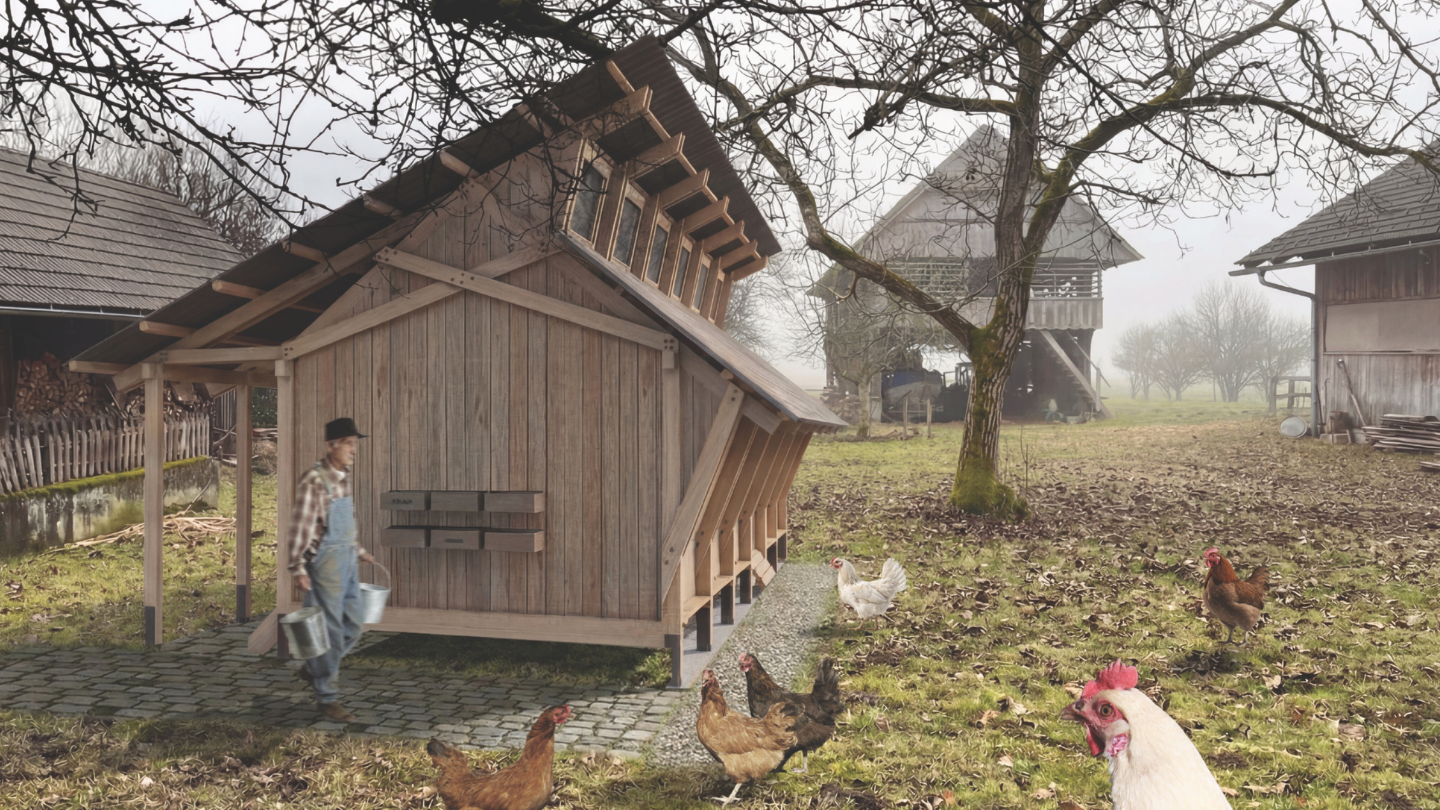
Chick-Inn reimagines the chicken coop as an architectural space of dignity, shifting small-scale food infrastructure from productivity toward care, individuality, and respectful human–animal interaction through spatial design that reduces stress and fosters interspecies coexistence.
Define the problem/need you are solving or addressing with your project. How does it address the Open Call criteria, such as environmental impact, social engagement, circularity, user experience, resource efficiency, and community-driven solutions?
Small-scale animal housing is often treated as purely functional infrastructure, where productivity outweighs wellbeing. Even outside industrial farming, chickens are reduced to egg-producing units, and spatial design rarely considers stress, behavioural needs, or respectful human–animal interaction.
Chick-Inn addresses this by redefining the coop as a space of care rather than extraction. It shifts the focus from output to dignity, proposing a more humane model of small-scale food production. By encouraging decentralised, local practices, the project supports environmental responsibility and reduces reliance on industrial systems. Its compact, durable construction promotes resource efficiency and longevity. At a social level, it reframes everyday agriculture as an opportunity for conscious engagement, empathy, and shared responsibility. The project aligns with the call’s vision by demonstrating how design can reshape relationships, not only between people, but between species.
Please describe your project, reflecting on the concept, inspiration, materials, technical aspects, methods and process(es).
Chick-Inn emerged from questioning why even small-scale animal housing replicates industrial logic. The project reimagines the chicken coop as an architectural micro-environment shaped by care, observation, and respect for non-human individuality.
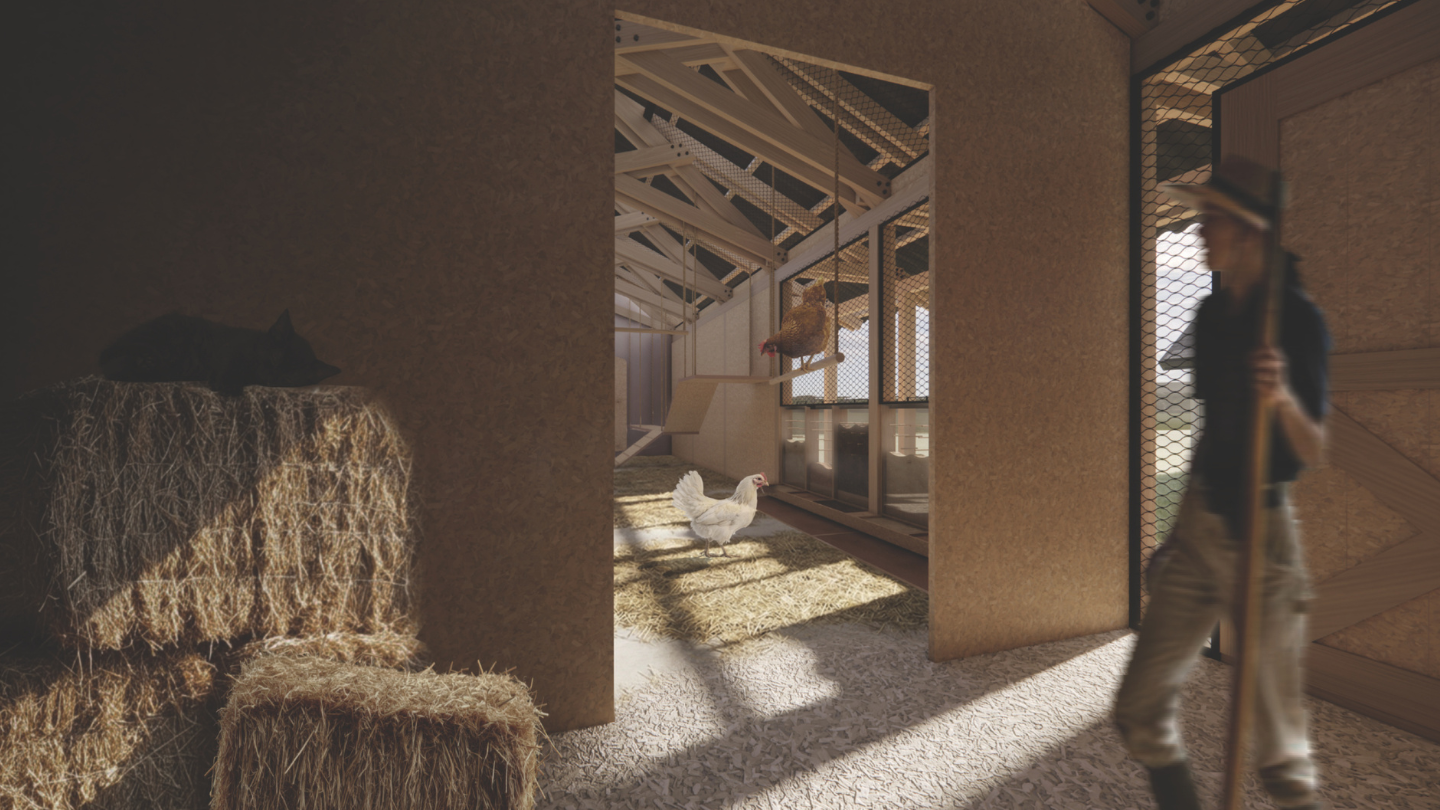
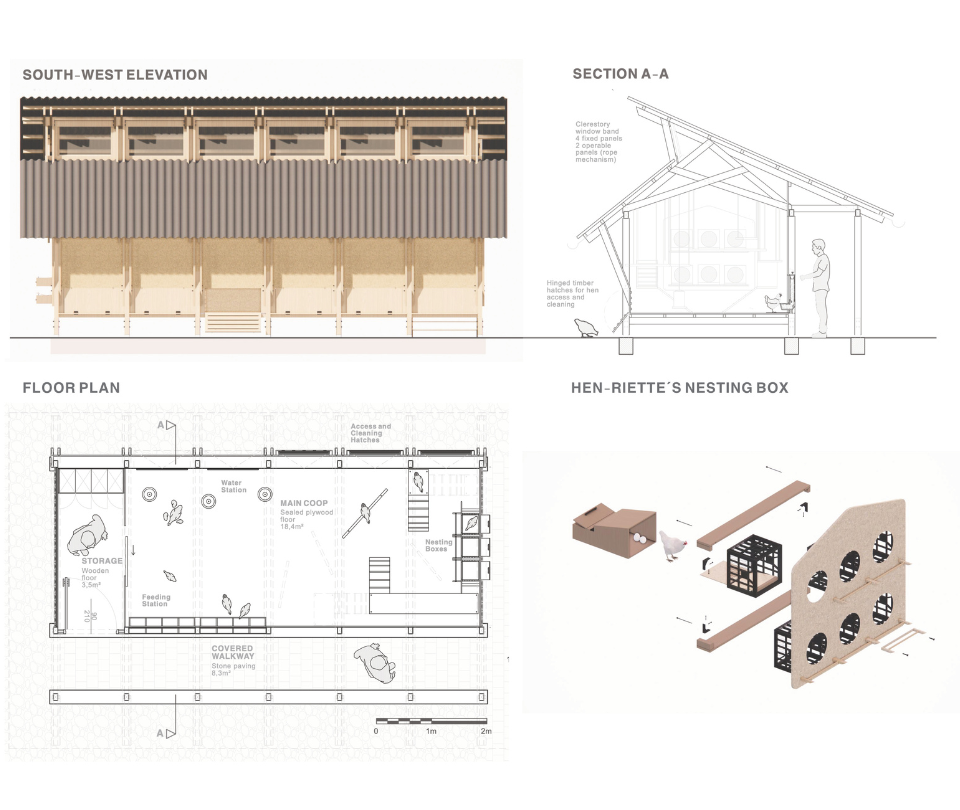
The design process began with studying chickens’ behavioural patterns, such as nesting habits, stress responses, and movement rhythms, and translating these insights into spatial decisions. The structure separates human access from nesting areas through an external egg-collection system, reducing disturbance while maintaining functionality. An interactive feeding element transforms routine maintenance into intentional engagement.
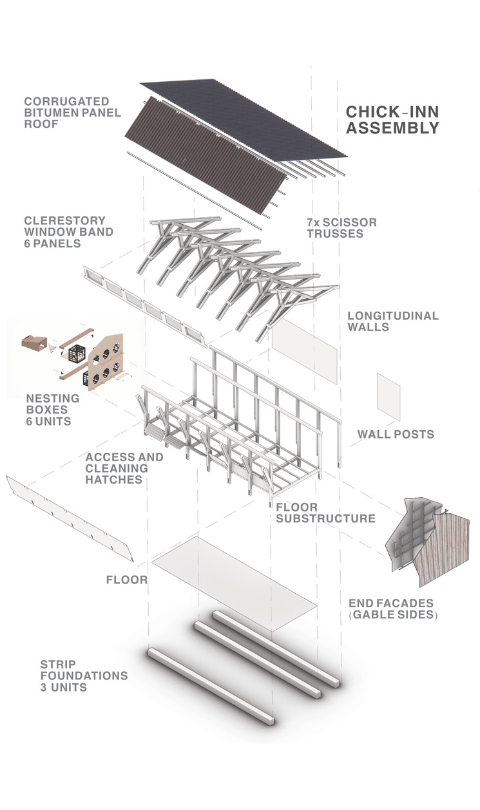
Constructed as a compact, durable timber structure, the coop prioritises longevity, clarity of assembly, and resource-conscious material use. The design balances practicality with ethical intention, demonstrating how even modest rural infrastructure can embody architectural thinking.
Chick-Inn proposes that care can be embedded in construction itself, turning an everyday agricultural typology into a spatial expression of interspecies responsibility.
What do you think makes your project innovative compared to the existing efforts and ideas in the field it addresses?
Chick-Inn is innovative because it transforms a mundane, utilitarian structure into a small-scale architectural experiment that prioritises animal wellbeing, human engagement, and ethical design. Unlike conventional coops, which focus solely on containment and productivity, it treats each hen as an individual with needs, personality, and space to express natural behaviours.
Spatially, the design integrates verticality, playful perches, and interactive elements that reframe routine tasks, such as feeding, egg collection and cleaning, as moments of mindful interaction rather than mechanical chores. Each nesting box is playfully labelled with charming names such as “Hen-Riette” or “Koko Chanel,” highlighting individuality and celebrating the hens as inhabitants rather than mere producers.
Does it impact or reflect young people need(s) and how?
Yes, it reflects young people’s needs by inviting them to reconsider relationships with the living world and everyday infrastructure. Chick-Inn demonstrates that even small, ordinary spaces, like a chicken coop, can embody care, observation, and ethical design. By prioritising the hens’ dignity and individuality, the project encourages empathy, reflection, and a sense of responsibility for non-human lives.
The interactive feeding station and external egg-collection system make daily engagement playful, intuitive, and rewarding, promoting active participation rather than passive management. It shows that design can be humanistic, socially aware, and fun, not just functional.
Through humour, charm, and architectural clarity, like nesting boxes labelled “Hen-Riette” or “Koko Chanel”, Chick-Inn inspires young audiences to question standardized systems, rethink their impact, and explore creative solutions that integrate care, ethics, and environmental awareness into everyday practices.