An interactive audiovisual installation that reveals how data infrastructure reorganises ecology, territory, and memory in Guizhou, translating the hidden costs of digital expansion into a spatial experience of listening, sensing, and critical reflection.
Define the problem/need you are solving or addressing with your project. How does it address the Open Call criteria, such as environmental impact, social engagement, circularity, user experience, resource efficiency, and community-driven solutions?
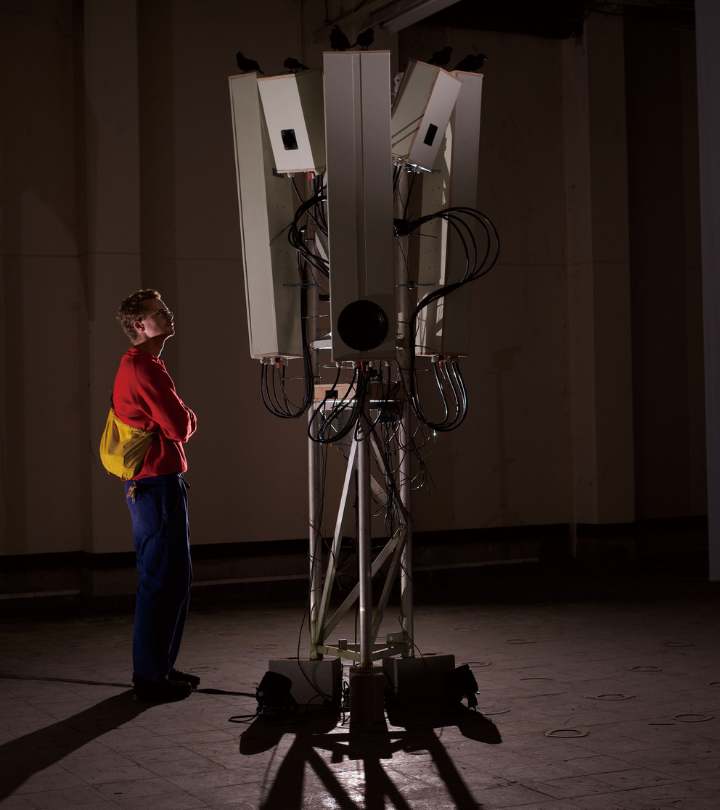
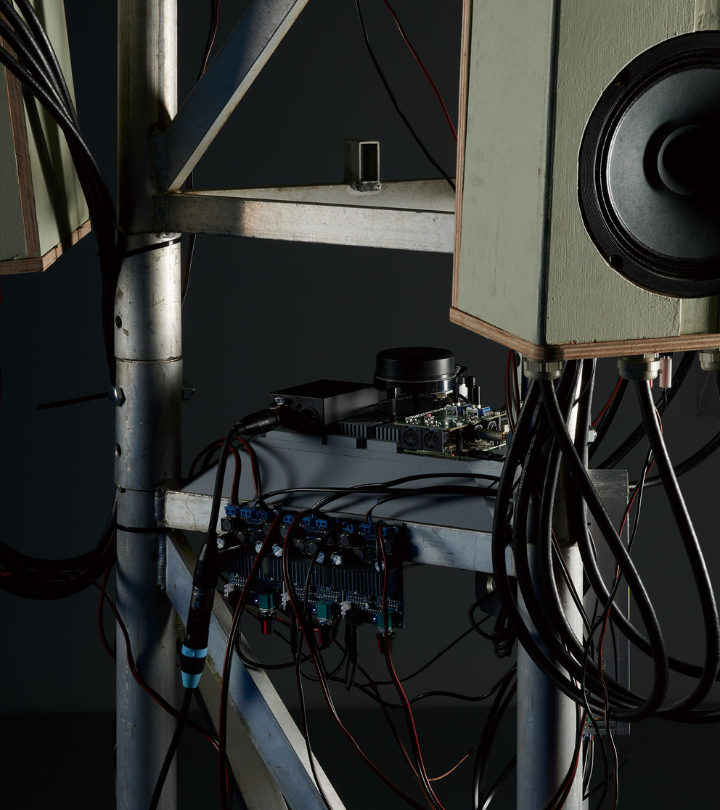
Cloud of Polyphony addresses restrained public legibility around the environmental and social impact of digital infrastructure. Data centres, 5G networks, and platform expansion are framed through progress and economic growth, while their energy use, land transformation, and local consequences remain separated from everyday digital interfaces. The project focuses on Guizhou, where data-industrial policies has reshaped Karst landscapes, economic expectations, and public memory. Through an interactive sound installation with moving image, the work turns these hidden operations into a shared sensory encounter. Field recordings, oral histories, infrastructural imagery, reclaimed plywood, truss elements, and LiDAR-based interaction connect these impacts to listening, movement, and attention. The project formation with reused materials, restrained technical setup, and embodied social engagement that asks how design can mediate technology’s impacts on communities, territories and the planet.
Please describe your project, reflecting on the concept, inspiration, materials, technical aspects, methods and process(es).
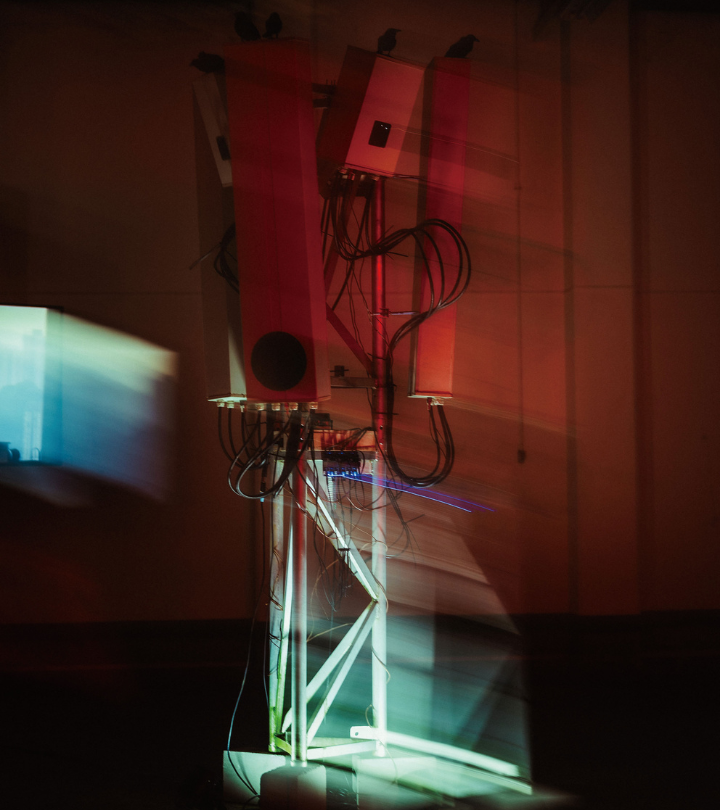
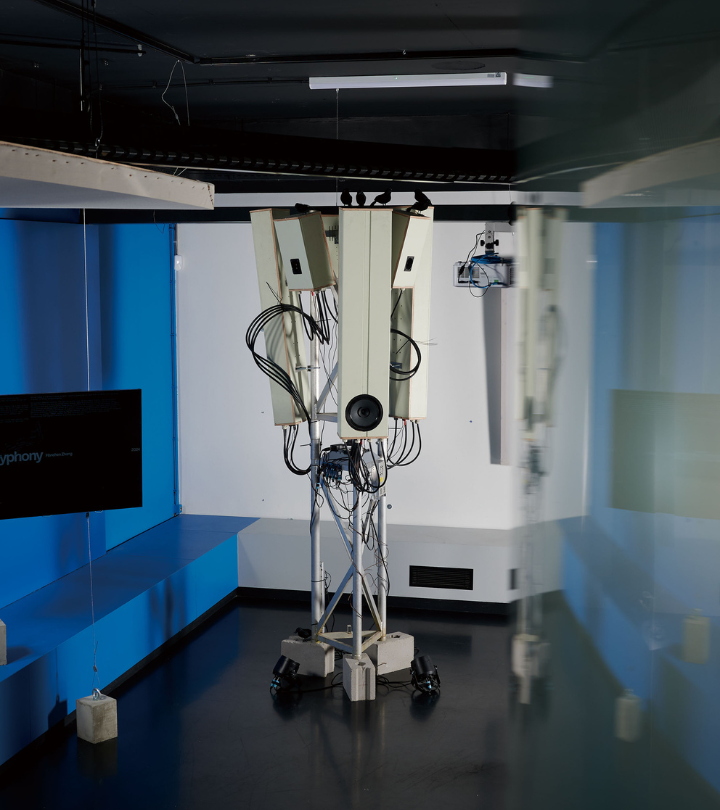
Cloud of Polyphony is an interactive sound and moving-image installation focused on the data industry in Guizhou. The project takes 5G towers, abandoned Big Data Expo sites, data-centre architecture, Karst landscapes, and development signage as its visual and spatial language. Reclaimed construction elements form an antenna-like apparatus that holds power, speakers, and sensor. Field recordings, synthesized textures, oral histories, machine frequencies, and filmed landscape fragments are composed into a polyphonic audiovisual environment. LiDAR sensor register audience distance and movement, then shift the density, timing, and sequence of the sonic composition. The process combines filed research, archival montage, material reuse, custom-built interface, and spatial calibration. The installation turns a network receiver into a station for listening, so infrastructure can be access through sound, image, material, and bodily position.
What do you think makes your project innovative compared to the existing efforts and ideas in the field it addresses?
The project composed through low-tech formation that referral the material dependencies of data industry. It examines the large-scale systems that sustain the Cloud: data centres, network expansion, land transformation, and platform governance, and propaganda support its inevitable. These forces are condensed into an inverted antenna built from reclaimed construction elements. The apparatus changes a symbol of signal distribution into a civic listening station. LiDAR register audience position, then modulate sound through proximity, delay, density and rhythm. The audience encounters infrastructure as a bodily relation, sensing how digital dependency is tied to environmental pressure, industrial planning, and the uneven distribution of technological benefit.
Does it impact or reflect young people need(s) and how?
The project materialises the Cloud’s intangibility by treating digital technology as a material and political agent behind seamless service. For future generations, the work offers another way to access the systems they inherit: through land, water, sound, memory, and the images of progress they were promised. In Guizhou, the project follows the passage from Karst landscapes and hydrological change to data centres, abandoned expo sites, promotional signage, and infrastructural relics. These fragments are gathered through field recordings, oral histories, moving image, and an interactive listening apparatus. As visitors move through the installation, the Cloud appears a set of dependencies embedded in territory rather than an abstract service. The project opens a critical relation to digital futures by showing how technological dreams are planted in specific territories, and how their consequences remain after the development narrative moves on.