Balance is a non-intrusive break management system for hospital teams that makes break times visible and easier to coordinate through an analog overview board, clip-on trackers, and NFC pause points – supporting care without surveillance.
Define the problem/need you are solving or addressing with your project. How does it address the Open Call criteria, such as environmental impact, social engagement, circularity, user experience, resource efficiency, and community-driven solutions?
In hospitals, breaks are essential but often the first thing to disappear. Long shifts, emergencies, staff shortages, and a strong sense of responsibility make it difficult for healthcare workers to step away, even when recovery is urgently needed. Over time, this affects wellbeing, focus, and the quality of care.
Balance responds to this everyday challenge by turning breaks into something visible, shared, and easier to support within the team. Instead of treating recovery as a private issue, it creates a gentle structure that helps colleagues stay aware of each other and coordinate pauses more fairly. The system is deliberately low-threshold and non-intrusive, using simple physical interaction instead of another screen-based layer. In this way, the project proposes a quieter, more caring approach to workplace support – one that values human limits, strengthens team culture, and offers a realistic intervention for high-pressure environments.
Please describe your project, reflecting on the concept, inspiration, materials, technical aspects, methods and process(es).
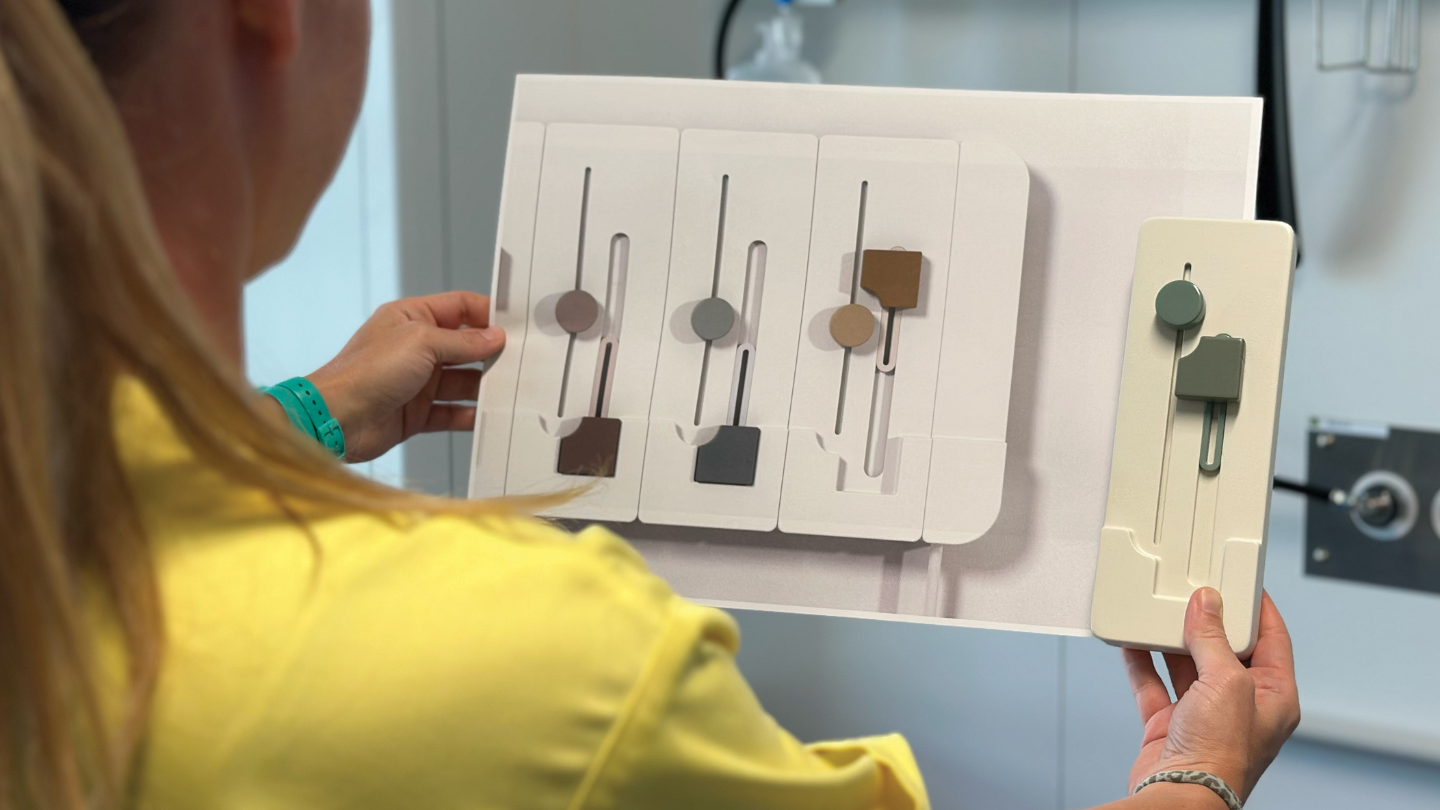
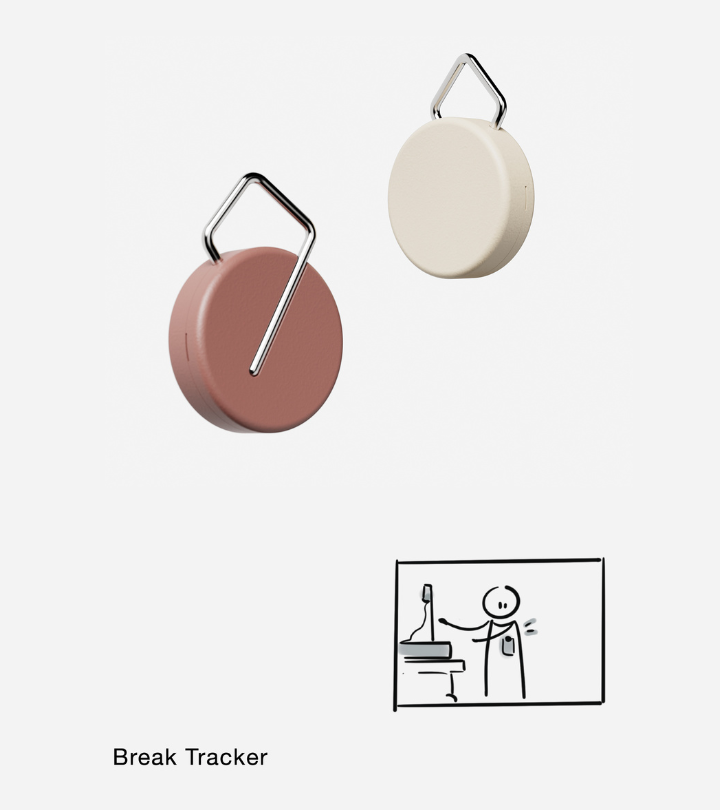
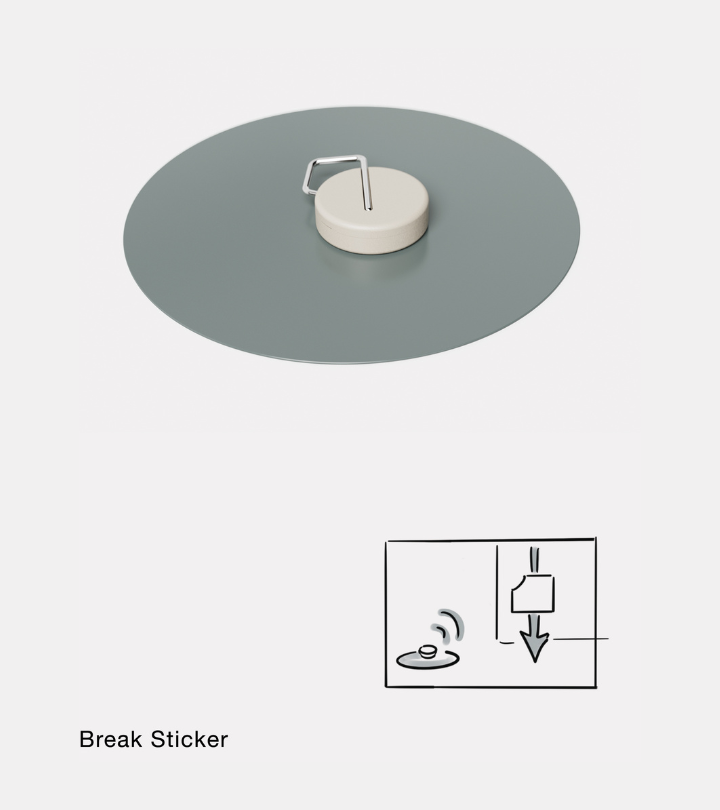
Balance is a hybrid analog system made up of three elements: a shared overview board, a personal clip-on tracker, and NFC pause points placed in suitable break areas. At the start of a shift, each team member sets a planned break time on the board and takes their color-coded tracker. When the time arrives, the tracker gives a gentle reminder. Placing it on a pause point marks the break on the board; removing it signals the return to work.
A central idea of the project is form fit. Work time and break time are translated into physical shapes that visually relate to each other: when a break is taken, the composition reaches balance, when it is missed, a visible imbalance remains. This makes the status understandable at a glance, without numbers or pressure. The concept was developed through literature research, interviews, observation, iterative prototyping, and exchange with hospital staff.
What do you think makes your project innovative compared to the existing efforts and ideas in the field it addresses?
What makes Balance innovative is its decision to step away from the usual logic of optimization, tracking, and digital oversight. Many existing approaches rely on apps, scheduling tools, or performance-oriented systems. Balance instead works through tangible interaction, shared visibility, and calm feedback embedded in the space itself.
Its innovation lies in how it communicates: the form-fit principle makes break status readable through physical balance rather than data, metrics, or alerts. This creates awareness without exposing individuals or turning recovery into something measurable. The project also shifts the focus from individual compliance to collective responsibility. In a hospital setting, where one person’s pause is closely tied to the rhythm of the whole team, that social dimension matters.
By combining analog clarity with minimal digital support, Balance offers a different kind of workplace technology: one that is quiet, respectful, and designed to strengthen trust, dignity, and everyday cooperation rather than control.
Does it impact or reflect young people need(s) and how?
Balance reflects the reality many young people encounter as they enter professions marked by high demands, emotional strain, and increasing pressure to keep functioning no matter what. In healthcare, younger workers often begin their careers in systems where exhaustion is normalized and self-care can feel secondary to responsibility. The project responds to that condition by making recovery part of the work culture rather than something left to individual negotiation. It supports an environment in which taking a break is not a sign of weakness, but a recognized part of sustainable teamwork. This speaks to a broader generational need for workplaces that are not only productive, but also humane, fair, and conscious of mental and physical wellbeing. Beyond healthcare, Balance also reflects a wider shift in values among young people: away from constant optimization and toward forms of working and living that leave room for care, boundaries, and shared responsibility.