The project activates regenerative rural economies by reorienting ancestral Mediterranean crafts into a circular, socially responsible design system that empowers local communities and new generations through material knowledge, collective agency, and symbolic narration.
Define the problem/need you are solving or addressing with your project. How does it address the Open Call criteria, such as environmental impact, social engagement, circularity, user experience, resource efficiency, and community-driven solutions?
Maratea, like many other rural Mediterranean areas, is experiencing a progressive erosion of economic autonomy and intergenerational continuity, due to intensive seasonal tourism and a lack of job opportunities for the young generations. Traditional craft knowledge — once embedded in everyday survival economies — is abandoned, leaving communities structurally dependent on external systems of production. This condition produces both economic fragility and symbolic disorientation: younger generations inherit territories deprived of viable models for dignified, locally grounded work. Nuova Libbaneria Mediterranea responds to this structural gap by constructing an alternative micro-economy rooted in craft knowledge, collective production, and locally sourced innovative materials. Through collaboration with young designers, the project addresses the urgent need to reactivate dormant competencies as infrastructure for future-oriented and resilient systems.
Please describe your project, reflecting on the concept, inspiration, materials, technical aspects, methods and process(es).
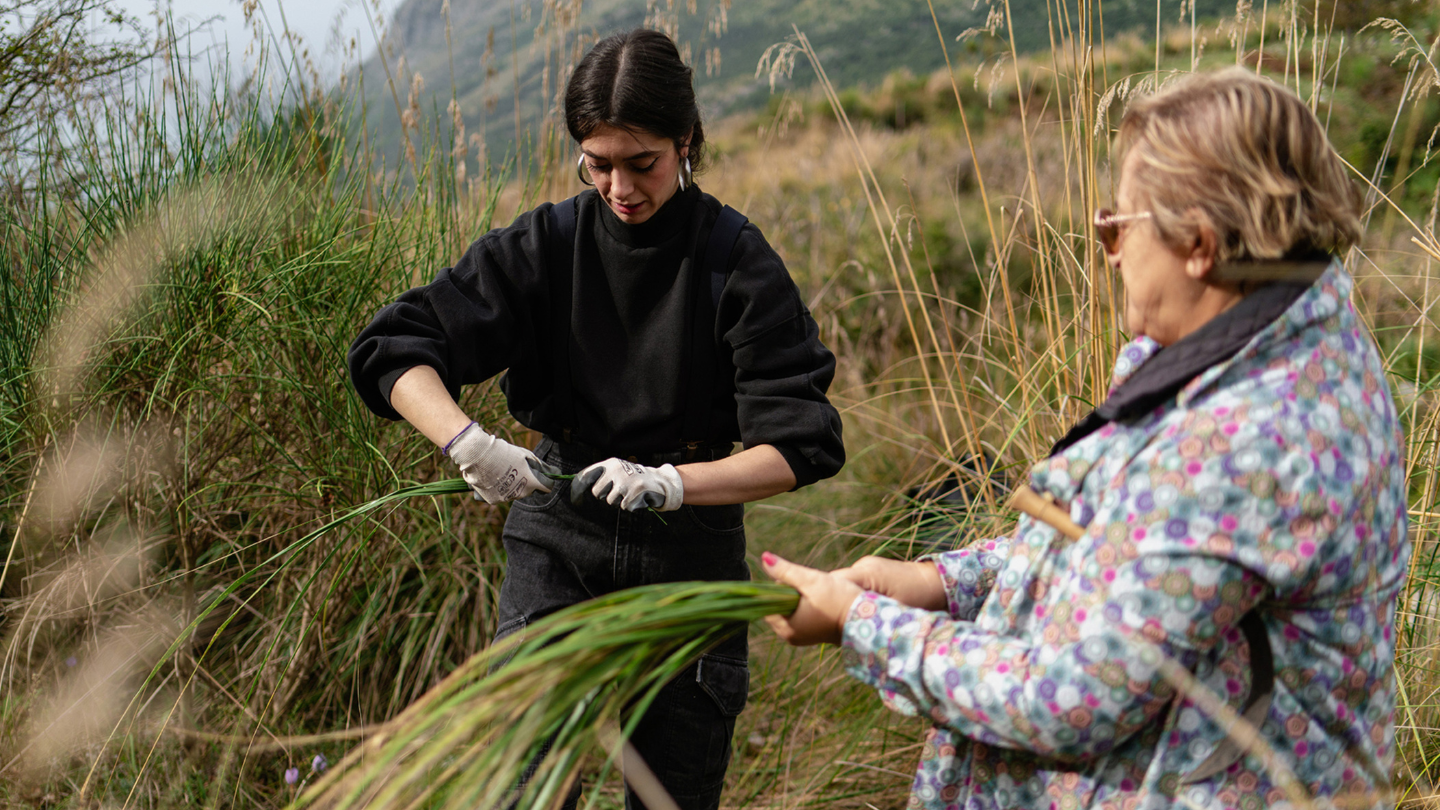
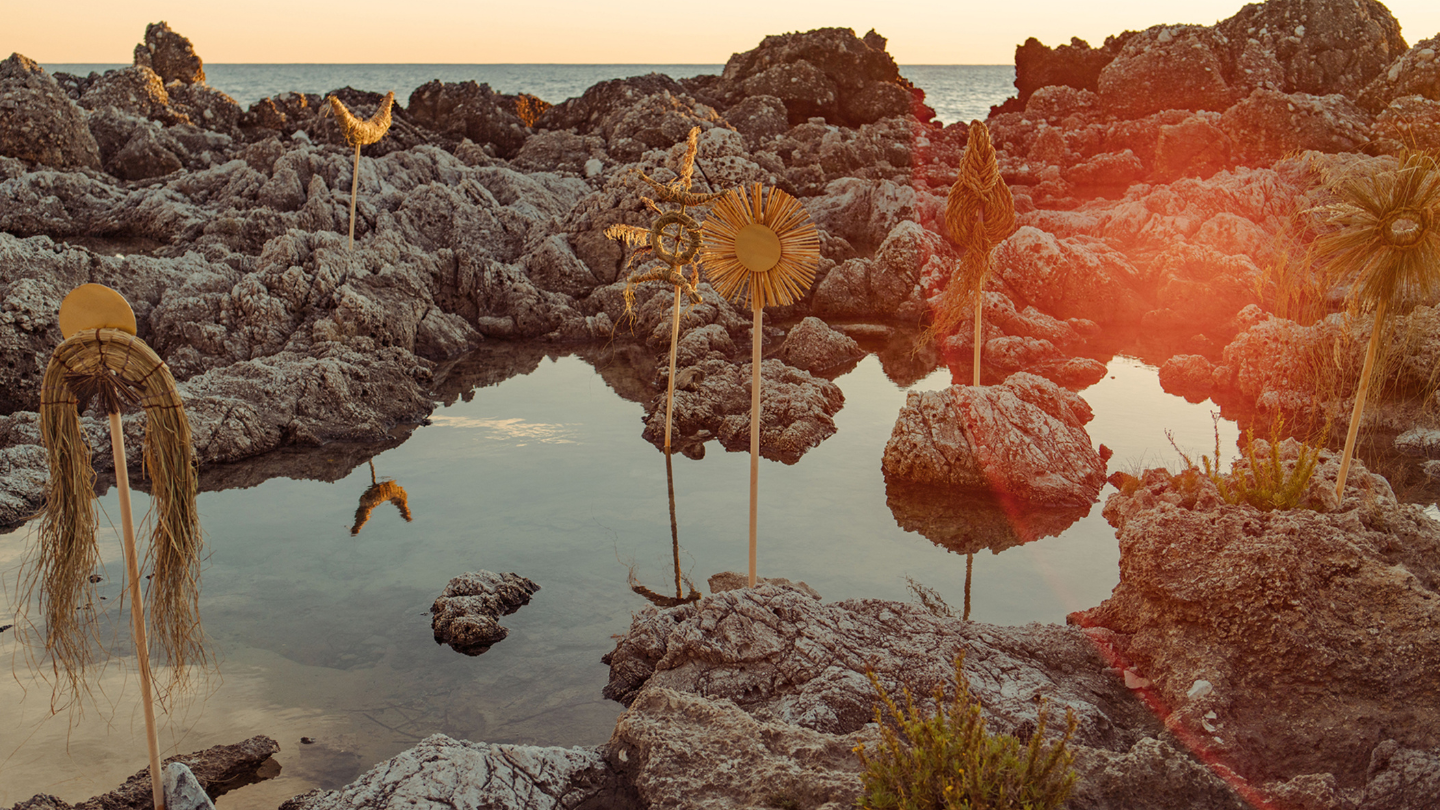
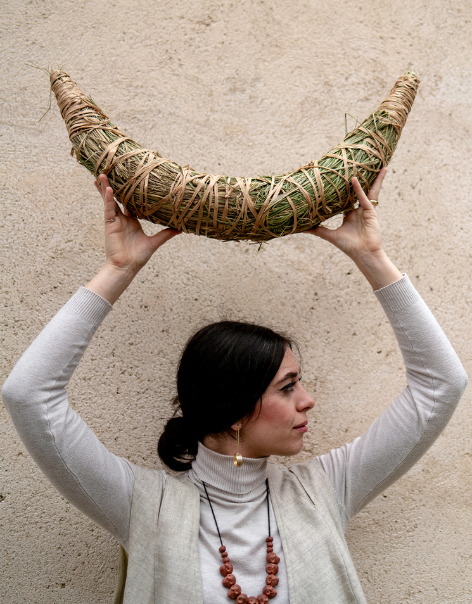
Tenacissimae is both a collection and a system, reinterpreting Maratea’s traditional “libbani” (vegetable ropes historically woven by women in a barter-based survival economy) into contemporary functional and poetic objects. Recovered through archival research and interviews by Nuova Libbaneria Mediterranea, the ropes are handwoven from an abundant indigenous grass called “tagliamani” (hand-cutting). Production is community-based, small-scale, and technology-independent, with a group of newly trained artisans preserving and cultivating this ancestral knowledge. The Tenacissimae collection includes different outdoor furniture pieces with variable headrests, ideally elevating the posture of the women who wove the history of the city with their hands, symbolically crowning them with haloes. The title references the tenacity of both the grass and the makers – from the past as well as from the present. Besides the furniture pieces, Sara Bologna and Libbaneria are currently developing a new collection of small objects and jewellery intended to address new markets.
What do you think makes your project innovative compared to the existing efforts and ideas in the field it addresses?
The innovation of Tenacissimae lies in its situated and material-based systemic integration. The project addresses:
Economic sustainability, through the generation of alternative rural income streams.
In addition to these recognized dimensions of sustainability, its explicit leverage of symbolism and narrative distinguishes it from other heritage revival initiatives. Tenacissimae reframes artisanal traditions as active systems of knowledge and as a resource for constructing, both materially and imaginatively, futures worth inhabiting, re-orienting value systems from extractive to relational economies.
By placing young generations at the center of knowledge transmission and economic activation, through both residency and training programs, but also through the creation of new territorial narratives, the project contributes to regenerative, decentralized, and culturally rooted models of production. Environmental sustainability, through new uses of natural, locally abundant and low-impact materials and processes; Social sustainability, through skill transmission, community empowerment and collective production;
Does it impact or reflect young people need(s) and how?
The project addresses key needs of young people in rural contexts: access to professional development, hands-on skill acquisition, and cultural belonging.
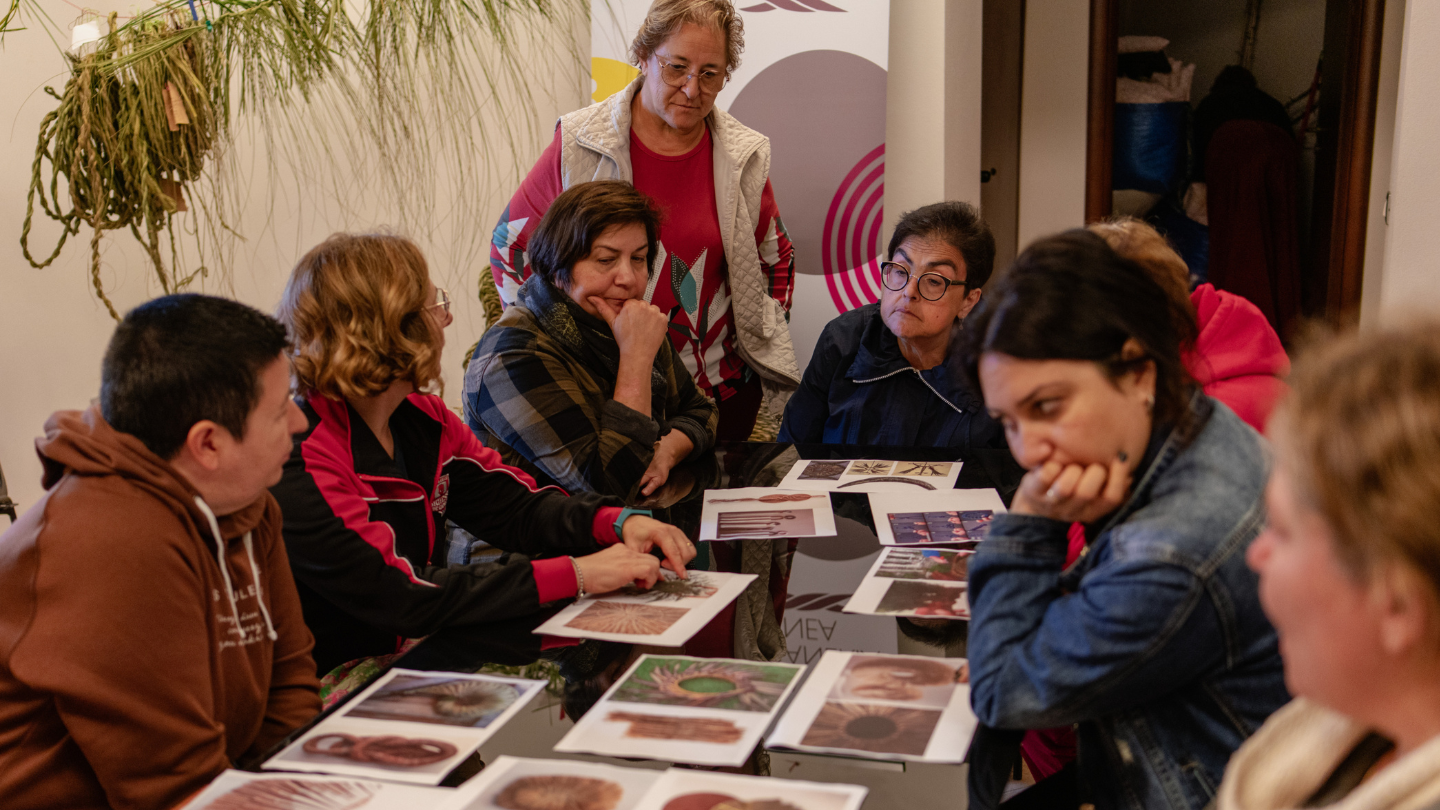
Through residency programs, young designers and professionals gain exposure to a living craft ecosystem, exchanging knowledge while confronting real-world challenges often absent from formal education. Simultaneously, by generating new imaginaries rooted in ancestral techniques and material culture, the project responds to the need for cultural identity, inspiration, and connection to local heritage.
In addition to that, Nuova Libbaneria Mediterranea also activates training programs directed to youth seeking to acquire manual craft skills and searching for a meaningful life experience, fostering confidence and agency in territories where such opportunities are scarce.
Across these three dimensions, the project creates tools, understanding, and imaginative capacity to envision futures that are both personally empowering and socially regenerative.