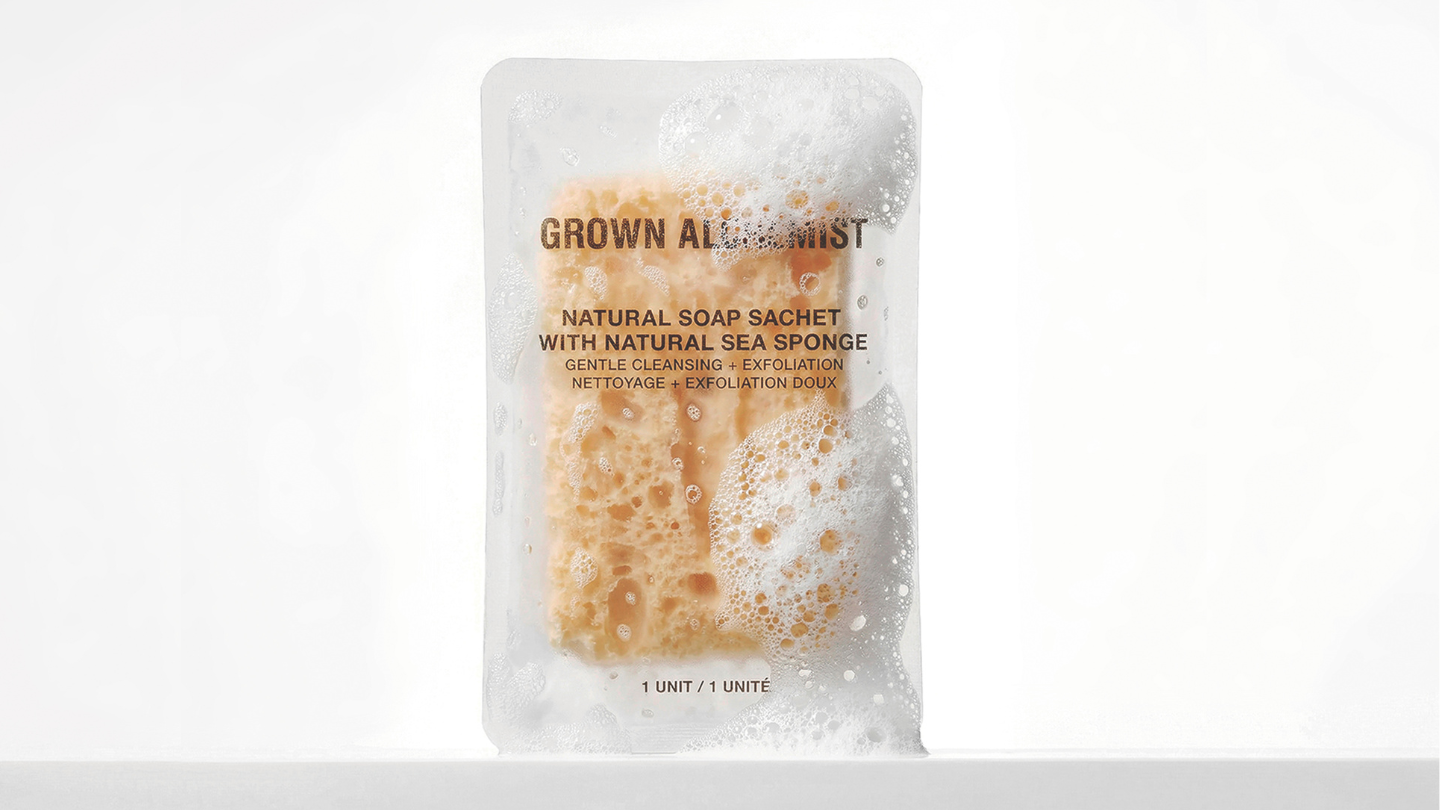
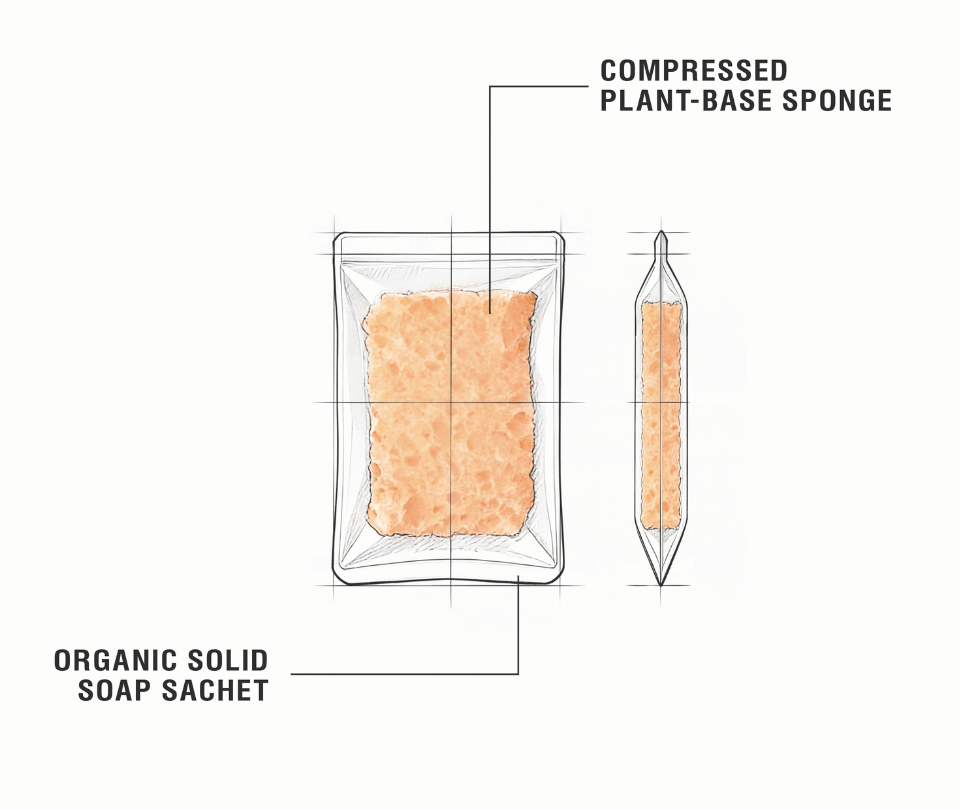
Minisponge rethinks the single-use bathing ritual in hospitality by merging packaging and product into one biodegradable system that reduces plastic, volume, and waste at the source.
Define the problem/need you are solving or addressing with your project. How does it address the Open Call criteria, such as environmental impact, social engagement, circularity, user experience, resource efficiency, and community-driven solutions?
Daily hygiene products are still designed within a linear consumption model based on synthetic materials, plastic packaging, and immediate disposal. This issue becomes more critical in the hospitality sector, where single-use amenities generate large volumes of waste, unnecessary packaging, and inefficient logistics. Minisponge addresses this problem by rethinking the structure of the product itself. Instead of separating packaging and product, it integrates both into a single biodegradable system. The soap-based wrapper dissolves during use, activating the sponge while eliminating packaging waste at the source.
This approach reduces material use, transport volume, and final waste, while improving user experience through simplicity and functionality. By redesigning an everyday ritual, the project contributes to circular thinking and promotes more responsible consumption patterns in both hospitality and travel contexts.
Please describe your project, reflecting on the concept, inspiration, materials, technical aspects, methods and process(es).
Minisponge is based on a simple idea: merging packaging and product into a single functional unit. The project rethinks the conventional bathing sponge by turning its wrapper into an active part of the experience. The system consists of a compressed vegetal sponge enclosed within a solid soap-based wrapper. When in contact with water, the soap dissolves, creating foam that is absorbed by the sponge, making it ready for use while the packaging disappears. The design process focused on reducing material layers and eliminating unnecessary structures, prioritising clarity and functionality. Materials were selected for their biodegradability and compatibility, allowing both elements to work as a single system. By integrating use and disposal into one gesture, Minisponge transforms a common object into a more efficient and intentional solution.
What do you think makes your project innovative compared to the existing efforts and ideas in the field it addresses?
What makes Minisponge innovative is not the material itself, but the way the system is structured. Instead of improving packaging or replacing it with alternative materials, the project removes the need for it by integrating packaging and product into a single element. The soap-based wrapper becomes part of the use, dissolving with water and disappearing during the process. This eliminates waste at the source, rather than managing it afterwards. By removing packaging as a separate layer, Minisponge proposes a structural shift in how single-use products are designed, moving from material substitution to a more integrated and efficient system.
Does it impact or reflect young people need(s) and how?
Minisponge responds to the needs of younger generations, who often travel frequently and look for practical, lightweight, and efficient solutions. Hygiene products can be bulky, restricted by liquid limits, and inconvenient to carry. The project offers a compact, solid alternative that simplifies this experience. Its format reduces volume and weight, making it easier to pack, transport, and use on the go, without compromising functionality. At the same time, it aligns with a growing awareness around waste and overconsumption. By eliminating unnecessary packaging and integrating it into the product itself, Minisponge provides a more convenient and responsible way to approach everyday hygiene while travelling.