Open source recipes and tools that enable local communities to transform paper waste into durable materials, shifting recycling from distant industrial systems to accessible, neighbourhood-based production.
Define the problem/need you are solving or addressing with your project. How does it address the Open Call criteria, such as environmental impact, social engagement, circularity, user experience, resource efficiency, and community-driven solutions?
Paper is widely considered recyclable, yet in practice it depends on centralised systems that collect, transport and process waste across long distances. This creates a paradox: a process meant to reduce impact relies on energy-intensive infrastructures that remain invisible to most people. As the use of paper packaging increases, so does the volume of waste, reinforcing dependence on industrial recycling.
Post Paper Studio addresses this by reframing waste as a local resource. It proposes that paper can be transformed where it is discarded, reducing transport, extending material lifecycles and making the process visible and shared. The project combines circularity and resource efficiency with social engagement, offering accessible methods that enable communities, makers and small businesses to take part in material production, while challenging the assumption that recycling must happen at scale and out of sight.
Please describe your project, reflecting on the concept, inspiration, materials, technical aspects, methods and process(es).
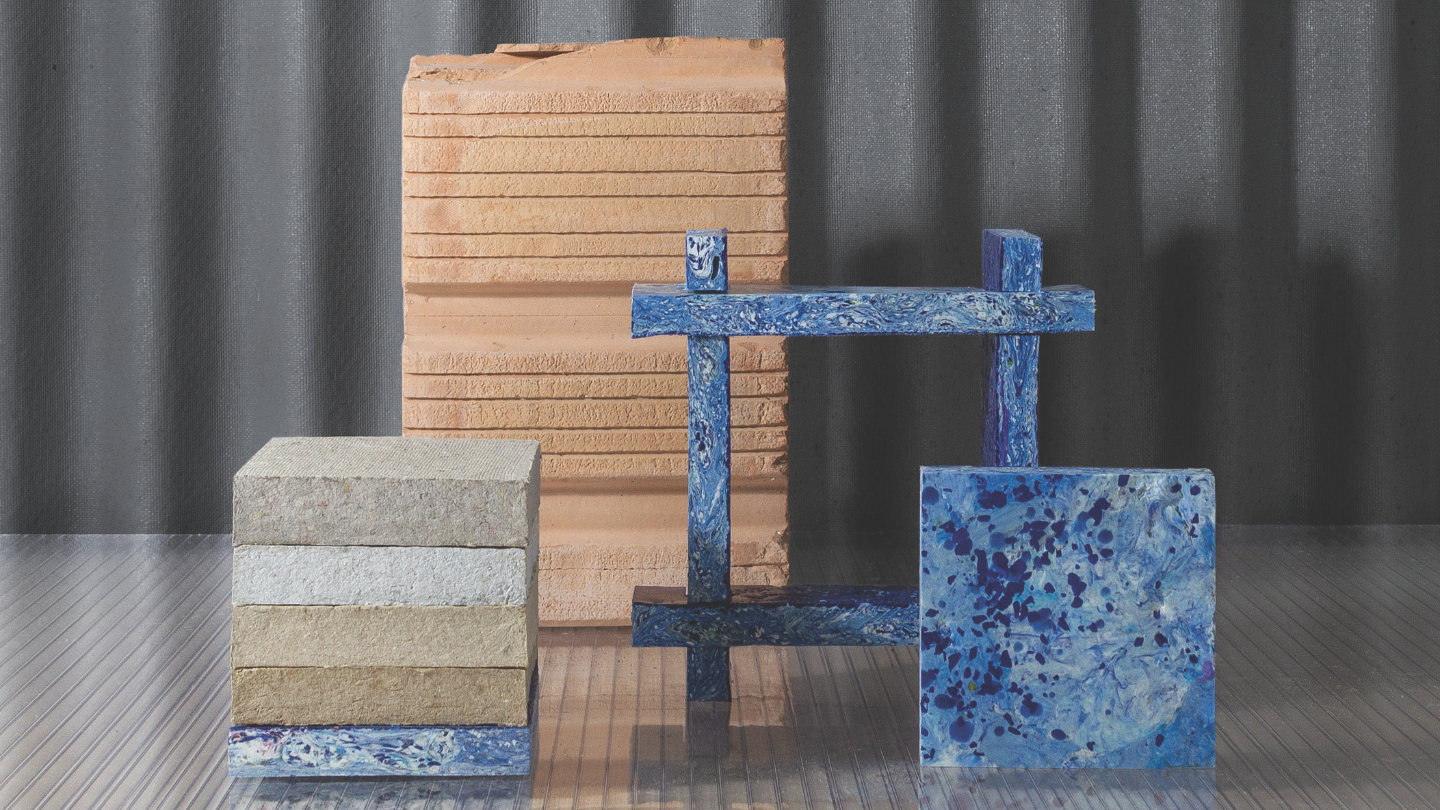
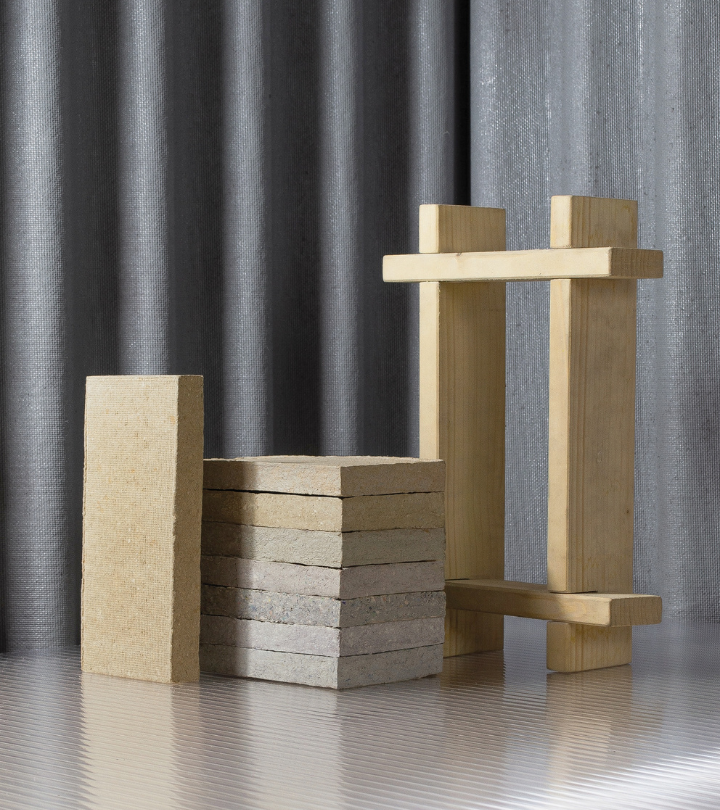
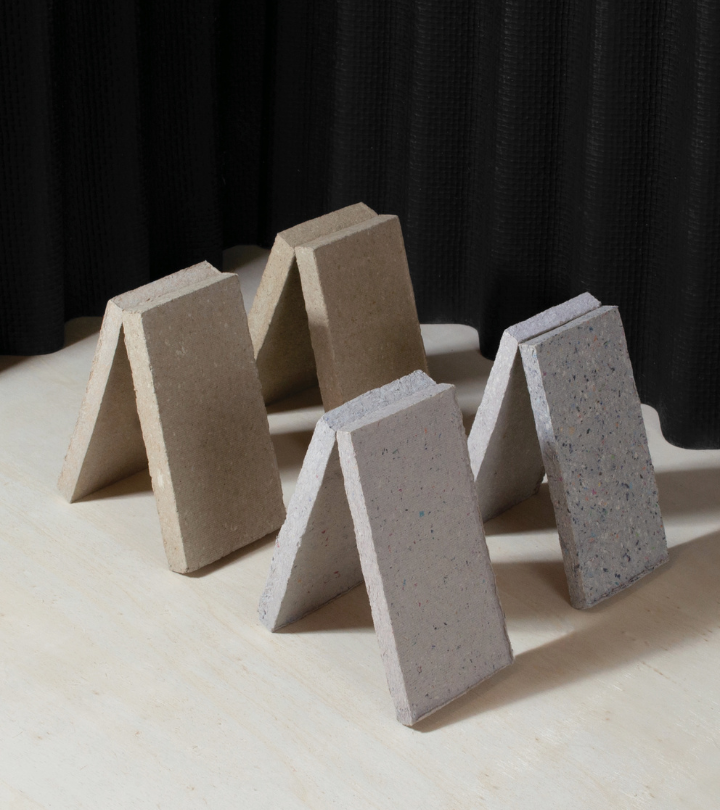
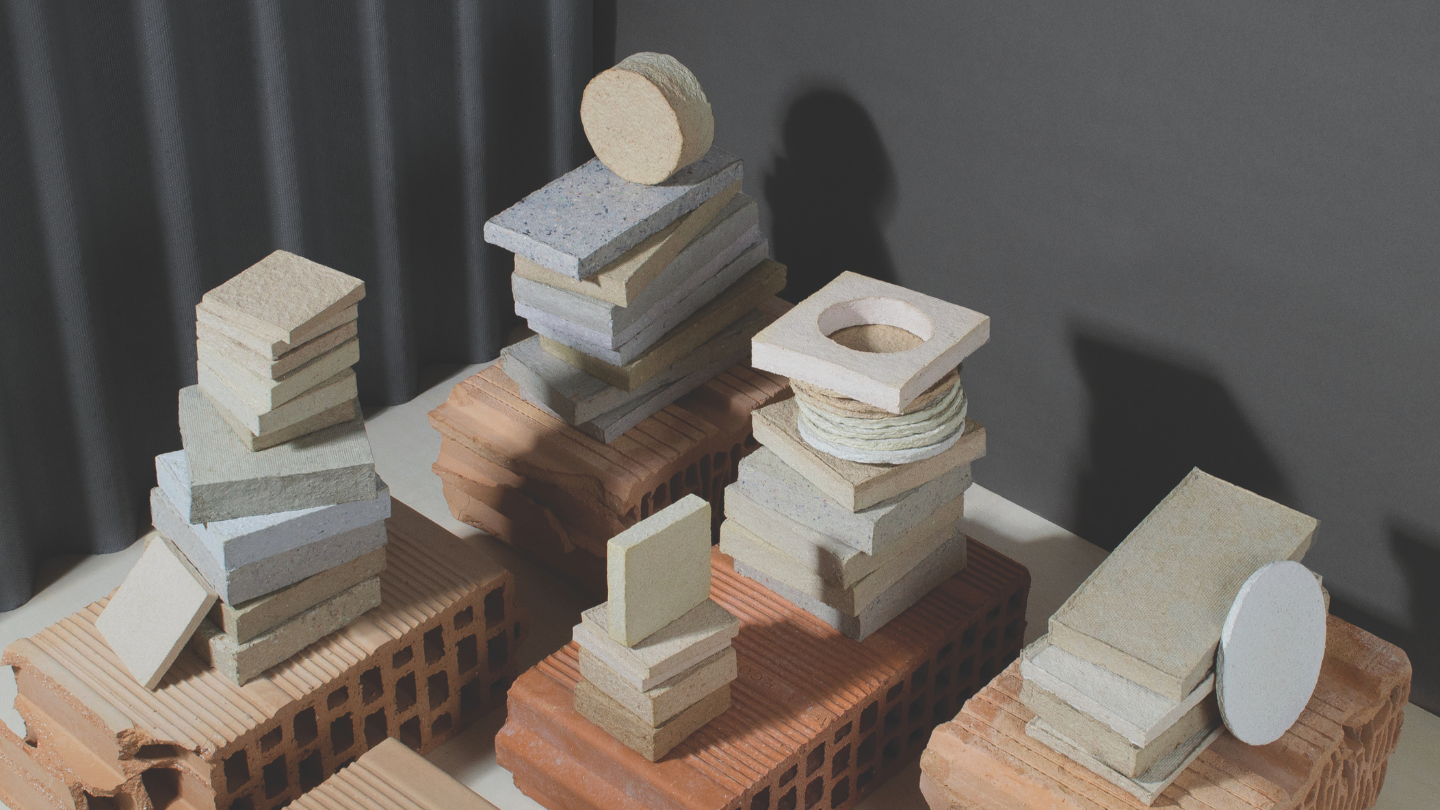
Post Paper Studio is an open system that enables the local transformation of paper waste into usable material for design and construction. It consists of a series of recipes, tools and experiments that combine traditional paper-making techniques with digital fabrication and craft practices. Paper waste is shredded, mixed with water and natural binding agents such as starches or alginate, and processed into a mouldable pulp. This pulp is then pressed using modular, low-tech tools to create sheets, bricks or components that can be further worked using CNC milling, laser cutting or manual techniques. The tools are designed for accessibility and replication: they can be fabricated from a single board of wood or recycled plastic, without glue or screws, and assembled in local workshops. By sharing recipes, blueprints and processes openly, the project invites others to adapt, improve and apply the system according to their local context, resources and needs.
What do you think makes your project innovative compared to the existing efforts and ideas in the field it addresses?
Current approaches to paper recycling operate at two extremes: large-scale industrial systems or small DIY practices with limited performance. Post Paper Studio introduces an intermediate model that combines the reliability of structured processes with the accessibility of local production. Its innovation lies in treating recycling not as a service, but as a distributed design and manufacturing system. By integrating material recipes, tool design and fabrication methods into a single open framework, it enables consistent and repeatable results without requiring specialised infrastructure. The use of natural binders ensures compatibility with existing recycling cycles, while the modular tools allow adaptation to different contexts using locally available materials and skills. This makes the system both technically viable and geographically flexible. Equally important is its open source nature. By making all components accessible, the project shifts innovation from closed development to collective evolution, allowing communities to contribute and refine the system over time.
Does it impact or reflect young people need(s) and how?
Post Paper Studio directly responds to the growing need among younger generations for more transparent, hands-on and meaningful ways of engaging with materials and production. Many young designers, makers and students are increasingly critical of global supply chains, yet lack accessible tools to act on this awareness. By lowering the technical and economic barriers to material experimentation, the project enables young people to move from passive consumption to active participation. Recipes can be reproduced with simple tools and locally available ingredients, while fabrication methods connect with widely accessible technologies such as makerspaces and digital workshops. It encourages experimentation, iteration and collaboration, offering an entry point into material research without requiring specialised laboratories. Beyond skills, it addresses a cultural shift: from designing products to designing systems. By engaging with local waste, young people can better understand resource flows, question existing infrastructures and explore alternative ways of producing and living.