Regeneration of Tarragona’s coastal seabed by means of a modular and scalable artificial reef system
Define the problem/need you are solving or addressing with your project. How does it address the Open Call criteria, such as environmental impact, social engagement, circularity, user experience, resource efficiency, and community-driven solutions?
Coastal ecosystems are under increasing pressure from sand erosion, artificialization, and biodiversity loss. In many Mediterranean beaches, natural sediment dynamics are disrupted, leaving flat, unstable seabeds with low ecological complexity. This not only accelerates shoreline retreat but also weakens marine habitats and local socio-economic resilience. My project addresses this challenge through a modular artificial reef system designed to reduce wave energy during storm conditions while fostering native marine life. By combining coastal engineering principles with ecological design, the system promotes sediment stabilization and habitat regeneration simultaneously. It aligns with the Open Call criteria by delivering measurable environmental impact, using resource-efficient marine concrete solutions, and proposing a scalable, circular system designed for long-term ecological integration. The project also considers community stakeholders like divers, coastal users, and local authorities, ensuring that the intervention enhances both ecosystem health and public coastal experience.
Please describe your project, reflecting on the concept, inspiration, materials, technical aspects, methods and process(es).
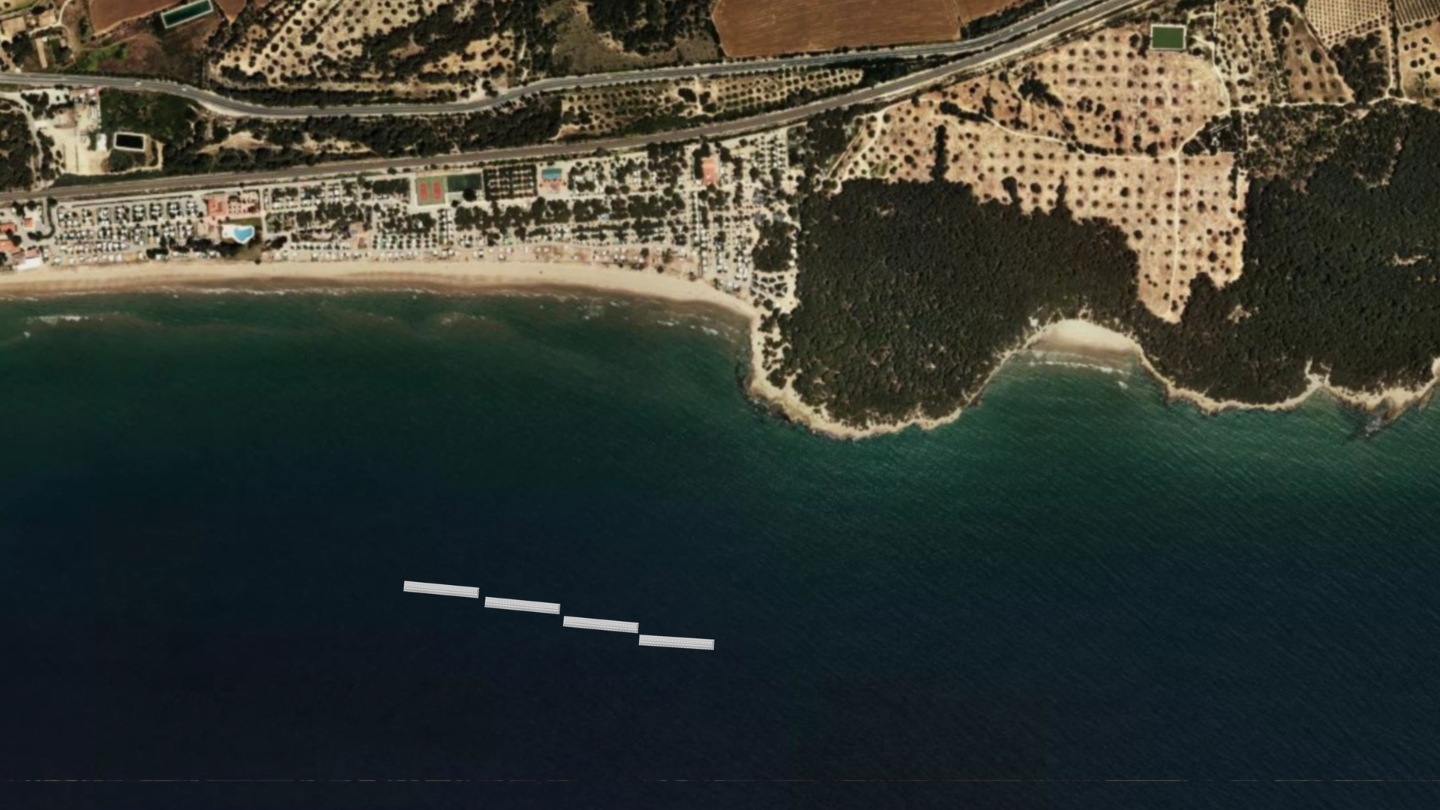
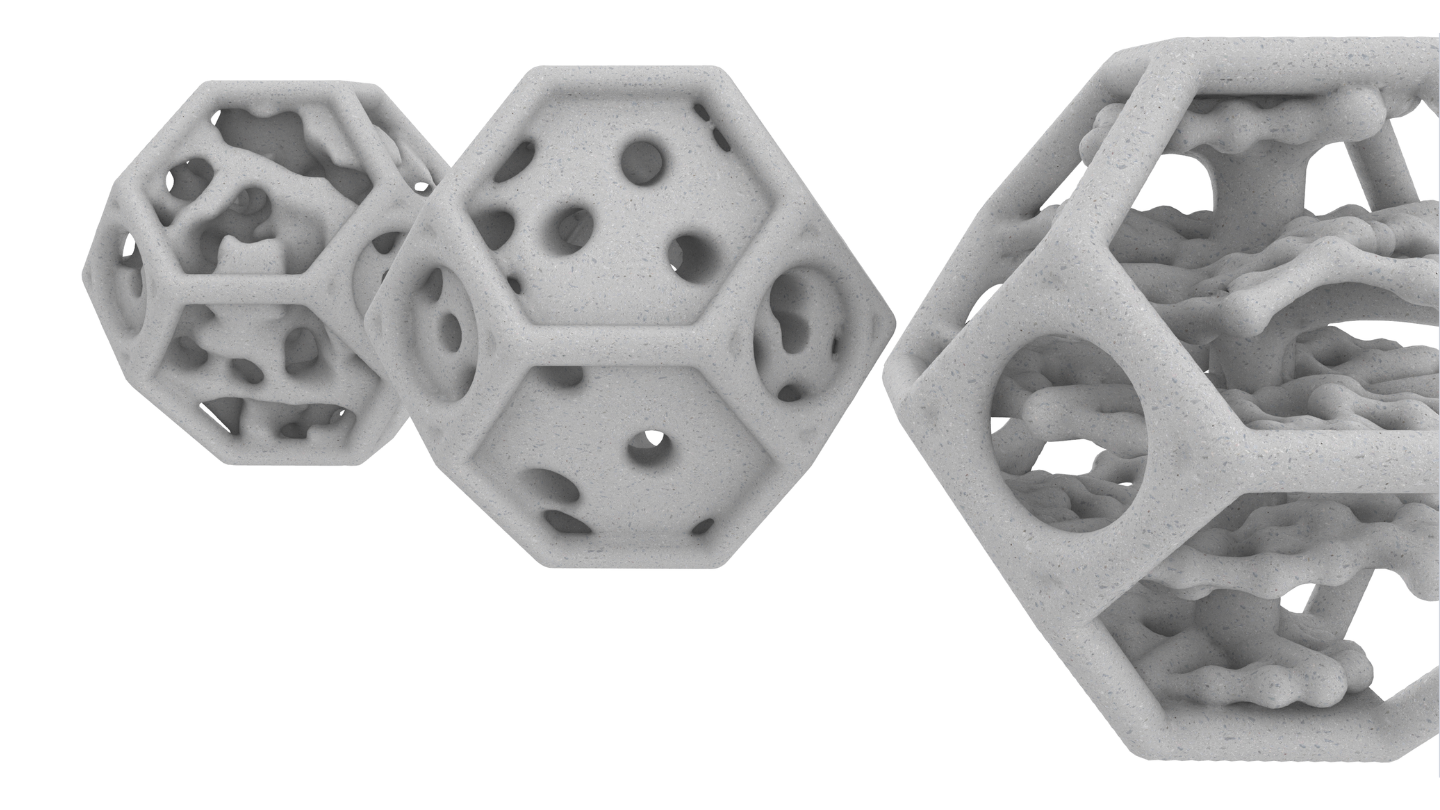
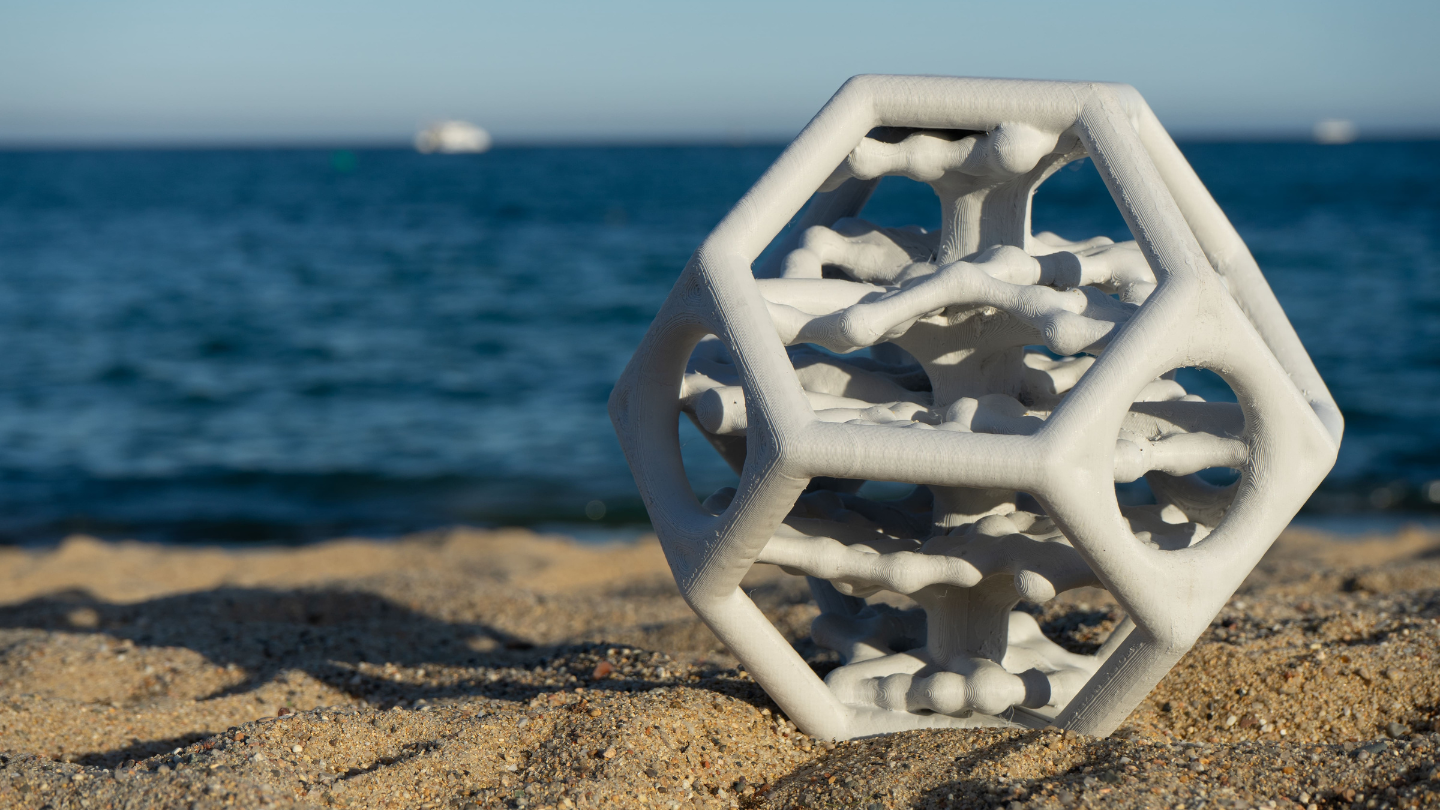
The project proposes a modular artificial reef system designed as both a coastal protection infrastructure and a living ecological scaffold. Inspired internally by the structural logic of branching corals such as Acropora palmata, the geometry is conceived to dissipate wave energy while creating microhabitats for marine species. The design process combined biological research, coastal engineering principles, and digital simulation. Wave behavior, storm conditions, and seabed bathymetry informed the reef’s crest height, porosity, and spatial configuration. CFD simulations were used to evaluate energy dissipation and sediment interaction before prototyping. The structure is conceived for binder-jetting fabrication in marine-grade recycled concrete. The modular logic allows phased deployment, enabling scalability and adaptability to different coastal contexts while maintaining ecological functionality and structural performance.
What do you think makes your project innovative compared to the existing efforts and ideas in the field it addresses?
What makes this project innovative is its integration of coastal engineering performance with ecological regeneration within a single design framework. While many artificial reefs are primarily conceived either as habitat structures or as breakwaters, this system is developed from the outset to operate simultaneously as sediment-stabilizing infrastructure and biodiversity catalyst. The innovation lies in its performance-driven geometry: wave energy dissipation, porosity, and crest dimensions are defined through hydrodynamic analysis rather than purely volumetric or aesthetic considerations. Instead of deploying massive barrier structures, the project proposes a modular cluster system that works with natural wave refraction patterns and local bathymetry. Additionally, the reef is conceived as a scalable, adaptable system rather than a fixed object, allowing site-specific calibration. The project reframes artificial reefs as regenerative coastal systems rather than static underwater constructions.
Does it impact or reflect young people need(s) and how?
This project reflects young people’s urgent need for climate-responsive and regenerative design solutions. My generation is growing up in the context of accelerating coastal erosion, biodiversity loss, and increasing climate instability. Beaches are not only ecological systems but also social and cultural spaces that shape collective identity and well-being. By proposing a reef system that protects coastlines while restoring marine life, the project responds to the demand for solutions that are not extractive, but restorative. It also represents a shift in how infrastructure is imagined: not as rigid defense, but as adaptive, nature-integrated systems. Furthermore, the project bridges science, technology, and design. Fields increasingly interconnected in the careers of young creatives. It embodies a mindset that values interdisciplinary thinking, long-term ecological responsibility, and community awareness, aligning with the priorities and environmental consciousness of younger generations.