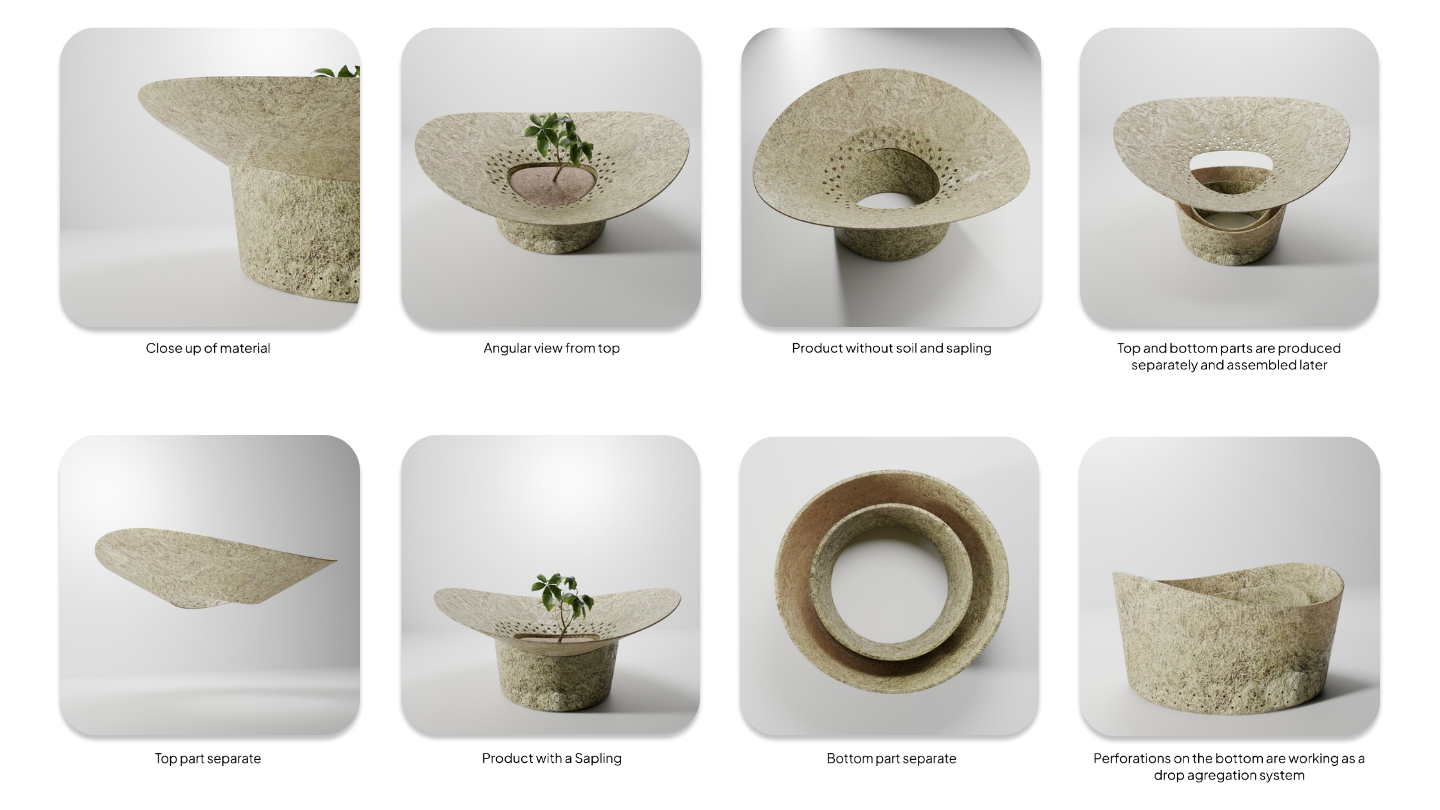
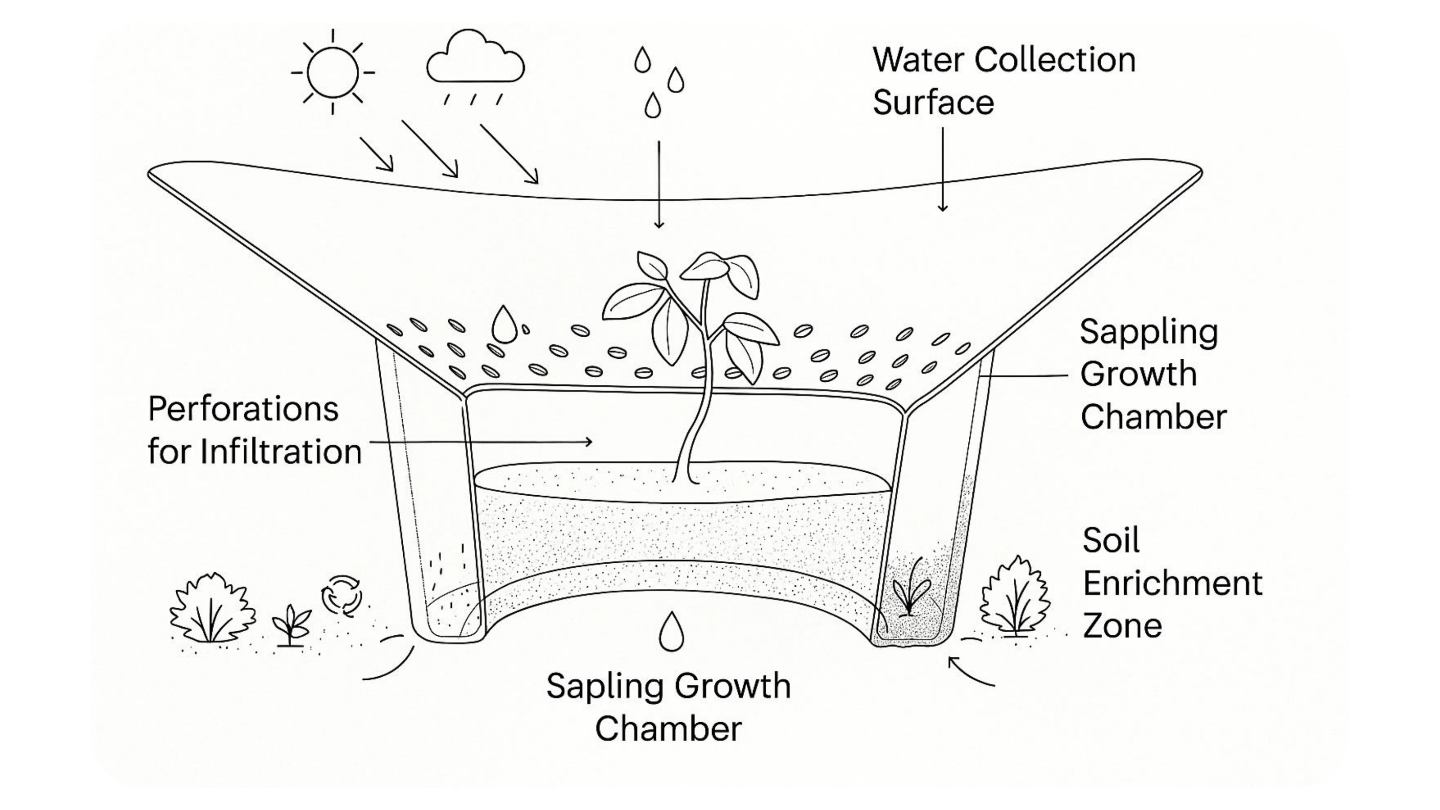
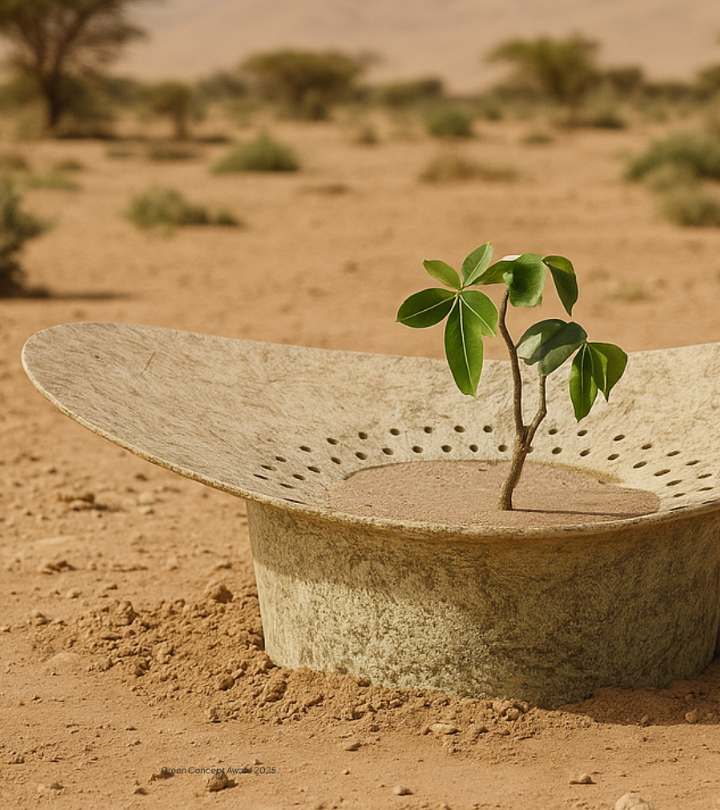
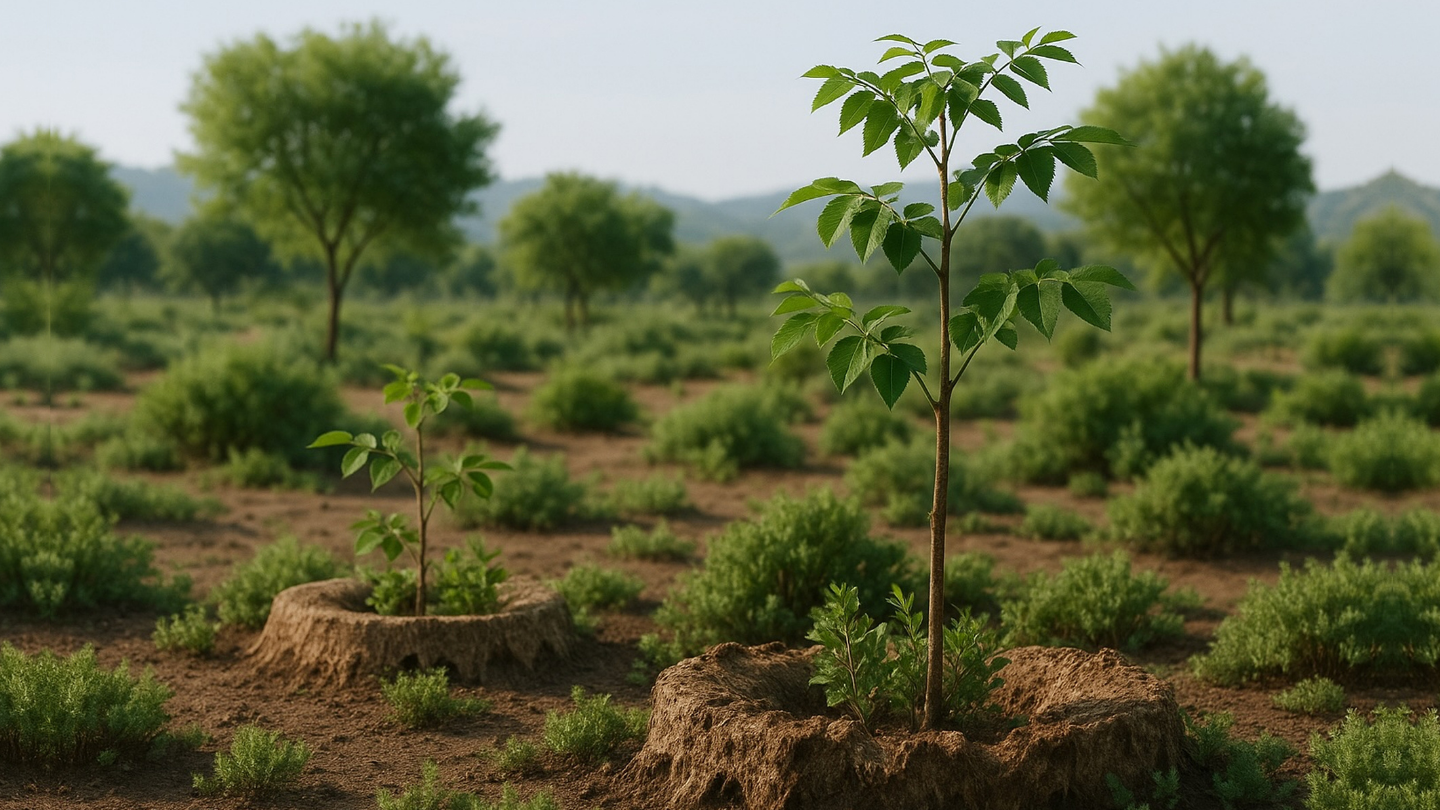
WAHA is an algae biomass and agricultural residue based planter system that passively captures and stores rainwater, prevents surface evaporation, and regenerates the soil over time, without any active irrigation or synthetic infrastructure.
Define the problem/need you are solving or addressing with your project. How does it address the Open Call criteria, such as environmental impact, social engagement, circularity, user experience, resource efficiency, and community-driven solutions?
WAHA addresses the intertwined challenges of water scarcity and soil degradation in arid regions, where rainfall is limited, evaporation is extreme, and degraded soils repel water, preventing vegetation growth. Conventional solutions rely on irrigation, plastic devices, or large-scale infrastructure, often making them costly, energy-intensive, and unsustainable. WAHA responds with a passive, biodegradable system that captures rainwater, reduces evaporation through shading, and gradually improves soil structure. Made from agricultural waste and algae-based biopolymers, it supports circularity by decomposing into nutrients that enhance microbial life and water retention. The design promotes resource efficiency by requiring no external energy or maintenance, and enables community-driven deployment due to its low cost and simplicity. By supporting multi-species planting and localized ecosystems, WAHA enhances environmental impact while fostering long-term resilience. It redefines user experience by shifting from product use to ecological participation, where communities actively regenerate their landscapes.
Please describe your project, reflecting on the concept, inspiration, materials, technical aspects, methods and process(es).
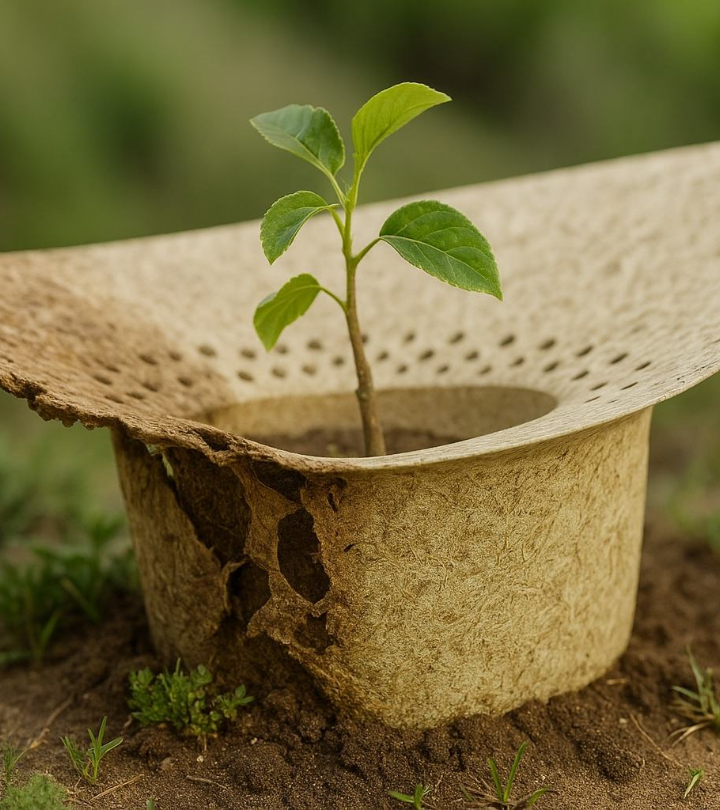
WAHA is a biodegradable, modular system designed to support vegetation growth in arid and degraded soils through passive water harvesting and soil regeneration. The concept is inspired by natural leaf structures and traditional water-retention practices, translating them into a form that channels rain and dew toward plant roots while shading the soil to reduce evaporation. The system is made from a bio-composite of agricultural straw and algae-based polymers, creating a low-cost, moldable material that gradually decomposes. As it breaks down, it enriches the soil with organic matter, improves water retention, and supports microbial activity. Technically, WAHA combines form-driven water collection, microclimate creation, and material lifecycle design into a single intervention. The modules are produced through simple molding processes and can be deployed without infrastructure. Over time, the product disappears, leaving behind improved soil conditions and enabling the establishment of resilient, multi-species plant systems.
What do you think makes your project innovative compared to the existing efforts and ideas in the field it addresses?
WAHA is innovative in how it combines material, function, and lifecycle into a single regenerative system. Unlike existing solutions that rely on plastic containers or irrigation infrastructure, WAHA uses a fully biodegradable bio-composite made from straw and algae, turning waste materials into a functional environmental tool. Its key distinction lies in shifting the focus from simply supporting plant growth to actively rebuilding soil systems. While many approaches target individual trees, WAHA enables multi-species growth, improves soil structure, and enhances water retention through both form and decomposition. It is also designed as a disappearing intervention: it performs its function, then decomposes into nutrients, leaving no waste or retrieval requirement. This integration of passive water harvesting, soil regeneration, and circular material logic creates a scalable, low-tech solution that aligns ecological processes with design, offering a fundamentally different approach to land restoration.
Does it impact or reflect young people need(s) and how?
WAHA reflects the needs of young people by addressing one of their most urgent concerns: climate change and environmental degradation, while offering a tangible, actionable solution. Rather than relying on complex technologies or large institutions, it enables direct participation in ecological restoration through a simple, low-cost system that can be deployed by individuals, students, or local communities. It also aligns with a growing shift among younger generations toward sustainability, circular design, and regenerative practices. WAHA demonstrates how design can move beyond consumption and instead restore natural systems, making it both educational and empowering. By being accessible, scalable, and rooted in local materials, WAHA encourages community engagement and grassroots action, allowing young people to actively contribute to environmental recovery. It transforms environmental concern into practical involvement, fostering awareness, responsibility, and long-term connection to the landscapes they inhabit.