The Anthill reimagines an abandoned warehouse as a cooperative vertical commons where food production, repair culture, and shared spaces intertwine—transforming industrial infrastructure into a catalyst for circular practices, collective learning, and resilient community life.
Define the problem/need you are solving or addressing with your project. How does it address the Open Call criteria, such as environmental impact, social engagement, circularity, user experience, resource efficiency, and community-driven solutions?
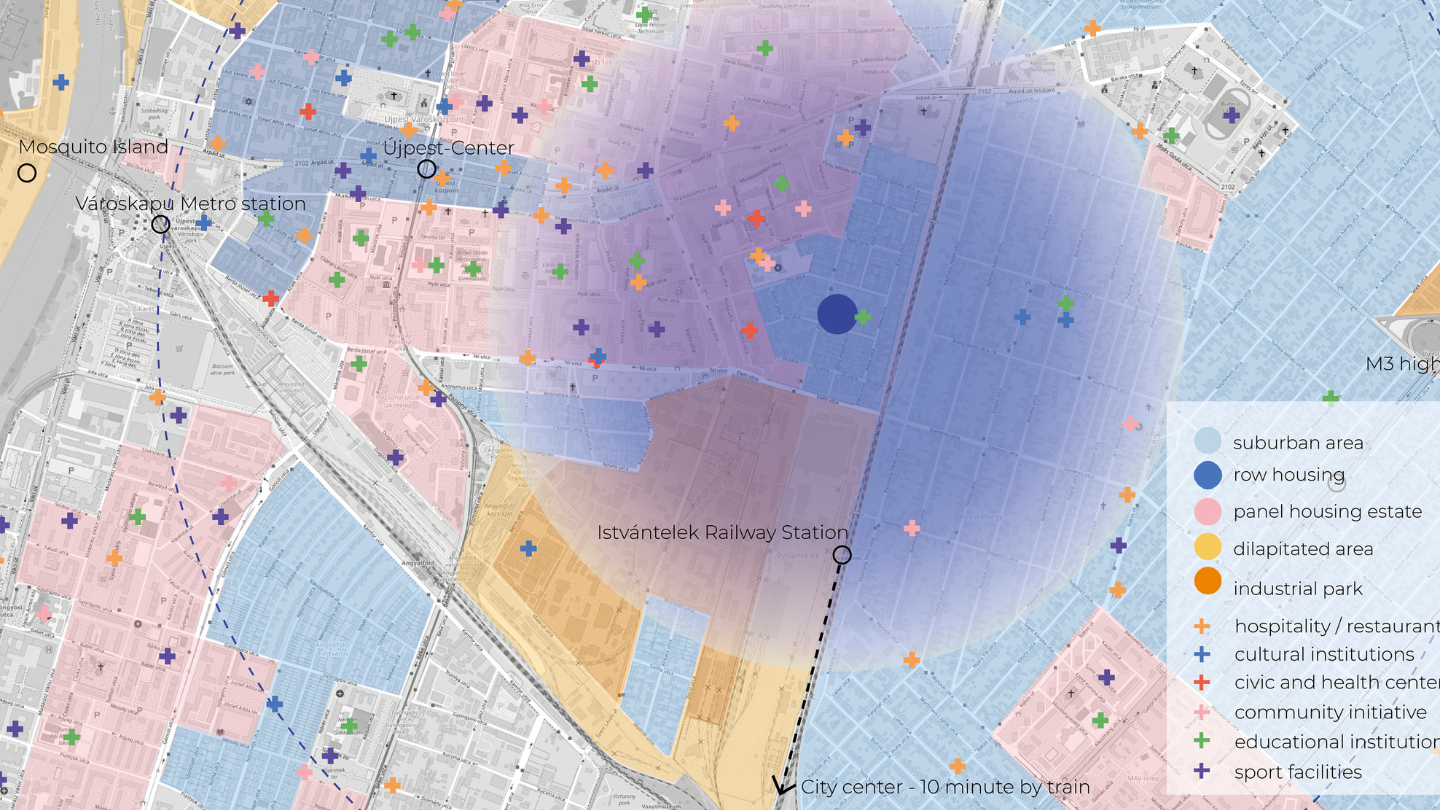
Many suburban districts of post-socialist cities face a lack of accessible public spaces where everyday social life, knowledge exchange, and community participation can occur. In Budapest’s Újpest district, industrial decline has left large vacant structures while residents lack “third spaces” that support shared activities beyond home and work.
The Anthill addresses this gap by transforming an abandoned pharmaceutical warehouse into a cooperative vertical public space that combines food production, cultural activity, learning, and repair. The project proposes a circular and community-driven system where production, consumption, and knowledge sharing coexist.
By integrating a vertical farm, food processing, repair workshops, and communal spaces, the project promotes resource awareness, local production, and collective participation. It strengthens social infrastructure while reusing an existing building, minimizing environmental impact. The cooperative model encourages shared responsibility and collective ownership, supporting resilient local networks and fostering a culture of collaboration and care.
Please describe your project, reflecting on the concept, inspiration, materials, technical aspects, methods and process(es).
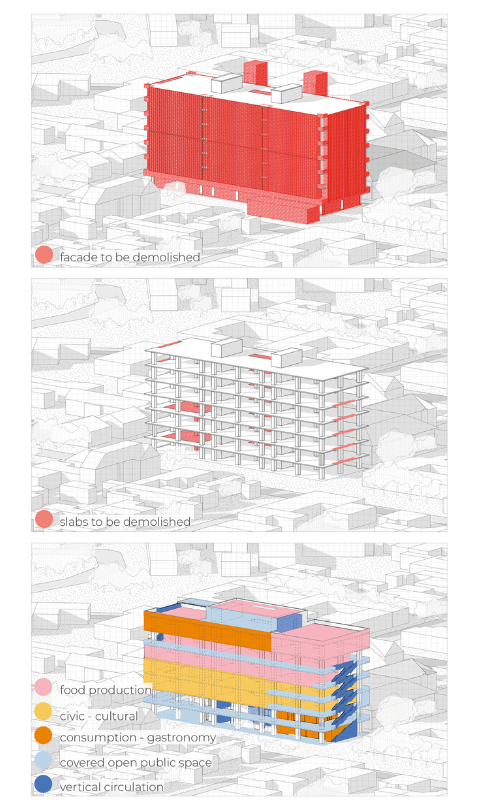
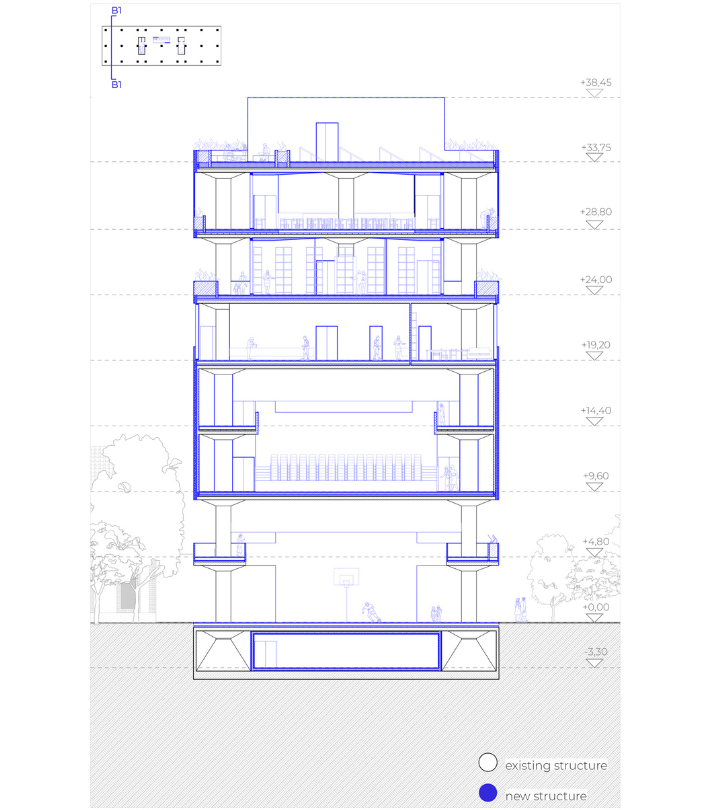
The Anthill is a proposal to transform a seven-story abandoned pharmaceutical warehouse in Budapest’s Újpest district into a mixed-use cooperative hub for food, workshops, and community life. Inspired by the principles of commoning — shared knowledge, collective care, and cooperative labour — the building becomes a vertical public landscape where production, education, and social interaction coexist.
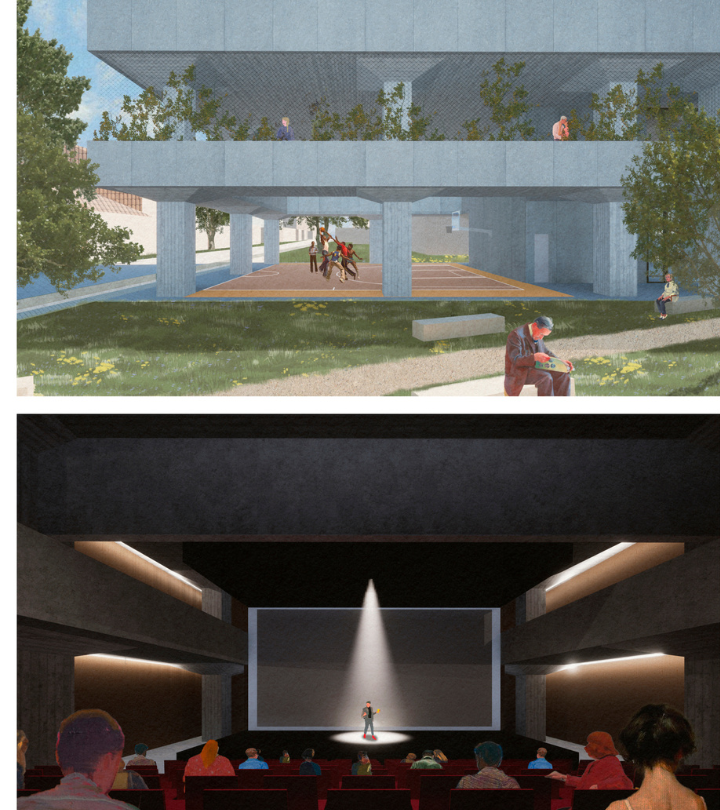
The lower levels host a canteen, café, and cooperative grocery store supplying food partly produced within the building. Upper floors include a cheese manufactory, vertical farm, and workshops for clothing repair, electronics, and woodworking, supporting circular practices and skill sharing. Flexible event spaces allow cultural programming and community gatherings.
Terraces connected by an external staircase form an urban hiking route that enables visitors and school groups to explore the building’s activities. By reusing an existing industrial structure, the project minimizes material consumption while creating a flexible system that can evolve according to community needs.
What do you think makes your project innovative compared to the existing efforts and ideas in the field it addresses?
The innovation of The Anthill lies in combining adaptive reuse, cooperative governance, and vertical mixed-use programming into a single integrated system. Rather than treating production, consumption, education, and social life as separate urban functions, the project brings them together within a shared spatial framework.
Unlike many regeneration projects driven primarily by commercial development, The Anthill proposes a commons-oriented model where knowledge, infrastructure, and labour are collectively shared. The vertical organization allows reuse culture, food production, cultural programming, and everyday social activities to coexist within a compact urban footprint.
The project also introduces a public circulation route that makes otherwise hidden processes—such as food production or craft—visible and educational. This transparency encourages participation and awareness, turning the building into a living learning environment rather than a closed production facility.
Does it impact or reflect young people need(s) and how?
The Anthill responds to the needs of young people by creating accessible spaces for learning, making, and social engagement outside institutional or commercial environments. In many suburban areas, opportunities for informal education, experimentation, and community participation are limited.
The project introduces workshops for repair, craft, and making, where practical skills and knowledge can be shared across generations. Spaces for events, cultural programs, and collective activities provide platforms for youth initiatives and local collaboration.
The building’s open circulation route allows schools and kindergarten groups to explore food production and sustainable practices, supporting environmental awareness from an early age. By promoting cooperative governance and shared resources, The Anthill also models alternative economic and social structures that young people can actively shape.
In this way, the project supports agency, creativity, and collective responsibility for more sustainable and community-oriented urban futures.