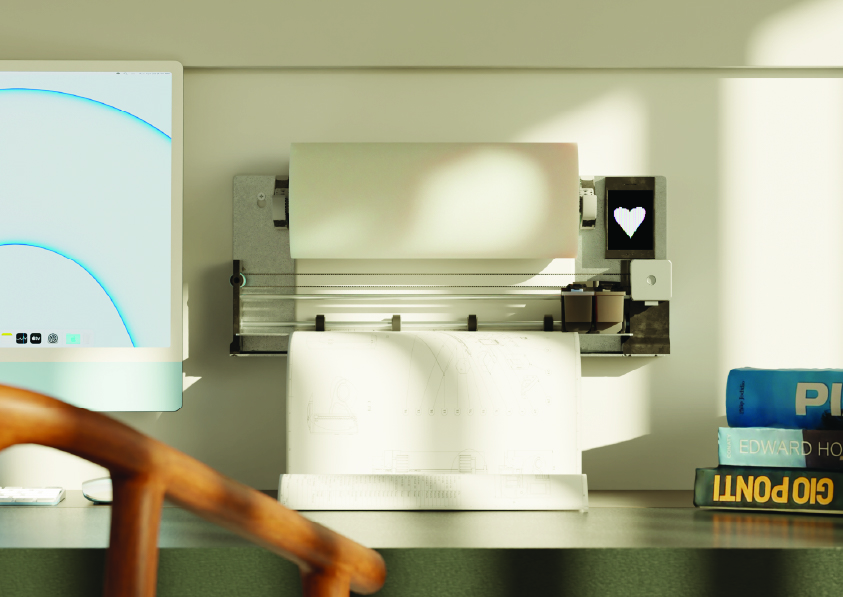
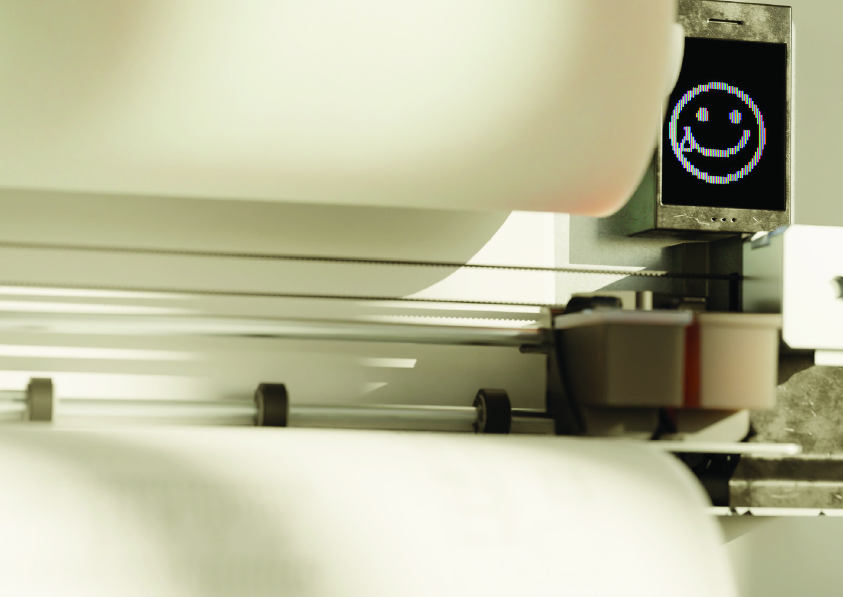
Bojan [pron. Boy-yan] is an open DIY inkjet printer that students can build, understand, and modify themselves, offering a low-cost, repairable and educational alternative to closed commercial printers in student spaces.
Define the problem/need you are solving or addressing with your project. How does it address the Open Call criteria, such as environmental impact, social engagement, circularity, user experience, resource efficiency, and community-driven solutions?
Commercial printers burden students with high ink costs, e-waste from unrepairable “black boxes,” and dependency on proprietary parts, creating financial stress and environmental waste in shared student spaces. Bojan addresses this by being a fully open-source DIY inkjet printer: students assemble it from affordable, off-the-shelf components like NEMA17 motors, ESP32, and 3D-printable parts, understanding every mechanism, from printhead movement to paper feed. Environmental impact through repairability (no proprietary cartridges, refillable HP302) and reduced e-waste; circularity via modular, upgradable design; social engagement and community-driven solutions by inviting hacks and workshops; user experience with customizable print widths and intuitive touchscreen control; resource efficiency using standard parts (~€150 total) for low ongoing costs. Bojan empowers student makers to experiment, collaborate, and sustain their own printing ecosystem.
Please describe your project, reflecting on the concept, inspiration, materials, technical aspects, methods and process(es).
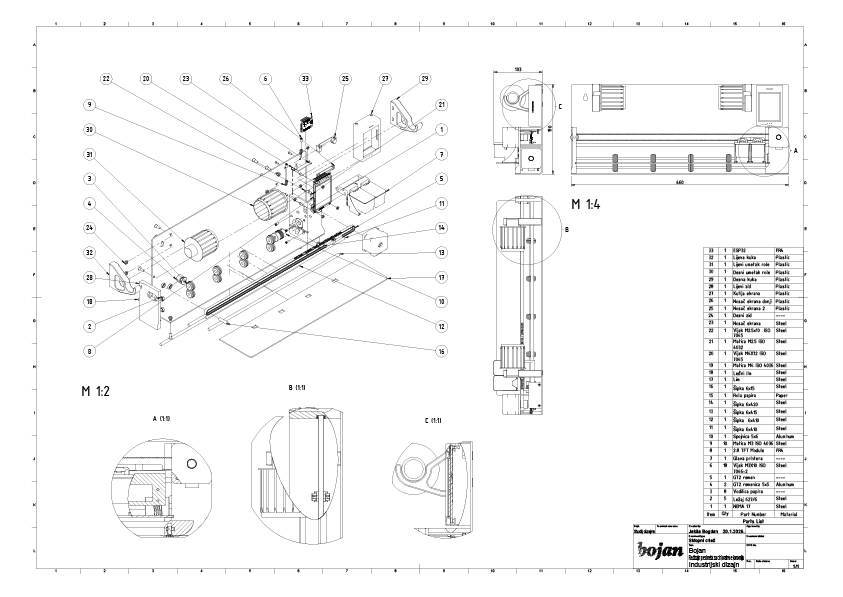
The name Bojan comes from the common Croatian name which sounds similar to the word “to color” [cro. bojati]. Bojan is an open-source DIY inkjet printer inspired by RepRap 3D printers and cartridge hacks found on sites like Hackaday, aiming to democratize color printing in student spaces. The concept: a modular platform students build themselves, using off-the-shelf parts. Technical aspects include microstepping, PDF rasterization on ESP32, and 1.5mm printhead gap to avoid crashes. The process: source parts (~€150), 3D print holders (customizable width via rod length), assemble mechanics like a 2D plotter and flash Arduino firmware for G-code like printing. This hands-on method fosters tinkering, with inspiration from Hackaday projects, emphasizing repairability over disposability.
What do you think makes your project innovative compared to the existing efforts and ideas in the field it addresses?
Bojan stands out from existing DIY inkjet efforts like Open Printer or Magic Paintbrush by targeting student ecosystems with extreme simplicity and affordability (~€150 BOM using ubiquitous parts like NEMA17 stepper motors, ESP32 microcontroler and HP302 cartridge). Unlike niche hacker projects requiring custom PCBs or STM32, Bojan prioritizes 3D-printable modularity—print width set by rod length, no exotic tooling and ESP32-only control for accessible Arduino programming, enabling workshops without advanced skills. Its innovation lies in educational transparency: every subsystem (motors, cartridge pulses, rasterization) is exposed for understanding, fostering community forks for UV inks, roll paper, or multi-color upgrades. While others focus on performance, Bojan emphasizes circularity: refillable cartridges, zero e-waste design and social scalability via plug-and-play assembly, bridging RepRap’s self-replication ethos to 2D printing for non-experts in shared spaces.
Does it impact or reflect young people need(s) and how?
Bojan directly impacts young people’s needs in student environments where printing is essential yet costly and unreliable: ink expenses (€0.05/page), frequent breakdowns, and e-waste from unrepairable printers create barriers to education and creativity. As a DIY open-source inkjet printer, Bojan slashes ongoing costs to near-zero (refillable HP302 cartridges at €2/fill) while empowering students to self-repair and customize—addressing frustration with “throwaway” tech. It reflects youth needs for hands-on learning and maker culture: high school/university students (like me, studying industrial design) gain skills in electronics (ESP32), mechanics (stepper timing), and coding (PDF rasterization), turning printing into a collaborative workshop activity. In shared dorms/clubs, it fosters community-driven sustainability, reducing waste and building resilience against vendor lock-in—key for Gen Z’s values of repairability, affordability, and digital-physical empowerment.