
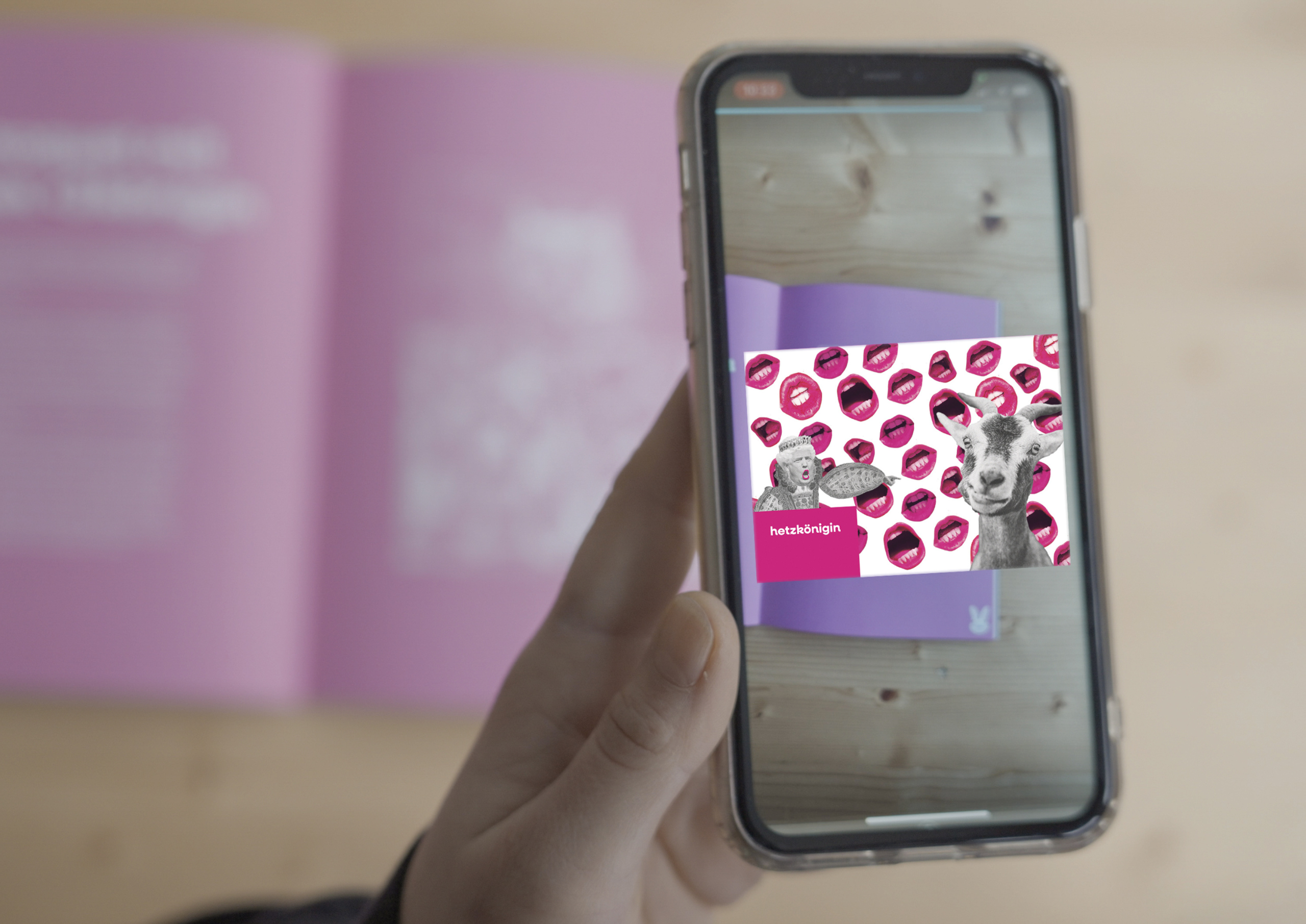
A field guide to Wonderland.
Or, in other words: A cross medial approach to build resilience & resistance against modern Propaganda on Social Media.
Define the problem/need you are solving or addressing with your project. How does it address the Open Call criteria, such as environmental impact, social engagement, circularity, user experience, resource efficiency, and community-driven solutions?
I‘m sure you can feel it too. Unsteadiness, discontent, distrust. We find ourselves in times of crisis. It comes at no surprise that we are now especially vulnerable to fall for “white rabbits“ which lure us into their rabbit holes by promising security, idyll and the one-and-only solution for all problems – ideologies too tempting to ignore. It is what many believe has perished with the Nazi Regime nearly a hundred years ago.
The reality is, propaganda is as existent as ever. All that has changed are its tonality, aesthetics, the media. Not that this change was by chance. It simply adapted to stay concealed. The Social Media Logic and recent developments of AI are contributing to spread manipulative content faster, more convincing and more gripping than ever before.
Please describe your project, reflecting on the concept, inspiration, materials, technical aspects, methods and process(es).
“Everybody knows enough about propaganda to dislike it, but few know enough to know what it is that propaganda actually does“, says Cory Wimberly.
To recognise the dangers early enough, we need to understand the mechanisms. That is why I designed a guide. It lifts the rosy veil of ideological promises. Inspired by the methology of “Prebunking“, readers learn about five common manipulation techniques and how to recognize them through a process of premonition, explanation and encountering examples. However, propaganda is not rational. It‘s toying with emotions. Thus, I approached the problem by making knowledge tangible through metaphors, namely the famous adventures of Alice in Wonderland but also popcultural references. The informative layer of the leaflet extends into the digital realm – just as propaganda did – by Augmented Reality.
What do you think makes your project innovative compared to the existing efforts and ideas in the field it addresses?
A common way to fight disinformation is by debunking the lies and factoids told by propagandists. However, various problems occur if we rely only on trying to redo the damage. Recent study suggests to expand the approach by including prevention: Prebunking. The goal is to preemptively build resilience and resistance against manipulative content. My main concern was how to translate the findings into a project, which would feel trustworthy and invites to properly engage with the topic, while also acknowledging today‘s accelerated consumption habits. The result is crossmedial: I translated the concept of a political pamphlet into a modern zine, combining analogue and digital by including AR-Elements. That way I could go beyond the expectations we have when consuming print products.
Does it impact or reflect young people need(s) and how?
One major aspect of developing the concept and visual language of the project was understanding where and how young people encounter propaganda. Studies suggest today‘s main touchpoint to be Instagram for my target group, which by it‘s design and logic seems to aggravate dynamics which allow manipulative rhethoric to flourish. Content floods us fast and unsorted. My project responds with the contrast of editorial clarity and structure, consciously enhanced by pop cultural references and memes, absurdity and humour. The AR contents add the possibility of working with motion and sound, to create more accurate links to what we encounter daily in “posts“ and “reels“. My goal is to craft an intuitive access, to empower young people. Because with the necessary tools, we can spot rabbit holes before the fall.