Making a environmentally friendly, low cost pet transporter that is easy to store away.
Define the problem/need you are solving or addressing with your project. How does it address the Open Call criteria, such as environmental impact, social engagement, circularity, user experience, resource efficiency, and community-driven solutions?
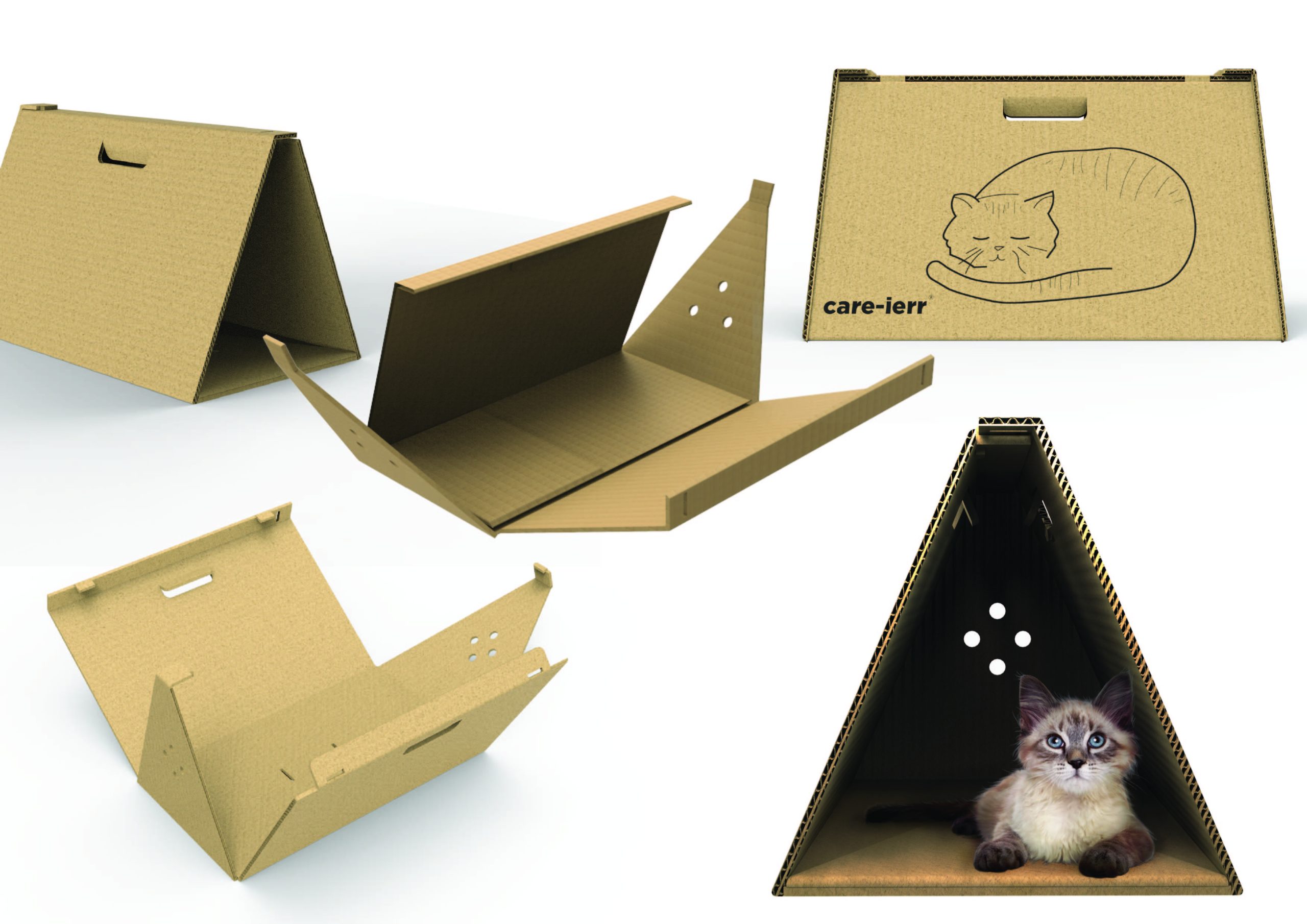
Standard cat carriers are mostly made of plastic and take up a lot of space, especially if we take into account that cats are vetted a couple of times a year. The idea was to apply a somewhat different approach and offer an alternative that takes into account the impact on the environment and the usability of the product itself. The project offers a solution through a foldable cardboard transporter, designed for short-term use that protects the environment. Plastic is replaced by a material that is recycled and supports more sustainable user behaviour. The structure of the material enables the product to be easily stored and disposed when not in use. Tactility and simple assembly improve the user experience, and cats’ affinity for boxes was also taken into account. It can be produced easily and locally, promotes good use of resources, circularity and a more responsible approach to products for pets.
Please describe your project, reflecting on the concept, inspiration, materials, technical aspects, methods and process(es).
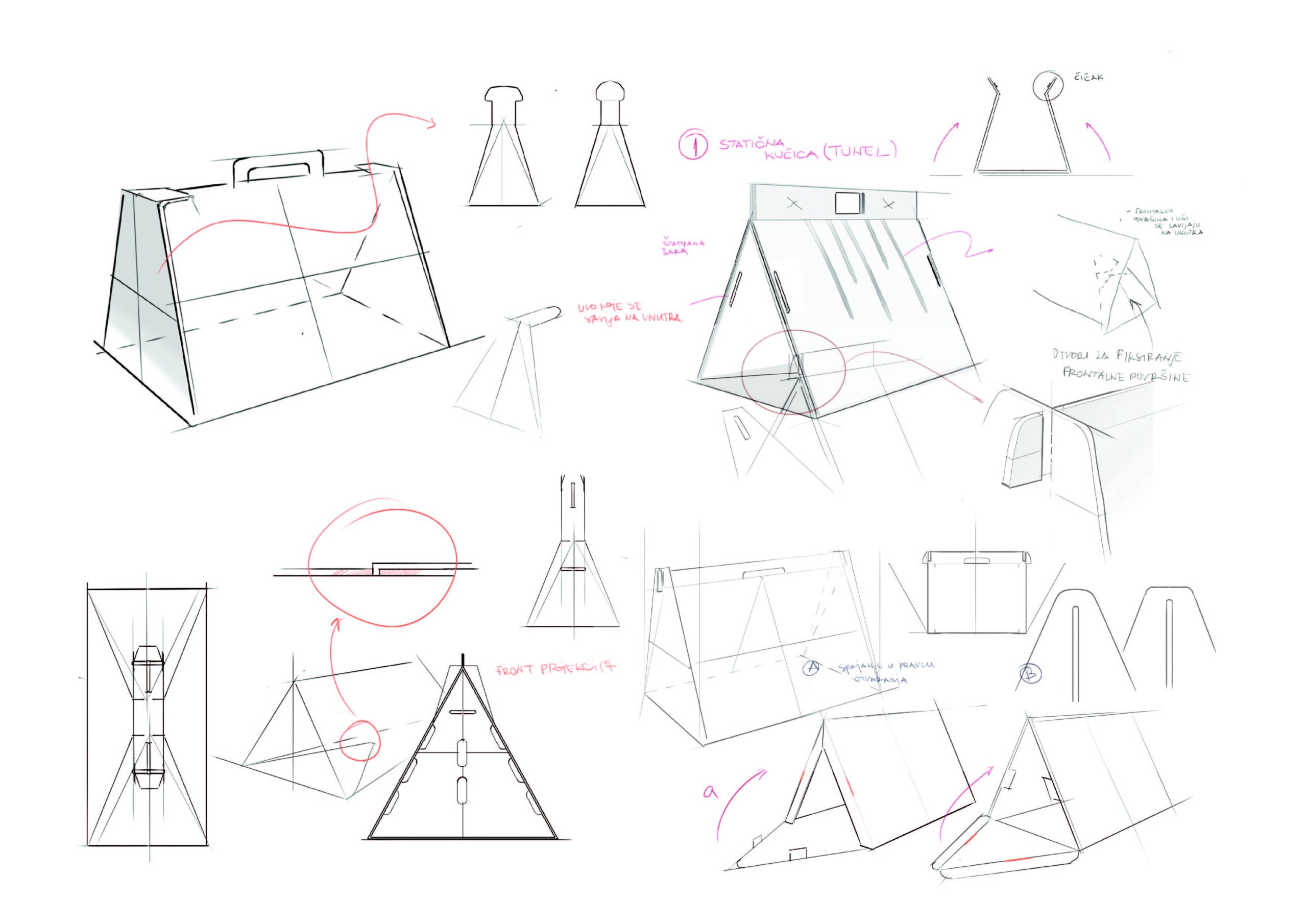
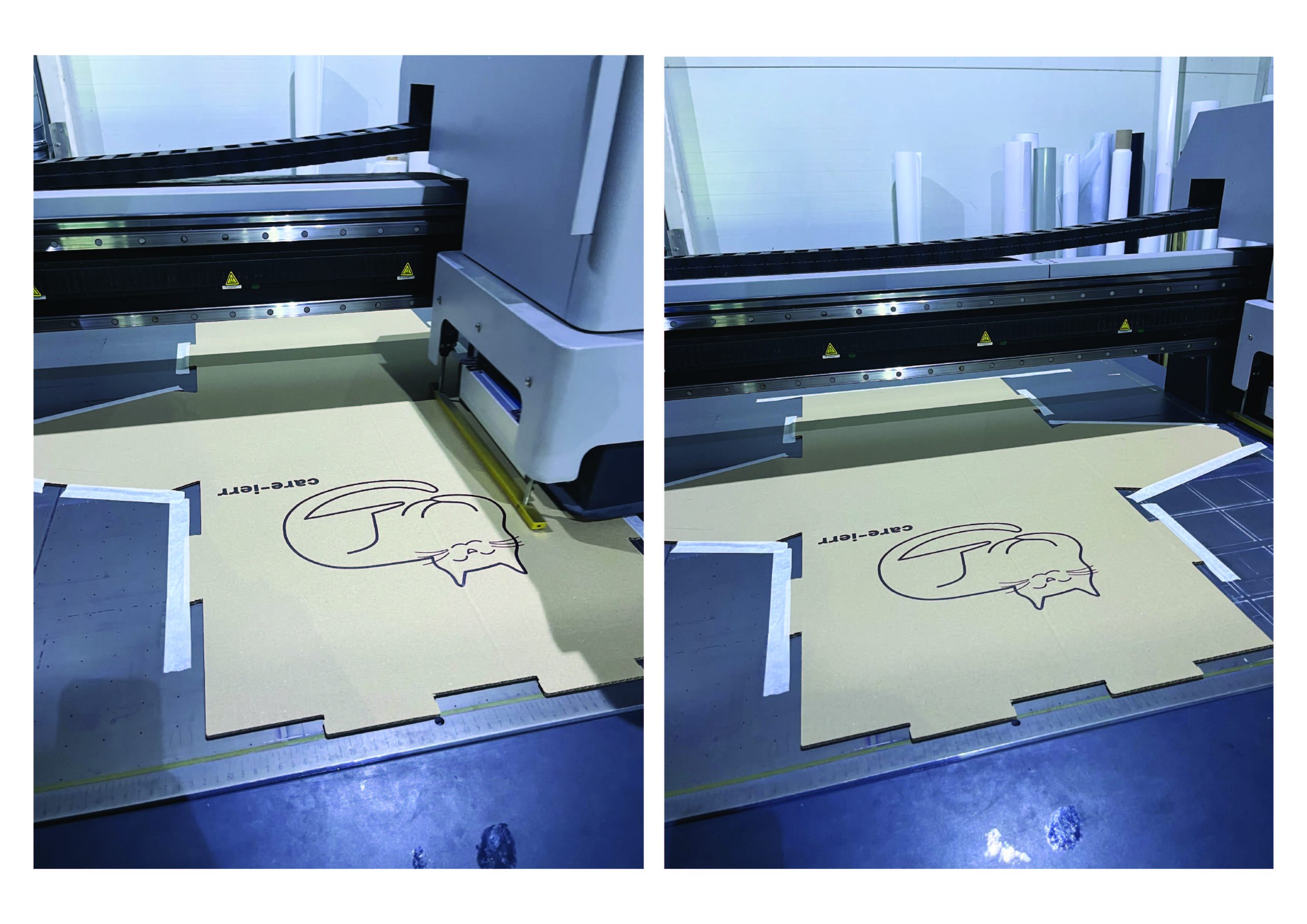
The concept was designed by considering the daily habits, transport solutions of pet owners and material usage. It is made of cheap, recyclable material and can be easily produced by cutting on a CNC machine, with less than 10 minutes of work on each copy and the cutting layout is adapted to make the best use of the material. Multiple prototypes were developed in order to test structure, usability and assembly order. The design is optimized for folding and flat packing, and can also have an additional purpose as a cat house or toy. Air vents, safe and secure closing system as well as a reinforced handle for stable carrying are integrated into the product and taken into account. The project combines simple manufacturing methods and user-focused design.
What do you think makes your project innovative compared to the existing efforts and ideas in the field it addresses?
This solution simplifies the product, reduces the use of materials while keeping only the essence and utility value of the classic carrier. It looks at it from a new, more natural angle.
Does it impact or reflect young people need(s) and how?
This project caters to the everyday needs of younger people, especially those living in smaller spaces or moving frequently. Traditional pet carriers take up quiet a lot of space but are only used a few a times a year. The foldable design offers a more flexible and space-saving alternative that fits better into today’s lifestyle. It is also affordable and easy to produce, making it more accessible to students and younger pet owners. At the same time, many young people are becoming more and more aware of environmental issues and are trying to make more responsible choices. Using recyclable cardboard and reducing unnecessary material reflects that mindset. The carrier can also be used as a small shelter or object for the cat, extending its use beyond transportation. The project connects practical constraints with a more conscious and adaptable way of living.