
LightPool
CONCEPT
LIGHT INTERACTION THROUGH COOPERATIVE MOVEMENT
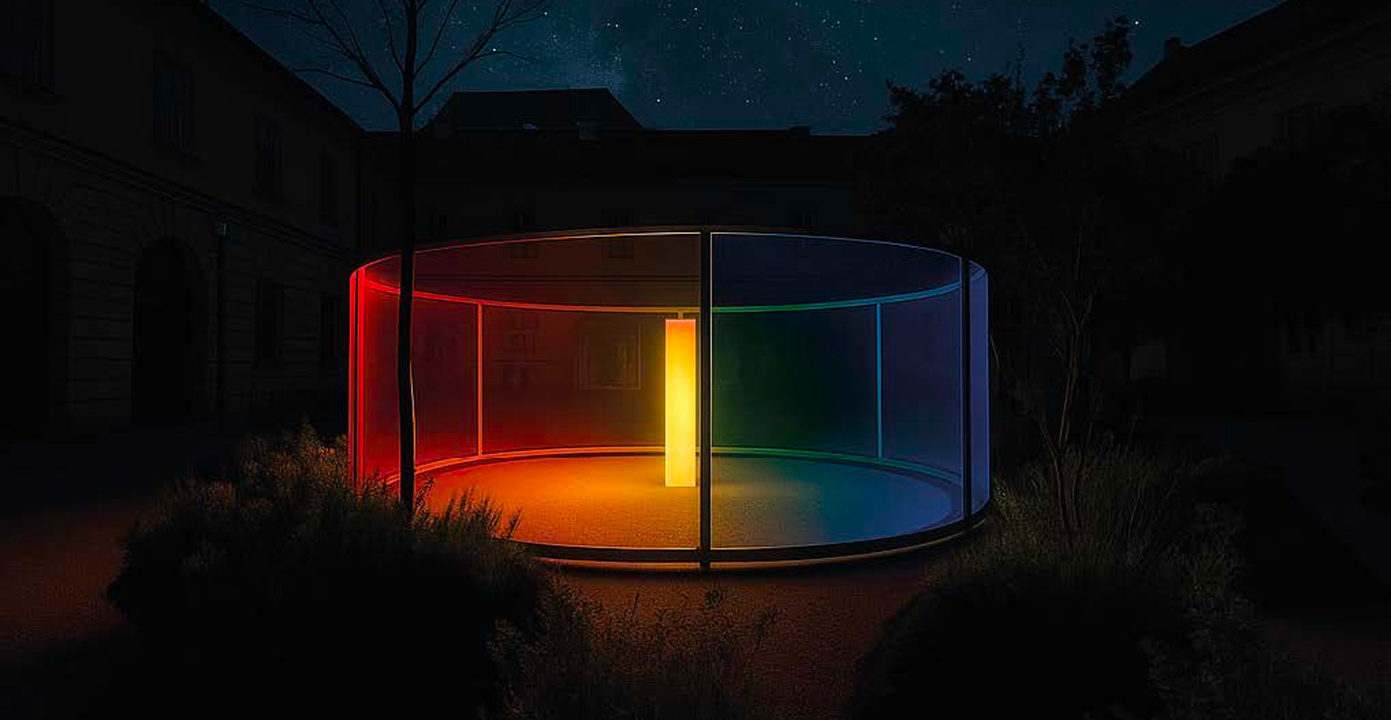
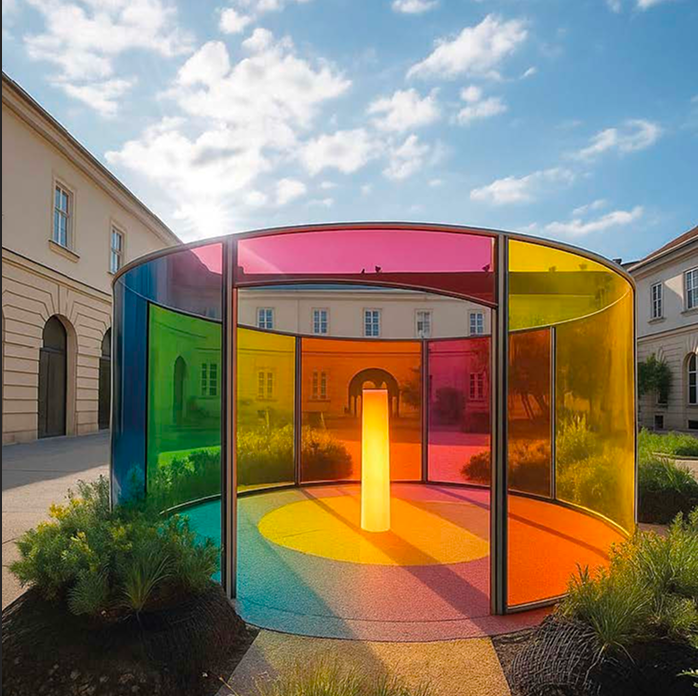
Interactive installation consisting of concentric panels illuminated by spotlights placed along the facades of the buildings enclosing the arkitekturzentrum wien. This installation incites human collaboration by offering a chance to explore spatial expression through light interaction and group cooperation.
The three layers of translucent panels made from recycled PET are placed on fixed rails installed on the floor of the architectural quarter. Their placement can easily be rearranged by groups of 2-4 people working together; the panels are light to manoeuvre, but their large dimensions require cooperation for exact placement.
The lights illuminating these panels are placed on two levels along the building facades, and can be controlled by the public by scanning QR codes, allowing them to control light direction and colour (red, blue, green). Shining various lights alters the aesthetic expression of each panel, growing in intricacy and complexity with the different possible panel combinations.
TEAM
Bio Designer
I am a Spanish bio-designer specialised in bacterial-cellulose in fashion applications, with a background in knitting and footwear. Making use of new technologies intertwined with traditional design approaches, my work investigates the potential of more-than-human design and living materials through multidisciplinary, speculative fashion and textile proposals. I recently completed my Master’s
at the Swedish School of Textiles, where I investigated the possibilities of shared human/non-human agency towards textile outcomes, and am now working towards my PhD at Kyoto Institute of Technology.
Although I come from and maintain an artistic design focus, my practice has led me to deepen my understanding of microbiology and organic chemistry through classes and workshops in order to support my design research explorations.
Industrial and CMF Designer
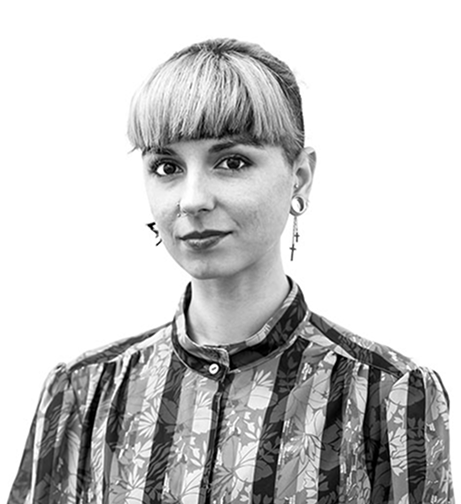
A graduate of Central Saint Martins’ Product Design program, I bring expertise in bridging products and users through augmented reality (AR) innovation
and additive manufacturing.
With a keen focus on CMF (Colour, Material, Finish) design, I have led collaborative projects for global brands including Dell, Kohler, Covestro, GAC, and Logitech.
Craftmanship Researcher and Designer
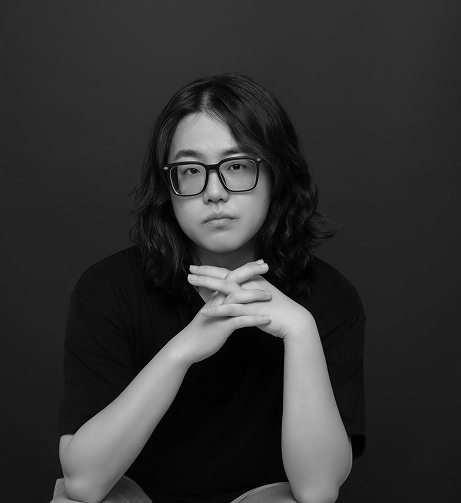
Originally from South Korea, a multi-disciplinary researcher and designer based in Eindhoven, the Netherlands. Her practice critically engages with the social, economic, and cultural systems that shape everyday life, drawing on societal norms, the social economy, and systemic structures to examine manufacturing, production, and labour, both past and present, and imagine the future.
Mainly working with material craftsmanship, she translates the investigations into object-based installations that reflect on contemporary issues. The work combines hands-on making with research-driven inquiry, questioning the values of efficiency and perfection embedded in everyday systems. Works invite audiences to think critically, broaden perspectives, and confront the environmental and socio-economic consequences of production, highlighting issues that unfold not only locally but across geo-economic networks. By using materiality as a lens, her practice explores and exposes the hidden structures that shape our contemporary world, bridging craft, critical reflection, and systemic inquiry in tangible, thought-provoking works.
Multidisciplinary Designer
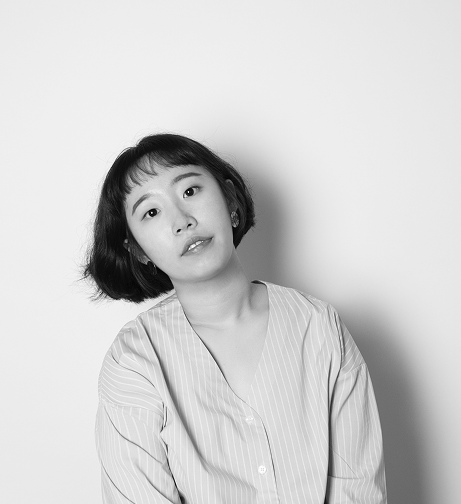
Zhong-Wei Lin is a designer dedicated to sustainability, specialising in product, brand, and packaging design. He is currently pursuing a Master’s degree in Design Products at the Royal College of Art in London.
With extensive experience in sustainable design, he has collaborated with Taiwan’s Ministry of Education, the Environmental Protection Administration, and private
enterprises, focusing on circular material innovation and social design. Sustainability and social impact are at the heart of his work, earning him multiple international awards, including the Red Dot: Best of the Best, International Design Excellence Awards (IDEA), and the A’ Design Award. He is also a recipient of the 2nd Chia Hsin Sustainability Scholarship and the 2024-2025 Chevening Delta Climate Scholarship.
PROCESS
GETTING TO KNOW MORE ABOUT MQ
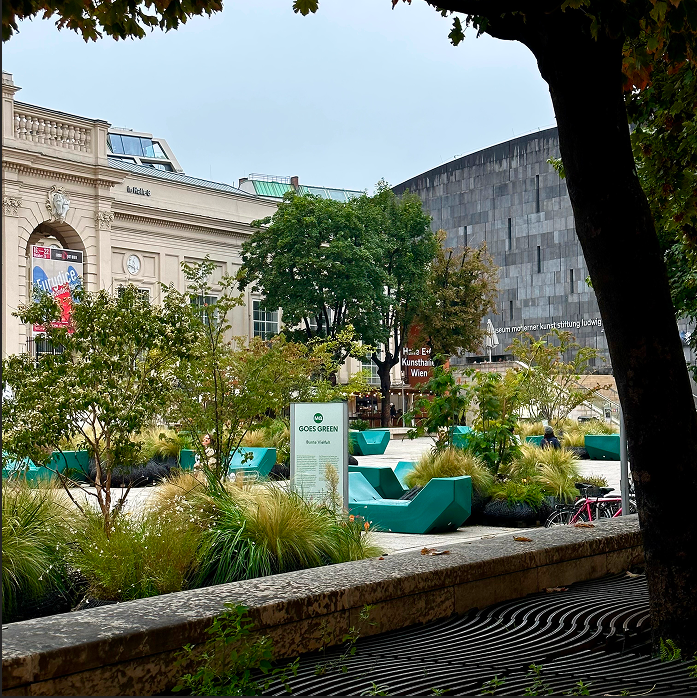
INSIGHTS FROM WALKING AND EXPLORING THE SPACE
The project began with a period of exploration within the MuseumsQuartier (MQ) in Vienna, where participants engaged in observing the site and its surroundings. Walking through the courtyards and public spaces offered valuable insight into the rhythms of daily activity — from visitors and residents to the cultural institutions and creative communities that define the area. Particular attention was given to the architectural composition and spatial divisions, noting how movement, light, and interaction shape the atmosphere of the space.
These early observations laid the foundation for the project’s concept: translating the dynamic relationships within the MQ into an interactive spatial experience. By studying how people navigate, gather, and connect within the architectural environment, our team identified light and movement as key elements through which to express collaboration and collective engagement.
THINKING THROUGHT DISCUSSION AND CONNECTION
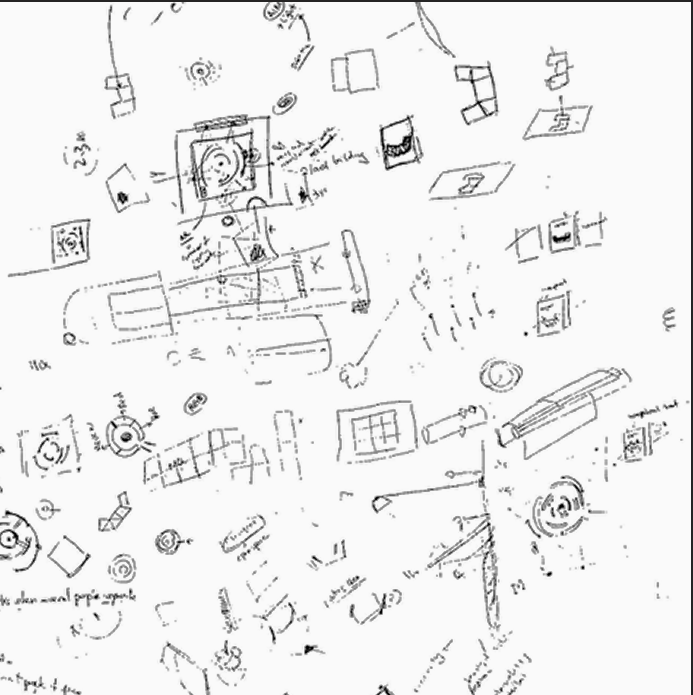
SKETCHING< IDEATION< SHARING IDEAS AND THOUGHTS ABOUT THE PLACE AND THE SOCIETY AROUND MQ
At the Museums Quartier (MQ) in Vienna, the residency became a space for genuine exchange and collaboration. Building on personal experiences and insights from projects in other countries, participants explored how design can connect people across diverse backgrounds and perspectives. The gr
oup dynamic encouraged open discussion, where ideas were shared, questioned, and developed collectively.
Through this process, concepts gradually took shape — evolving from words to sketches and finally into a digital prototype. The decision to work with light and colour reflected a shared vision of connection and transformation, symbolising how collective creativity can illuminate new ways of thinking and working together.
OUR FINAL CONCEPT
LIGHT INTERACTION THROUGH COOPERATIVE MOVEMENT
The cooperative process involves a two-fold approach where panel placement and light are integrated in the process of cooperative creation.
This open-ended approach, incorporating light and spatial exploration, transforms the courtyard into a hidden gem embedded within the Viennese artistic fabric.
The social aspect marked by the necessary collaboration is underscored by values of sustainability and circularity derived from material selection.
As a souvenir, postcards commemorating the installation can be acquired at the locales within the courtyard after visiting the exhibitions. These are made from the same recycled material as the panel and serve as a memento of the time exploring and creating the space of the installation.
EXPERIENCE
RETHINKING DESIGN THROUGH EXPERIENCE
The NEXT GEN DESIGN Residency in Austria offered an insightful and transformative opportunity to reconsider the role of design today. The program fostered an atmosphere of openness and authenticity, encouraging genuine exchange rather than formality.
Participants were challenged to look beyond aesthetics and explore the social, cultural, and ethical dimensions of design. The residency became a space for critical reflection on how design shapes ideas, systems, and experiences that influence the world around us.
Through collaboration, dialogue, and experimentation, the program demonstrated that growth often comes from questioning assumptions and embracing uncertainty. It was a demanding yet rewarding experience — both creatively and professionally enriching.