
Balance to Glow
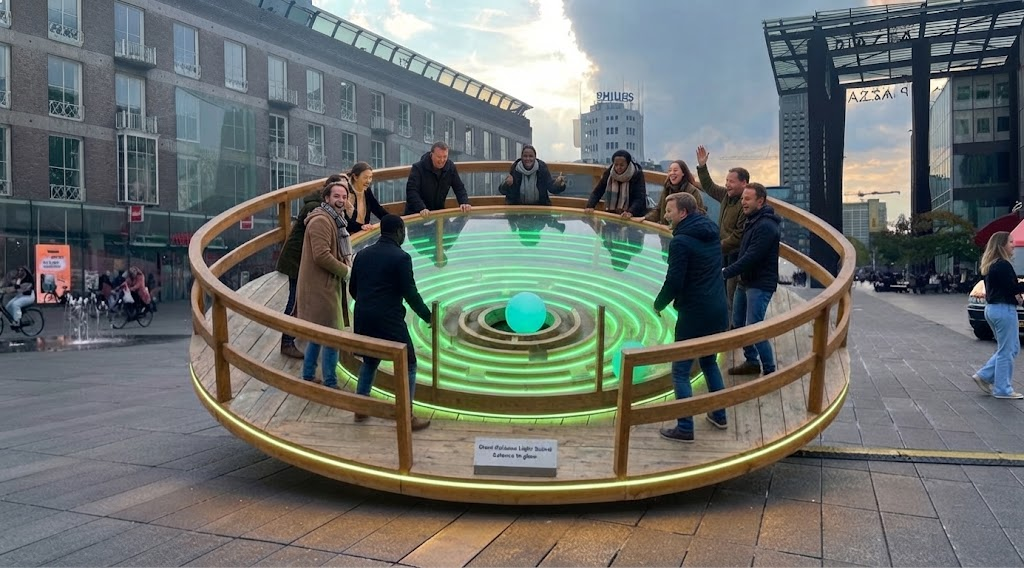
CONCEPT
A Collective Balancing Game for a Connected City
FINDING BALANCE MEANS FINDING IT TOGETHER.
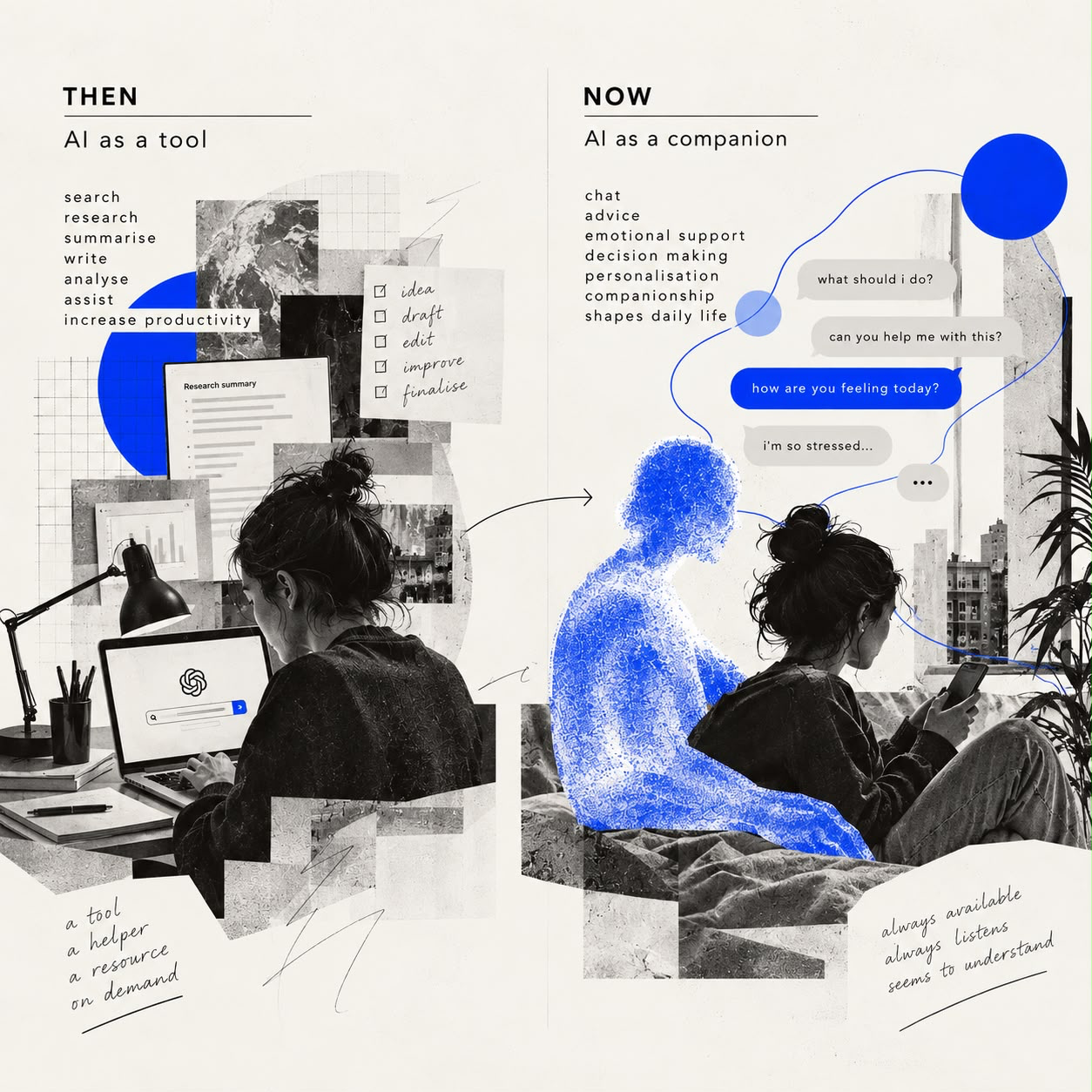
We started by exploring how our relationship with technology has shifted: we once used digital tools to get tasks done, but today, AI is increasingly treated as a companion, a friend, or an advisor. This digital hyper-connection has coincided with a loneliness pandemic, and observations show that people linger far less in public spaces today compared to the past.
Rather than designing against AI, Balance to Glow is designed to protect real human connection. It is a language-free, physical, and kinetic community installation sited at 18 Septemberplein in Eindhoven. By encouraging strangers to coordinate their physical movements together to balance a glowing core, it transforms digital dead zones into spaces of shared play, turning isolation into spontaneous, meaningful human interaction.
TEAM
Architect and founder of Aakriti Atelier, working at the intersection of architecture, ecology, and digital design. Trained at IAAC in Barcelona, her work explores how urban systems can integrate biodiversity through scalable, technology-driven interventions. Her projects move beyond static buildings toward adaptive ecological frameworks, combining spatial design with simulation tools. Through BEASTIE, she develops a platform that enables users to design, visualize, and evaluate biodiversity interventions within existing urban environments. Her approach focuses on transforming everyday spaces into active ecological infrastructures that support multispecies coexistence.

I am a System Service Designer driven by an active desire to immerse myself in complexity and challenges. Rather than avoiding friction, I intentionally place myself in environments where I can experience diverse communities, distinct behaviors, and alternative ways of thinking and living. I believe that true design value comes from deeply understanding these varied perspectives, which allows me to position myself to design more effectively. My process focuses on translating these insights into collaborative frameworks and social rituals that help people navigate rigid institutional systems. By embracing continuous, empathetic exploration, I design the soft infrastructure needed to empower communities and build resilient, long-term impact.
PROCESS
FROM TOOL TO COMPANION
THE PROVOCATION | WHY
AI is reshaping how we work, think, and connect, evolving from a productivity tool into an everyday companion. But as our digital interactions become more personal, what happens to human-to-human connection?
Rather than viewing AI as good or bad, Balance to Glow explores a counter-provocation: Could the future of technology encourage us not only to connect with machines, but to reconnect with each other?
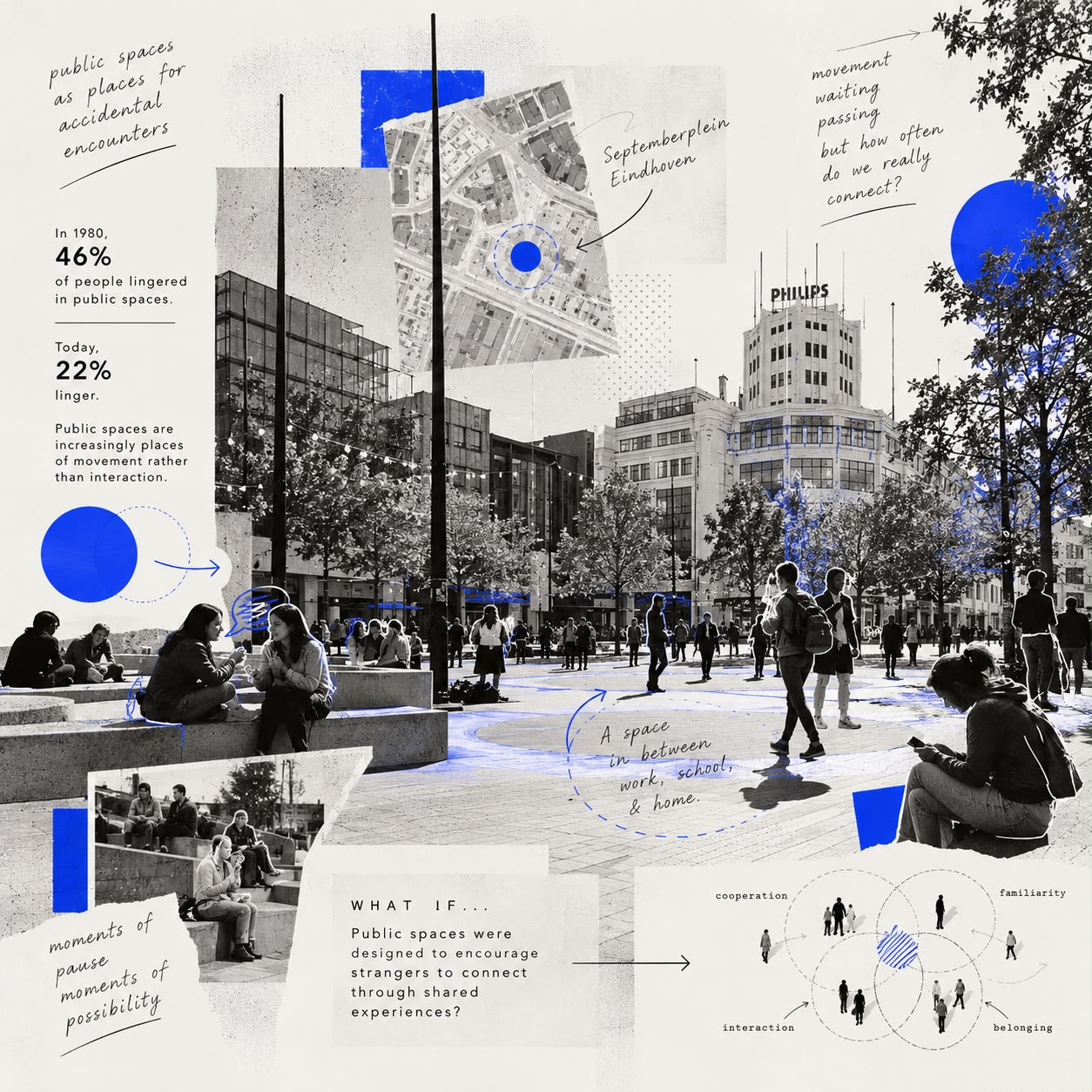
RECLAIMING THE IN-BETWEEN
THE OPPORTUNITY | WHERE
Public squares are increasingly places we move through rather than spaces where we connect. In 1980, 46% of people lingered in public spaces; today, that number has dropped to 22%.
Sited at 18 Septemberplein in Eindhoven, our intervention asks: What if public spaces were designed to encourage strangers to connect through shared play? Turning ordinary moments of passing by into reasons to stay.
DESIGNING INTERDEPENDENCE
THE EXPERIMENTATION | HOW
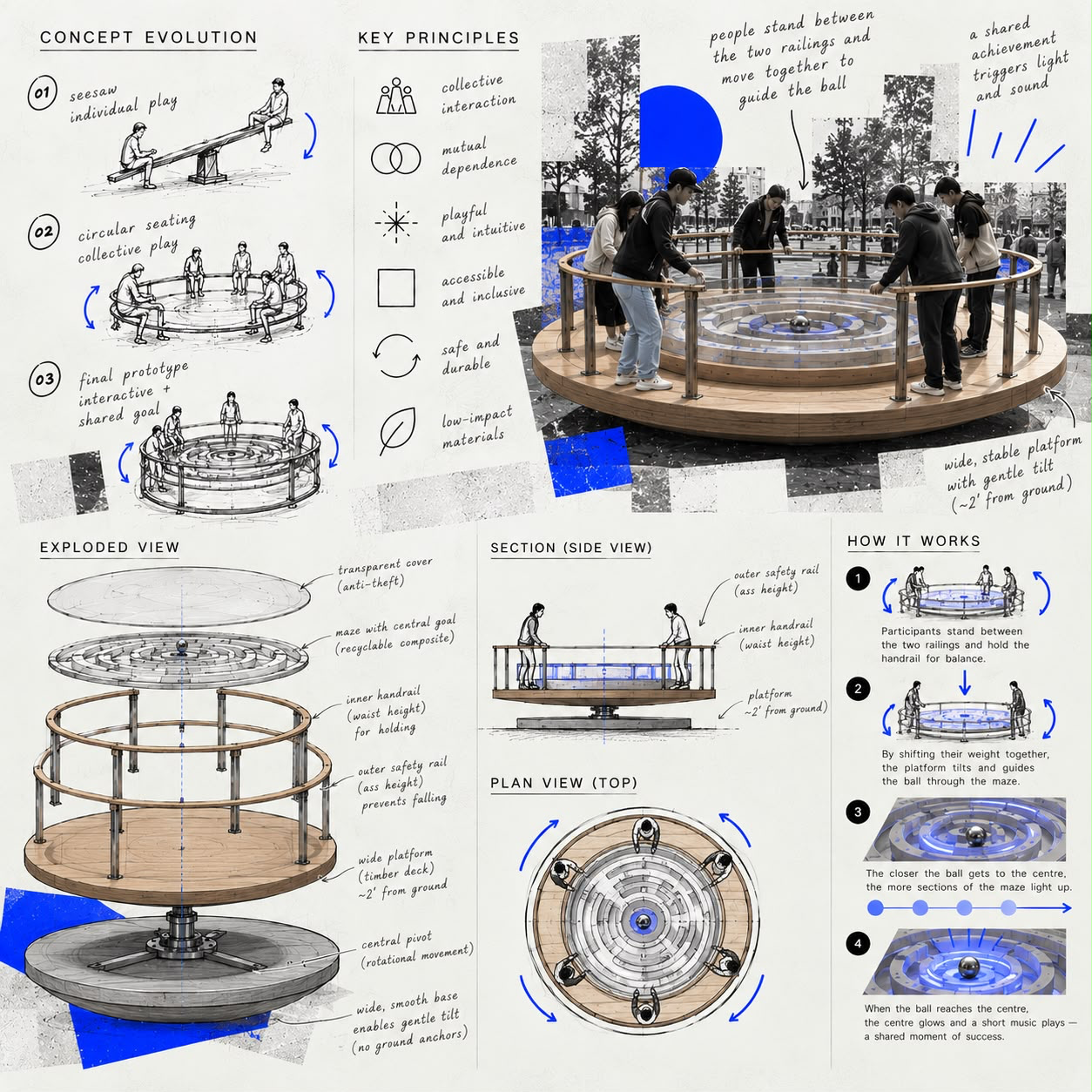
Moving from an individual seesaw to a collective circle, we developed a language-free collaborative balancing game.
Participants stand between two railings on a gently tilted platform (2° tilt). By shifting their weight together, they guide a ball through an internal maze. As the ball nears the center, segments illuminate; once reached, the core glows and a musical cue celebrates their shared achievement. Finding balance means finding it together.
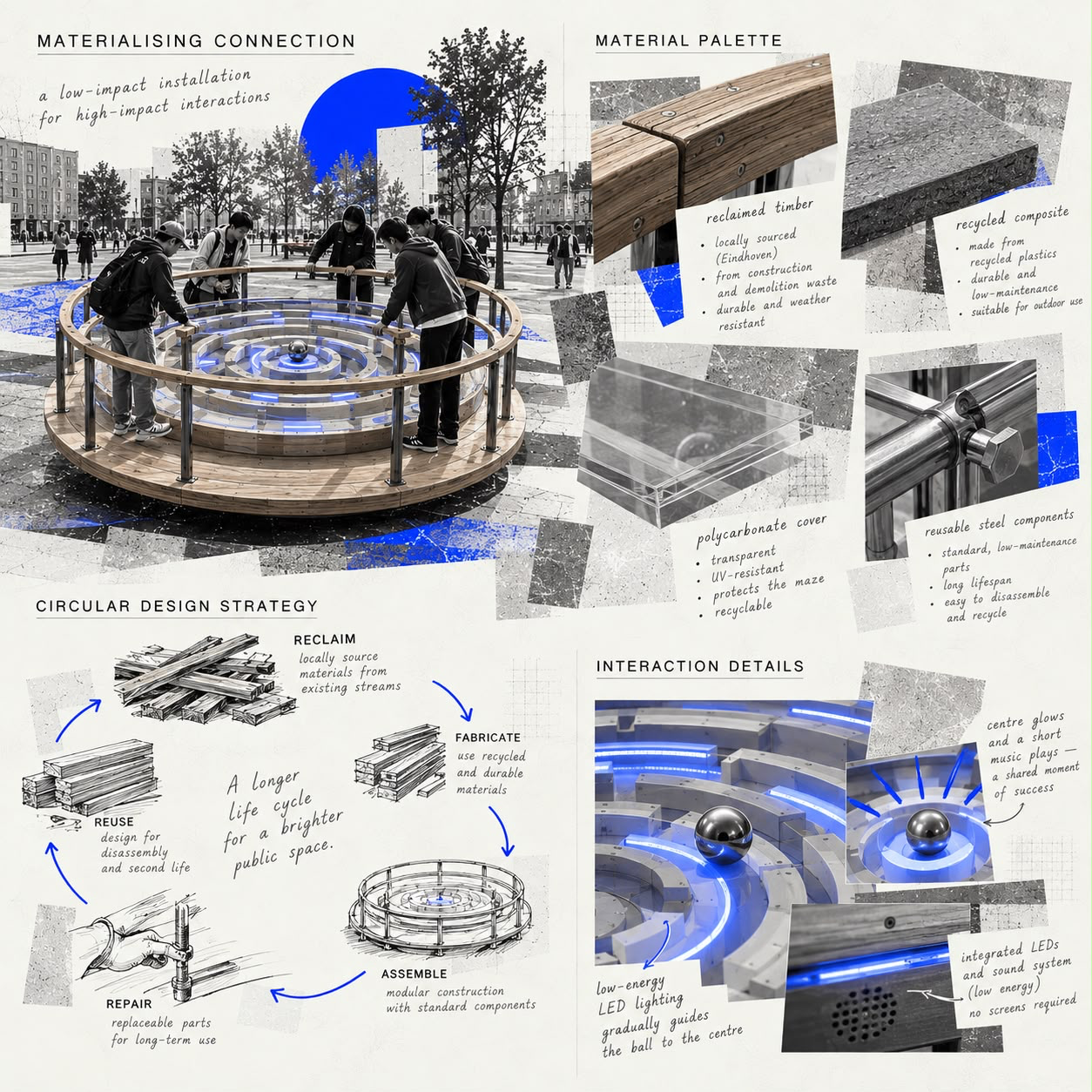
MATERIALISING CONNECTION
THE REALISATION | WHAT
Balance to Glow answers this by combining circular design principles with minimal digital intervention, using locally reclaimed timber, recycled-content composites, protective transparent polycarbonate, and reusable steel components. Rather than relying on complex digital interfaces, it features low-energy LED lighting and a simple sound system powered by physical cooperation. Furthermore, the installation ensures long-term sustainability through modular components, replaceable elements, and reversible connections designed for easy maintenance, disassembly, and future reuse, proving that low-impact materials can drive high-impact human interactions.
EXPERIENCE
Participating in the residency challenged us to look beyond screen-based solutions and confront the realities of the loneliness pandemic head-on. Working through intense, fast-paced cycles of research, ideation, and prototyping forced us to think and work differently, proving how physical, language-free design can spark spontaneous human connection in public spaces. Beyond the project itself, the experience was defined by its vibrant international environment, offering an incredible opportunity to meet, connect, and collaborate with warm, talented people from all over the world. It was an invaluable journey of translating the themes of Sustainable Digital Futures into a tangible, circular, and joyful community intervention for Eindhoven, shaped by wonderful friendships and unforgettable teamwork.
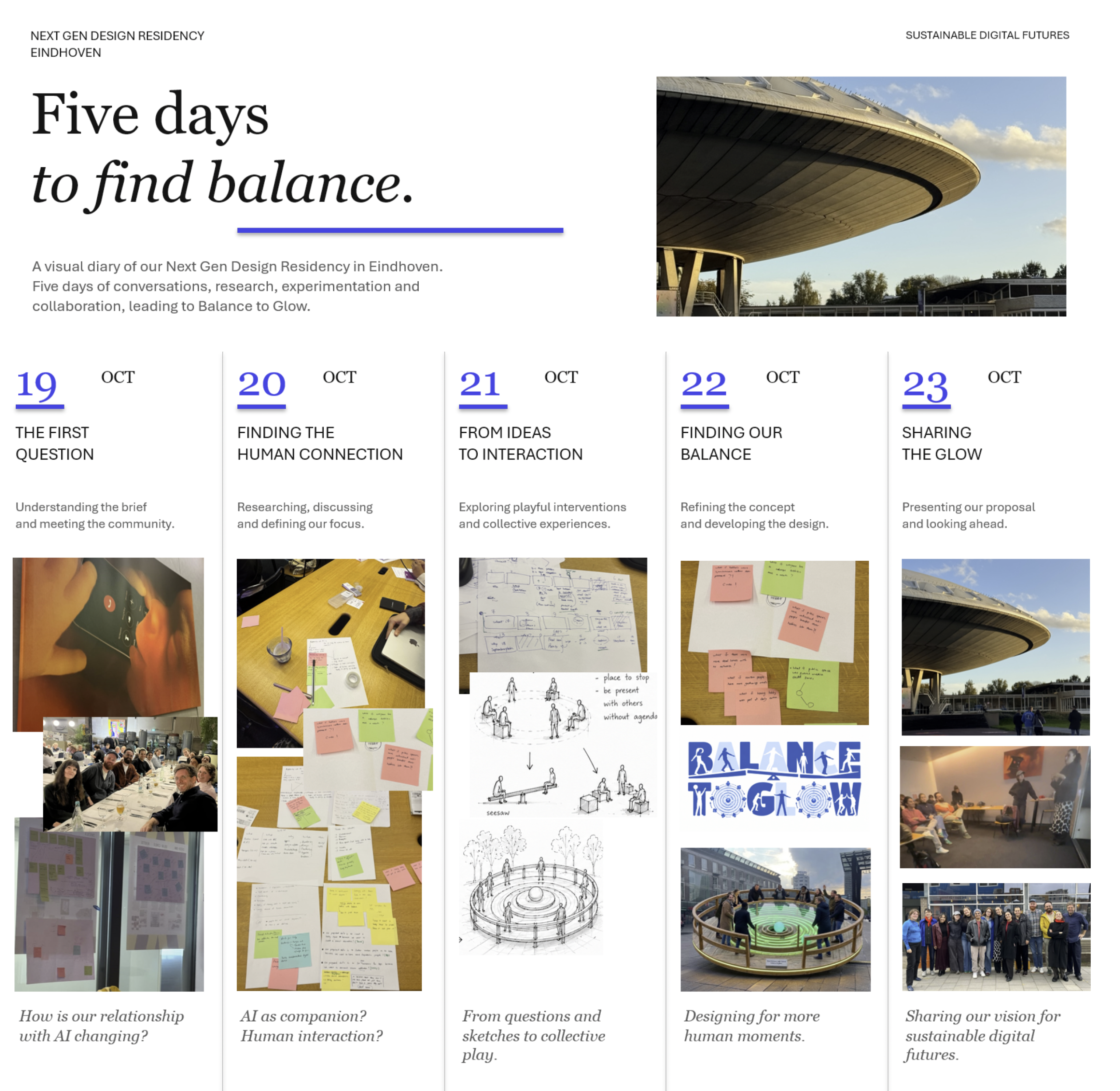
Visual diary: “Five days to find balance”.
19 October: The first question. Understanding the brief and meeting the community. How is our relationship with AI changing?
20 October: Finding the human connection. Researching, discussing and defining our focus. AI as companion? Human interaction?
21 October: From ideas to interaction. Exploring playful interventions and collective experiences. From questions and sketches to collective play.
22 October: Finding our balance. Refining the concept and developing the design. Designing for more human moments.
23 October: Sharing the glow. Presenting our proposal and looking ahead. Sharing our vision for sustainable digital futures.