
Are You Scrolling for Free?
CONCEPT
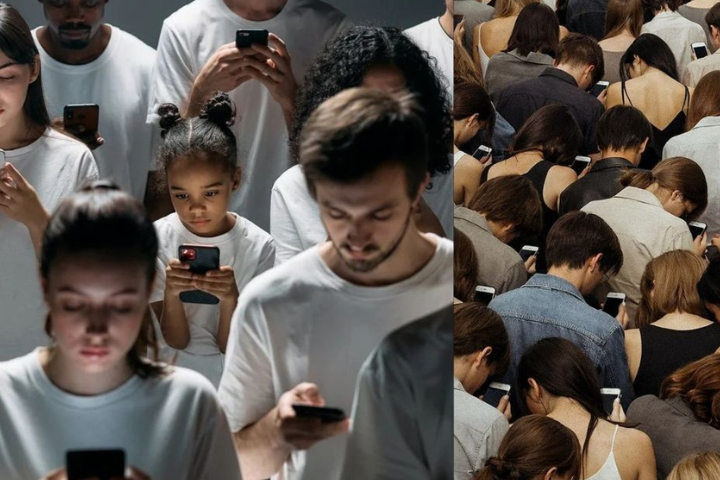
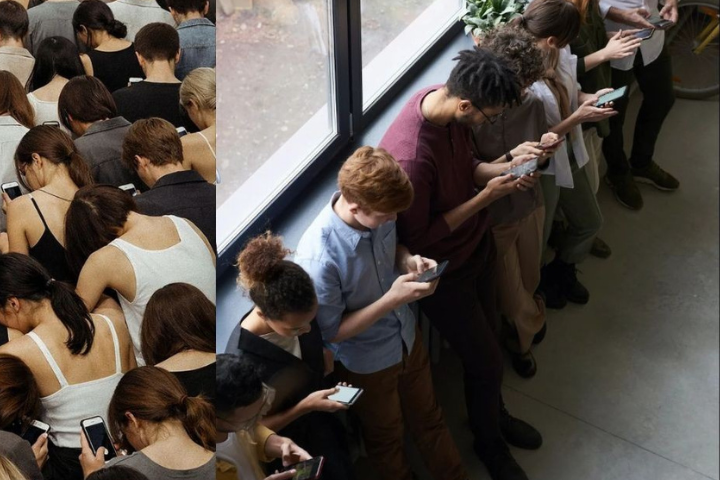
WE GIVE OUR ATTENTION FOR FREE, AND TOGETHER IT BECOMES ENORMOUS VALUE. WHAT IF SOME OF THAT VALUE CAME BACK TO THE LIFE WE SHARE?
We are promised more convenience, more productivity and more connection. But what would progress actually look like in our everyday lives? Would we have more time for each other? Would it be easier to meet our basic needs? And who would benefit?
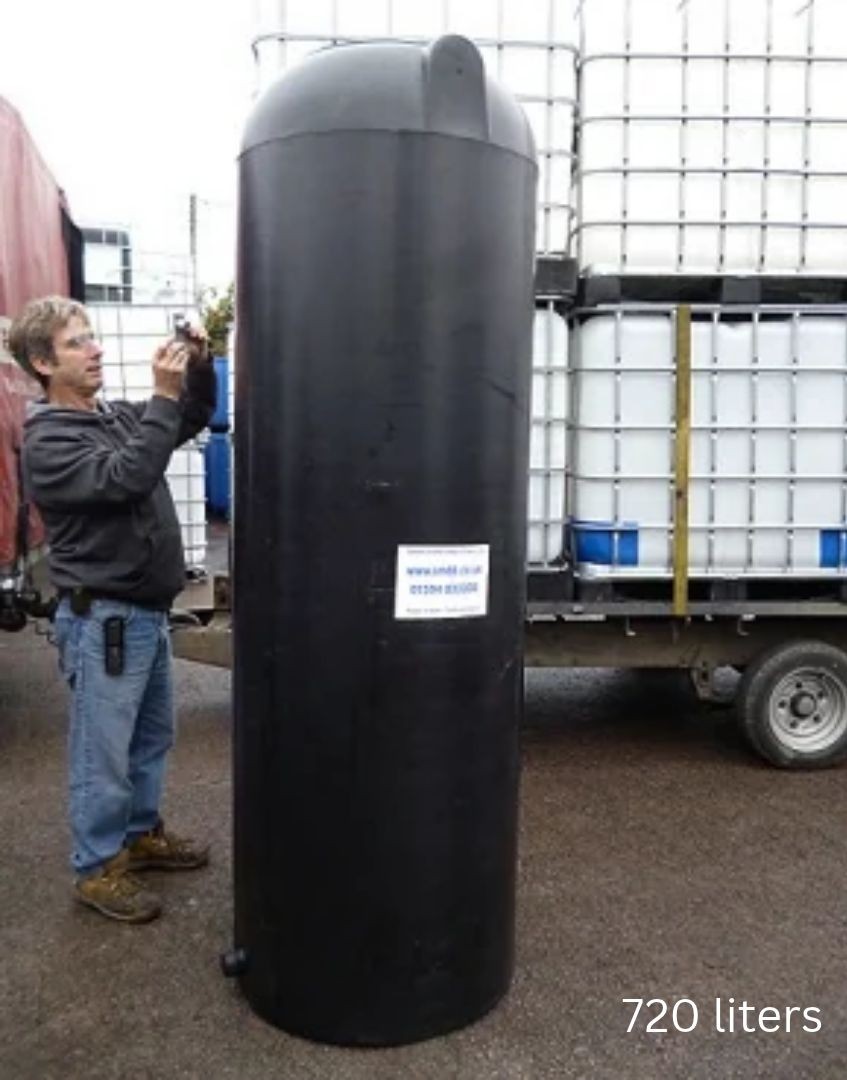
Every glance, pause and scroll is a small act of attention. Individually it costs us nothing. Together, it creates enormous wealth for the platforms that collect it, while the costs are carried elsewhere: in energy, water, raw materials, e-waste and the infrastructure behind every feed and every generated video. Two hours of AI video generation alone can require roughly 36-130 kWh of electricity and 140-720 liters of water.
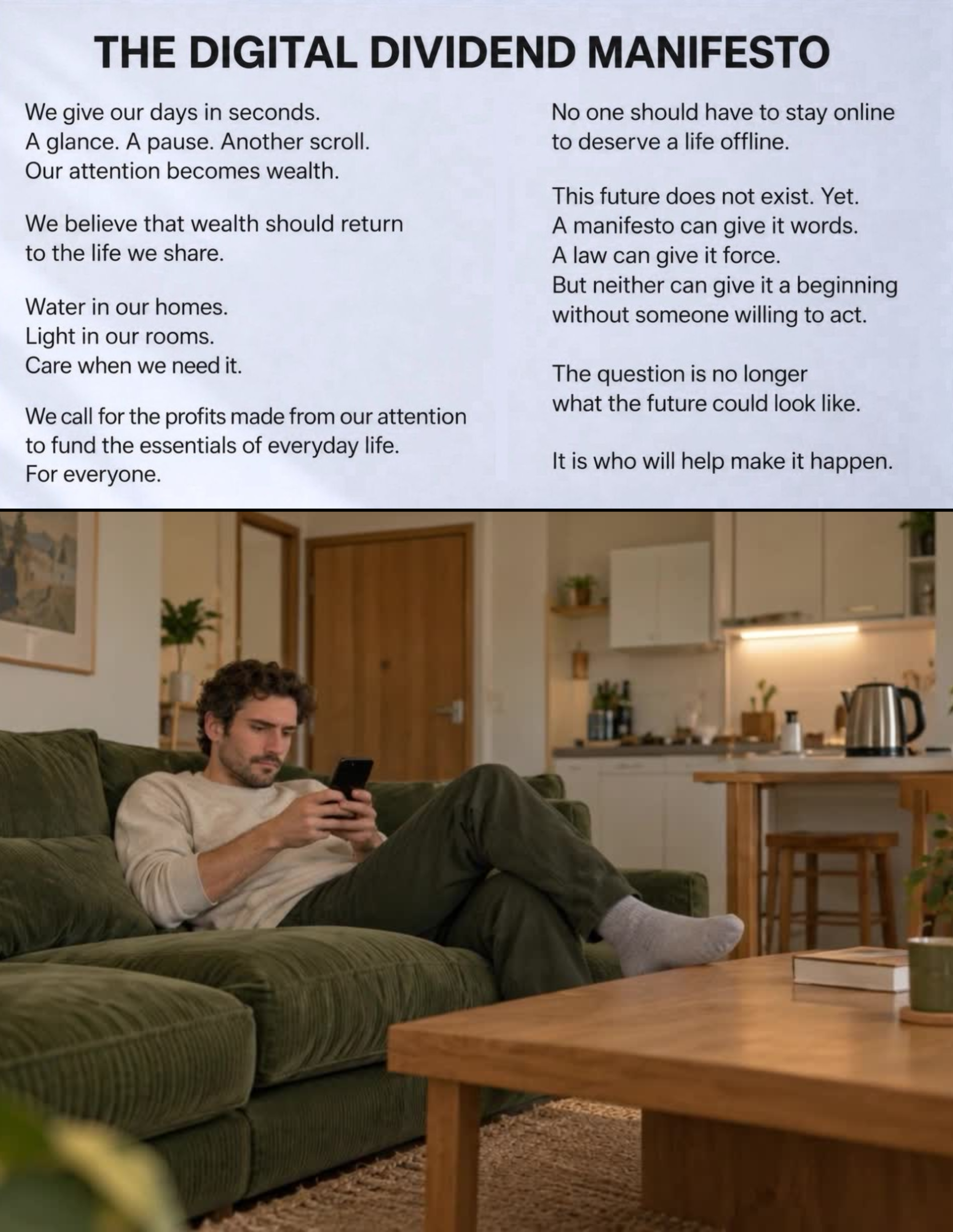
“Are you scrolling for free?” asks what comes back to the society that produces this value. The project answers in two parts: an AI-generated video and a speculative manifesto, The Digital Dividend Manifesto, presented as a framed, everyday artefact. It imagines profits made from our attention funding the essentials of daily life: water in our homes, light in our rooms, care when we need it. For everyone.
We imagined changing the system, and didn’t notice it directing us. The future doesn’t exist yet. Our choices do.
The video is the critique. We made it with generative AI to save time and effort, and in doing so we walked into the very trap the project describes. Between us we have real experience in the film industry, Stefan as a producer and Emina as a scenographer, so we could have shot it ourselves, with people, spaces and real crafts. Choosing the shortcut made us part of the system we question, and the resource cost of that shortcut is exactly what the research behind the work puts on the table.
The manifesto is the artefact that answers the video: a framed text that proposes what the value of our attention could return to society. Both were presented as a presentation to the group and guests in Eindhoven during NXT GEN 2026.
TEAM
Emina Murtezic is a product designer. Through her work she connects design, research and strategic planning in projects that combine accessibility, sustainability and social impact.
Her focus is on challenging stereotypes and developing more inclusive systems, spaces and experiences for neurodivergent people, children, the elderly and other marginalised groups, using a multidisciplinary approach and different methods and media in the service of community and social change. She is the founder and president of the Association for Inclusion and Affirmation of Neurodiversity and the national coordinator of the Neurodiversity Foundation for Bosnia and Herzegovina and Serbia.
She has received international awards, and her work has been shown at festivals and exhibitions in Bosnia and Herzegovina, Serbia, Croatia, Montenegro, Slovenia, North Macedonia, Austria, Spain, the Netherlands and Estonia.

Stefan Aleksandar Jovanovski is a curator, art director and concept-driven cultural practitioner based in Skopje, with more than 10 years of experience in contemporary art, community-based practice and multidisciplinary cultural production. He is the founder of KomshiLOOK, a platform that transforms overlooked public spaces into stages for collective cultural experience. His work combines site-specific art, performance, light and media art, dramaturgy and community engagement.
He is also the founder of Skopje Light Art District and The Smallest, and one of the initiators behind LUNA. As a concept thinker, he develops new artistic formats that use art as a tool for visibility, participation and social connection, exploring how culture can create dignity, reshape everyday space and open new ways for connection.
PROCESS
INSPIRATION
THE GAP BETWEEN PROMISE AND REALITY: WHO BENEFITS FROM OUR ATTENTION?
The starting point was a gap between promise and reality. Technology is sold as a way to give us time, ease and connection, yet it was supposed to save us time, and instead it keeps us in the feed. We asked who actually benefits, and what the shared society gets in return for the attention it gives away.
RESEARCH & MATERIAL COST
THE HIDDEN FOOTPRINT BEHIND TWO HOURS OF GENERATED VIDEO
We looked at the hidden footprint of the attention economy, using AI video generation as an example. For 2 hours of generated video: electricity approx. 36-130 kWh; water approx. 140-720 liters; CO₂ emissions depending on the energy source and data-centre efficiency. Behind that sit chips and servers (raw materials and chemicals), cooling, electronic waste, and the data centres and power grids that must be built and maintained, plus the impact of repeated generation attempts.
FINAL OUTCOME
A VIDEO AS CRITIQUE, A MANIFESTO AS ANSWER
The final work has two parts. First, a video generated with AI, made as a deliberate critique: we fell into the trap ourselves by choosing the easier route, even though, with our experience in the film industry (Stefan as producer, Emina as set designer), we could have filmed it ourselves. Second, The Digital Dividend Manifesto, an artefact that turns the logic around: our attention becomes wealth, and that wealth should return to the life we share. It is presented in a quiet, domestic form, a framed object you could hang at home, next to a second piece: “Some things begin when we look up. Others, when we look inside.” Both were shown as a presentation in Eindhoven on the last day of the residency.
EXPERIENCE
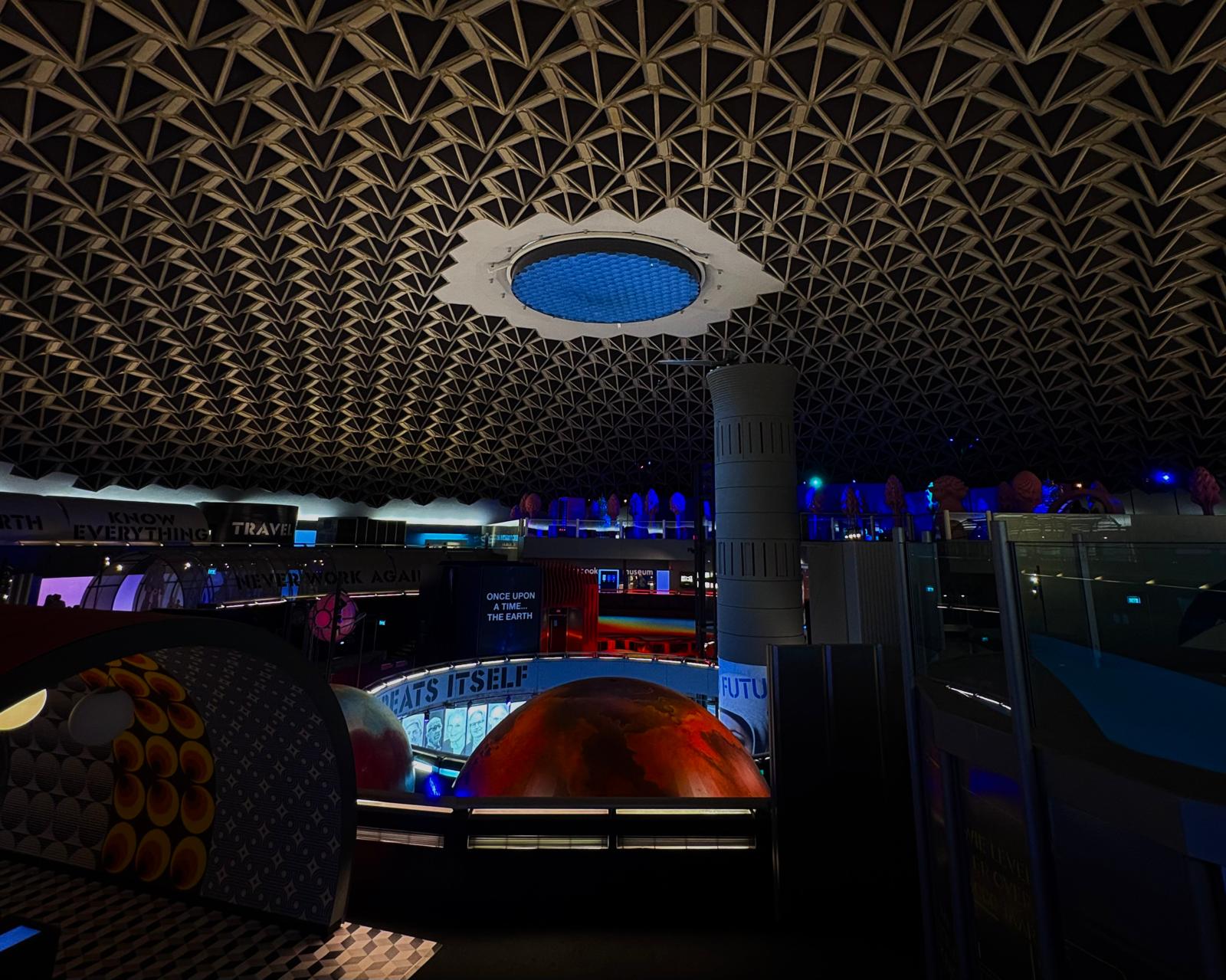
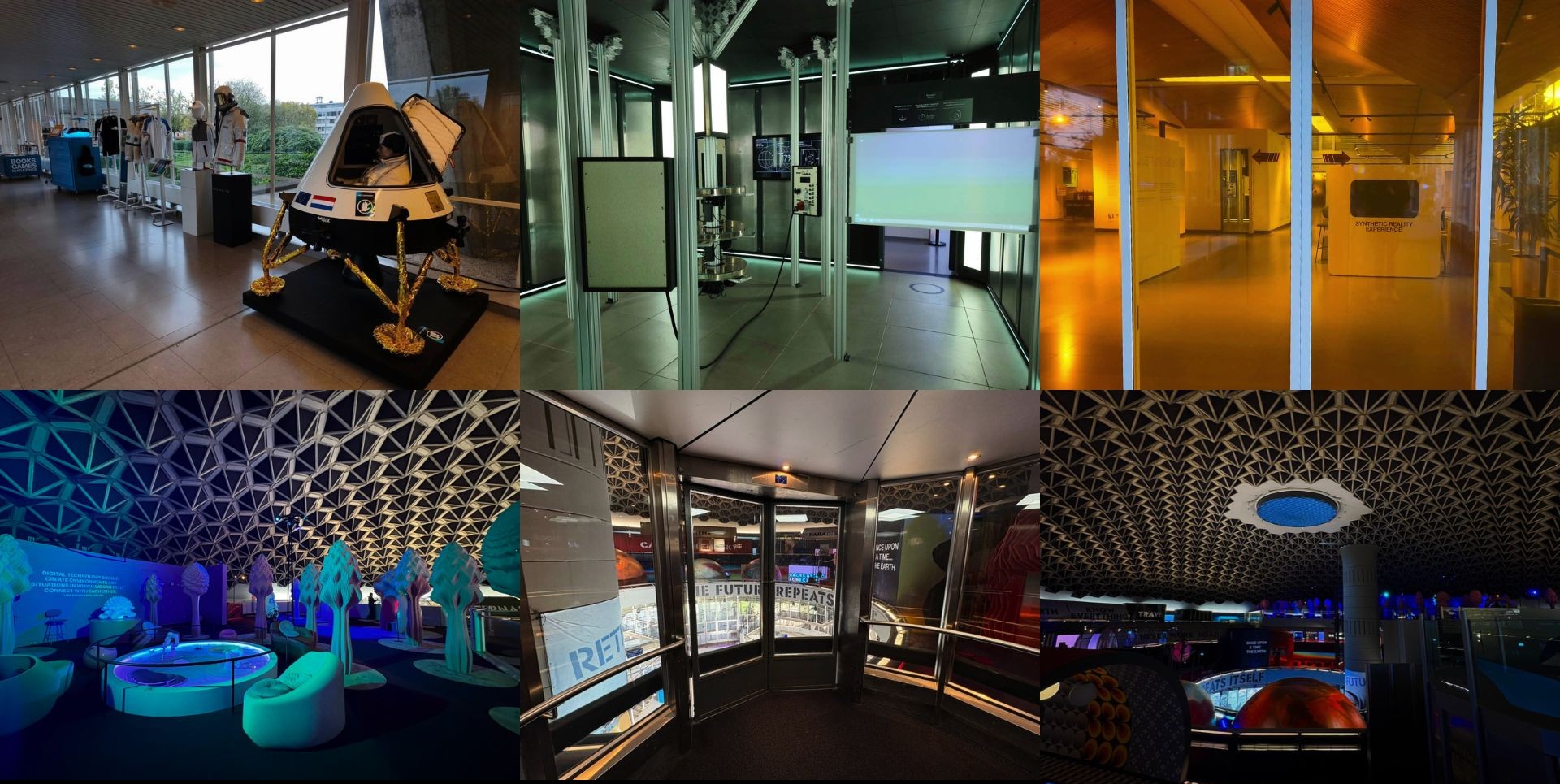
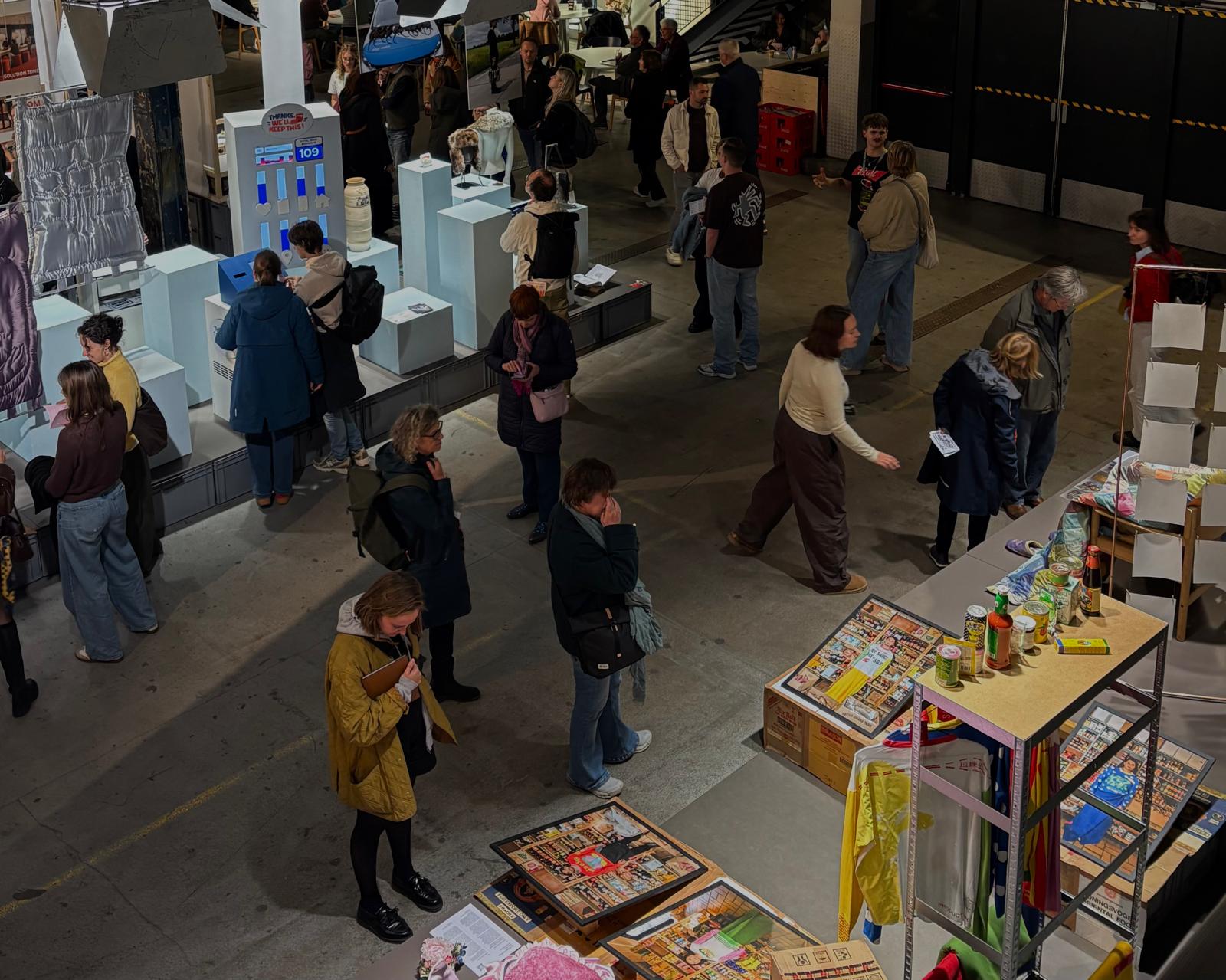
19 October: Meeting the other residents and getting to know the group. We visited the museum and explored its exhibition and setup, which gave us a first shared reference point for the week.
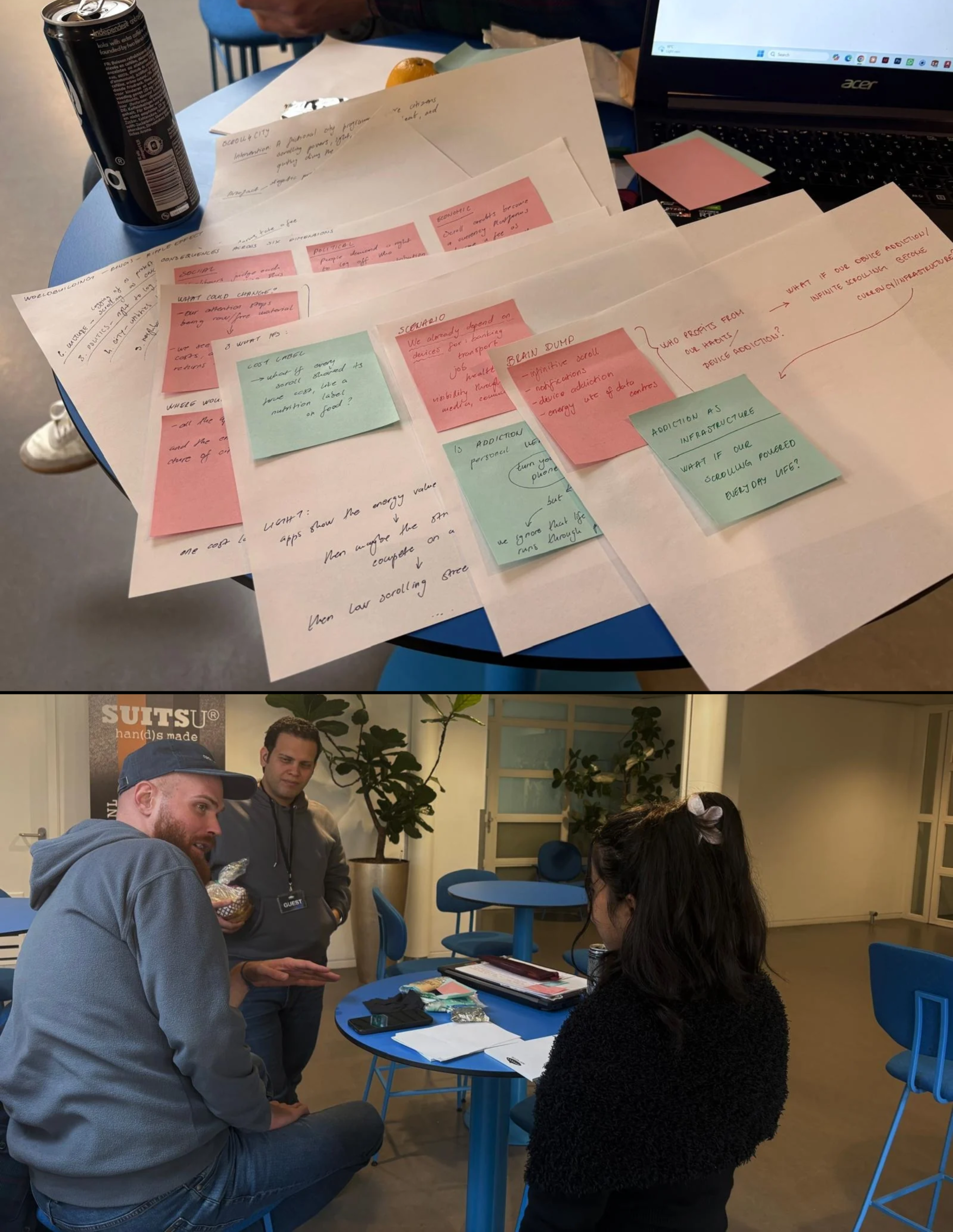
20 October: The work became more intensive. We attended lectures on speculative design, which gave us tools to think about possible futures rather than only critique the present, and the residents were divided into working groups. Our group formed around the question of what comes back to society in exchange for our attention.
21 October: A visit to Dutch Design Week (DDW). Seeing how other designers approach climate, technology and everyday life helped us place our own idea in a wider context.
22 October: Intensive work on the project. We produced the AI-generated video, developed the Digital Dividend Manifesto as an artefact and prepared the presentation, while discussing the contradiction of using AI to critique AI.
23 October: Final presentations, a shared lunch and farewell to the group. We presented the video and the manifesto and received feedback from the other residents and guests.