
MOW — This season’s shells, next season’s market
CONCEPT
Exploring how the leftovers of Vienna’s winter markets could become resources for the next.
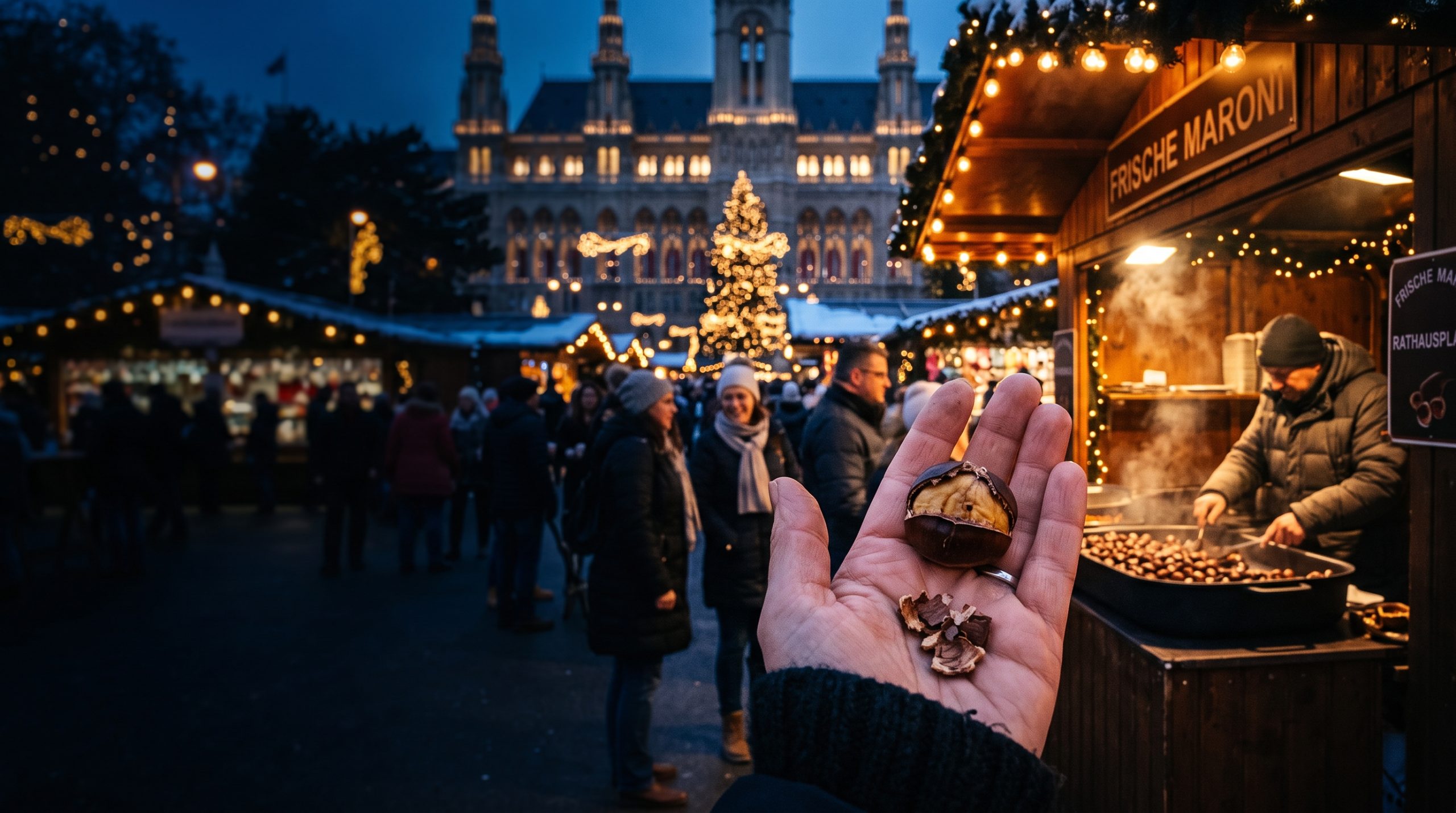
Every winter, Vienna’s streets and Christmas markets fill with the familiar smell of roasted chestnuts. We buy them warm, peel them as we walk, and discard the shells without giving them much thought.
The chestnut already comes with its own packaging: its shell protects it for months. Why does it become waste within seconds? What if this packaging could become useful again?
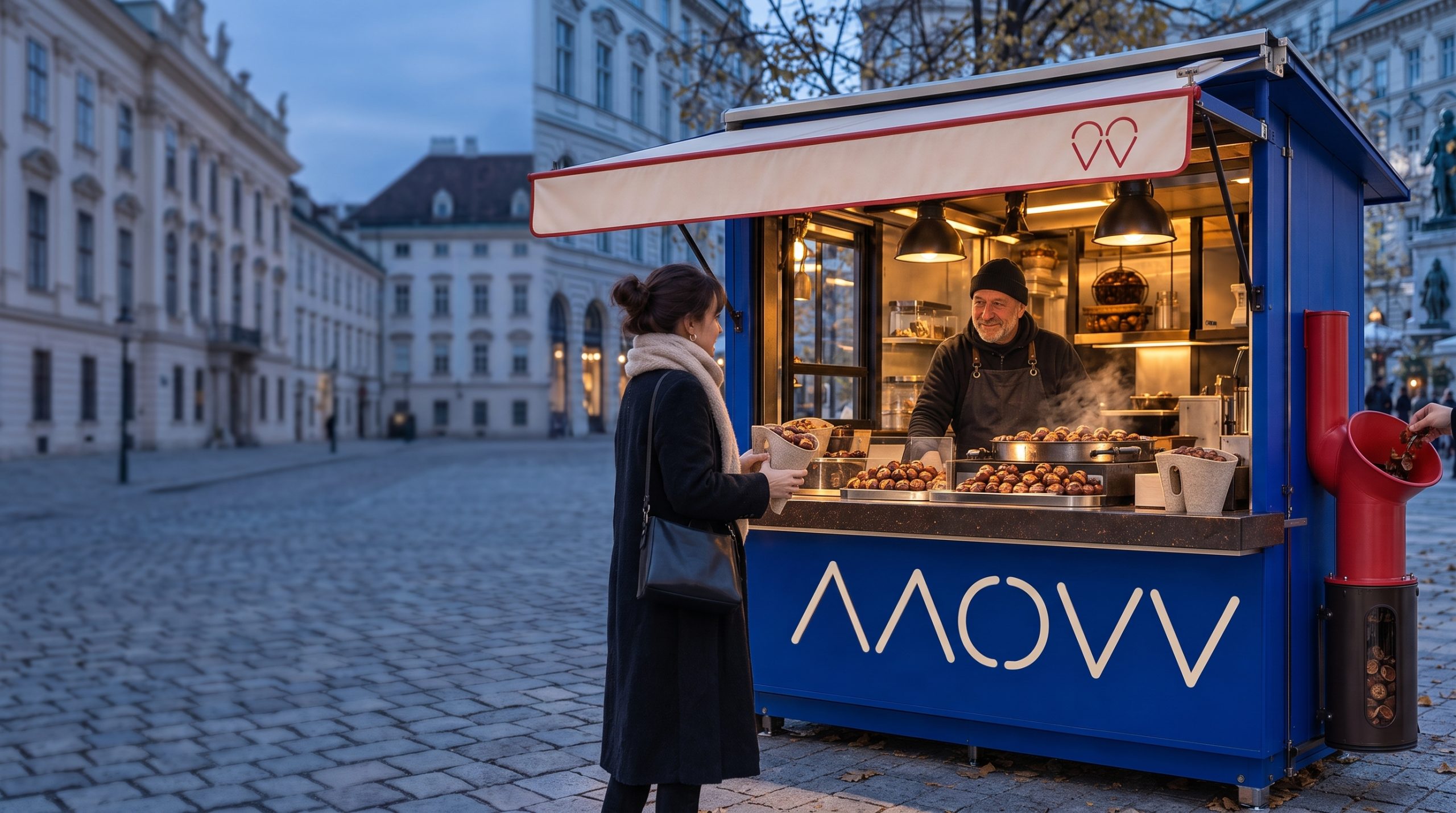
MOW explores how the discarded shells of roasted chestnuts could become the packaging in which they are sold the following winter. Instead of introducing another material into this familiar ritual, the project proposes transforming what the ritual already leaves behind.
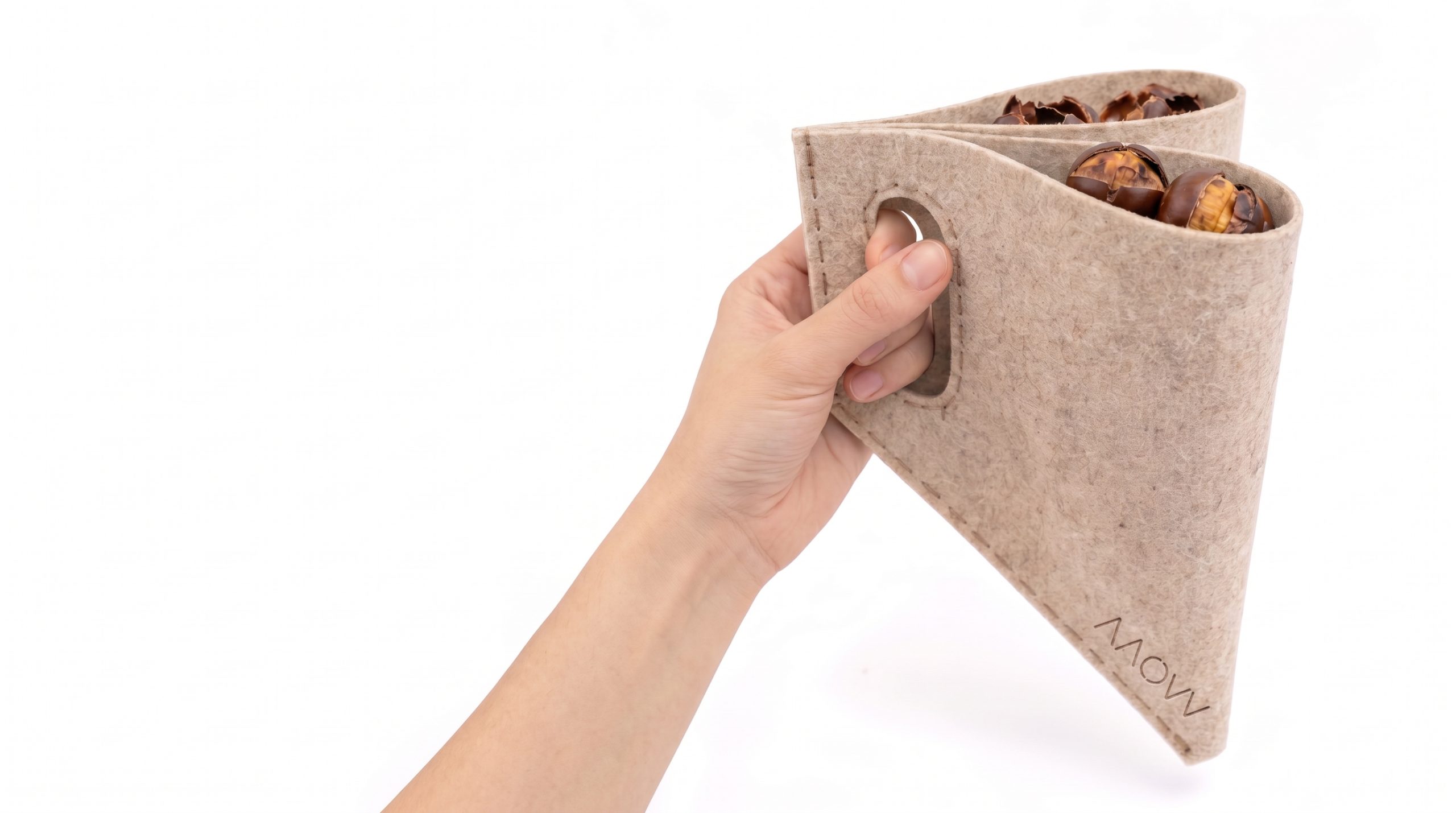
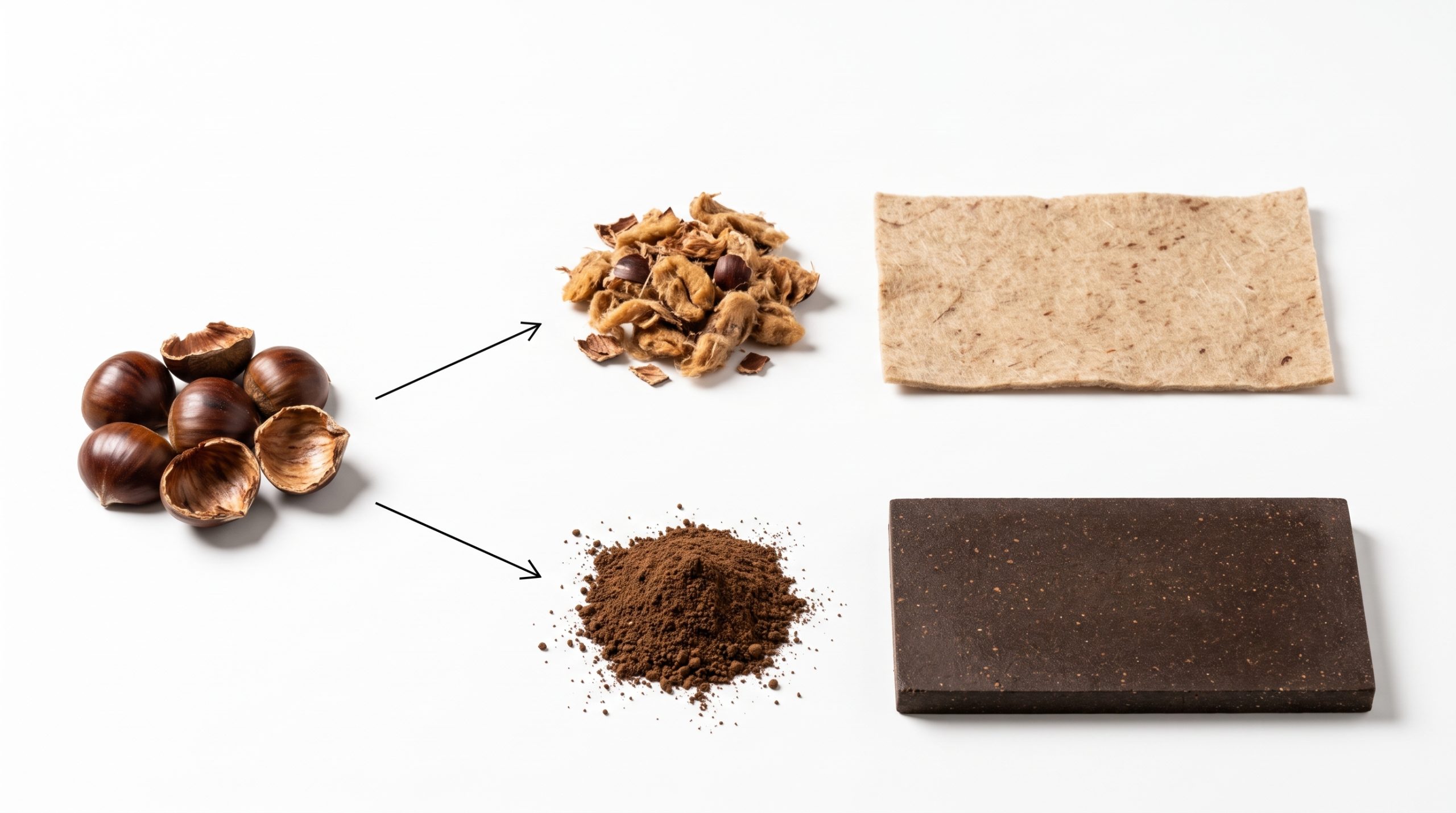
Chestnut shells contain cellulose and lignin, offering possibilities for developing bio-based materials. One direction is a flexible, felt-like material that could be cut and assembled into a new type of packaging.
The proposed design consists of two connected cones: one holds the roasted chestnuts, while the other collects their shells. As the chestnuts are eaten, one compartment empties and the other fills. Once finished, the shells can be returned to the vendor, collected and processed into material for the following season. This way MOW aims to make collecting the shells part of the winter ritual of eating the chestnuts.
But the possibilities extend beyond packaging. Different fractions of ground chestnut shells could be explored to develop materials with different properties, from flexible sheets to harder composites. These could eventually return to Vienna’s markets as trays, signs, loyalty cards, surfaces or even components of the market stands themselves.
How much of next winter’s market could be made from the leftovers of this one? Perhaps the shell in our hands is not simply the end of something, but already the beginning of next winter.
TEAM
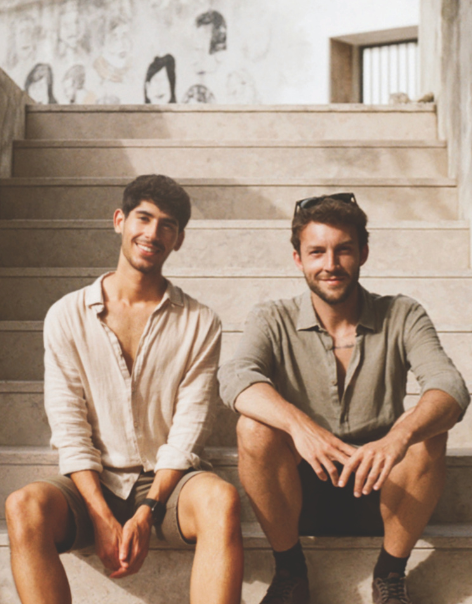
Is a designer with a deep passion for innovation and sustainability. She enjoys creating solutions that combine aesthetics and functionality, with a particular interest in biomaterials and biomimicry. She explores new ideas and taking on creative challenges, aspiring to continuously improve through study and research.

Is a systemic designer and co-founder of BY THE END OF MAY, a Lisbon-based research and design studio exploring how local waste, digital fabrication, biomaterials and craft can support more self-sufficient urban futures. He holds an MA in Design from the University of San Marino and a BA in Cultural Communication from the University of Bologna. His work questions how design can move away from extractive production models towards locally grounded and openly shared practices. Over the past years, his projects have been presented through exhibitions, festivals and public programmes. He previously collaborated with the Polytechnic of Lisbon on Distributed Design activities and has delivered masterclasses for makers, artisans and creatives.
PROCESS
The chestnut already comes with its own packaging, so what happens when its job is done?
The project began with a question: the chestnut already comes with its own packaging, so what happens when its job is done? This observation informed both the collection system and the proposed material applications.
The pouch keeps shells separate as the chestnuts are eaten, making collection part of the product’s use. The material strategy explores two directions: a fibrous fraction transformed into felt-like sheets for pouches and loyalty cards, and finer particles combined with a binder to form rigid composites for market-stall counters. Together, these applications connect a handheld object with customer participation and the physical infrastructure of the market.
EXPERIENCE
The residency offered a valuable opportunity to exchange perspectives and explore Vienna’s everyday culture through design. It encouraged us to connect creative ideas with local habits and practical needs. Working with Davide felt natural from the start. We both have a business-oriented mindset, which made it easy to find a shared direction and develop a concept with a clear purpose. Our priority was to create something with realistic potential for implementation and room for further development. We believe progress is built step by step: starting with what is achievable today creates a foundation for addressing more complex challenges as more time and resources become available.