Zero waste, five senses
CONCEPT
First, we had to identify the main message we wanted to communicate. The IGB Restaurant, part of the BEEGOOD program, places great emphasis on building connections through communication and raising awareness of sustainability. This led us to explore how we could communicate these values to customers in an engaging and accessible way.
We came up with the idea of using a game to spark conversations about sustainability. By making use of the time customers spend waiting, we aimed to create an opportunity for interaction and encourage them to engage in conversations about sustainability and sharing.
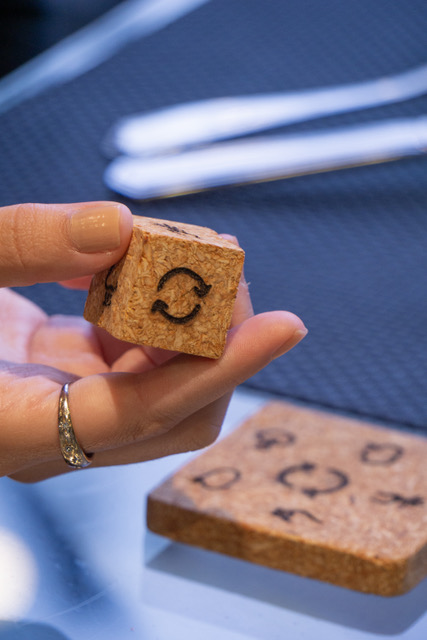
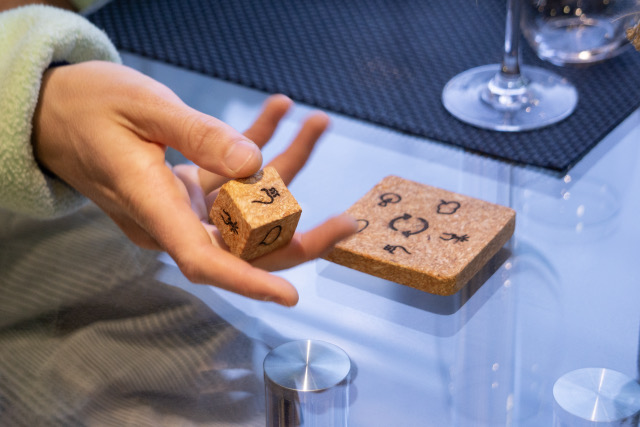
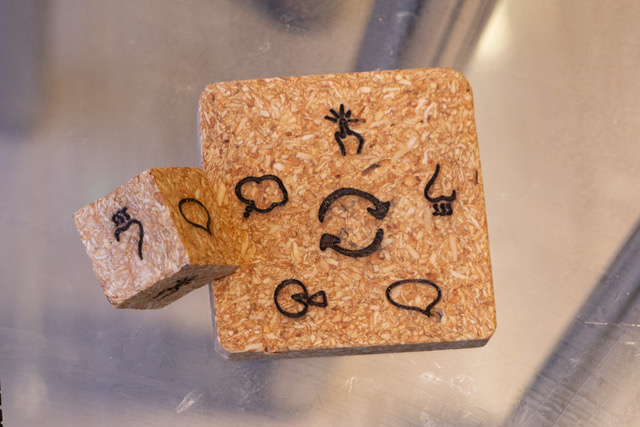
We ultimately developed a simple dice game featuring pictograms to initiate this journey. The concept combines two key themes: zero waste and the five senses.
TEAM
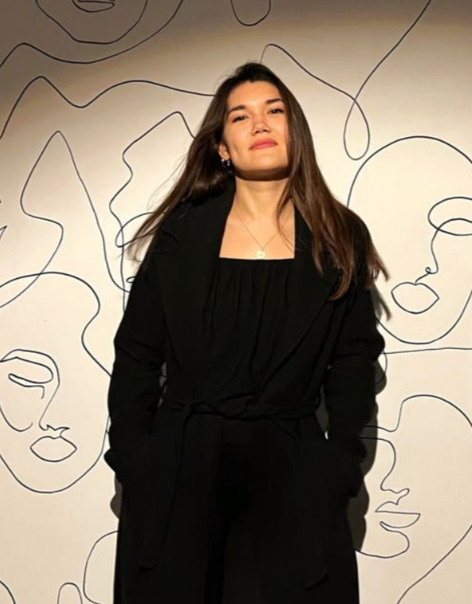
Asena graduated in Industrial Design in Istanbul, with studies in Portugal and Italy, and recently completed her Master’s degree in Eco-Social Design in Italy. With a background in spatial design and material research, she combines conceptual thinking with hands-on making. Her work focuses on collaborative processes that connect design, materials, and social systems to foster regenerative futures. Her recent exhibition at the Porto Design Biennale explored biomaterials as storytelling tools through participatory installations. Using ecological materials derived from food waste, she invited audiences to engage with transformation processes, reframing waste as a shared resource and positioning design as an open, collective practice rooted in care, responsibility, and ecological awareness.
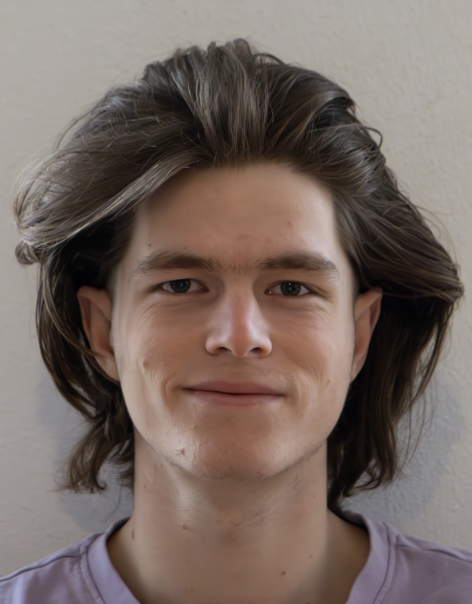
I grew up in the south of Germany and was raised with a strong focus on consistent, sustainable decisions. We often spent time in nature and the Alps, which helped me develop a humble attitude and a desire to preserve the environment.
I graduated from a design-focused high school, where I developed an understanding of beauty, craftsmanship, and the arts. After graduation, I began an apprenticeship in a small ecological bistro kitchen, where I discovered my interest in local cuisine and sustainable food practices.
This led me to work in restaurants in Iceland and London that follow radical approaches to local sourcing and zero-waste production. These experiences inspired me to explore circular products and pursue industrial design.
PROCESS
Material Selection
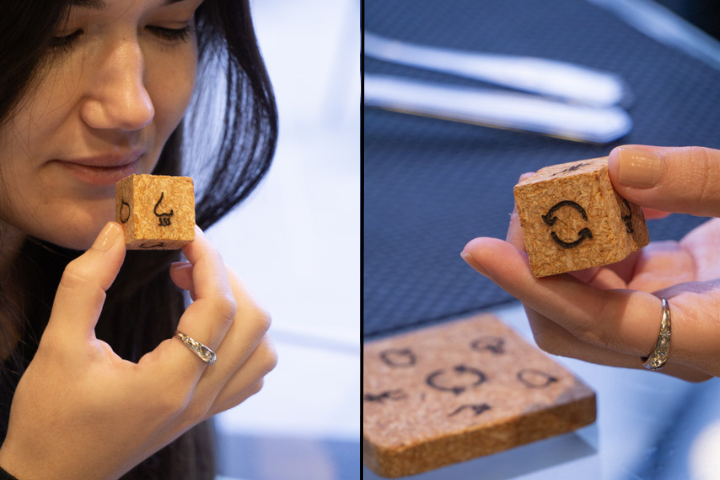
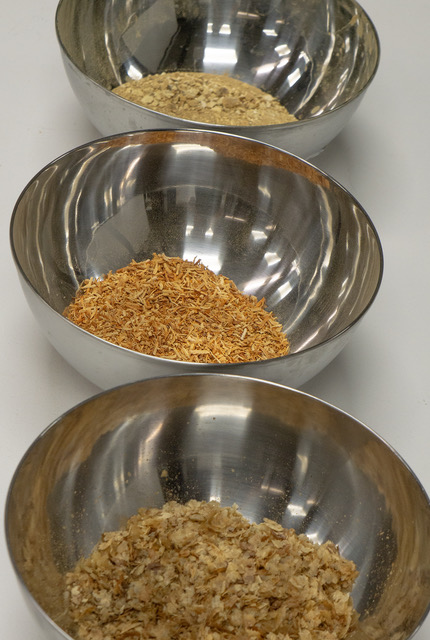
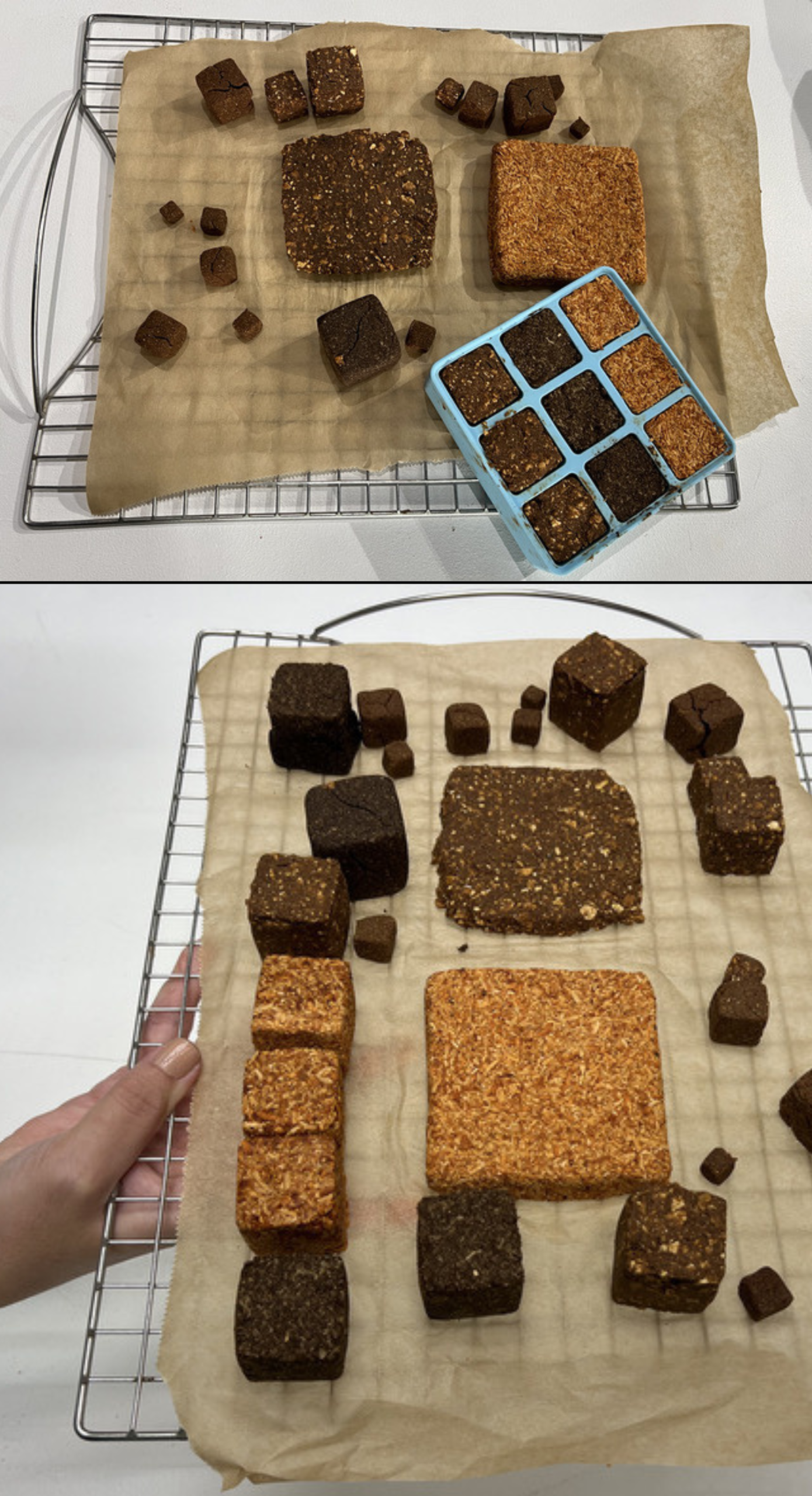
Our goal was to experiment with different biomaterials, all using the same binder made from starch, water, and glycerin. We wanted to create an interesting variety of textures and scents that would intrigue users, encouraging them to explore the objects through touch and smell before initiating a conversation.
We experimented with coffee grounds and coffee husks, orange peel powder and coarser orange peel pieces, as well as ground avocado seeds.
Due to time constraints, we placed the materials directly into the dryer. Some samples turned out well, while others developed cracks caused by the starch-based binder and the high drying temperatures. The experiments revealed that samples made exclusively from fine powders tended to develop significantly more cracks and were less stable than those containing coarser material.
Production
Once the basic shapes were formed, we began sanding the objects to achieve a smooth and clean finish. However, since the cubes had only been in the dryer for twelve hours, they had not yet dried completely. This made it difficult to determine the right amount of sanding without damaging or crushing the objects.
The next step was laser engraving the pictograms onto the biomaterial coasters and dice. It took some time to find the right settings and determine whether it was possible to laser-cut material that was three centimetres thick. After several adjustments and experiments, we eventually achieved the desired result.
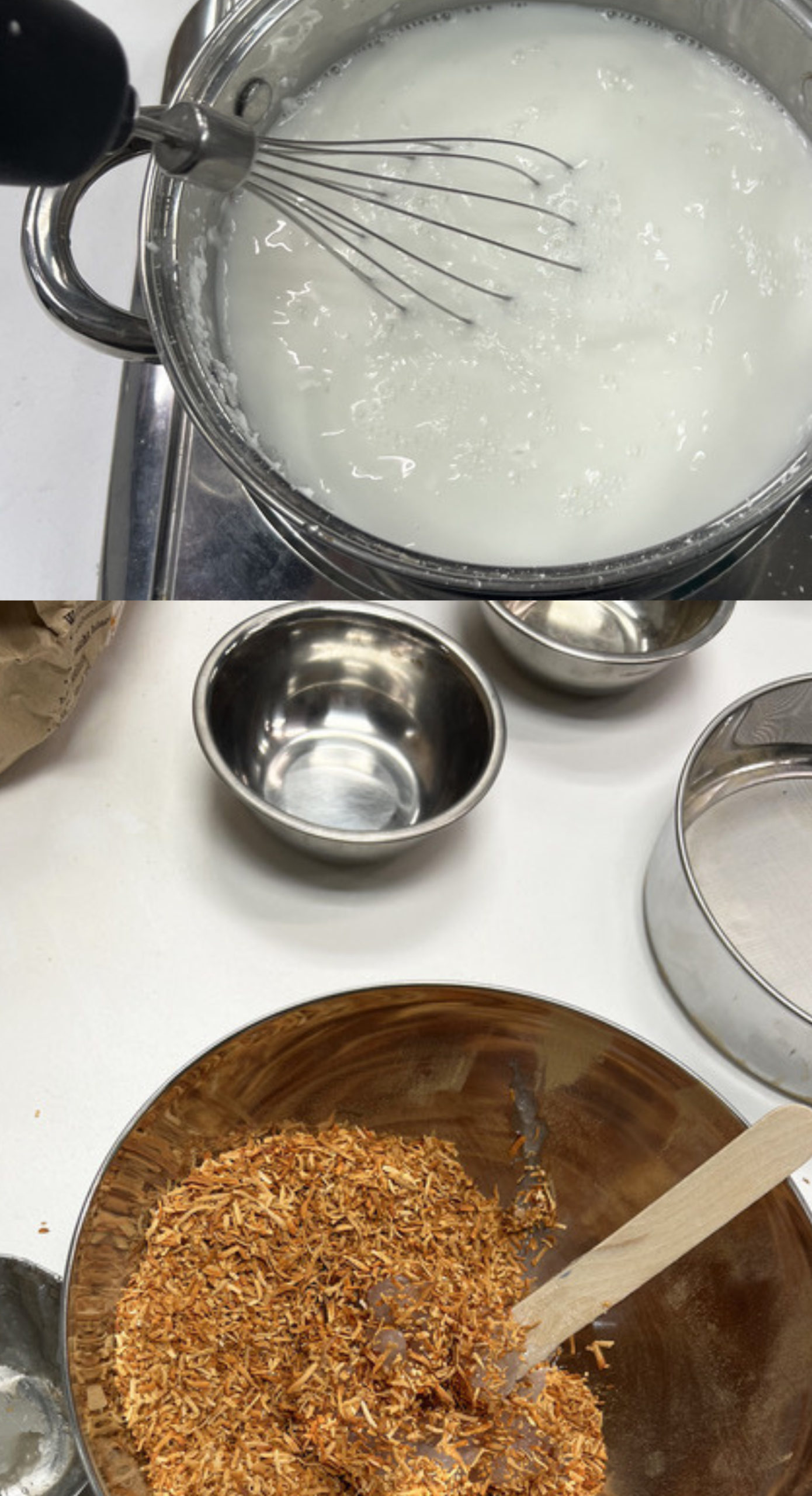
Putting it all together and experimenting with recipes
A game to spark curiosity around food, waste, and materials.
Food is more than what we eat. It carries stories, memories, cultures, and materials that we often overlook.
ZERO is a sensory game that invites us to reconnect with the people around us, with food and food waste through curiosity, imagination, and conversation. Using a dice made from food-waste biomaterials, each roll opens a new way to explore the resources around us.
Smell a scent. Share a taste. Touch a texture. Listen to a story. Imagine what a discarded ingredient could become. And finally, rethink what zero waste could mean.
Each interaction encourages us to look beyond the idea of waste and discover the possibilities hidden within it.
Designed for restaurant tables, where food and conversation come together, ZERO makes use of the time we spend sharing a meal. Yet the game is not limited to restaurants. It can be played anywhere people gather. It is an invitation to slow down, share experiences, ask questions, and bring curiosity to the table.
Roll the dice. Engage your senses. Rethink waste.
Roll the dice. Engage your senses. Rethink waste.
ZERO WASTE, FIVE SENSES
The second stage of experimenting focussed more on the ratio of the ingredients, exploring how much eggshells are required, and what can create the heavier look and feel. Here we also worked with different sizes of the mold and different wool integrating techniques.
Learnings from this stage: Creating the actual object bigger than what was created would work better, and an important learning was to cover the entire object with wool all around, hiding the heavy object underneath.