
KAVICA
CONCEPT
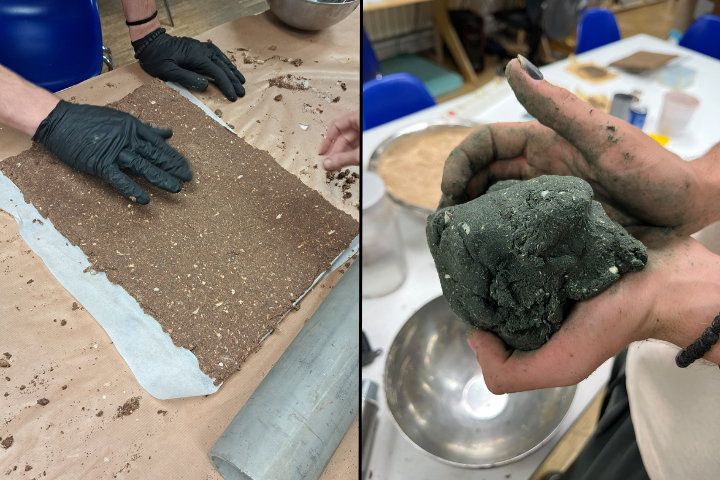
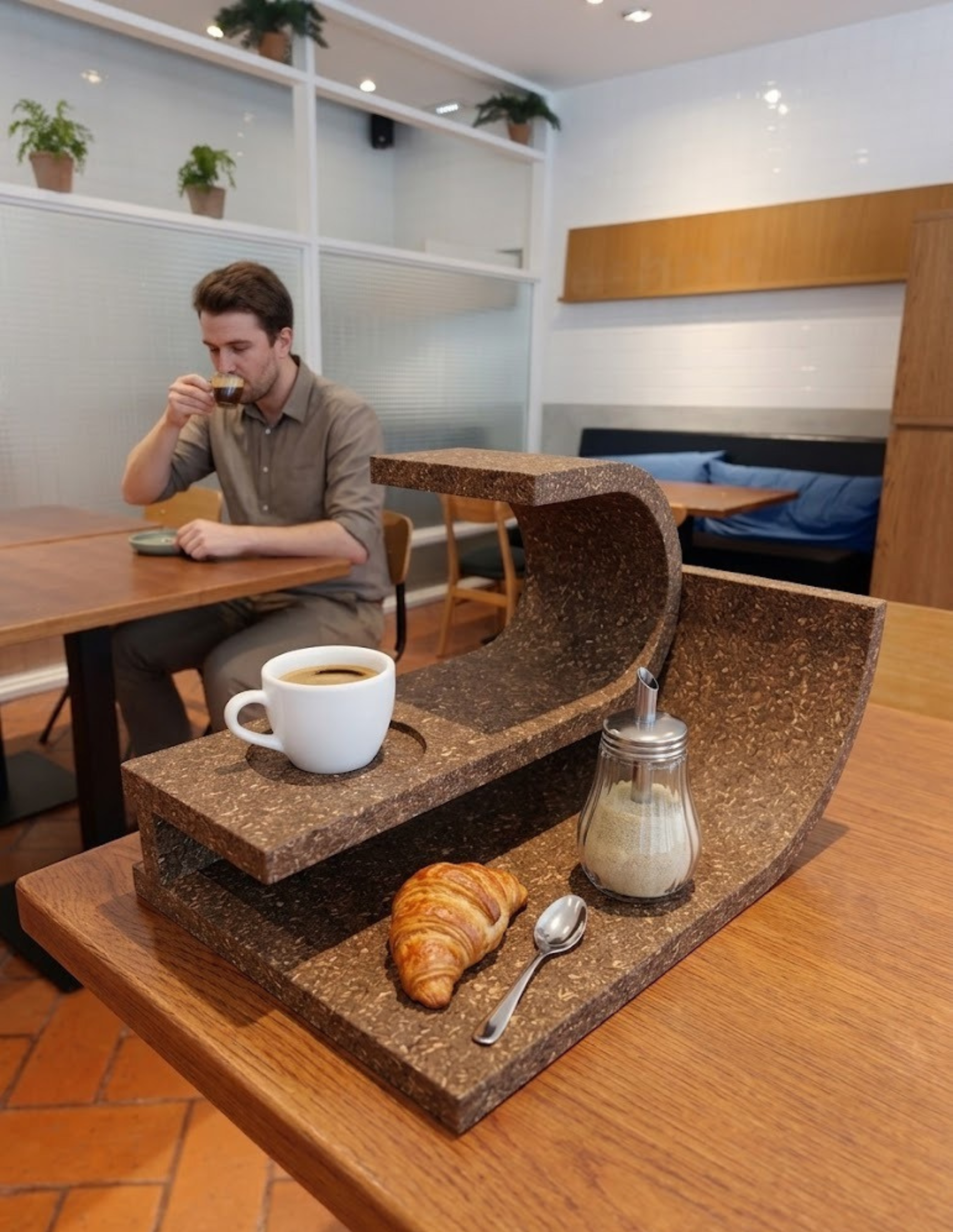
The initial focus of the concept was on creating an object inspired by the institute’s identity, designed to spark curiosity about the students behind the café service. However, the development process shifted the focus from a single finished product to an adaptable biomaterial made primarily from locally sourced spent coffee grounds.
Rather than prescribing a fixed form, the project proposes an open material system that can be used to create a family of products. By providing a repeatable material formulation and production process, it enables students and staff to participate in designing and producing their own applications. The material itself becomes a means of communicating the project’s circular and social values, transforming everyday coffee waste into a shared resource for creativity, learning, and collaborative design.
TEAM
Leja Rebolj is an industrial designer focused on sustainable design, material research, and circular innovation. She graduated in 2024 from the Academy of Fine Arts and Design in Ljubljana, with an exchange at ESADSE in Saint-Etienne, France. Leja’s work combines design, science, and craftsmanship, with a focus on biomaterials and alternative production methods. She developed Pomter, a biopolymer packaging made from discarded potato peels, merging her passion for cooking and material innovation. Her approach earned her the Slovene Design Awards 2024. In 2025, she showcased her work at MOME in Budapest, marking her international exhibition debut. Leja envisions to expand her sustainable design practice and collaborate globally on biomaterials and eco-conscious solutions.

The value of a project is reflected in whether it continues to live and develop independently, or whether it ends with the last line drawn by its author.
Dusan Jevtic (born in 2003 in Belgrade) is a graduate architect and a master’s student of architecture at the University of Belgrade, where he also served as a student mentor during his studies. He is a member of the Board of the Students of Technology Club (KST). He completed his professional internship at Atelier Ličina. His professional interests are focused on energy-efficient and sustainable architecture, primarily in the field of public buildings and transport infrastructure. His career goal is to work on modular and practical solutions to address the problem of the massive amount of waste present in the construction industry. He has engaged in volunteer work at ISUF (International Seminar on Urban Form), and his work was exhibited at the “Imagine Dignity” exhibition in Belgrade. He is part of the team that worked on the Atrium project of the Faculty of Forestry in Belgrade, with which they participated in the 48th Salon of Architecture and the BIG SEE festival in Portoroz.
PROCESS
RESEARCH
Our research began with a simple question: how can an everyday waste stream become a valuable resource within an existing community?
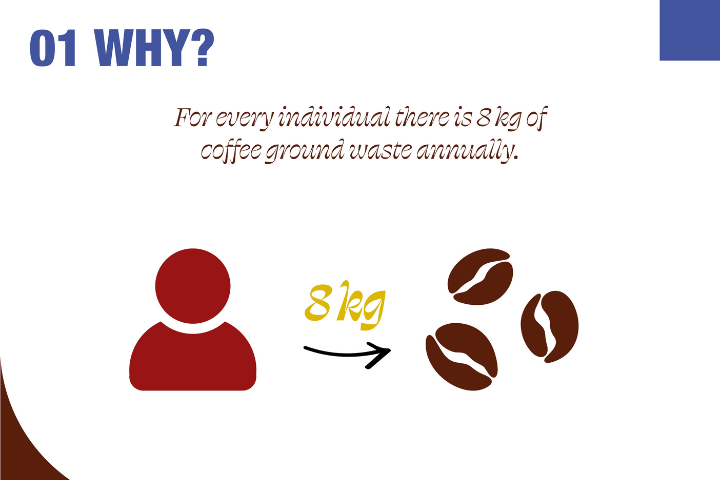
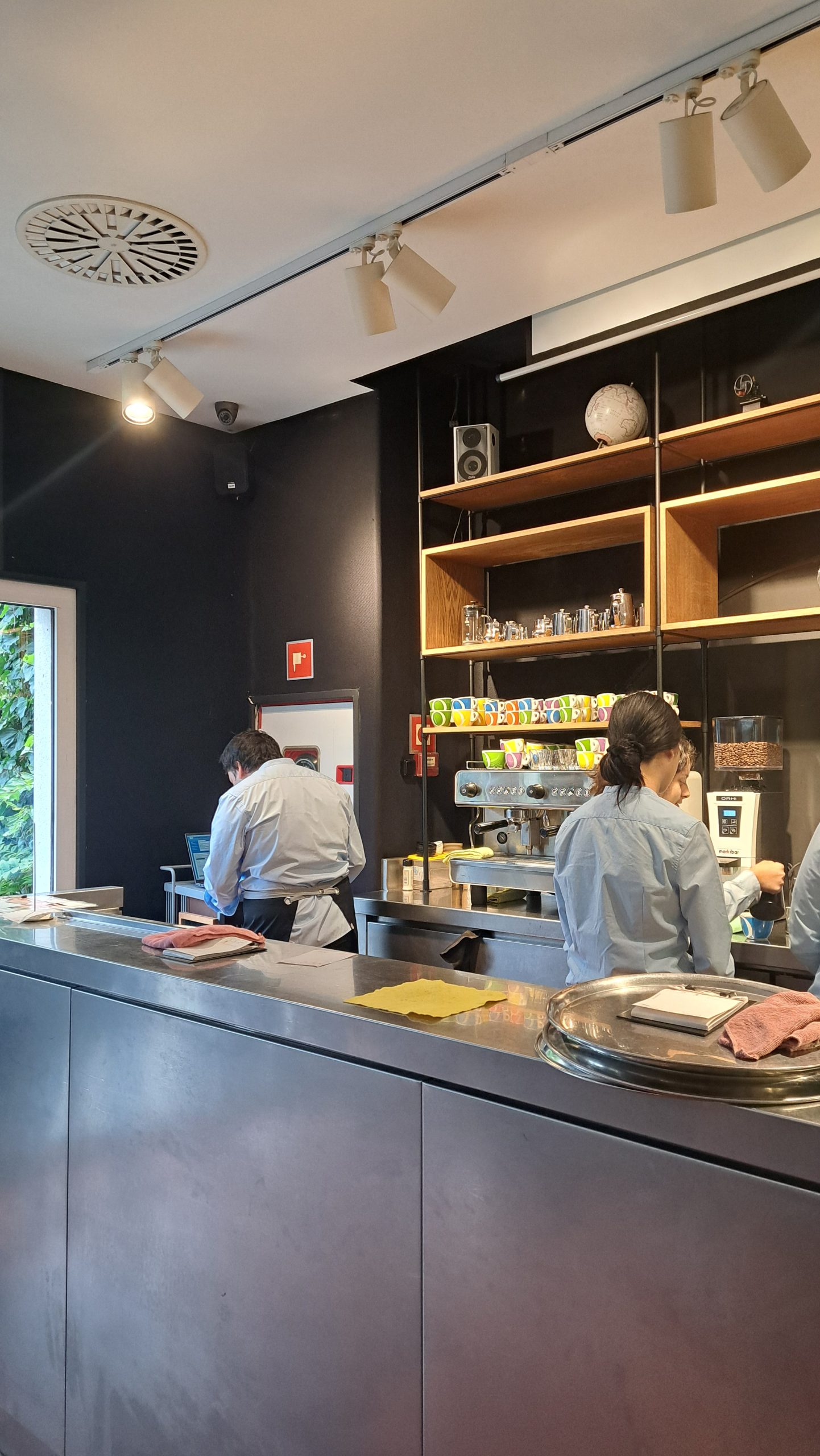
We selected spent coffee grounds as the foundation of our project because coffee is one of the easiest food waste streams to collect separately. In most cafés and restaurants, espresso preparation already involves a natural separation process: once the coffee has been extracted, the grounds are discarded into a separate container. This makes coffee waste particularly interesting from a circular design perspective, as it is readily available, easy to collect, and generated as part of an existing daily routine without creating additional work for café staff. Beyond its availability, coffee grounds offer interesting sensory qualities. Depending on the coffee variety, its origin, and the region where it was grown, the material can have different aromas, textures, and visual characteristics. This creates an opportunity to develop a sustainable material that also carries a connection to the origins and everyday experience of coffee consumption.
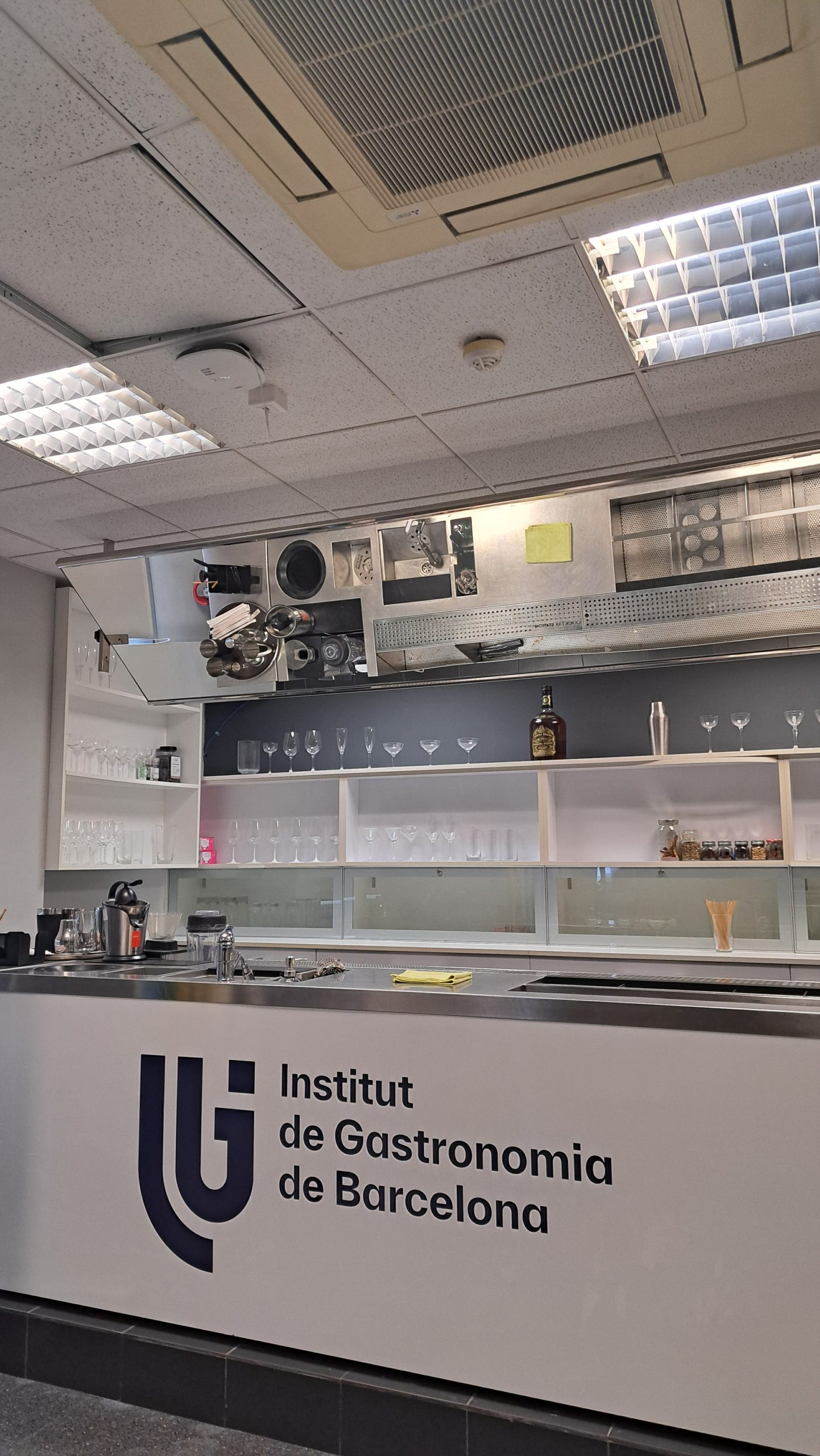
The research was grounded in the practical realities of the Institut de Gastronomia de Barcelona. Dušan’s experience as a manager in a student café provided valuable insight into daily restaurant operations and existing waste collection routines. Based on his experience, the café consumes approximately 10 kilograms of espresso coffee per week, demonstrating the potential for a consistent and locally available supply of raw material. Leja contributed a complementary perspective through her previous experiments with waste-based materials, particularly materials developed from potato peels. This experience helped establish an approach in which waste is understood not simply as something to discard, but as a resource with new material and design potential.
An additional motivation came from the identity and social mission of the institute. Inspired by its logo and its commitment to students, we initially imagined an object that could communicate the human dimension behind everyday café service. We wanted visitors to become curious about the people preparing and serving their coffee, encouraging them to ask who was behind the counter and what they were learning, creating, and contributing to the community. Our research therefore evolved beyond the environmental value of recycling coffee grounds. It became an exploration of how material, education, social participation, and everyday consumption could be connected through design.
MATERIAL EXPERIMENTATION
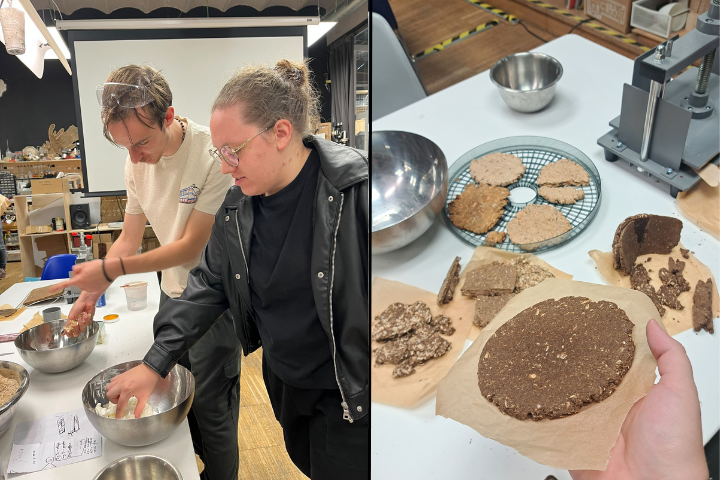
Material development became the central part of the project and required an extensive process of experimentation. Before deciding on the final applications, we explored different waste combinations, binder ratios, and material structures. We tested numerous formulations, evaluating their strength, flexibility, texture, workability, and potential for further processing. The process involved countless iterations. Some mixtures were too fragile, others were difficult to bend or shape, while some did not provide the structural stability required for functional objects. Each experiment helped us better understand the behaviour of the ingredients and identify the qualities needed for a material suitable for everyday use.
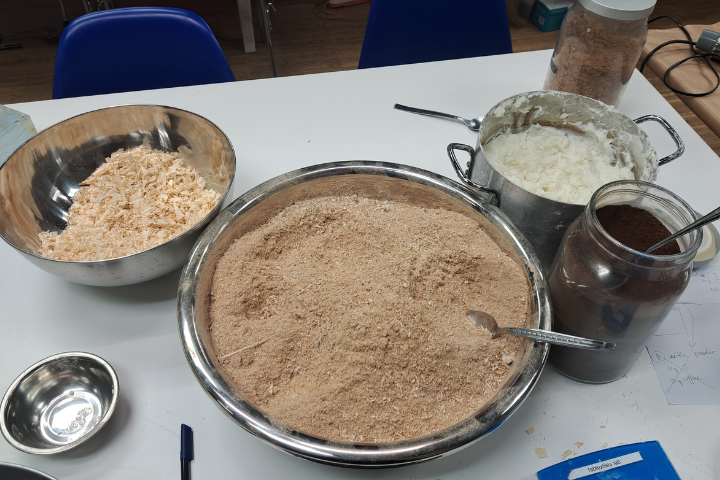
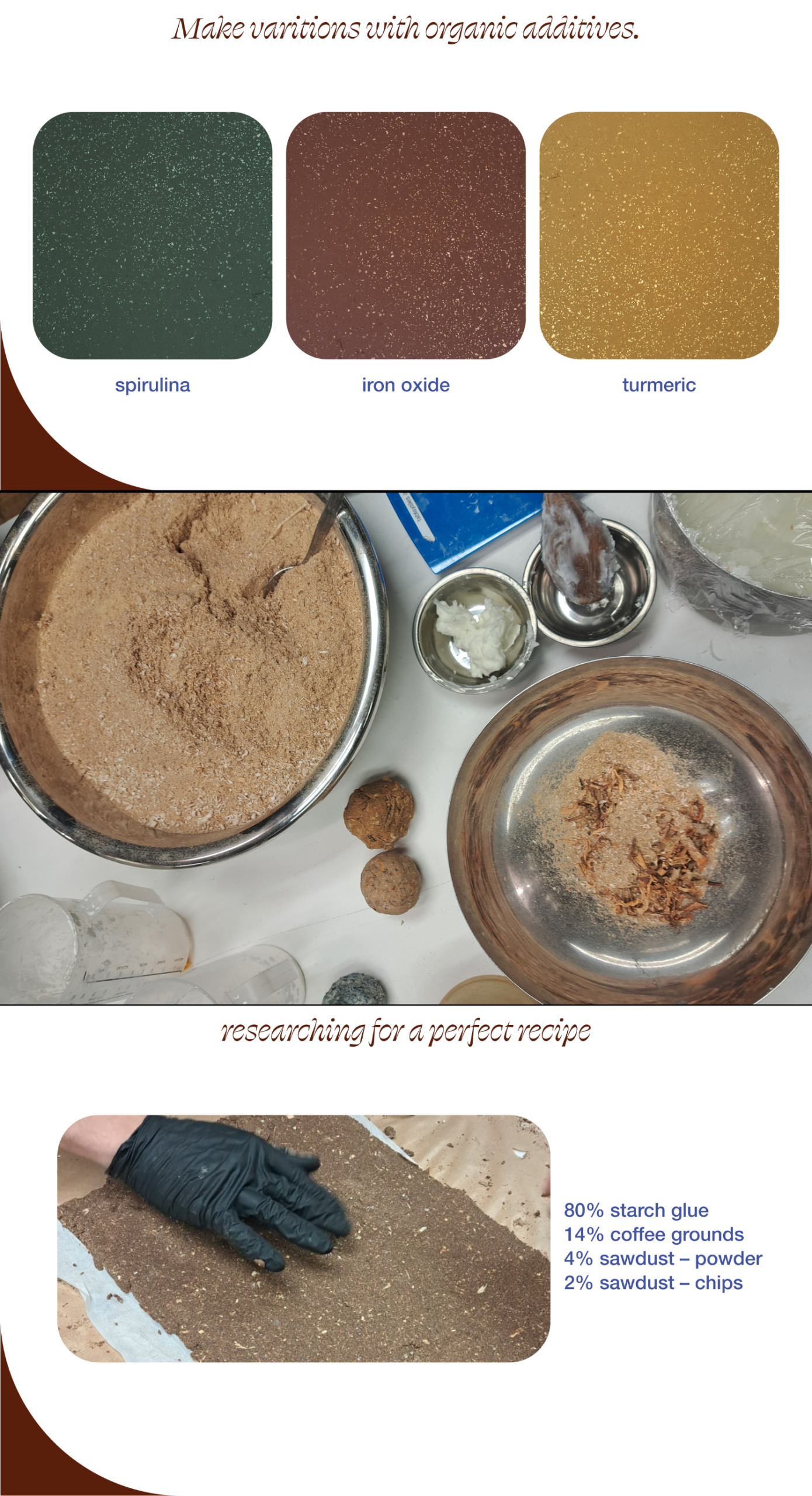
The final recipe consists of:
- 80% starch glue – the primary binder, providing cohesion and structural integrity.
- 14% coffee grounds – the main waste-based ingredient, contributing texture, colour, and the characteristic identity of the material.
- 4% sawdust powder – introducing additional organic content and influencing the material’s structure.
- 2% sawdust chips – adding a more visible texture and variation to the surface.
Beyond its structural properties, we also wanted to explore the aesthetic potential of the material. We therefore experimented with natural and mineral-based additives, including spirulina, iron oxide, and turmeric. These ingredients introduced different colour possibilities, expanding the visual language of the material and allowing us to develop customised palettes for different seasonal themes and applications.
An important shift in our thinking happened during this stage. Initially, we approached the project with a specific finished object in mind. However, as the material developed, we realised that its potential was more important than the shape of any single product. The object gradually became a demonstration of the material’s capabilities rather than the final destination of the project. Instead of focusing exclusively on designing one finished product, we began to explore how the material could be adapted, processed, and used in different ways.
IMPLEMENTATION
The developed biomaterial serves as the foundation for a versatile family of table accessories designed for use in the everyday environment of a restaurant. Proposed applications include menu holders, coasters, bill holders, and table numbers. These objects are intended to integrate naturally into existing front-of-house operations, providing functional elements for restaurant service without introducing unnecessary tasks for waitstaff.
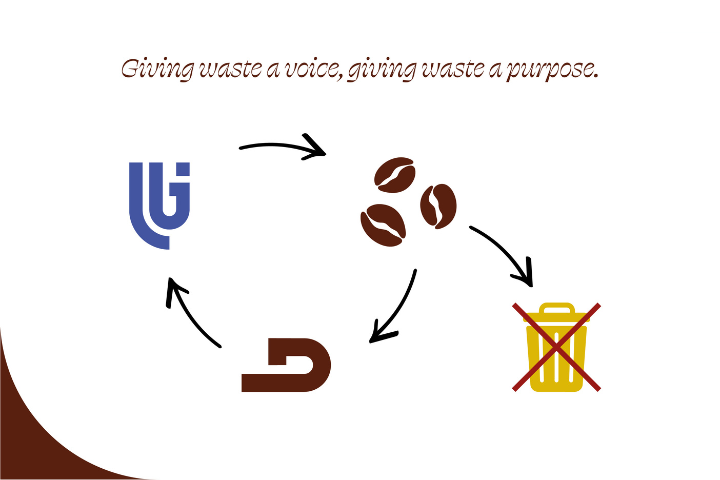
However, the implementation goes beyond producing a collection of finished prototypes. Our ambition is to establish a circular material process within the Institut de Gastronomia de Barcelona itself. Spent coffee grounds generated through daily café operations are collected and transformed into a new material, which can then be used to create functional objects within the same community. In this way, the project connects everyday consumption with material experimentation, design, education, and social participation. The objects also become a communication tool. Rather than relying on written explanations or traditional sustainability messaging, we want the material itself to tell the story of its origins. Its visible coffee particles, colours, textures, and physical qualities can spark curiosity and encourage visitors to discover the process behind the objects and the people involved in creating them.
An essential part of the implementation is enabling students and staff to participate in the process. Rather than prescribing exactly what everyone should create, we aim to provide the material, the knowledge, and a repeatable production method that others can adapt to their own needs. The standardised formulation creates a starting point for students and staff to experiment with different shapes, applications, and material variations. This allows them not only to use the material, but also to become active contributors to its development, maintenance, and future applications.
For us, the real value of the project lies not only in the objects produced, but in the possibilities they create for a more circular, collaborative, and socially meaningful design process. What began as an exploration of what could be made from used coffee grounds gradually developed into a broader question: What can we enable others to create when we transform waste into a resource?
EXPERIENCE
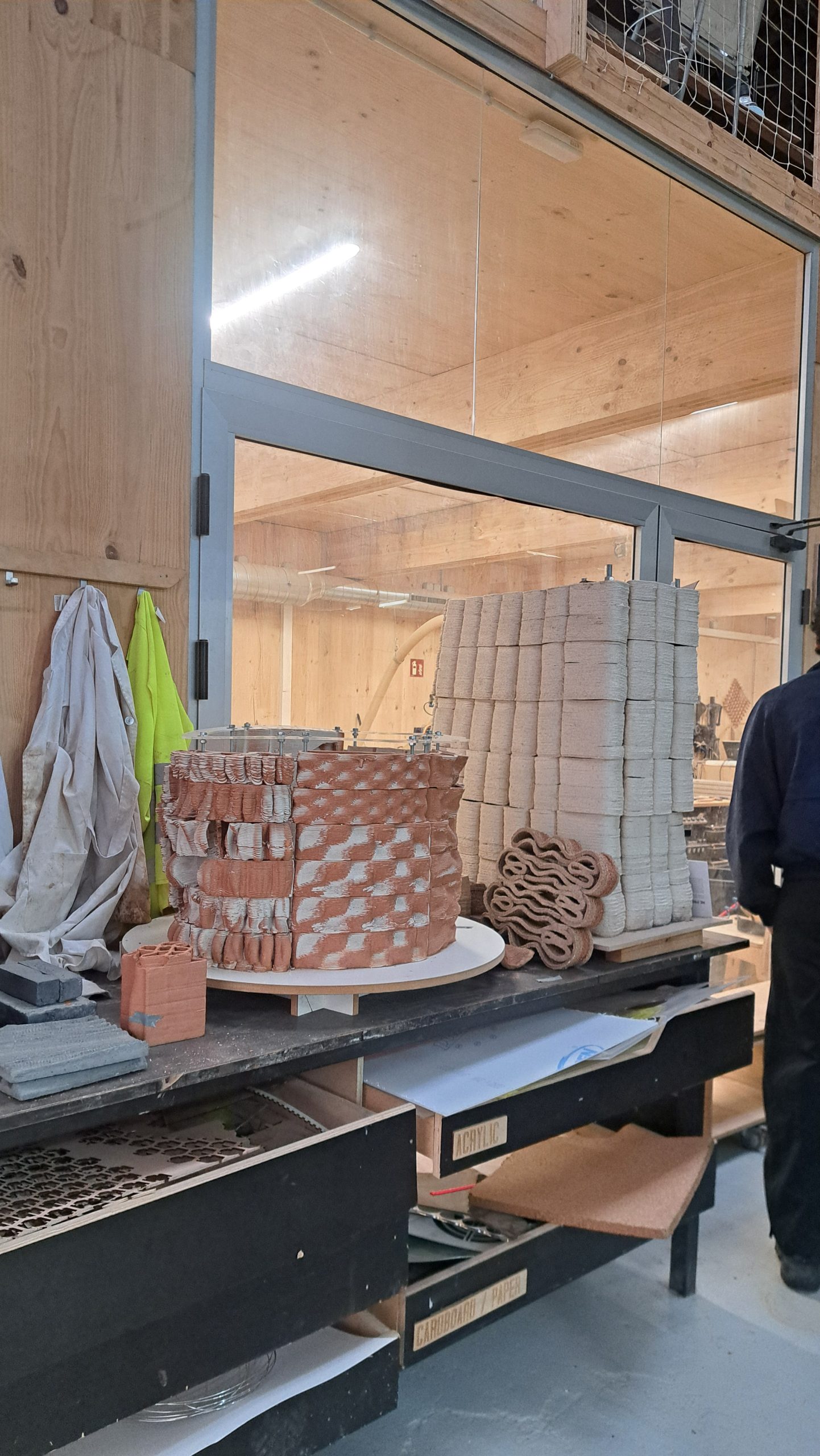
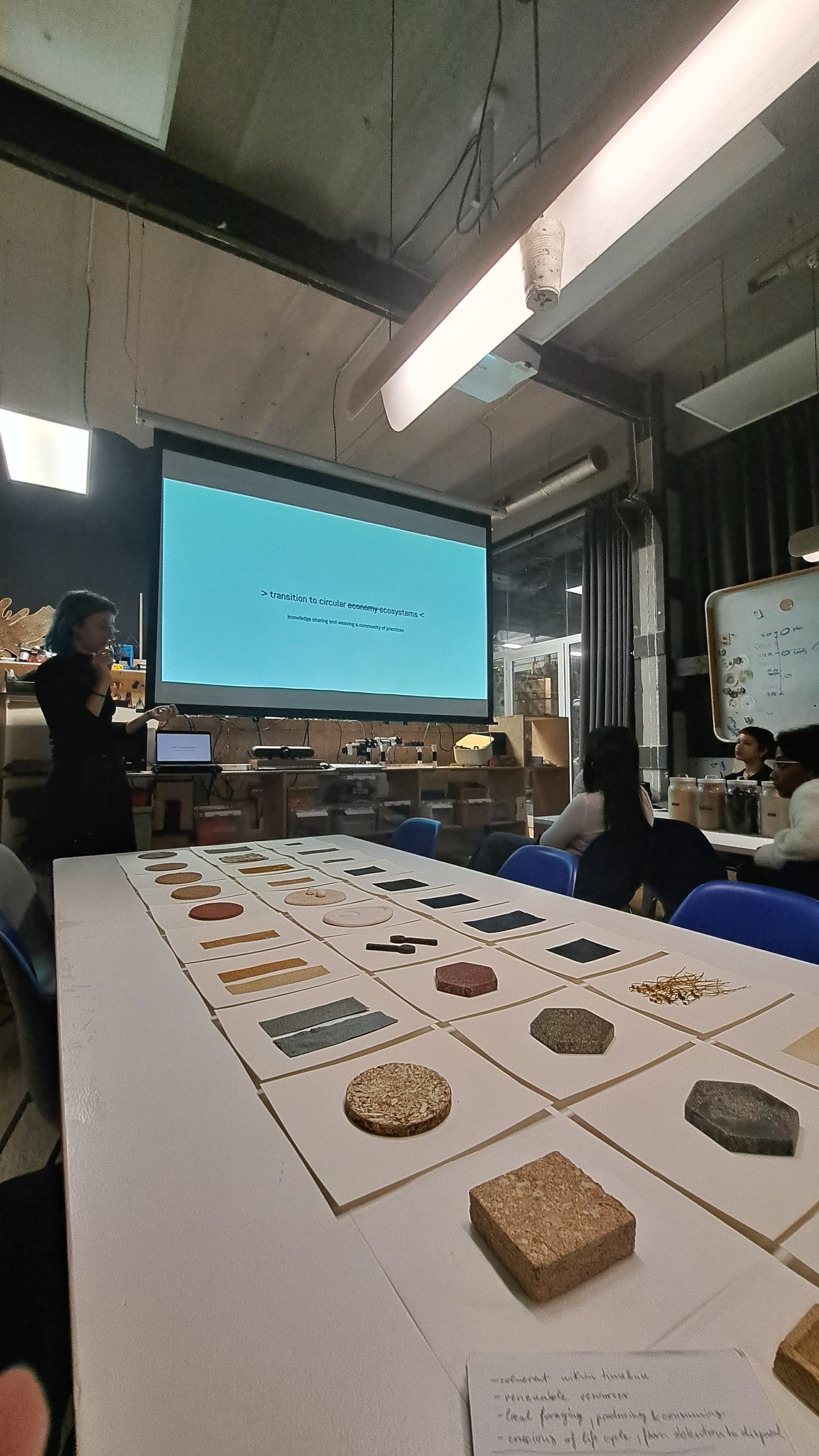
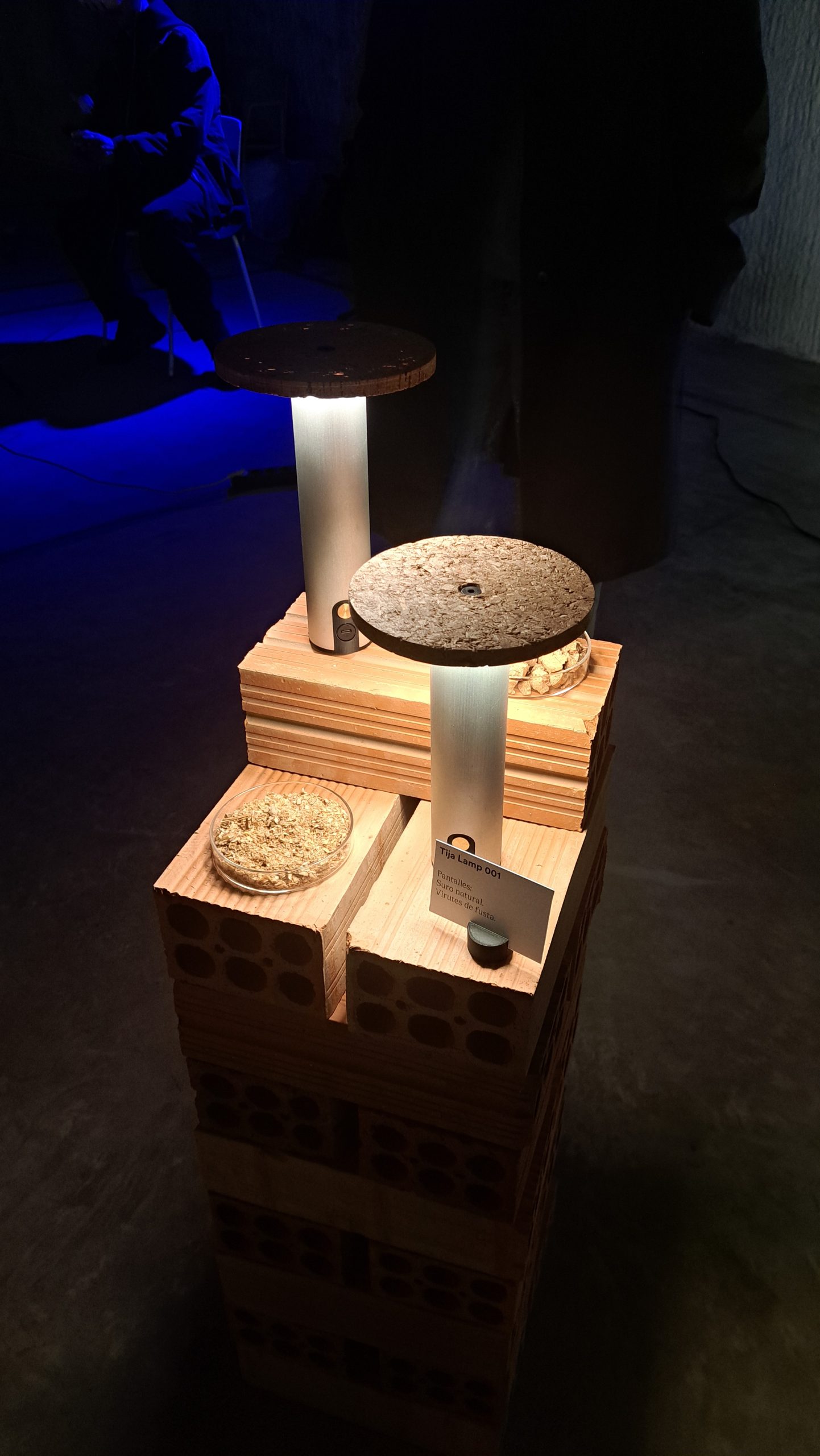
“The workshop on the first day was super interesting, and talking with the professional team at Fab Lab Barcelona was insightful, even though I already know biomaterials a bit from my practice. The whole process of working with another binder and waste material, exploring different combinations and production options, was super enjoyable. Above all, I’m glad to have met all the fellow designers included in this residency—they made the days fun and memorable.” Leja Rebolj
“I really enjoyed working on the project during the residency. One of the most valuable aspects was the opportunity to step away from the type of design work we usually do and focus on creating and building something with our own hands from scratch. I am grateful for the knowledge shared by our hosts, and I would be interested in returning to this field at some point in my professional career. Another highlight was the atmosphere among the participants. The workshop brought together motivated and talented people, and it was a pleasure to work alongside them. I am confident that many of them will be successful in the career paths they choose in the future.” Dusan Jevtic