
CIRCULTIVATE
CONCEPT
From the Table, Back to the Soil
An Object With Two Lives
What if restaurant waste could become part of the dining experience and eventually help grow new food?
CIRCULTIVATE is a circular design project developed during our NEXT GEN DESIGN residency in Barcelona. Working with the Institut de Gastronomia de Barcelona (IGB), we explored how everyday restaurant waste could be transformed into something meaningful, functional and regenerative.
Through IGB’s BeGood circular economy initiative, we discovered how students are encouraged to engage with sustainability through food, education and responsible practices. However, much of this work happens behind the scenes, with customers rarely seeing the impact of these initiatives.
We wanted to make this invisible work visible.
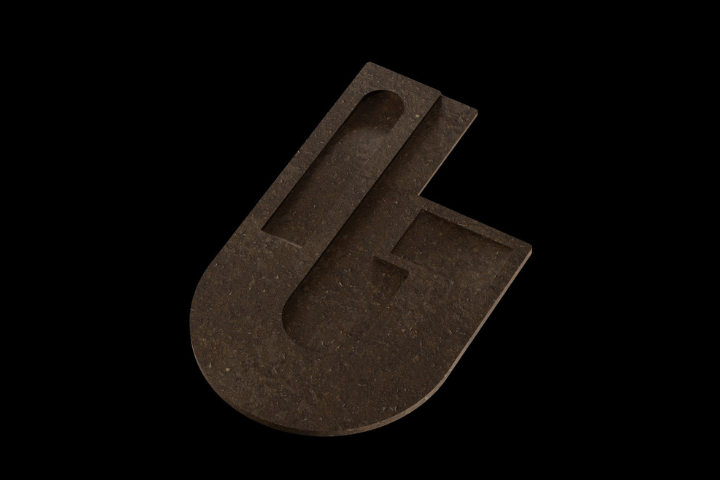
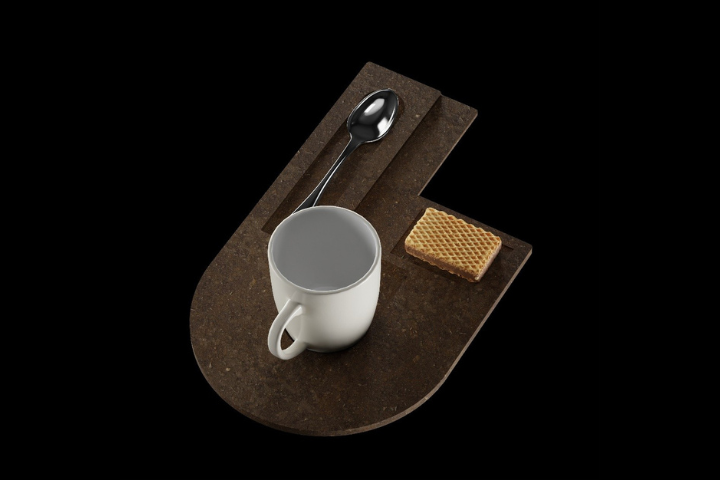
Our concept reimagines the traditional placemat as a biodegradable dining object made from repurposed materials, including coffee grounds and coffee husks.
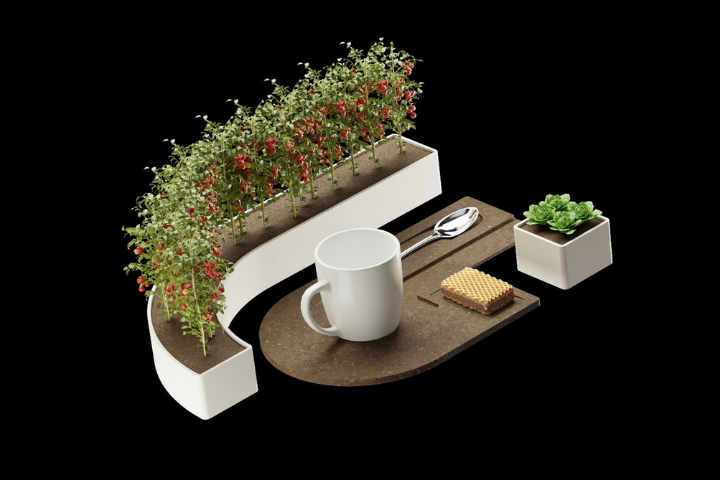
Designed with a second life in mind, the placemat could eventually return to the restaurant’s garden, where its organic materials have the potential to contribute to the soil and support future plant growth.
Beyond reducing waste, CIRCULTIVATE aims to create a connection between people, food and nature, encouraging customers to become active participants in the circular economy.
TEAM
I am a London-based sustainable design postgraduate with a background in interior architecture and experience working in finance. I am currently completing my Master’s in Sustainability at Kingston School of Art, where I am exploring how design can create meaningful, responsible, and inclusive spaces. I am passionate about interior and furniture design, materials, food culture, and creating environments that support people and communities. My work is guided by empathy, persistence, and a desire to make a positive social and environmental impact. I am especially interested in socially conscious design that brings together creativity, wellbeing, and sustainability, and I aspire to contribute to a more compassionate and thoughtful built environment through my future work.
Eugenio Costa is a Milan-based product designer working across furniture, lighting, and industrial objects. His practice combines material research, technical development, and a strong interest in form as a carrier of meaning.
PROCESS
01 / Discovering the Opportunity
Our journey began at the Institut de Gastronomia de Barcelona, where we explored the relationship between food, sustainability and the dining experience.
We became particularly interested in how the restaurant’s circular economy initiatives could become more visible to customers.
The dining table stood out as an opportunity because it is where every customer interacts directly with the restaurant.
This led us to ask: What if the table itself could communicate the story of sustainability?
From this question, we began developing a placemat that could serve a practical purpose while also encouraging customers to participate in a circular journey.
Image not set.
02 / Material Exploration
We began experimenting with waste materials to understand how they could be transformed into a functional object.
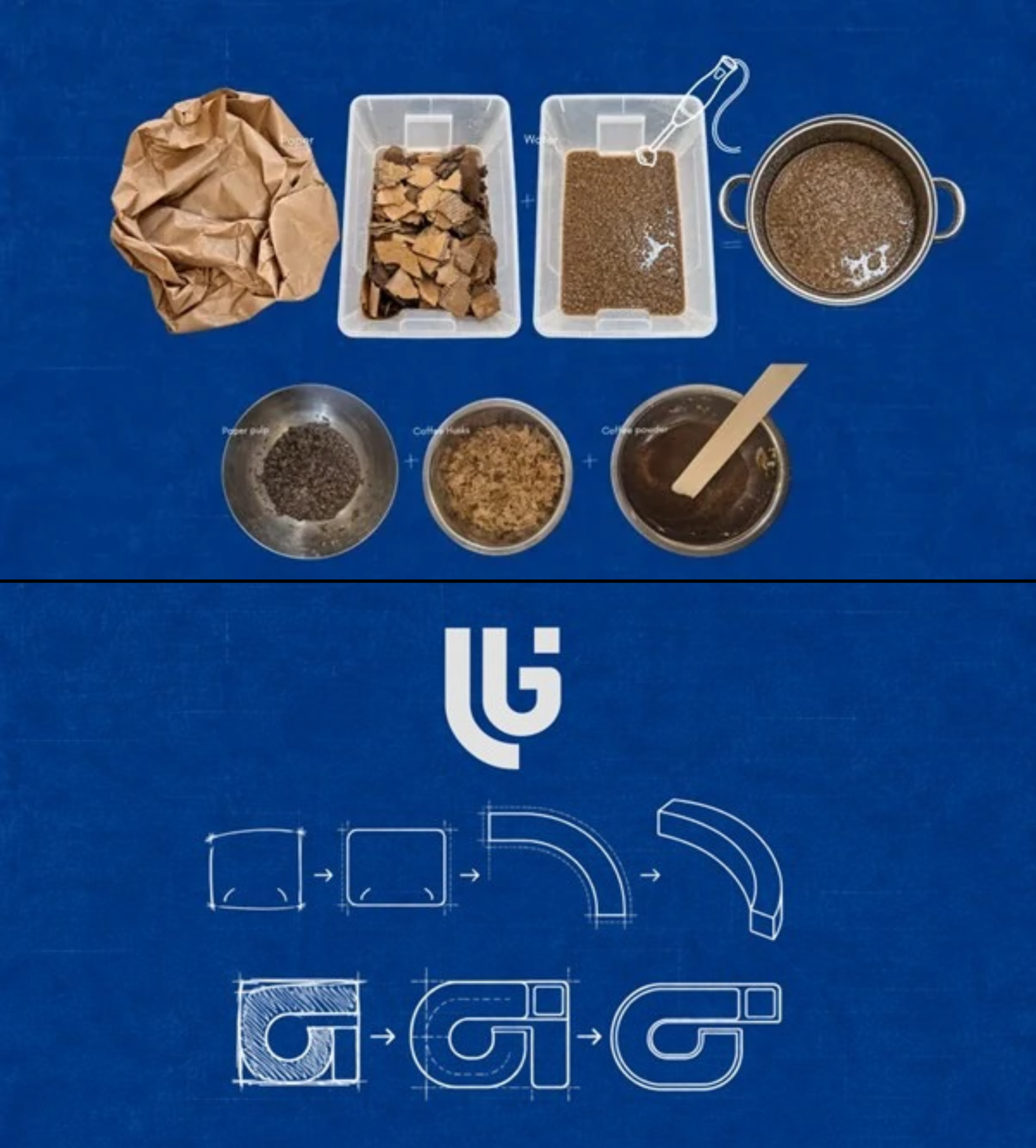
Our first prototype combined recycled paper pulp, coffee husks and coffee grounds. As compost was unavailable during our experiments, we used paper pulp made from recycled paper and water as an alternative material.
The initial outcome was promising because the mixture could be moulded into shape. However, the material lacked structural strength and broke apart when lifted.
Although the prototype was not functional, it helped us understand the material’s limitations and identify what needed improvement.
This became an important part of our design process, showing us how experimentation and failure can lead to better solutions.
03 / Improving the Prototype
For our second round of experimentation, we continued working with the most promising material mixture from our first day.
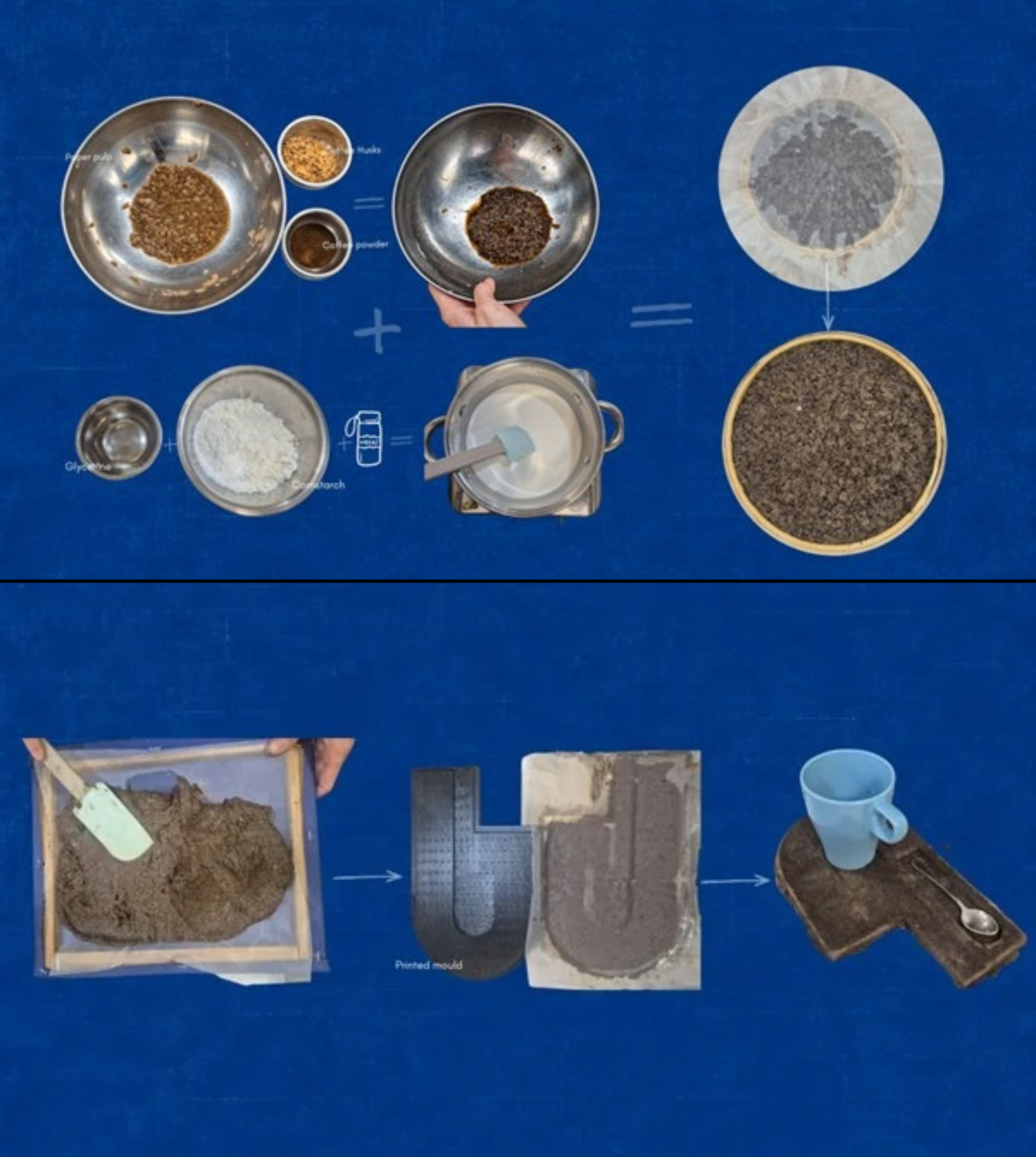
We introduced a homemade glue made from cornstarch, water and glycerin to improve the binding properties.
We also redesigned our mould and press to create a thicker and denser material.
These changes significantly improved the outcome. The prototype became stronger, more stable and capable of supporting everyday dining items such as a mug and cutlery.
This was an important breakthrough, demonstrating the potential of our material experiments and bringing us closer to a functional placemat.
04 / Designing the Circular Experience
As the physical prototype developed, we also explored what would happen to the placemat after its first use.
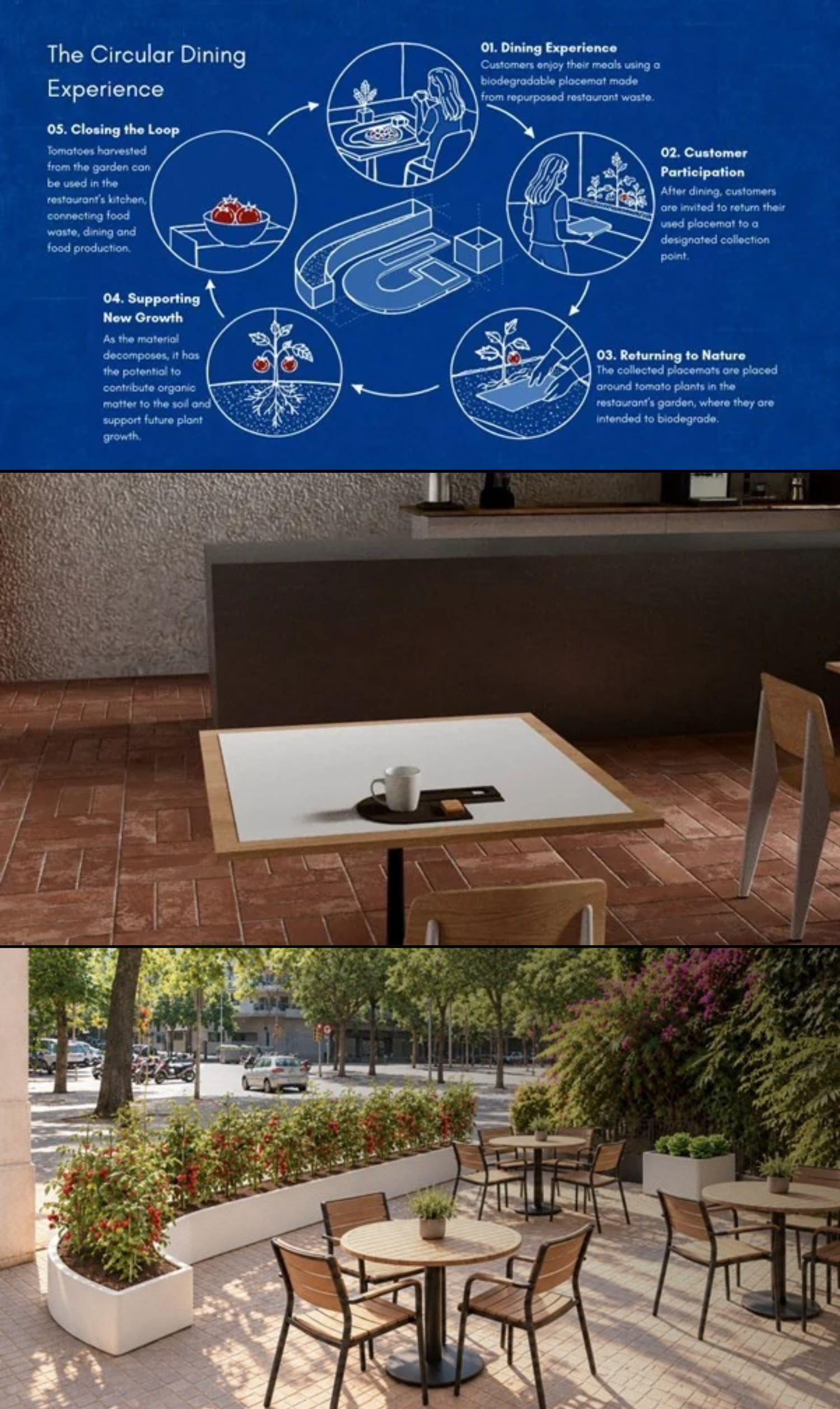
Rather than designing an object that would simply be discarded, we imagined a circular dining experience involving both customers and the restaurant.
Customers would use the placemat during their meal and then return it to a designated collection point.
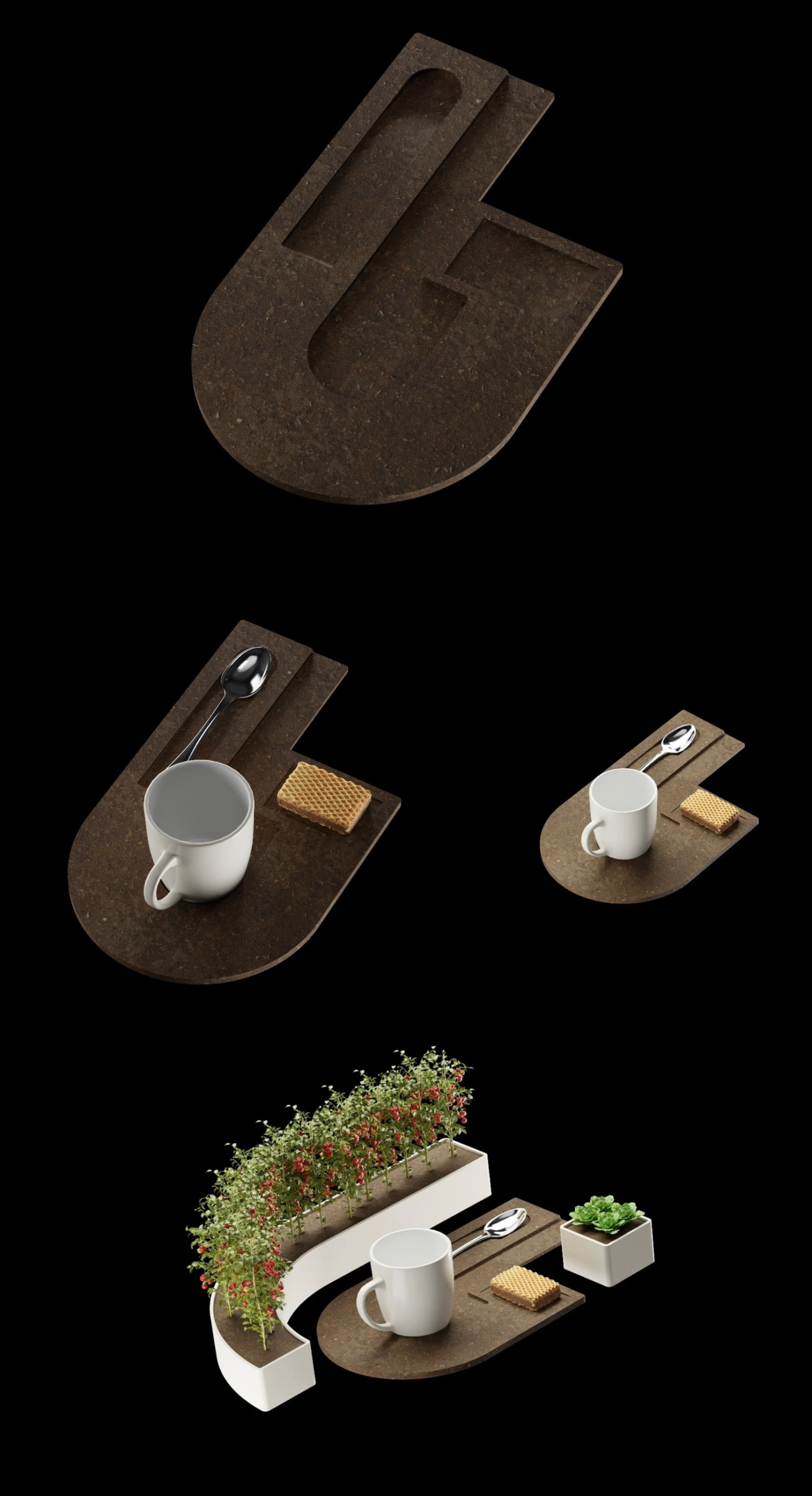
The collected placemats could eventually be incorporated into the restaurant’s garden, where the materials would be intended to biodegrade and potentially contribute organic matter to the soil.
The garden could then support the growth of ingredients, such as tomatoes, which could return to the restaurant’s kitchen.
This proposed journey connects dining, waste, nature and food production in one continuous cycle.
05 / Final Design and Future Development
Our final design brings together the physical placemat, its proposed second life and the wider customer experience.
The outcome demonstrates how a simple dining object could communicate circular economy principles while encouraging participation in more sustainable restaurant practices.
Although our material experiments were successful in improving strength and stability, further development is still required.
Our next steps would include experimenting with compost, exploring different colours and finishes, testing water resistance and durability, and trialling the design in a real restaurant environment.
We would also need to test the material’s biodegradability and suitability for returning to the soil.
CIRCULTIVATE remains a developing concept, but our residency allowed us to explore how waste materials can inspire new possibilities for circular design.
EXPERIENCE
Our time in Barcelona gave us the opportunity to explore sustainable design through hands-on experimentation and collaboration.
Working within the context of the Institut de Gastronomia de Barcelona encouraged us to think differently about the relationship between food, waste and the people who experience it.
One of our biggest learning experiences came through material experimentation. Our first prototypes did not perform as expected, but these challenges encouraged us to reconsider our approach, improve our materials and continue testing.
The residency also helped us recognise that sustainability is not only about the materials we use, but also about how design can communicate ideas, encourage participation and create meaningful connections.
Through CIRCULTIVATE, we began exploring how circular design could go beyond waste reduction to support environmental awareness, community engagement and a stronger connection with nature.
Ultimately, this experience reminded us that even the simplest everyday objects can become opportunities to rethink how we consume, reuse and regenerate.