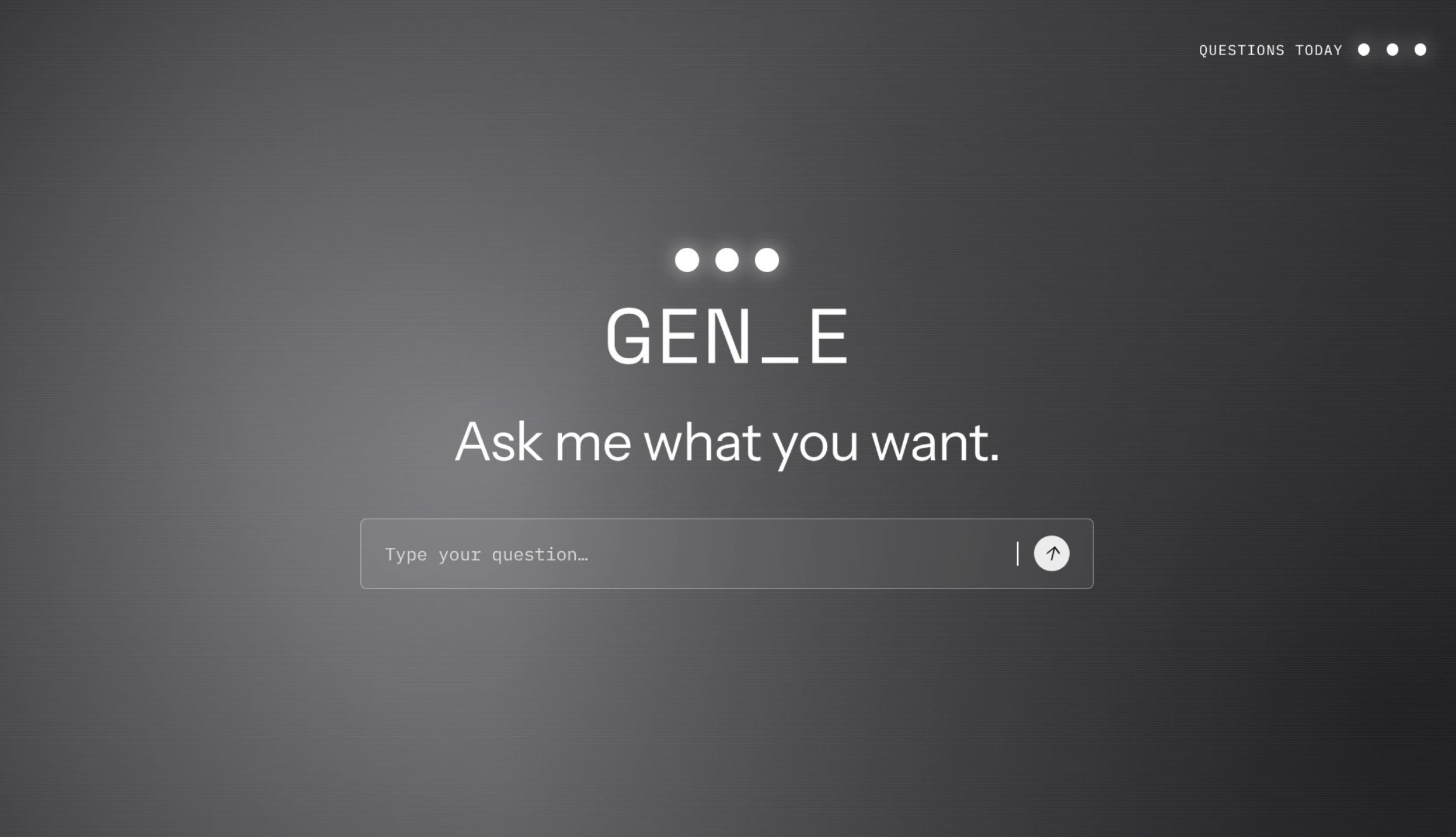
GEN_E
CONCEPT
Three questions a day. An artifact from 2036.
WHAT IF EVERYONE COULD ONLY ASK AI THREE QUESTIONS A DAY?
In 2026, AI was in everything. We stopped thinking for ourselves, stopped talking to each other, and the data centres answering us consumed as much energy as entire countries. In our future, 95% of AI companies signed the GEN_E Treaty in 2027: all personal AIs merged into one, GEN_E, with one rule. Three questions per person, per day, reset at midnight, for everyone.
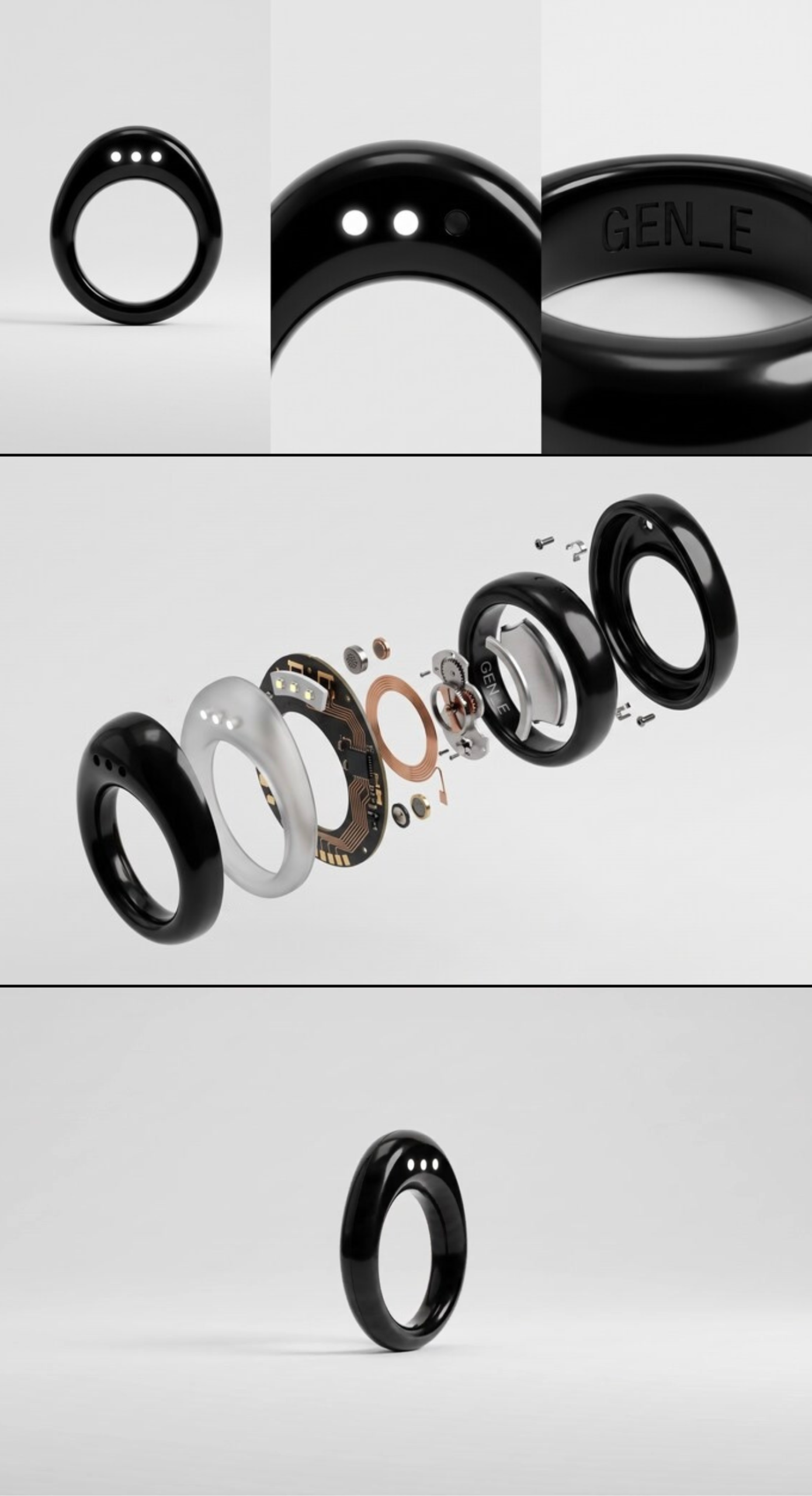
The artifact is the ring that carries those questions, like the lamp of a genie with three wishes. It has no screen: you speak to it or tap it on a computer, and three small lights show how many questions you have left. The basic ring costs €3; others are silver or gold, but none holds a single extra question. Ten years later, people read, reason and talk more, and many end the day with their lights still on.
TEAM
I am a graphic designer with a background in multimedia and a specialization in packaging design. I enjoy developing new concepts and rethinking existing products to make them clearer, easier to use, and more meaningful. Packaging has become the space where I experiment the most, combining ideas with real, functional solutions. I see design as a constant process of learning and questioning, a way to explore how small changes can improve everyday experiences.

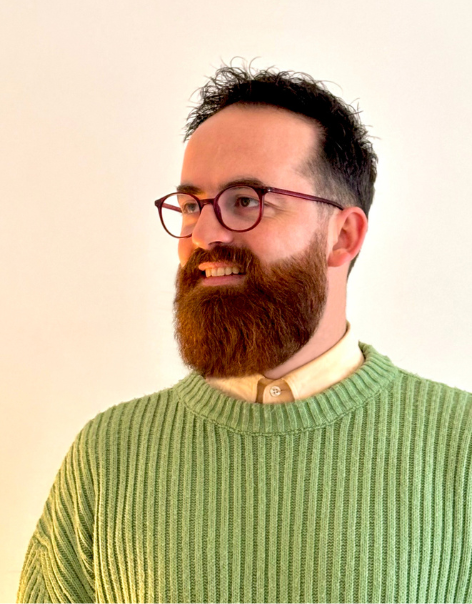
Kosovo-based architect, designer, and founder of the award-winning multidisciplinary studio SHAPE & SHADE. His work bridges architecture, product design, and urban thinking, translating local memory and cultural heritage into contemporary forms. With his debut product, the BOLD Shkam chair, he gained international recognition through multiple global awards and exhibitions, positioning Kosovo-rooted design on the international stage. Ibrahim’s projects range from urban masterplans and housing concepts to experimental objects and installations. Alongside his practice, he teaches design, mentors young creatives, and actively builds platforms that strengthen the regional design ecosystem. His approach is guided by one belief: local identity is not limitation, but future potential.
PROCESS
THE STORY
WRITING A SHORT HISTORY OF THE FUTURE, FROM AI OVERLOAD TO THE GEN_E TREATY
We built a short history of the future: the AI overload of 2026, the GEN_E Treaty of 2027 and the protests it caused, and ten years in which people slowly became resourceful again, with invented data such as library visits ×4.3 and personal AI energy −80%.
THE RING
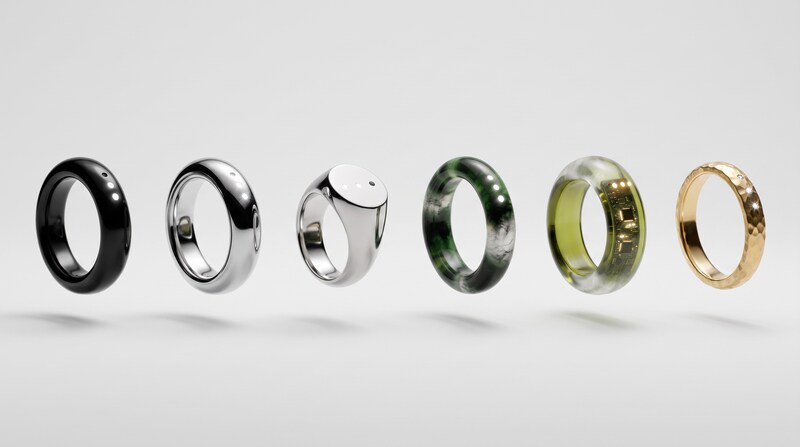
ONE OBJECT FOR EVERYONE: SIX RINGS, THE SAME THREE QUESTIONS
A ring can be worn by almost anyone, goes everywhere and can be taken off to disconnect. We designed six rings, from a black €3 basic ring to hammered gold with three diamonds as lights, all with the same chip, the same lights and GEN_E engraved inside. The first rings, in our story, were made in Eindhoven’s former Philips factories.
THE PERFORMANCE
TWO USERS FROM 2036, ONE DAY OF MAKING, ONE LAST LIGHT LEFT ON
Everything was made digitally in one day. We presented as two users from 2036 asking GEN_E our daily questions on a black and white chatbot interface with a synthetic voice. For the last question, one of us explained the ring instead of asking, and GEN_E answered: “Looks like you didn’t need me. Your last light stays on tonight.”