
Weighted
CONCEPT
Do you ever think about the person on the other side of the table?
A paper weight where the core concept uses the heaviness of the object as a metaphor symbolizing the varying hardships that are weighed upon the students of the BEGOOD program under the Institut de Gastronomia de Barcelona.
The BEGOOD program brings students from vulnerable situations together and teaches them core values and skills within gastronomy such as turning surplus into value, learning that nothing and no one is wasted, cooking for people in need and learning that their skills matter to connect with other human beings, and are part of the restaurant and café, serving the guests.
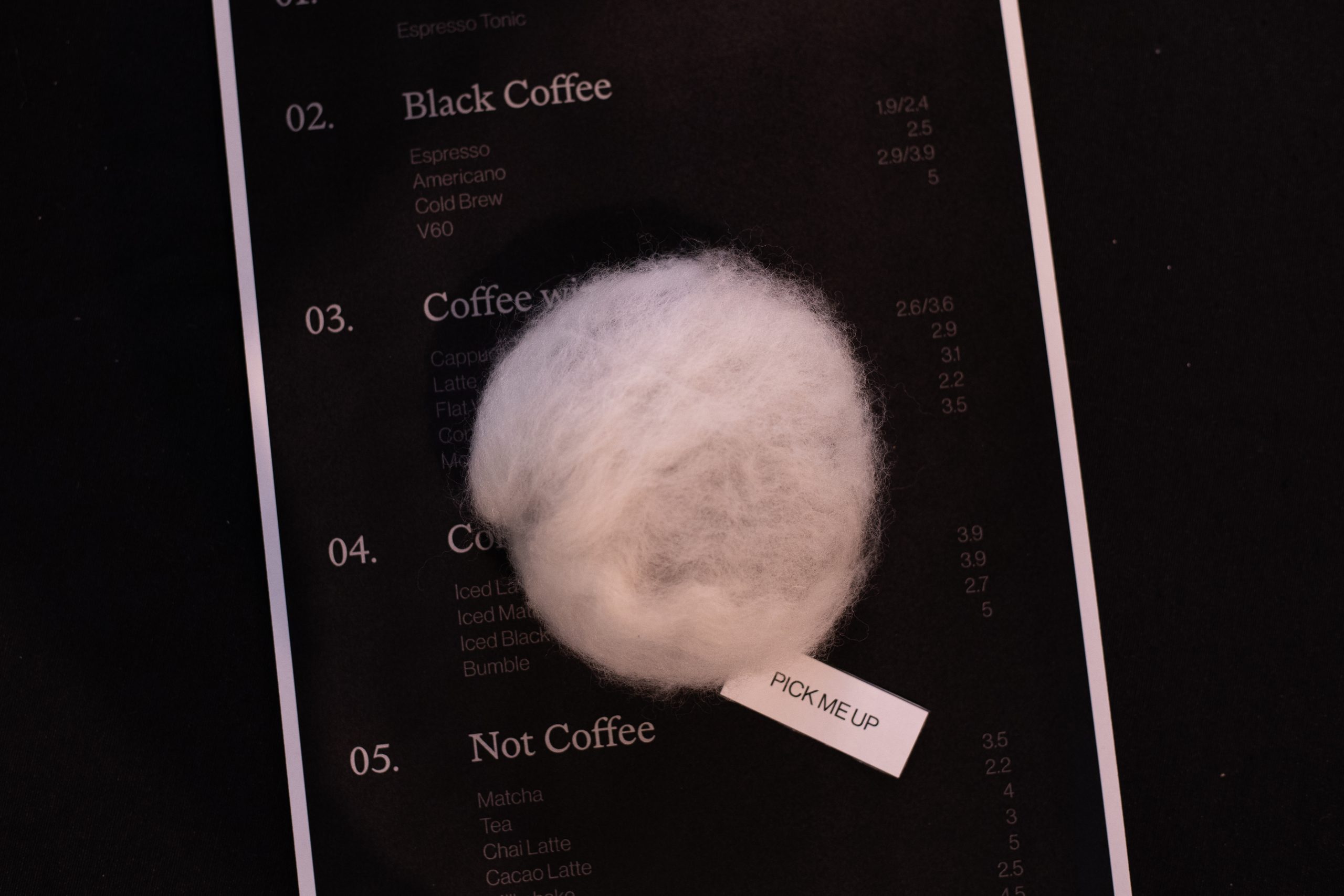
In this project, the paper weight itself serves a functional purpose of holding down the menu when brought or kept on the table, but it goes beyond the physicality and invites the guests of the restaurant to connect and understand with the students of the program, and their hidden heaviness such as mental health struggles, socio-economic difficulties or certain geographic disadvantages, like being away from home.
This narrative also extends to the heaviness of our impact on the environment around us, every decision we make has a consequence, which is also something the BEGOOD program imparts on their students, where every choice made in the kitchen has a consequence affecting the planet and its people. Hence the name “Weighted”, reflecting the weighted lives of the students and the weighted impact the decisions we make have.
Through this narrative we are creating a poetic interconnection between the students, the paperweight and the visitors of the space.
TEAM
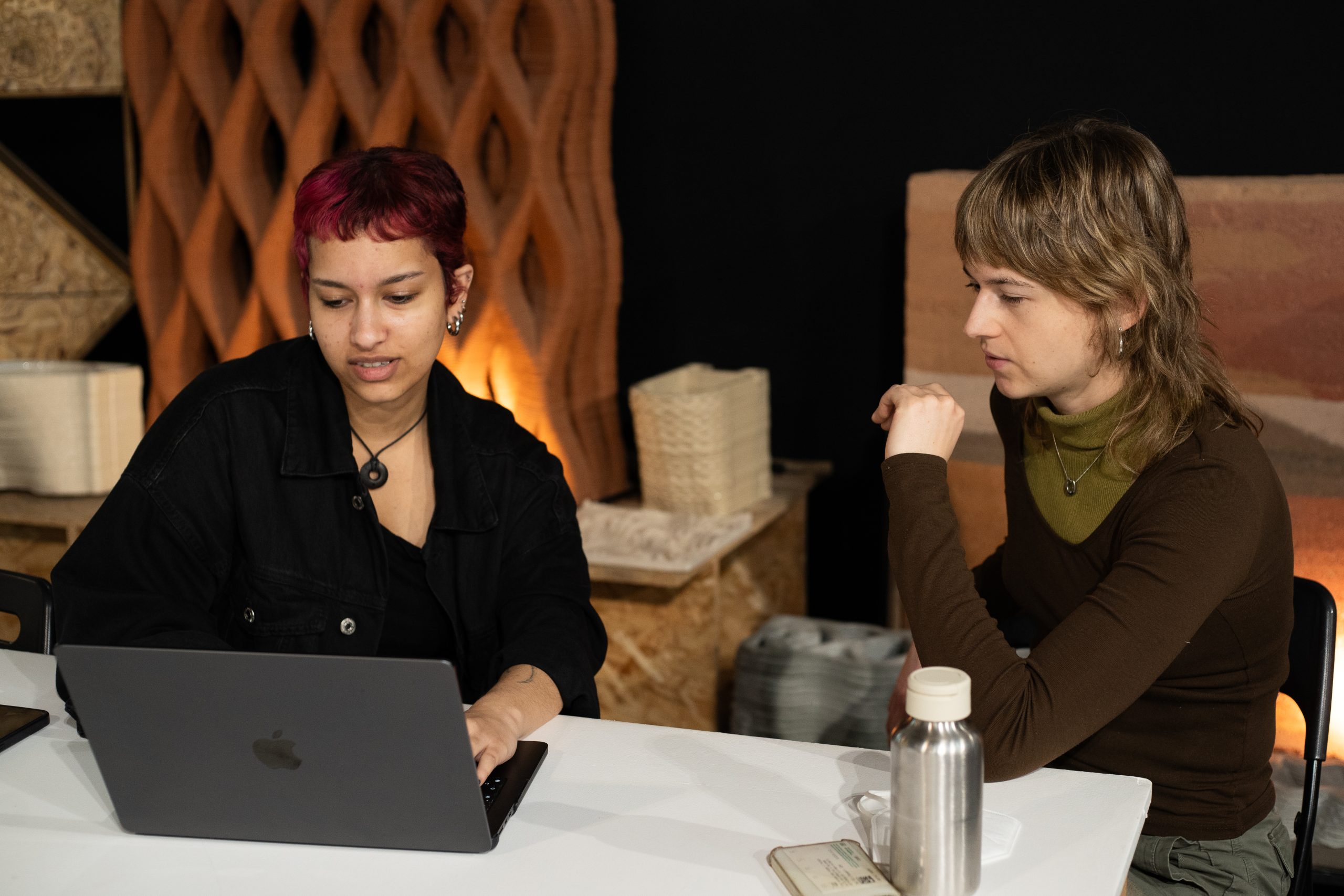
As an architect, I am particularly drawn to systematic thinking. Creating harmony between the individual elements and the development of complex structures hold the most excitement for me. Lately, my interest has shifted towards adaptive reuse projects where the main focus is on the creative use of our existing assets and resources.
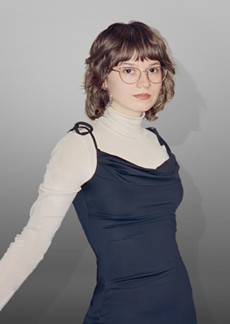
Designing with intention to bring people together.
Berlin-based designer with a deep interest in connecting people with the planet they live in, designing experiences that foster empathy and creating a space for social good. Currently, product design and data visualization are at the centre of my work, but the goal is broader: using design in any form to help the environment.

PROCESS
Bringing the object to life
Before starting the process of bio-making and building the object, we had to decide the look and feel of it and how it would be received in a restaurant environment. Our intention with the object itself was to create something that sparks curiosity and conversation within the visitors from the beginning.
To achieve this we decided to create a paper weight that on first glance appears to be soft, fluffy and light but upon interacting with the object, one realizes that it is actually hard and heavy. This reflects the juxtaposition of the more fun and light interactions that you see the students have with each other and the visitors, while the hardships and heaviness they carry on the inside are hidden and not visible on a surface level.
The contrast also has an additional purpose that adds to the user experience. Due to the unexpected interaction with the object, the expected impact is that the visitors start questioning the physical attributes of the object and understanding why it looks and feels the way it does.
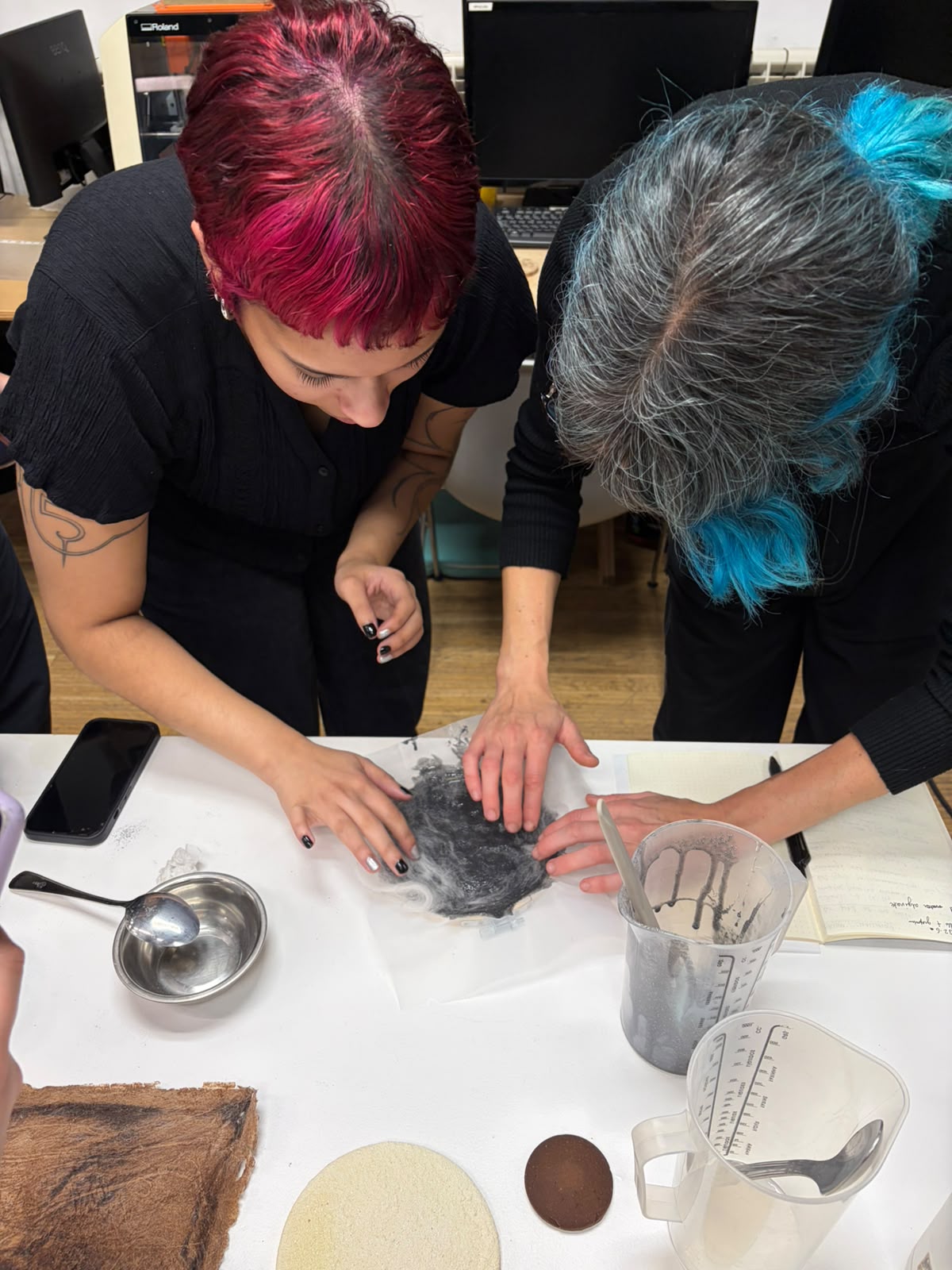
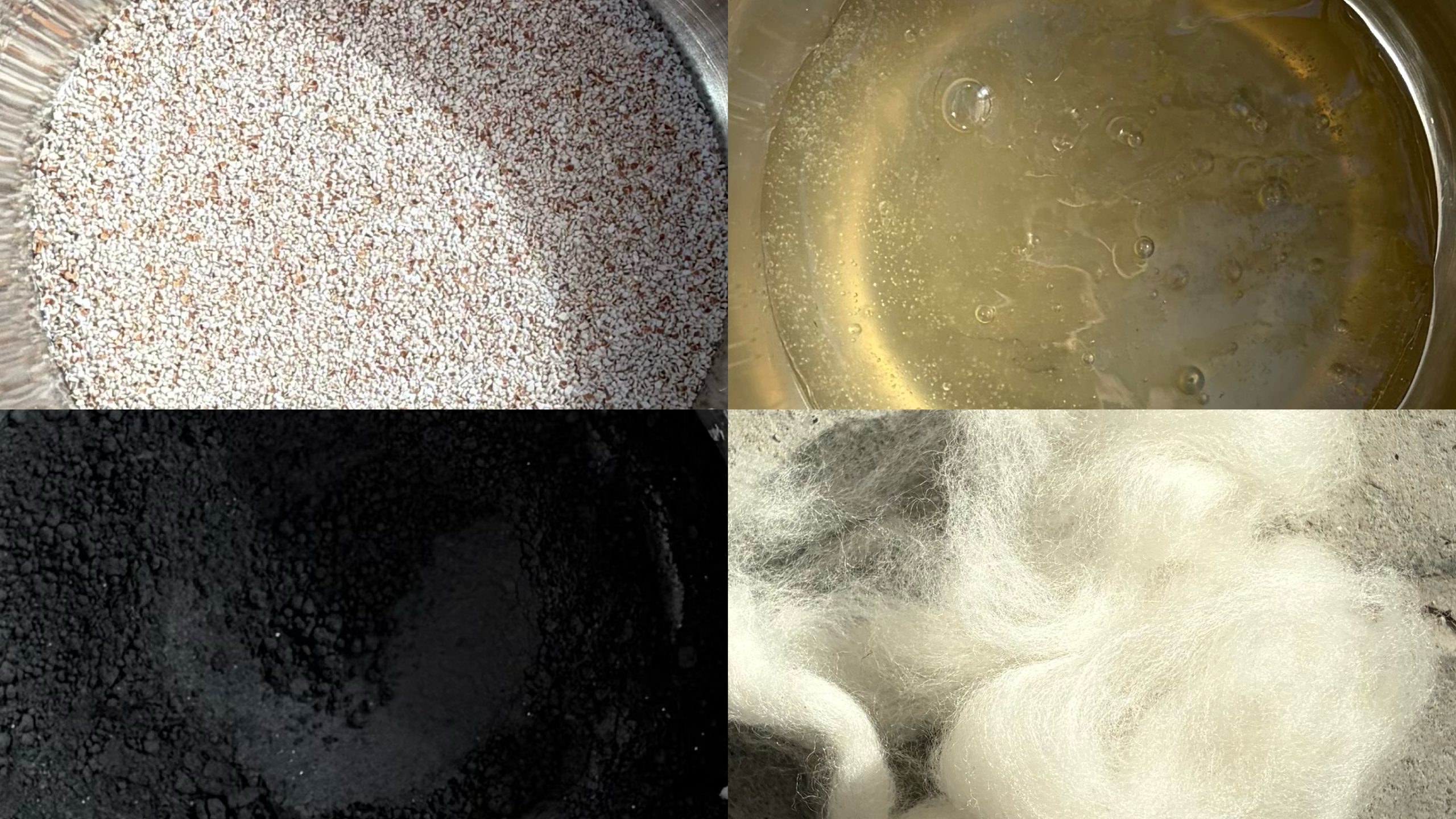
Starting with the materials
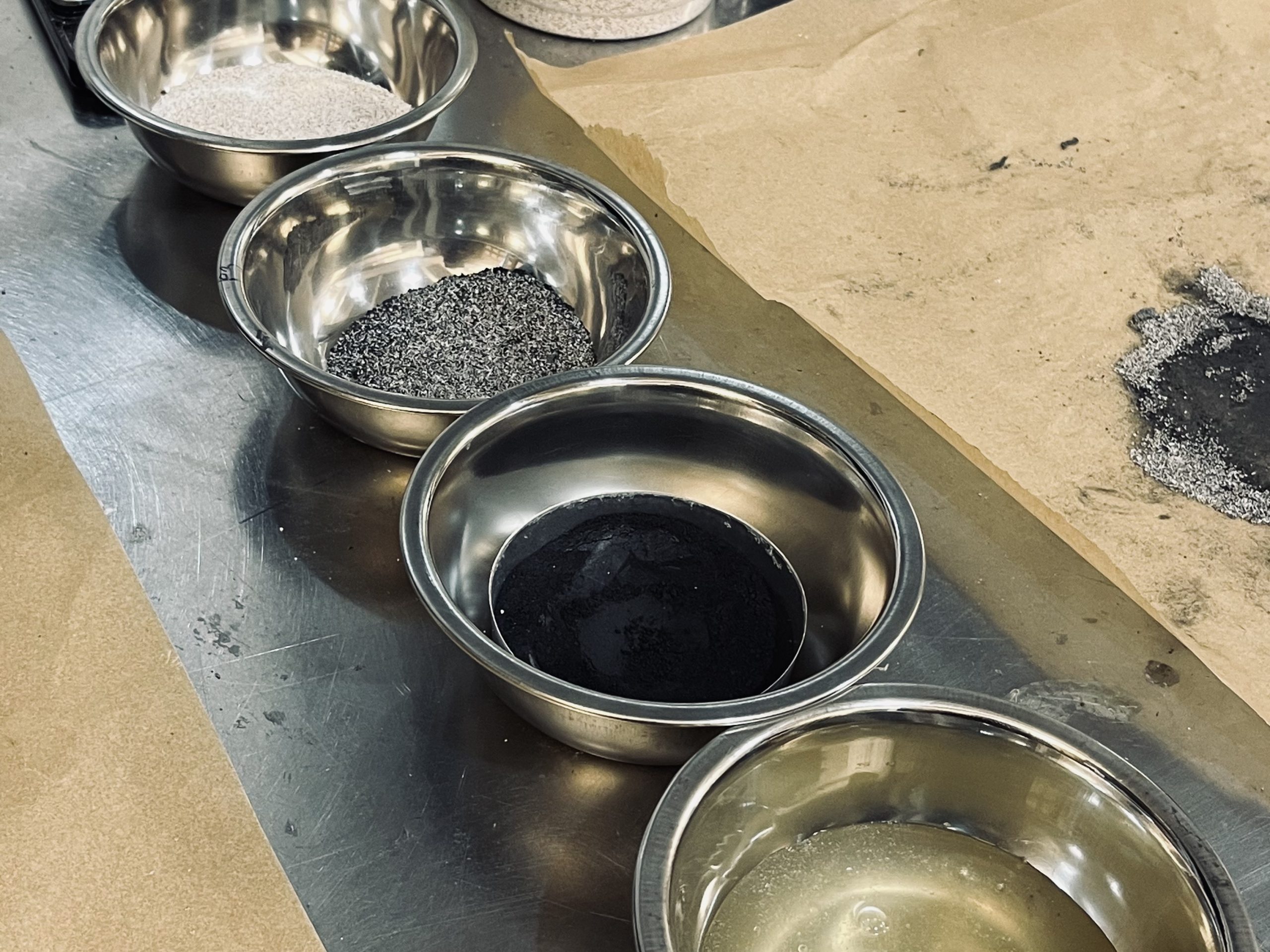
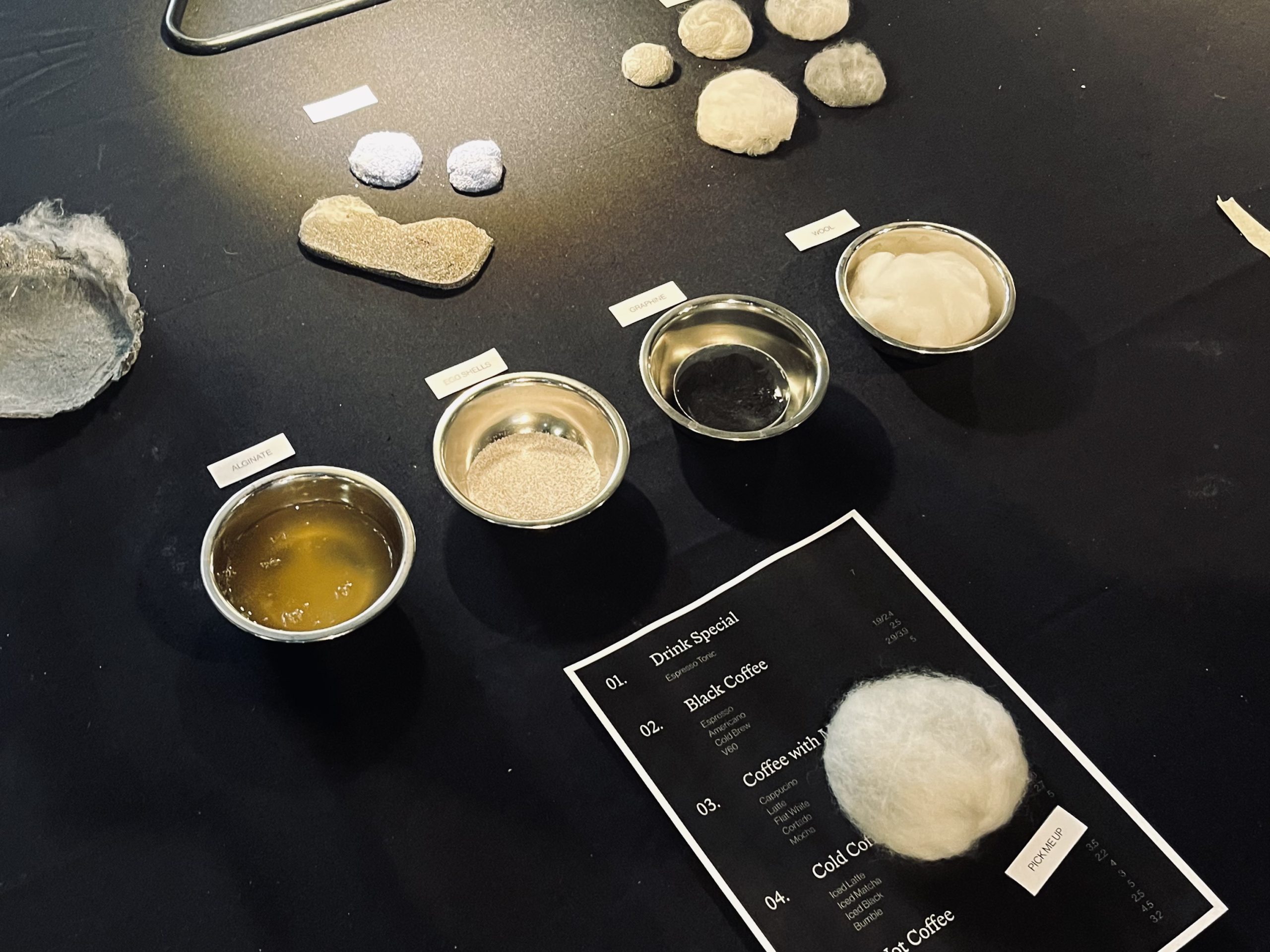
To replicate the heaviness of a paper weight with food waste at our disposal, we decided to use egg shells as they were the most dense material and by experimenting with the granularity of the shells, we were able to explore how heavy and textured it can get.
To bind the egg shells together and bring it to a consistency to mold the desired shape, we made an alginate mix using water, alginate powder and tea tree oil and created a glue-like gel.
We decided to use graphite and black coloured mica to give the object a darker pigment, replicating other naturally heavy objects such as a rock.
And lastly, to create the fluffy outer layer creating a softer and lighter look, we used wool to wrap it around the object, hiding the heaviness.
Putting it all together and experimenting with recipes
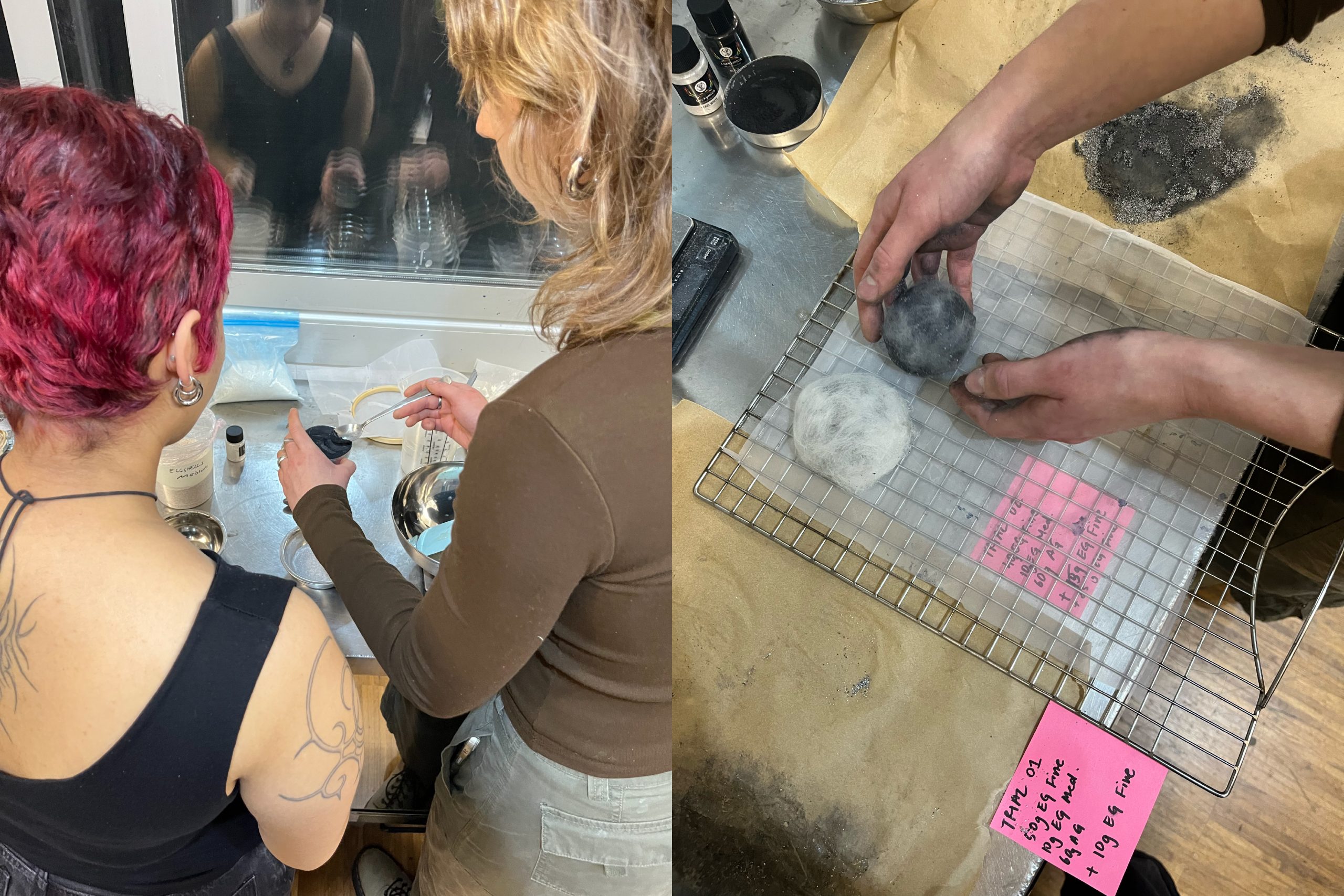
Our first round consisted of us testing out the materials, understanding how they work together and experimenting with them. At this stage, we tried out different pigments, and explored different forms and shapes that the paper weight could take, and also crucially played with the wool and tried integrating it into the alginate and egg shells mold.
Learnings from this stage: The darker, black-grey pigments are more natural and fitted for the concept, the shape could be more rounder as opposed to flat, and integrating wool inside the mold creates gaps, resulting in an undesired look.
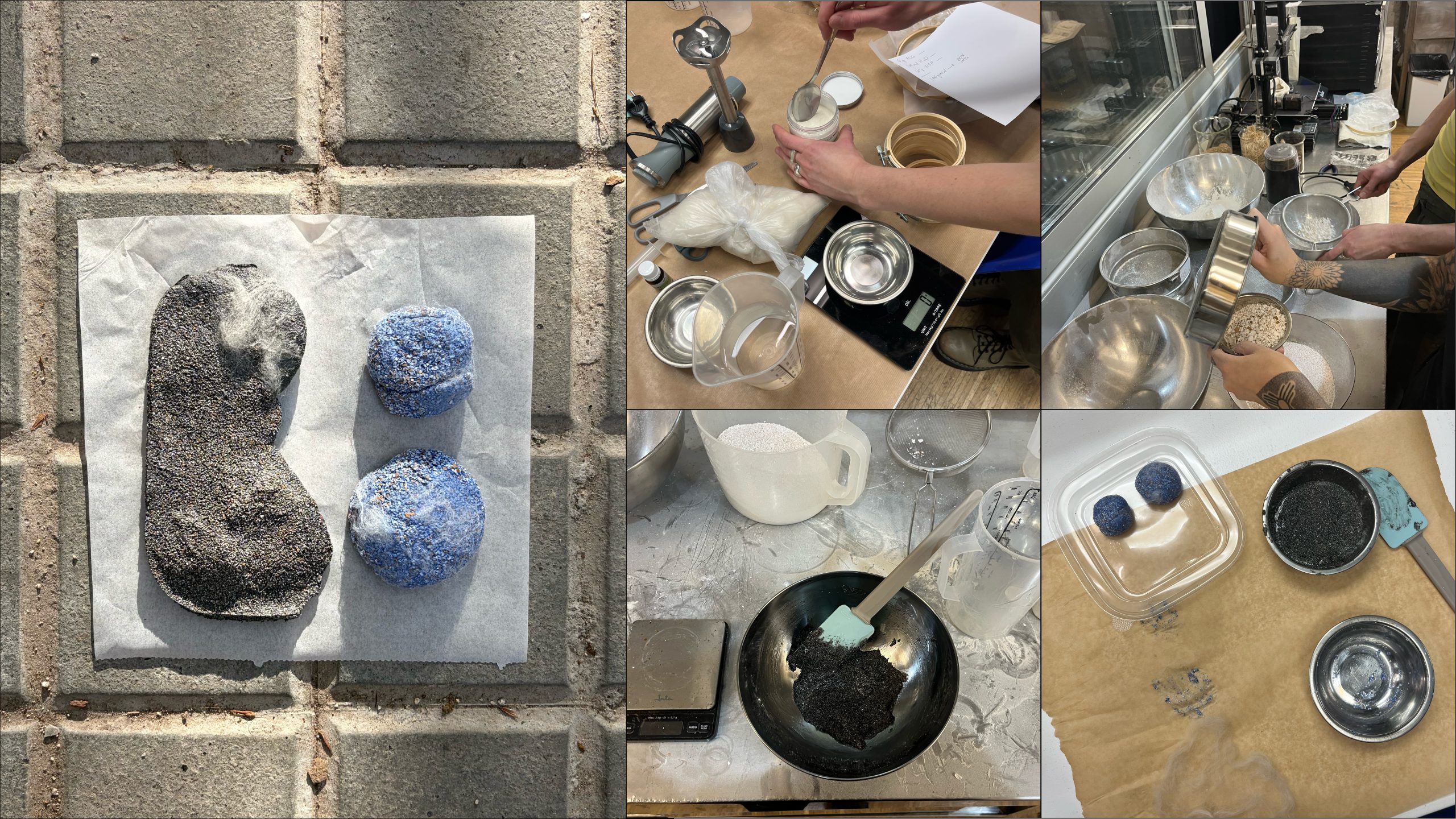
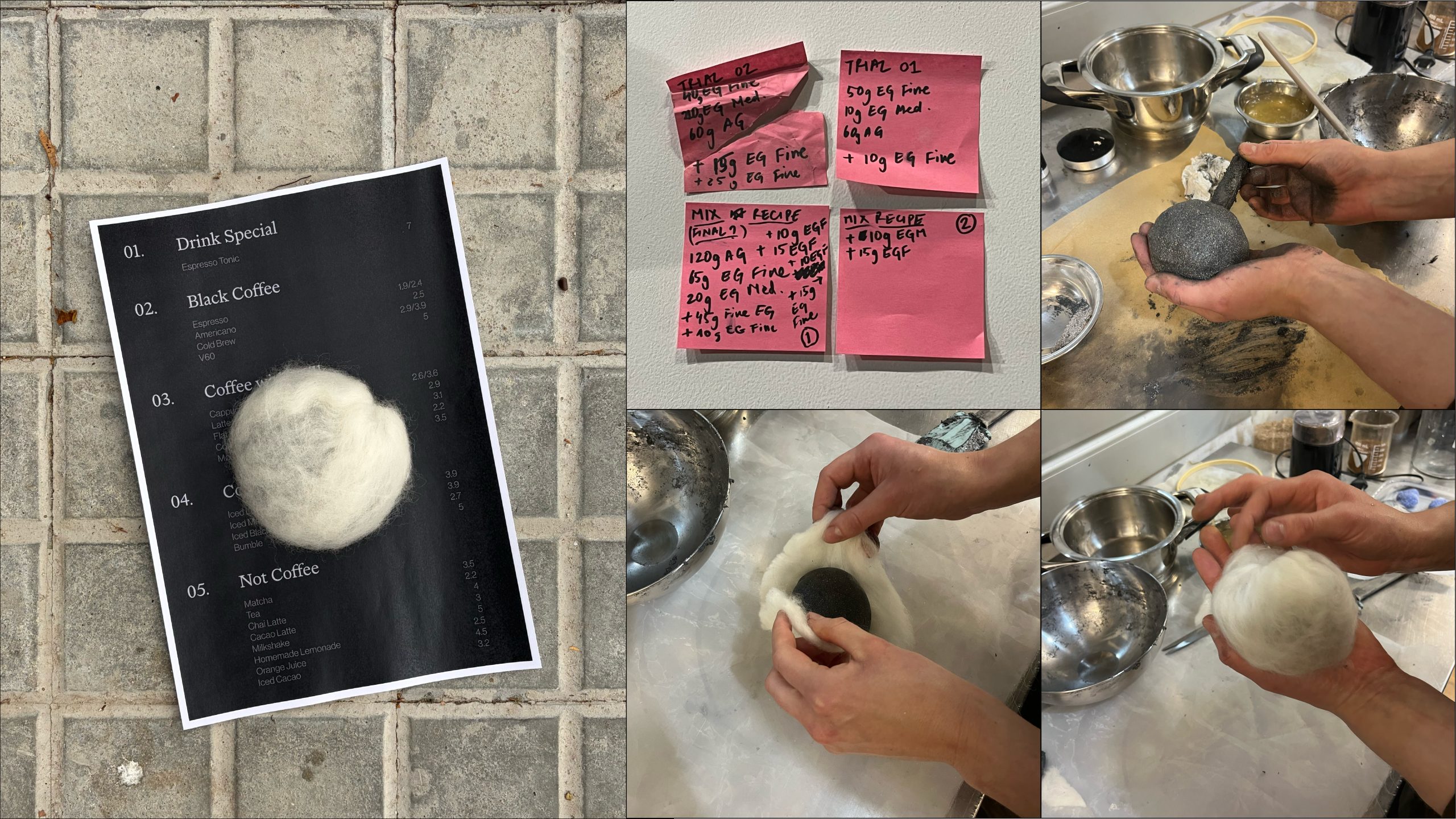
The second stage of experimenting focussed more on the ratio of the ingredients, exploring how much eggshells are required, and what can create the heavier look and feel. Here we also worked with different sizes of the mold and different wool integrating techniques.
Learnings from this stage: Creating the actual object bigger than what was created would work better, and an important learning was to cover the entire object with wool all around, hiding the heavy object underneath.
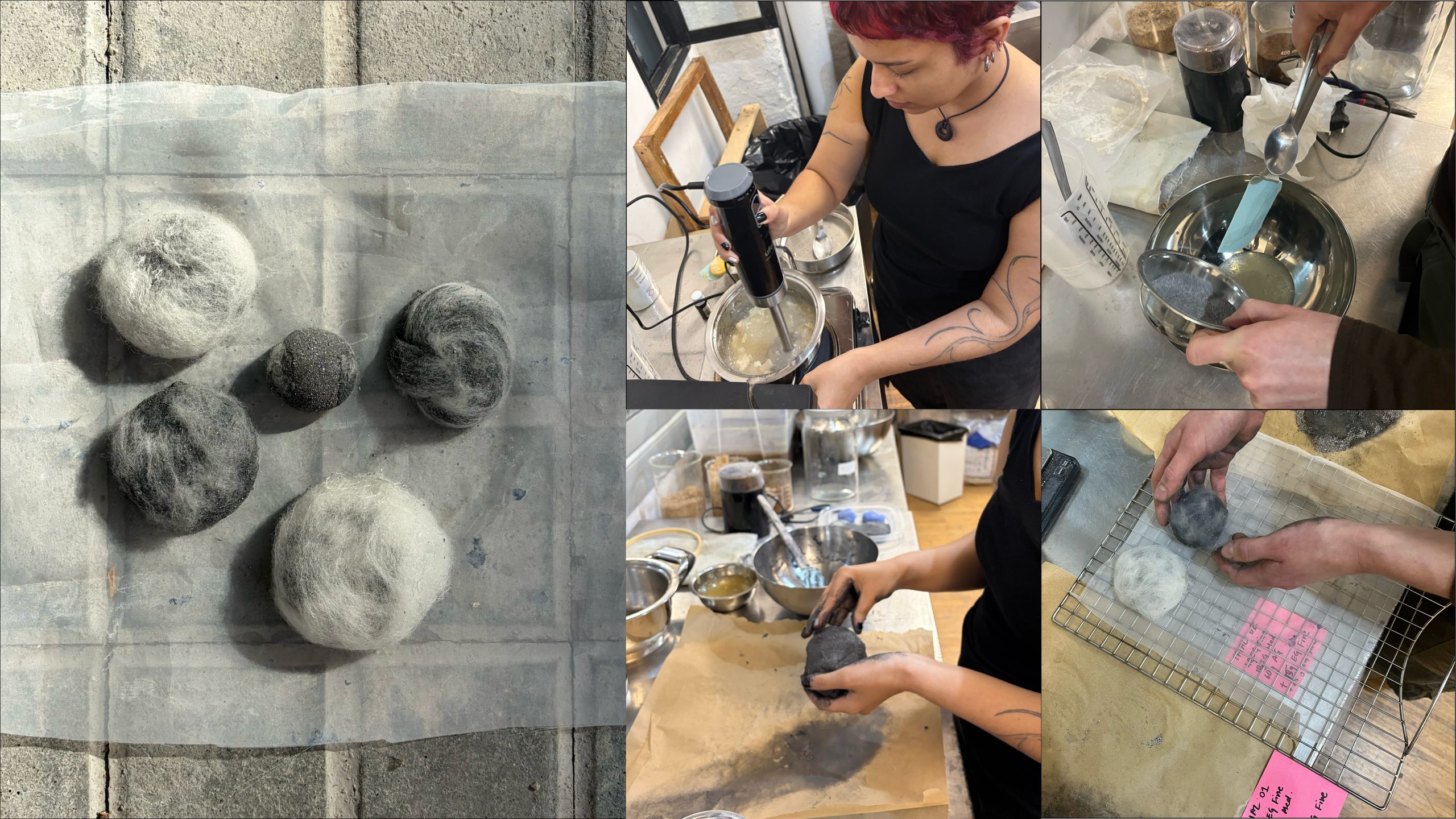
Lastly, after multiple trial and errors of the recipe, we were able to reach a desired outcome. As seen in the image, we workshopped the recipe multiple times by adding more and more egg shells to create the denseness.
The final outcome is not only the item but the process itself.
While creating this object, we discovered the value of the making process itself and how therapeutic it can be. This realization led us to believe the object could be woven into the program, offering students a space to express themselves, to release some of the heaviness they carry by pouring it into the piece, and to share their own unique stories through it.
EXPERIENCE
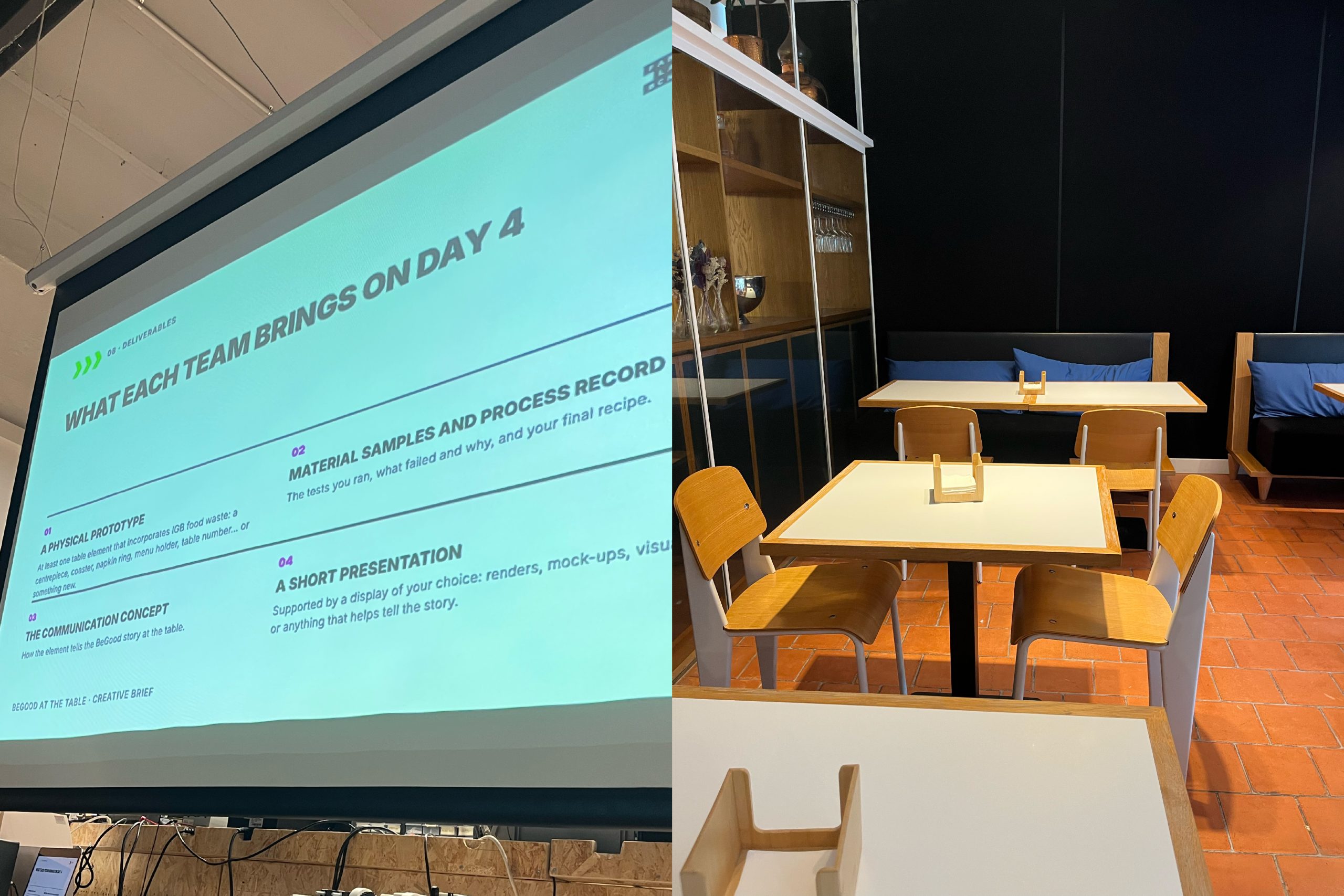
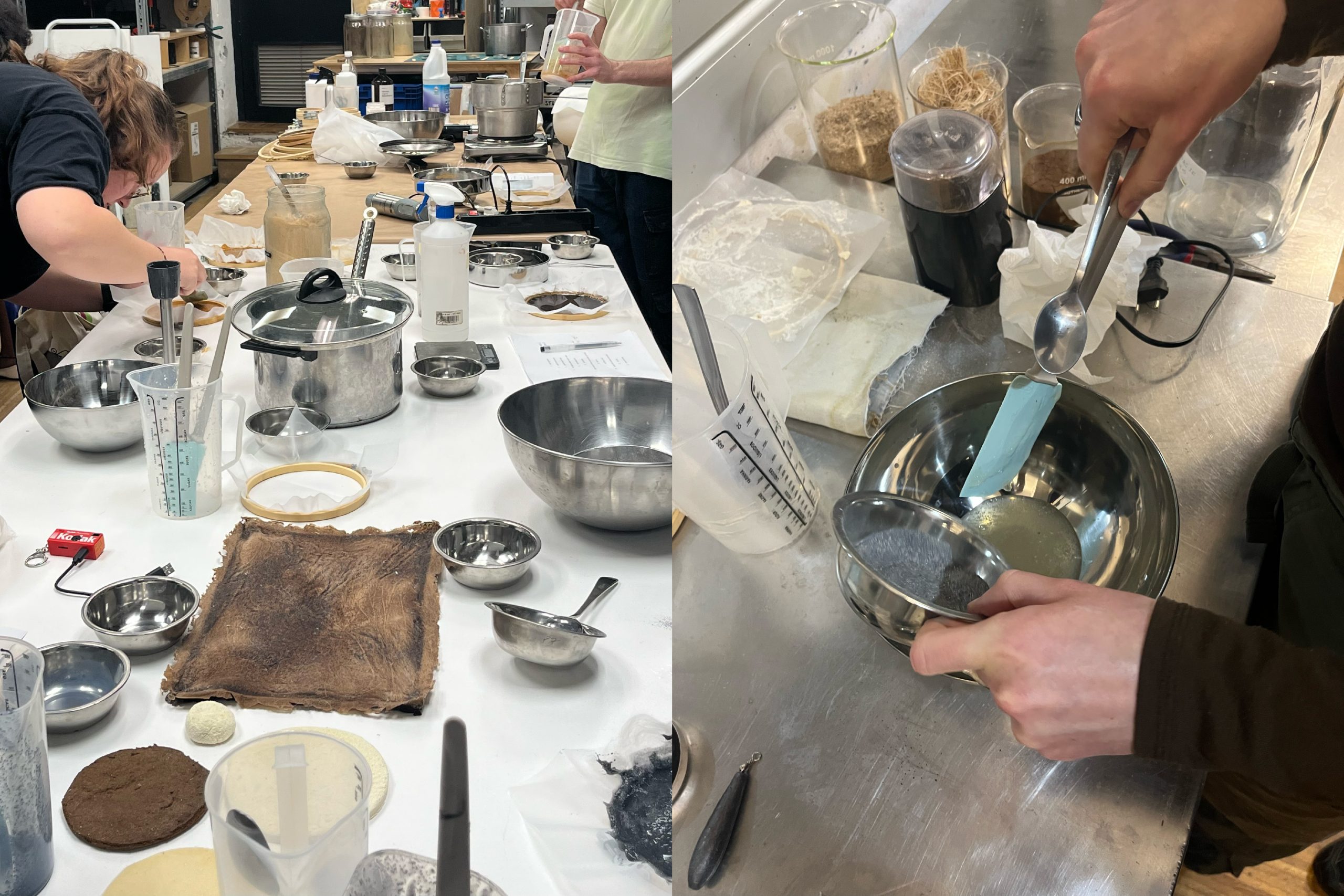
The residency at IAAC was a great experience. We worked on food waste together with a culinary institute, which made me see leftovers as a real design material. Having the Fab Lab next door meant we could go from idea to prototype fast, and the whole process pushed me to think more experimentally and more sustainably in my own work.
— Rebeka Manjár
As someone who has primarily worked on digital projects, going beyond a screen to work with tangible materials was a big learning experience. During the residency, I explored materials like food waste and discovered their properties and the many possibilities they offer, which was truly eye-opening. Working in the Fab Lab at IAAC with designers from various backgrounds, and learning from our mentors, was really valuable. The experience helped me be more critical in concept development, stay curious at every stage, and, importantly, learn to be adaptable in new environments.
— Juana John