
N-UOVO
CONCEPT
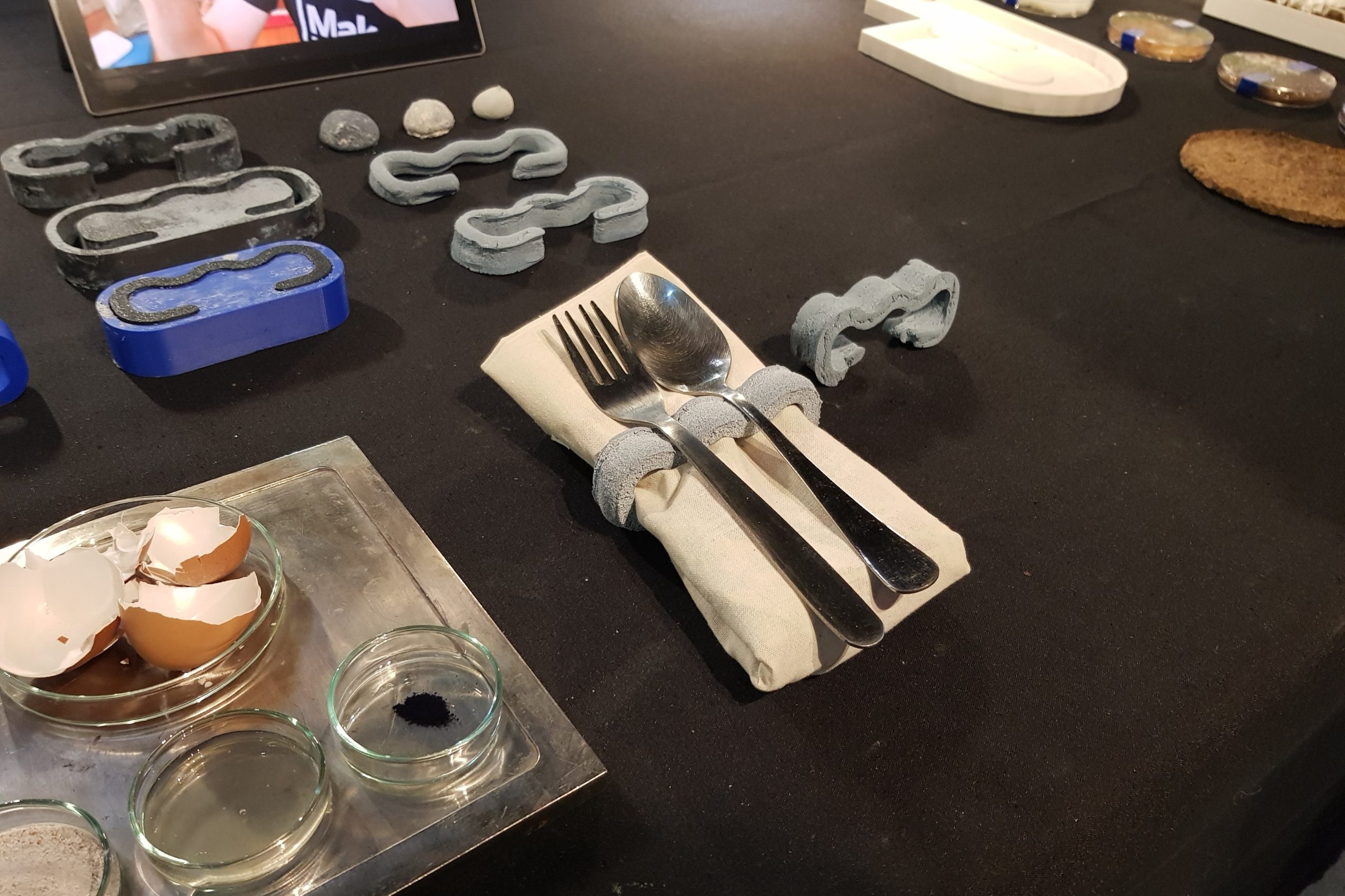
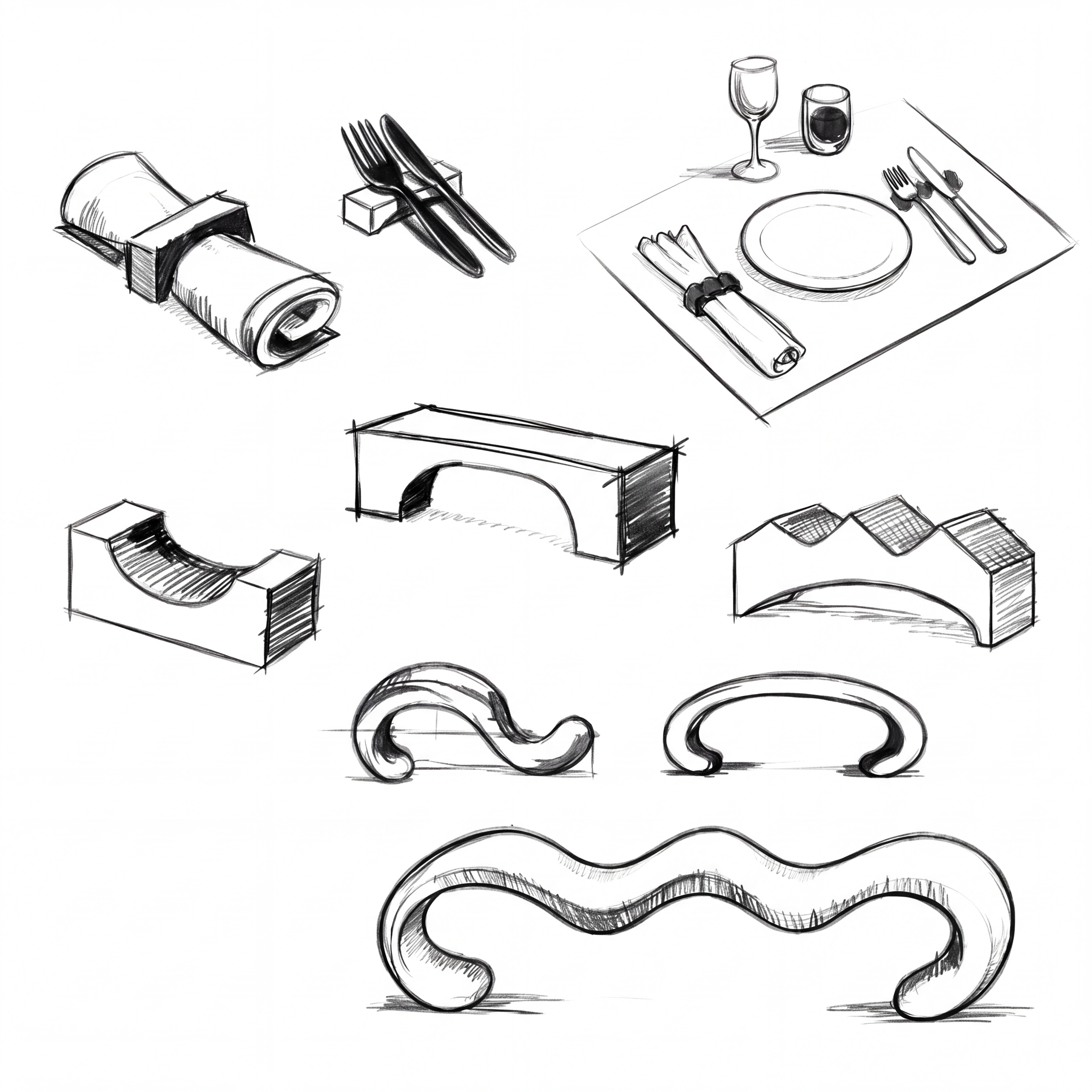
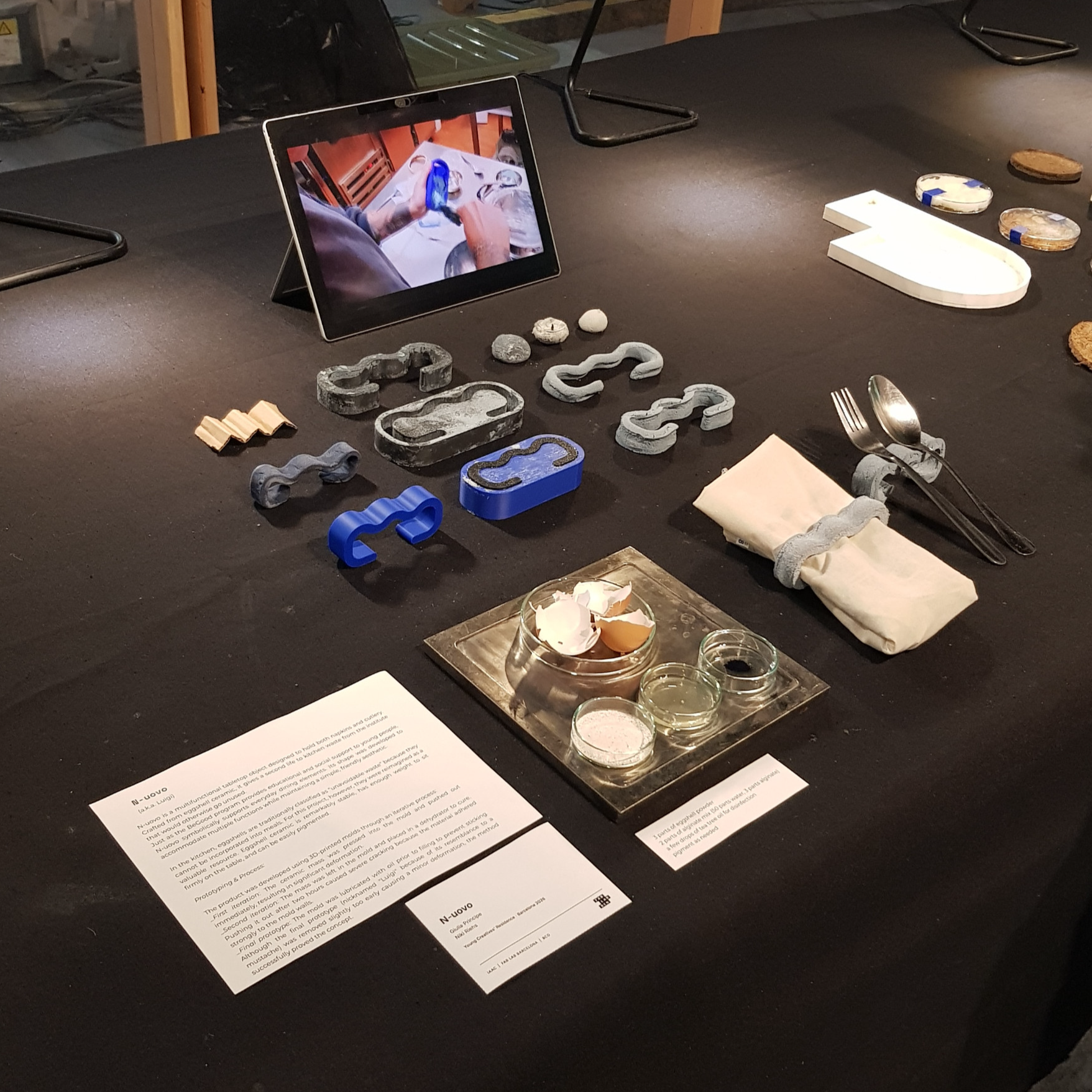
COMMUNICATING THE SUPPORT THE INSTITUT DE GASTRONOMIA DE BARCELONA IS GIVING TO THE STUDENTS TAKING PART IN THE BEGOOD PROGRAMME N-uovo is a multifunctional tableware object that serves a dual supporting role as both a napkin holder and a cutlery rest. Crafted from eggshell ceramic, it gives a second life to the institute’s organic leftovers that would otherwise go unused.
TEAM
Giulia Principe is a Neapolitan transdisciplinary artist based in Amsterdam. Her practice explores perception as an unstable interface between the self, technology, and the environment. She works on mixed media installations and material research on sustainable darkroom practice, first developed during Covid-19 and later supported by Rijksakademie van Beeldende Kunsten during the Tech Fellowship of 2022. Her work has been exhibited throughout the Netherlands, India, Japan,Italy and NYC. Her photographic research won the Art and Science Prize at Crqlr Awards (JP) in 2024. In 2023 she co-founded Doka 107, a photographic darkroom studio in the centre of Amsterdam, and she is currently a Master student at Sandberg Instituut (NL).
Industrial Designer currently pursuing his Master’s Degree in Eco-Innovative Design at the University of Applied Sciences in Graz, Austria. Alongside his work as a designer, he serves as a volunteer EMT and is an active member of the Scout movement. These commitments shape not just his values, but the way he works. His approach is grounded in a single question: Is this necessary? Trained to prioritize under pressure, to acieve more with less and to put others’ interests before his own, Niki brings a combination of pragmatism and precision to the design process, which enables him to find simple solutions for complex problems.

PROCESS
CONCEPT
SIMBOLIC SUPPORT N-uovo supports napkins and cutlery in a symbolic way, mirroring how the BeGood programme offers educational and social support to young people and the community. Its shape was designed to accommodate multiple functions while maintaining a simple, friendly aesthetic. Beyond its functional utility, N-uovo is designed to serve as a conversation starter, sparking interest in the BeGood programme.
MATERIAL
USING THE UNUSABLE
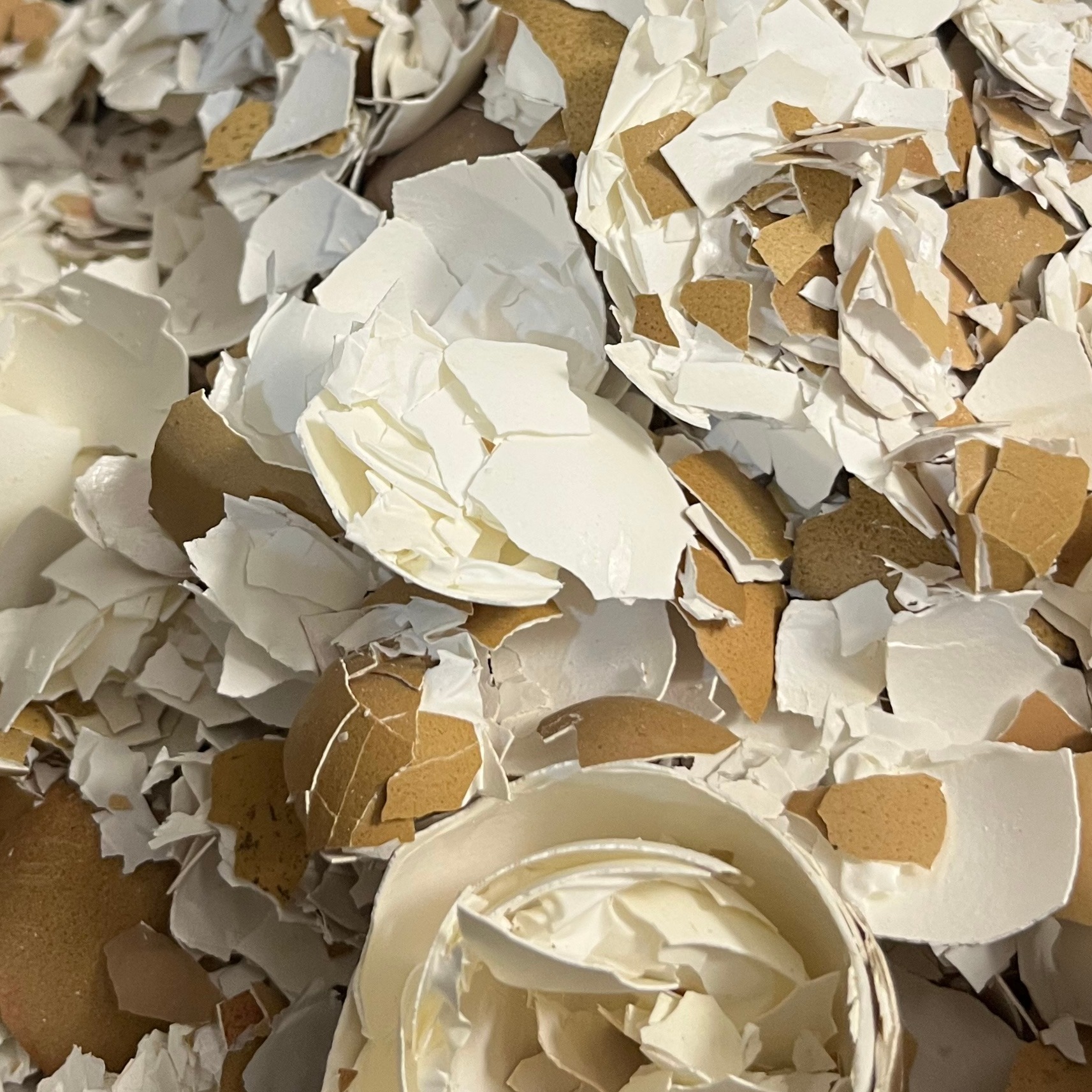
In culinary settings, eggshells are classified as “unavoidable waste• because they cannot be incorporated into dishes. For this project, however, they were treated as a valuable raw material for creating eggshell ceramic. This material is remarkably durable, possesses enough weight to
ist securely on a table without easily tipping over, and can be easily pigmented. Additionally, it forms a dense paste, which proved advantageous during the residency prototyping phase.
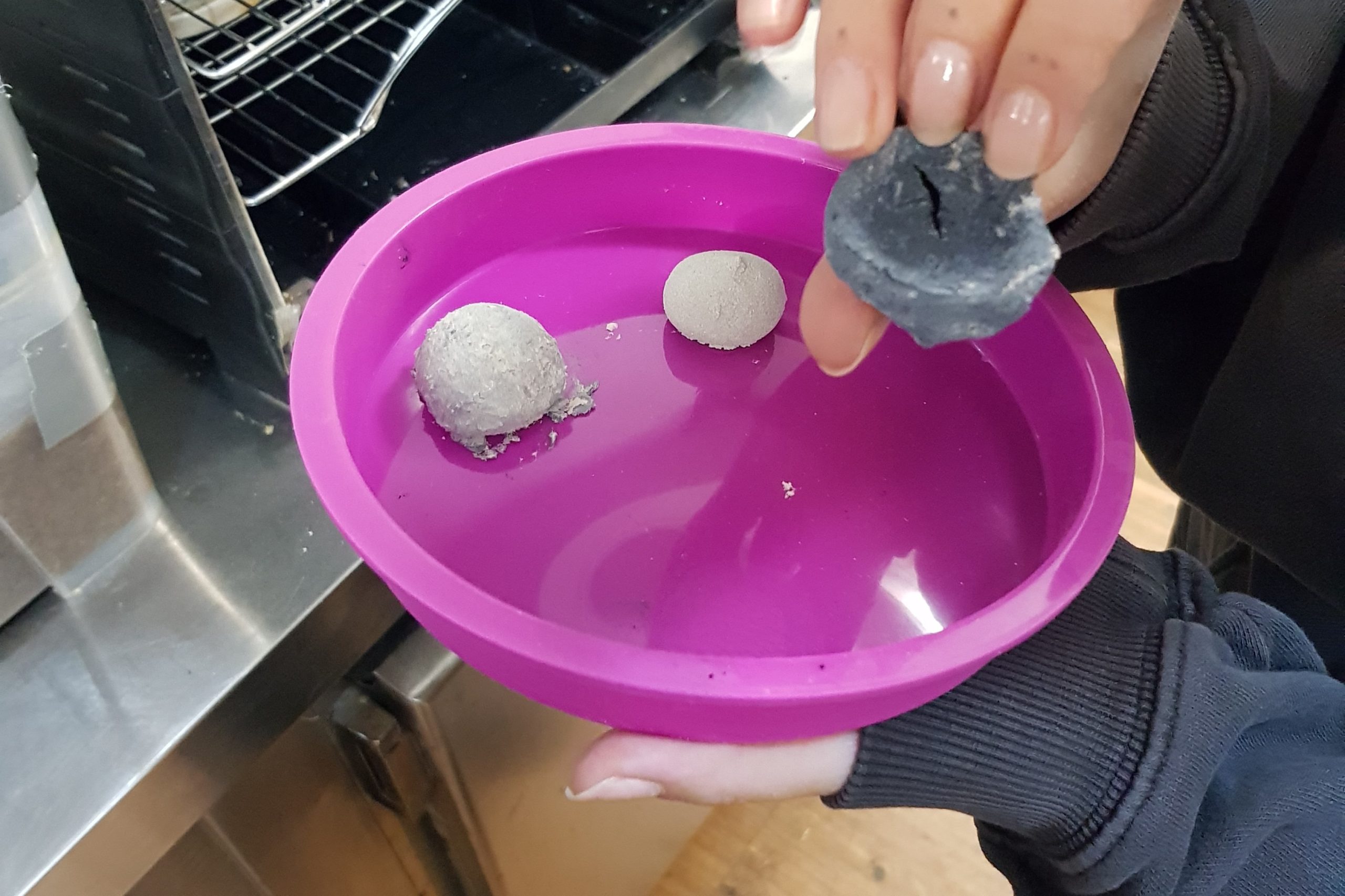
To produce the eggshell powder, collected shells were crushed in a household blender and sieved to achieve the finest possible grain size. To determine the material’s shrinkage rate, three spheres were molded and dehydrated over a 12-hour period. Horizontal shrinkage measured at
approximately 10%, while vertical shrinkage exceeded 30%.
PROTOTYPING
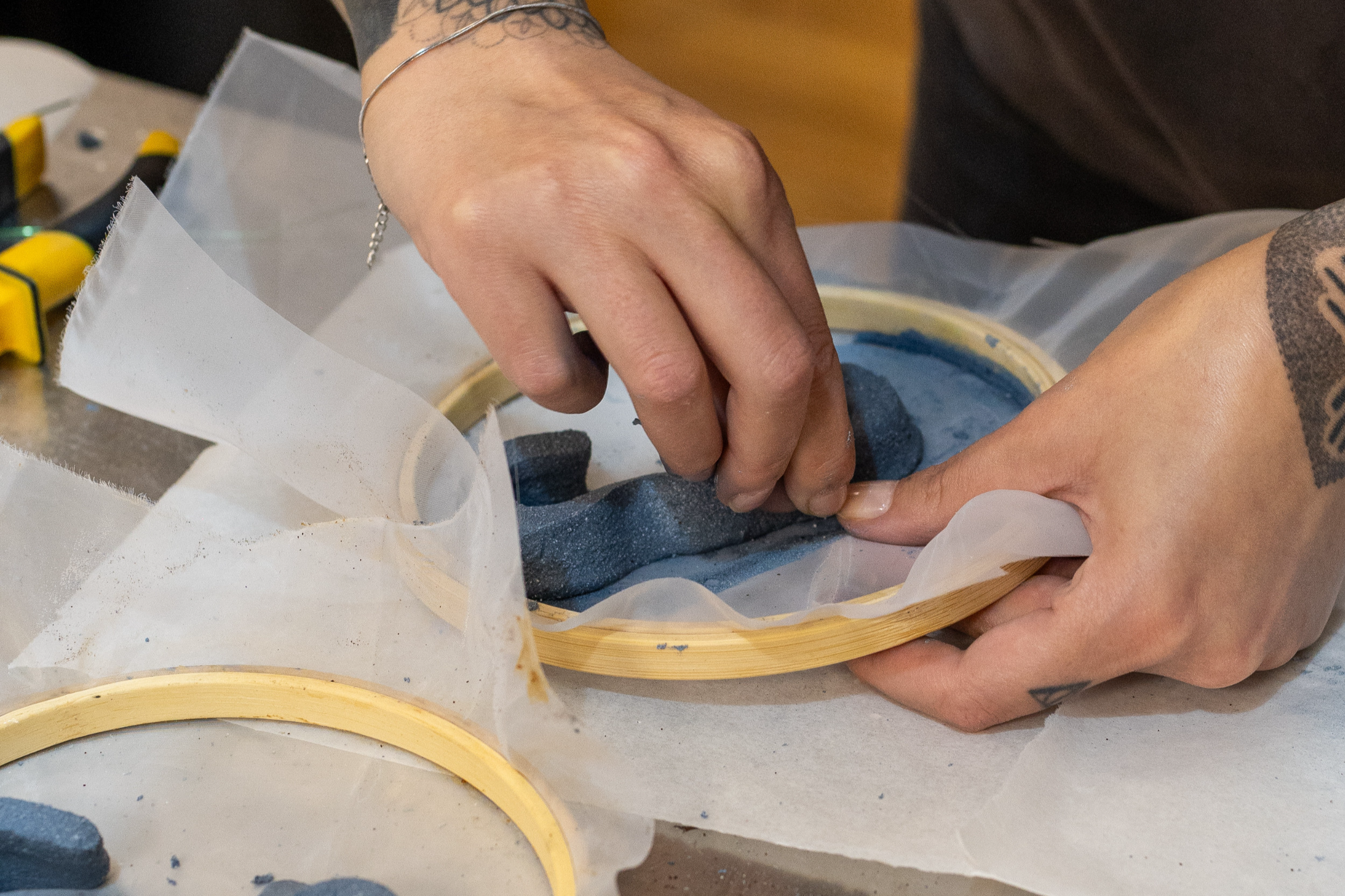
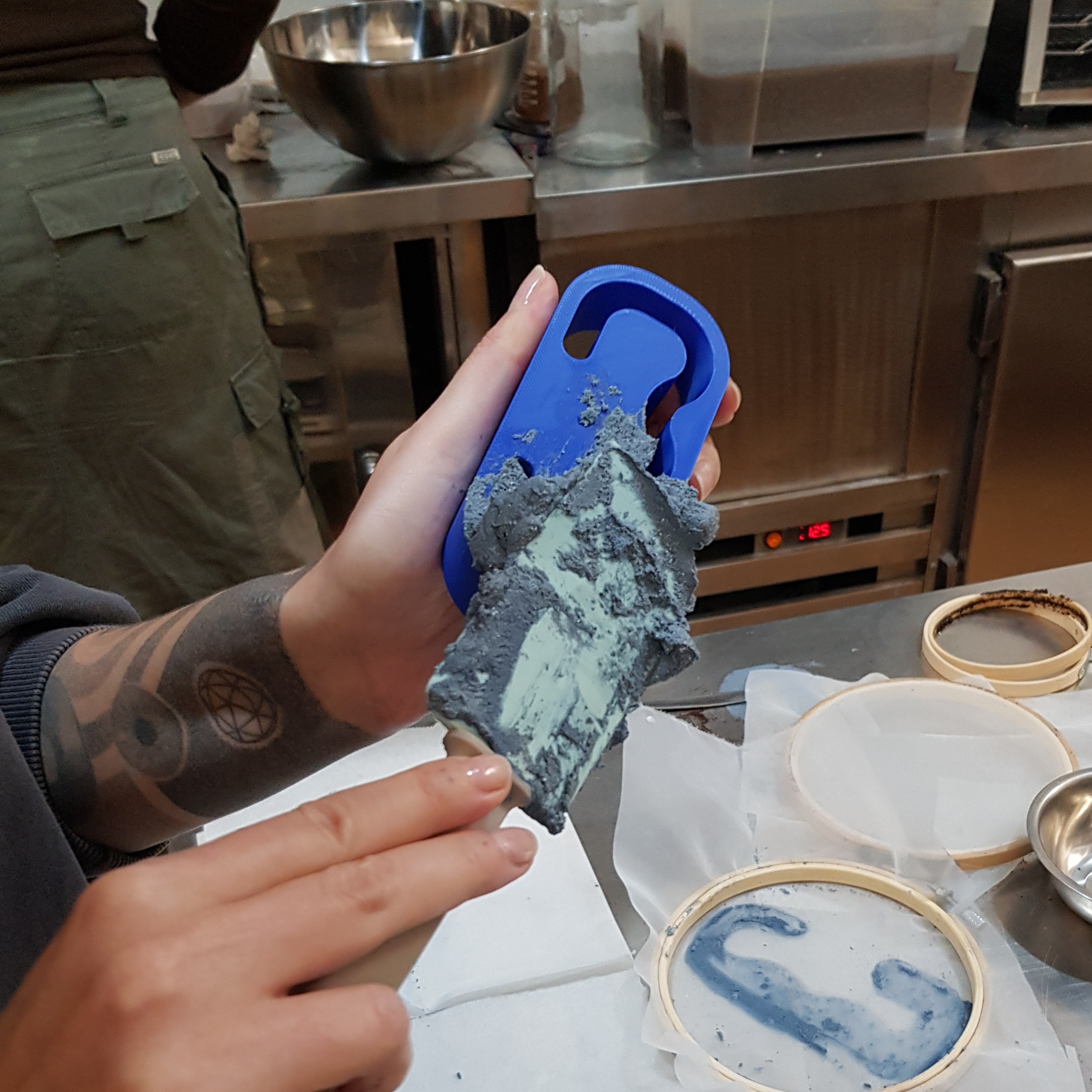
ITERATION 1 The mold was filled with the ceramic mass and pushed out immediately. Although the piece initially retained its form, N-Uovo collapsed during the drying process.
PROTOTYPING
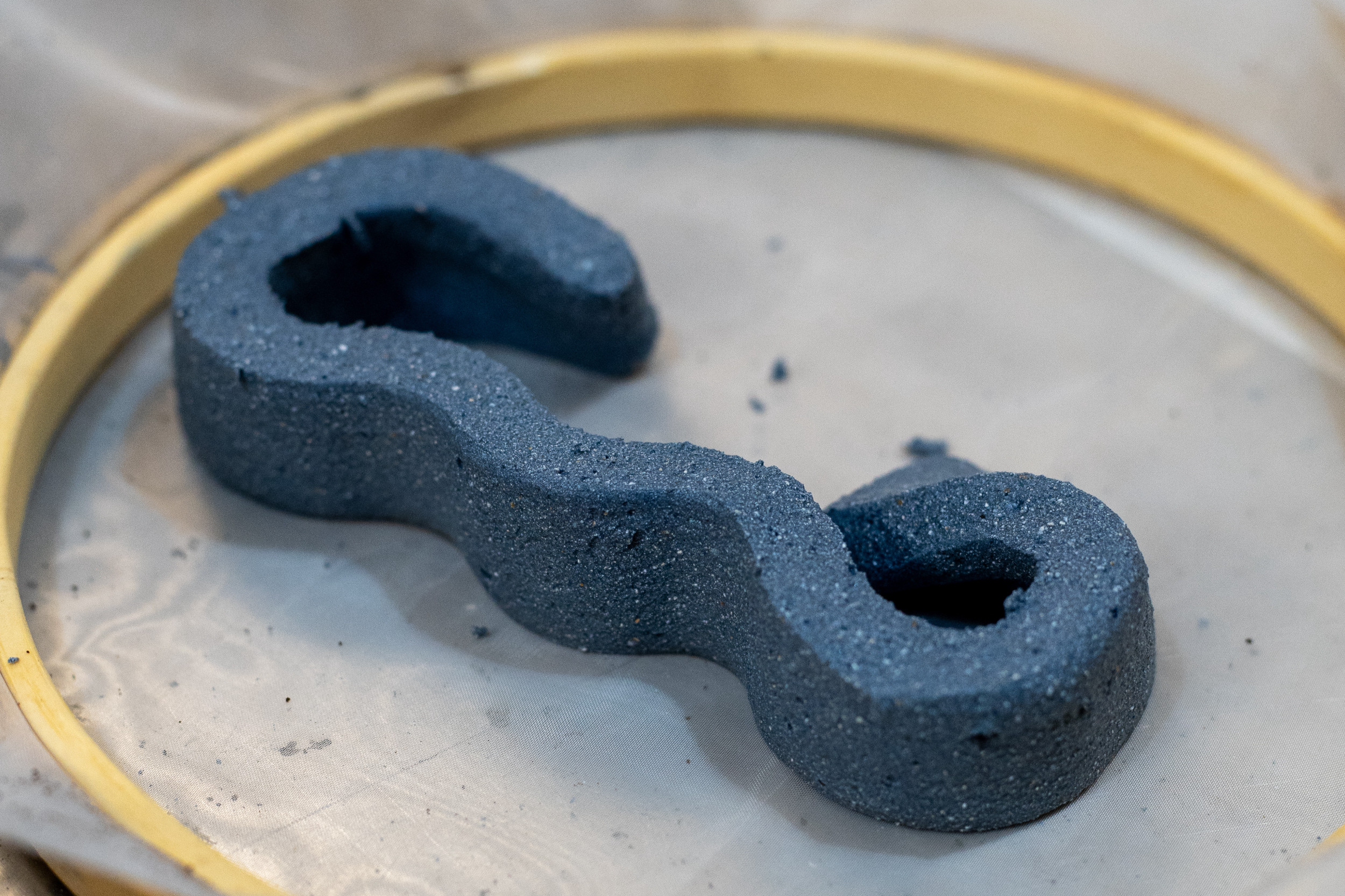
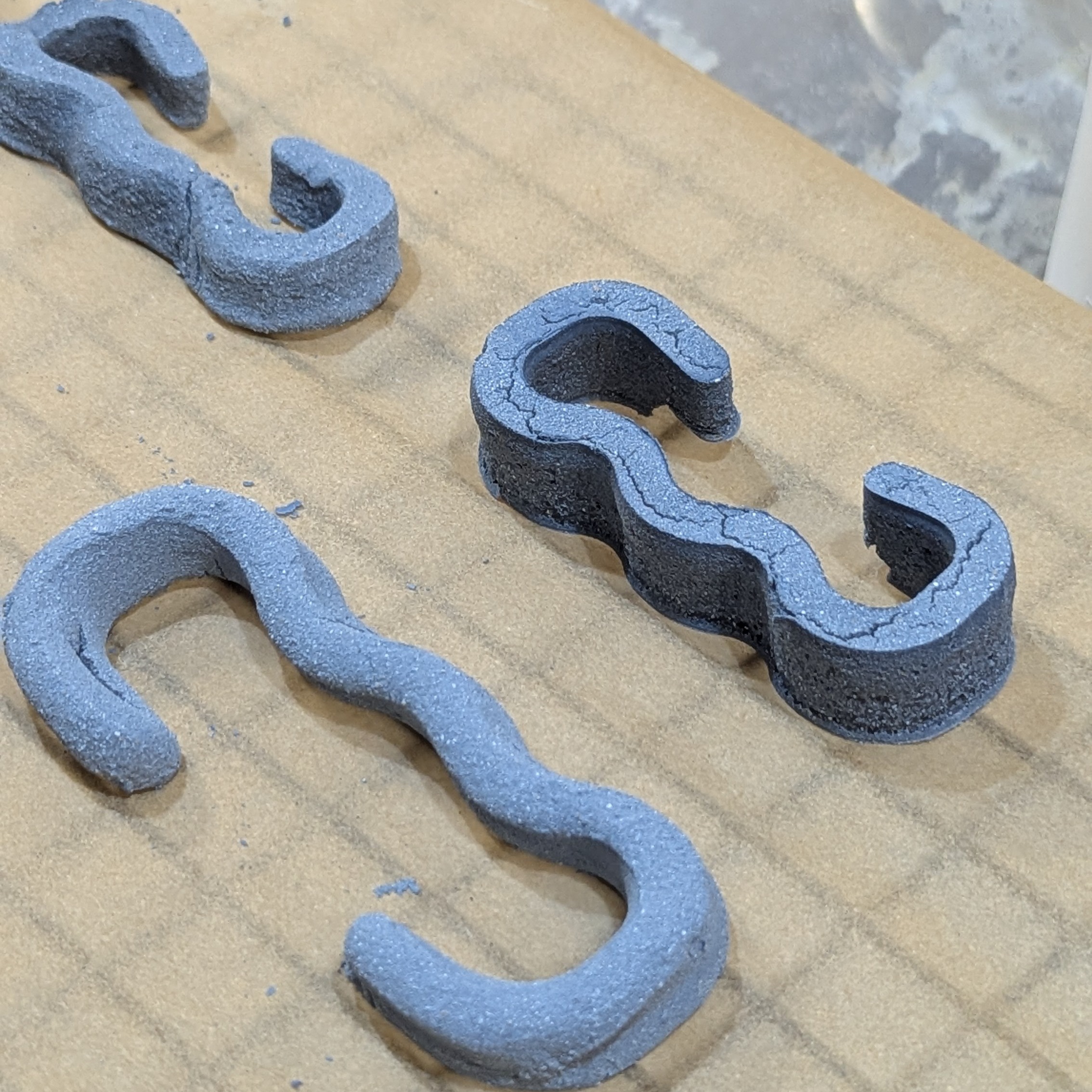
ITERATION 2 The mass was left inside the mold, placed in a dehydrator to cure, and demolded after two hours. While the shape largely held, significant surface cracking occurred at the top and bottom due to strong adhesion to the mold walls .
PROTOTYPING
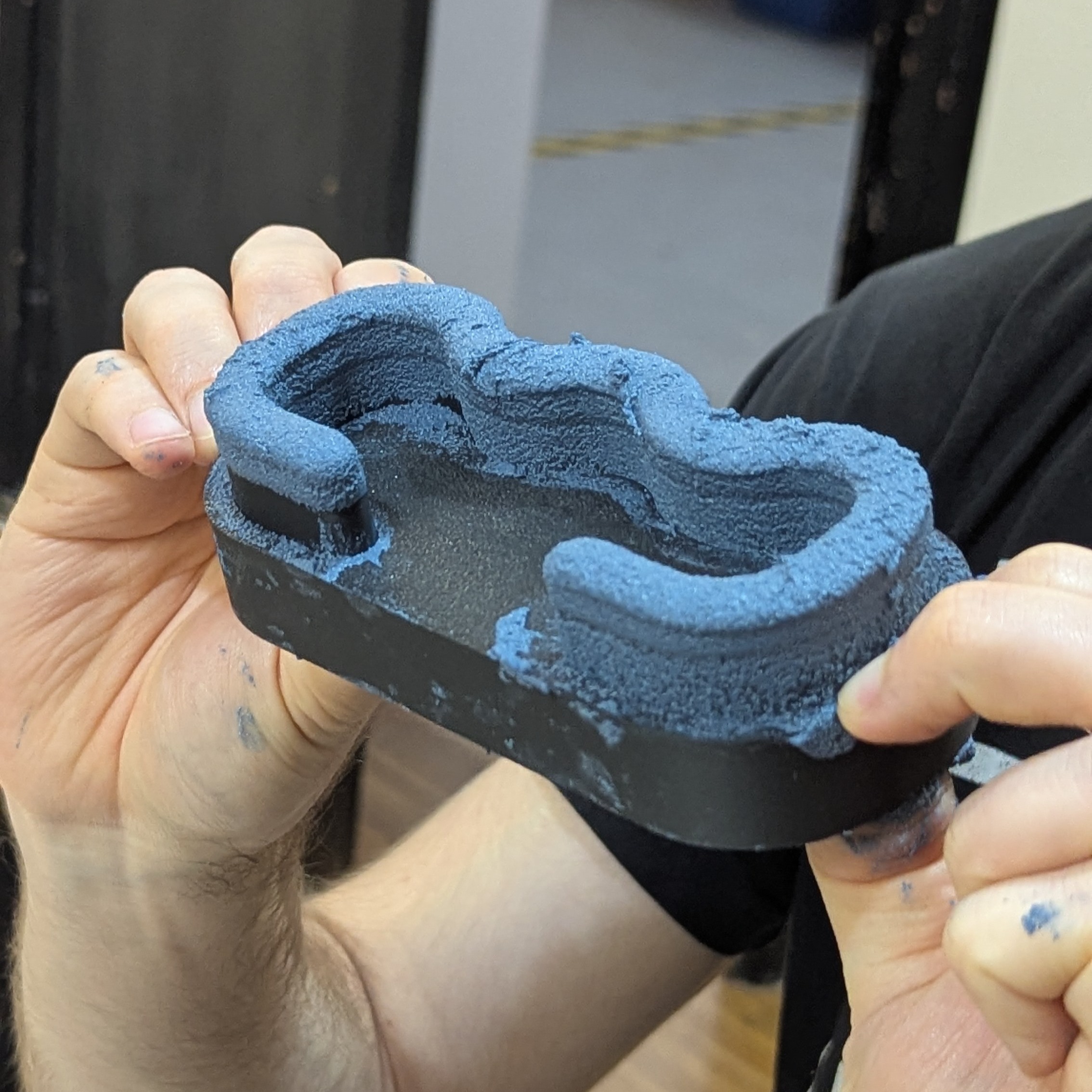
ITERATION 3
The mold was oiled prior to filling to prevent sticking. Although the prototype suffered slight
deformation from being demolded a bit too early, the process improved noticeably with each
attempt. Given additional time to produce another iteration, a near-production-ready result would likely have been achieved.
RECIPE
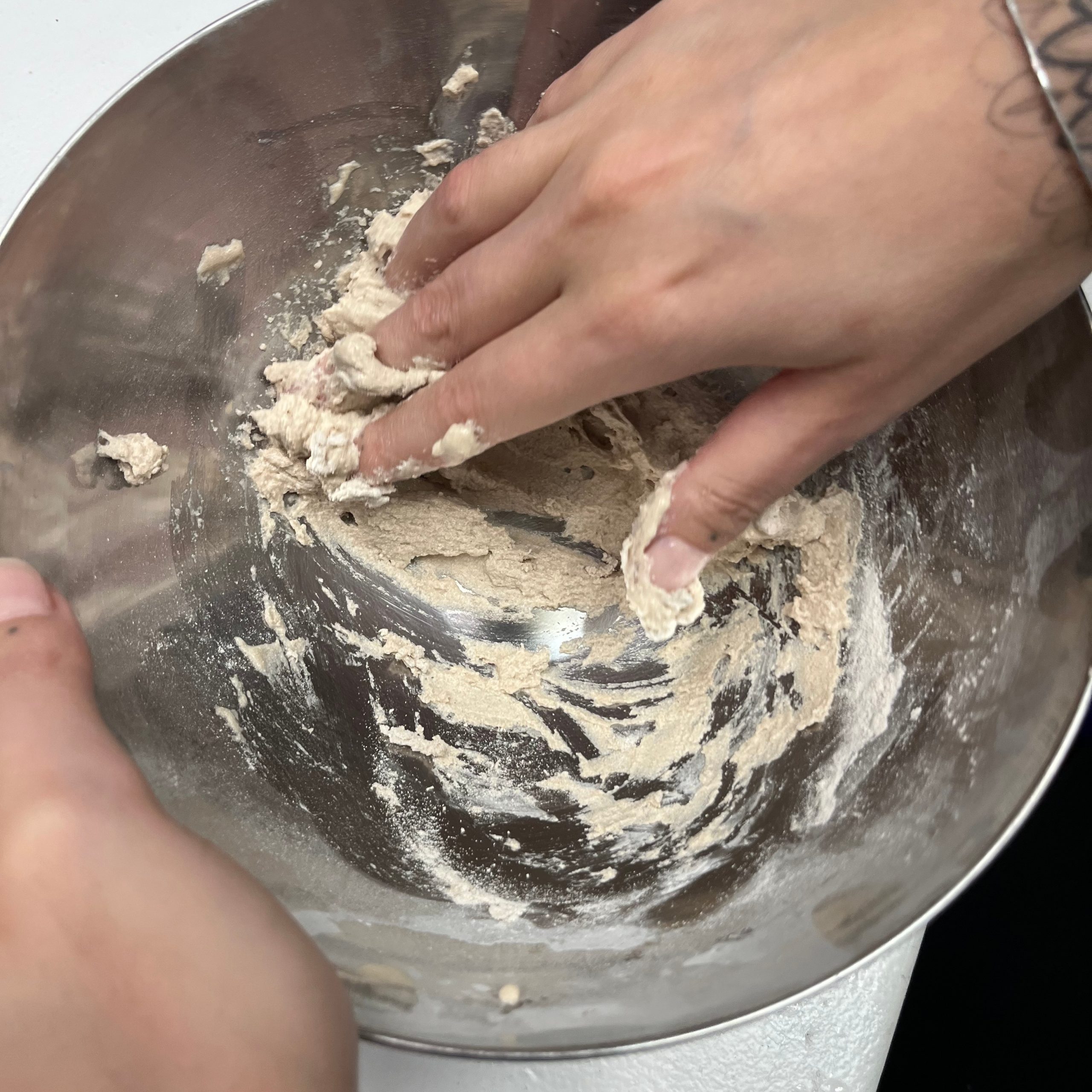
3 parts eggshell powder
2 parts alginate mix (50 parts water : 3 parts alginate)
A few drops tea tree oil (for d sinfection)
Pigment as needed
NEXT STEPS
Material Refinement: Further material development over a longer timeframe to eliminate the need for an electric dehydrator.
Material Exploration: Investigating other promising composites (e.g. eggshell concrete). Color Testing: Conducting further research into natural pigmentation techniques.
Manufacturing: Enhancing mold design and optimizing the overall production process.
Form & Scale: Fine-tuning measurements and exact dimensions for improved functionality.
EXPERIENCE
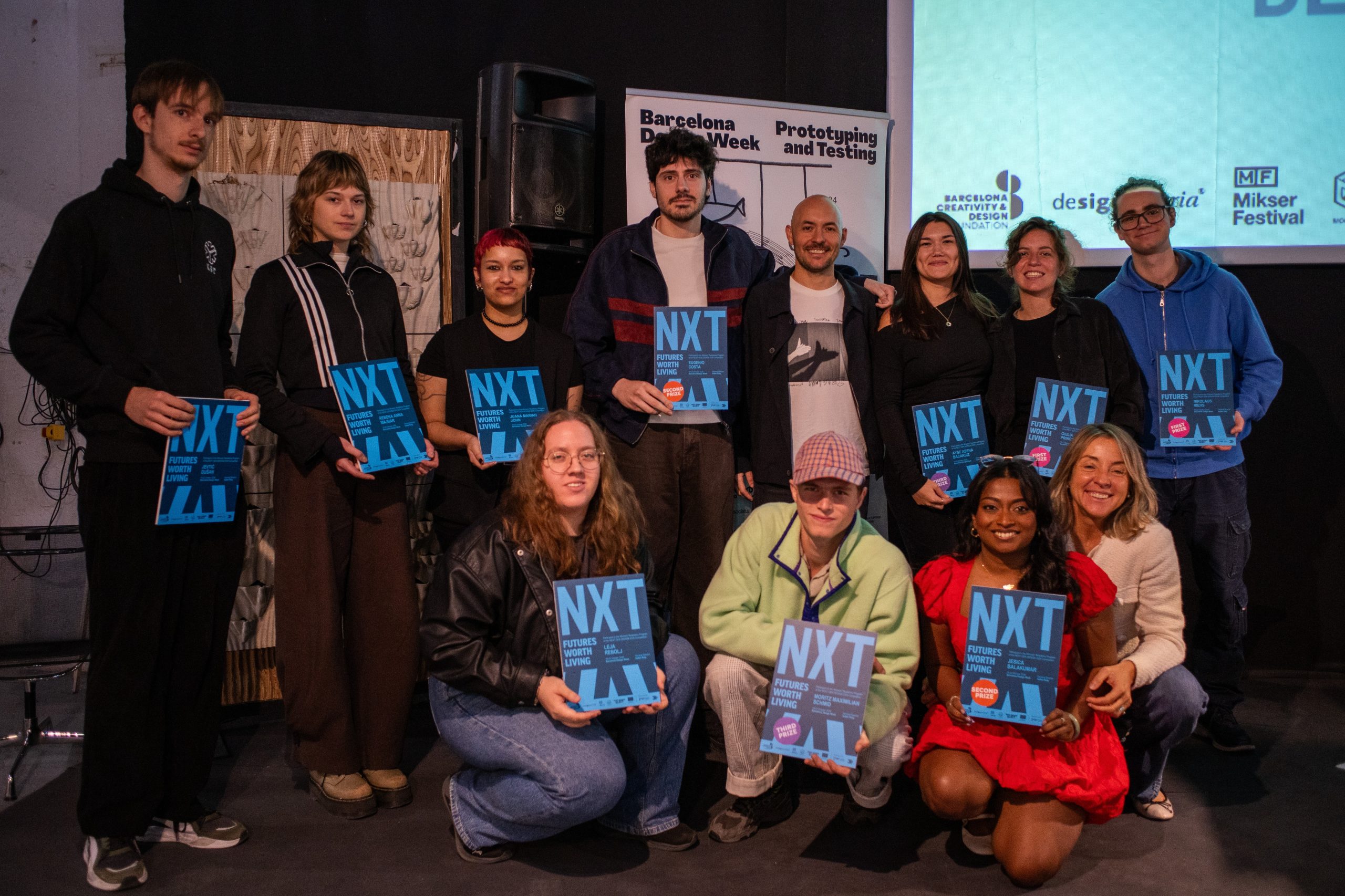
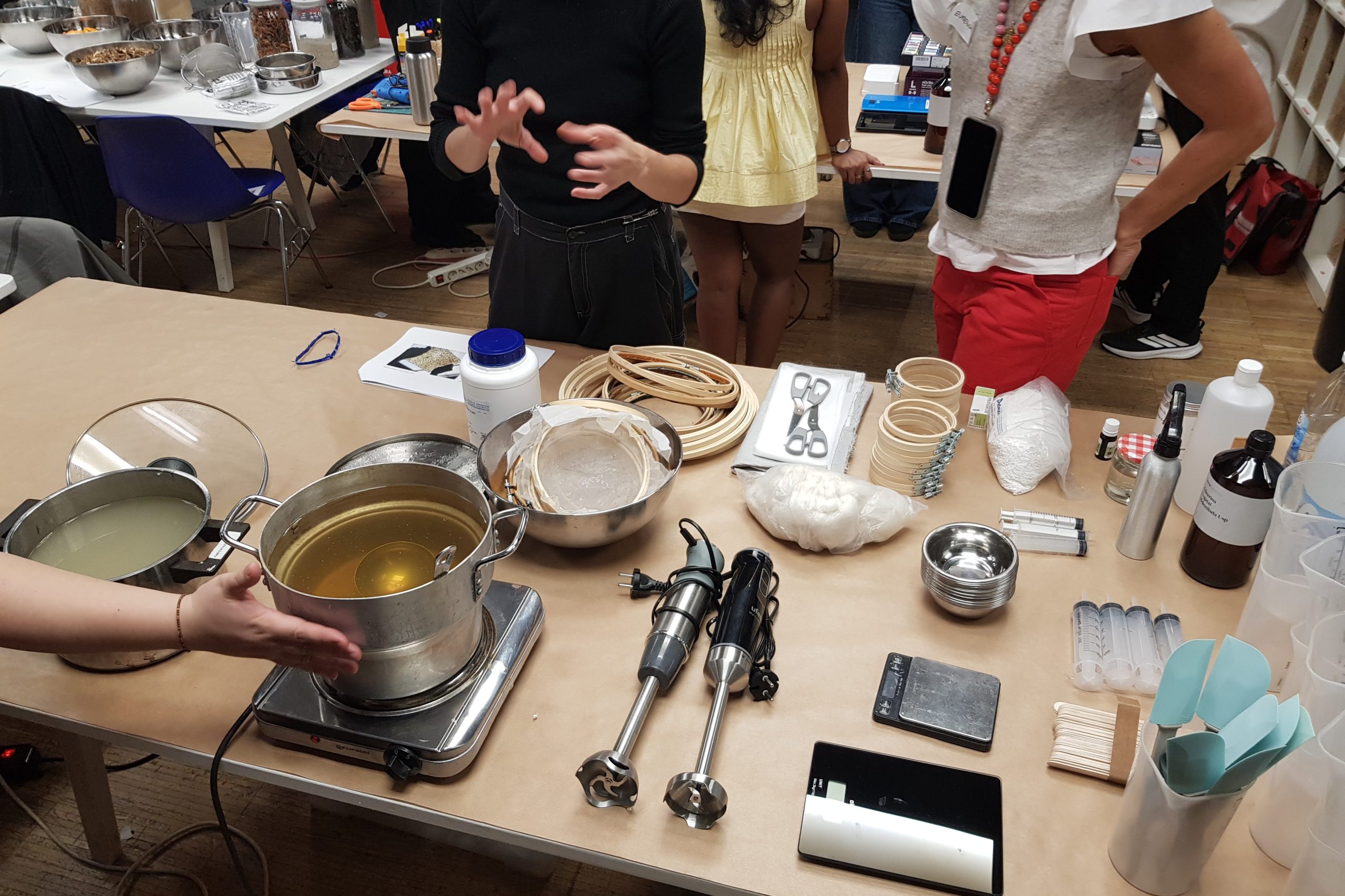
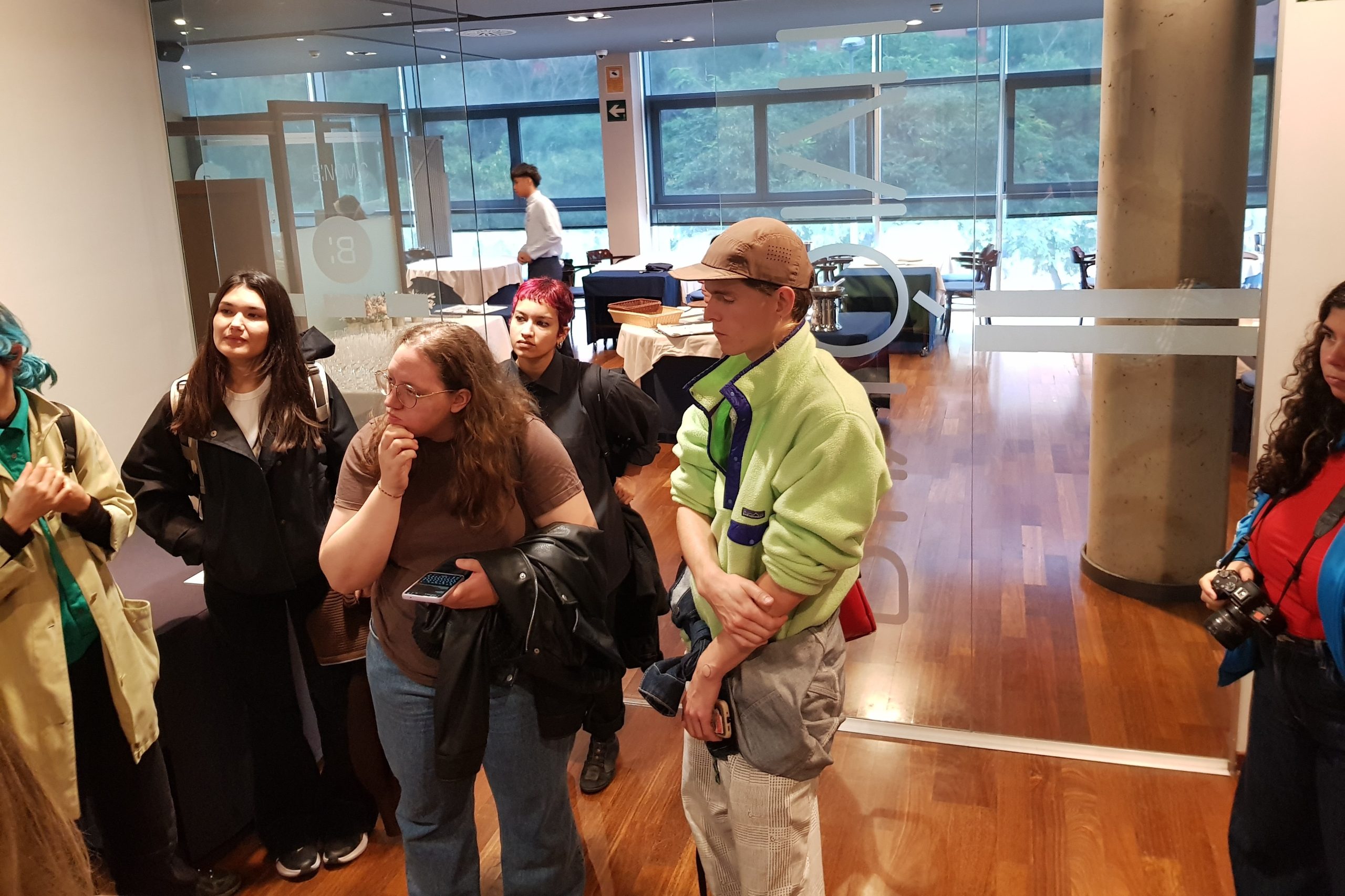
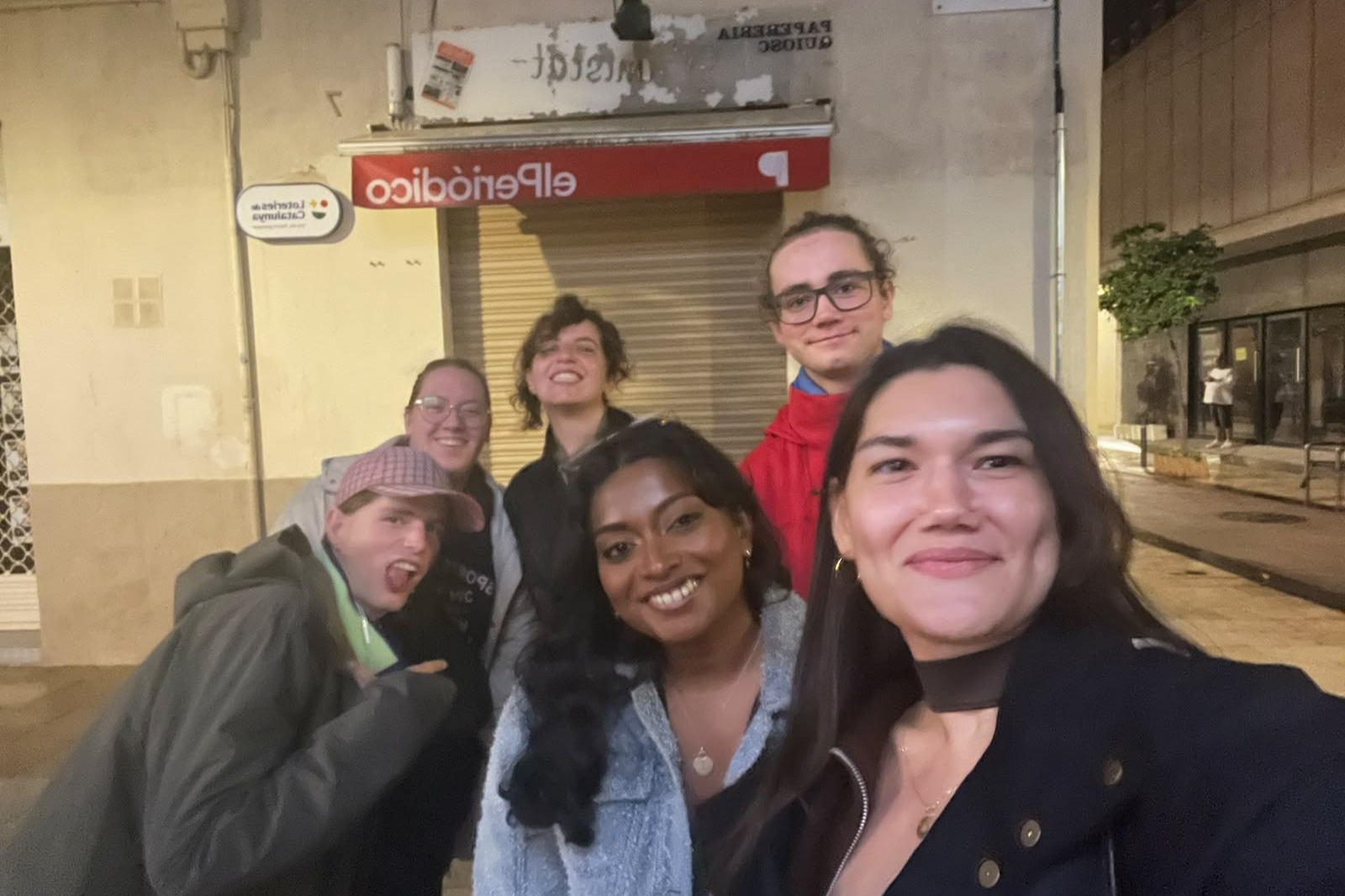
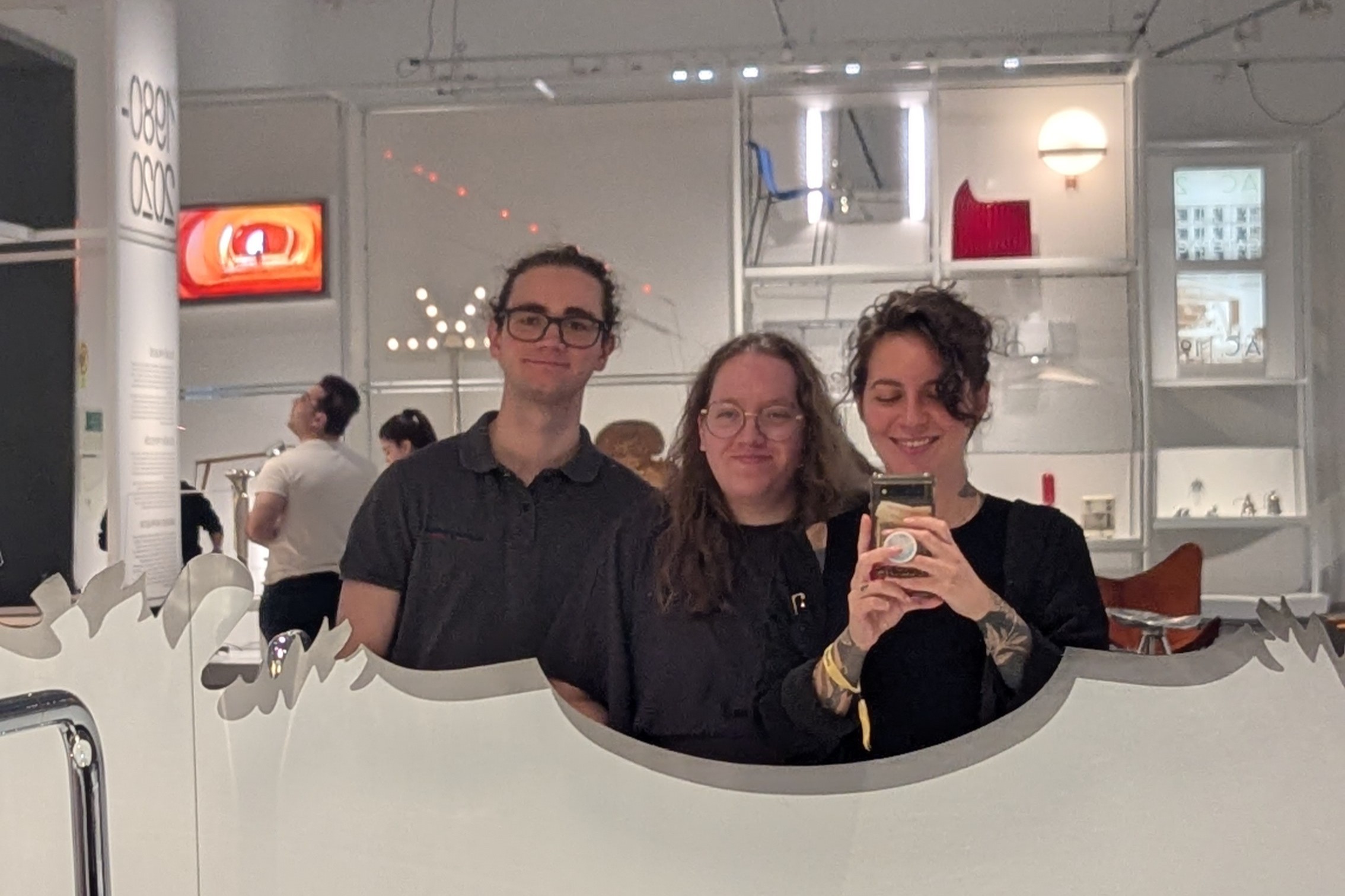
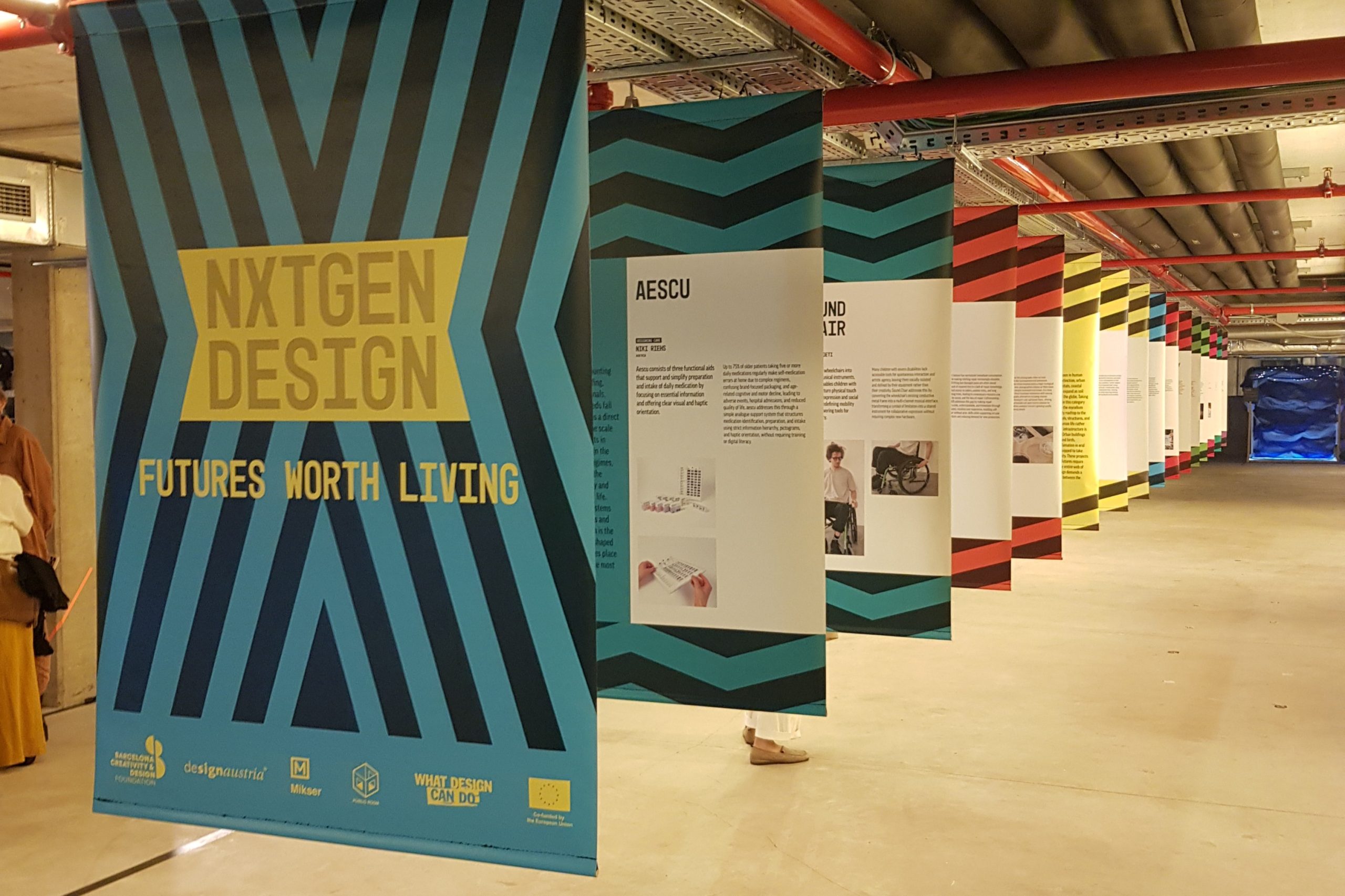
Looking back, the residency in Barcelona was an experience we will remember for a long time. In just a few days we learned a great deal, from new ways of working with materials and food waste to how much a project changes once you test it in practice.
Doing all of this in Barcelona made it even better. It is a wonderful city, and it was a real pleasure to spend these days there. What made the biggest difference, though, were the people. Getting to know designers from all over Europe and exchanging ideas, approaches and perspectives with them was one of the most valuable parts of the week.
The team at Fab Lab Barcelona was a huge enrichment for our work. We are especially grateful to Eugenia, who was responsible for the whole organisation and made everything run so smoothly. A big thank you also goes to Lara, Andrea and Damian for their great mentorship. Their feedback, time and patience helped us get further than we could have on our own.