
Novi Sastavci Public Space
CONCEPT
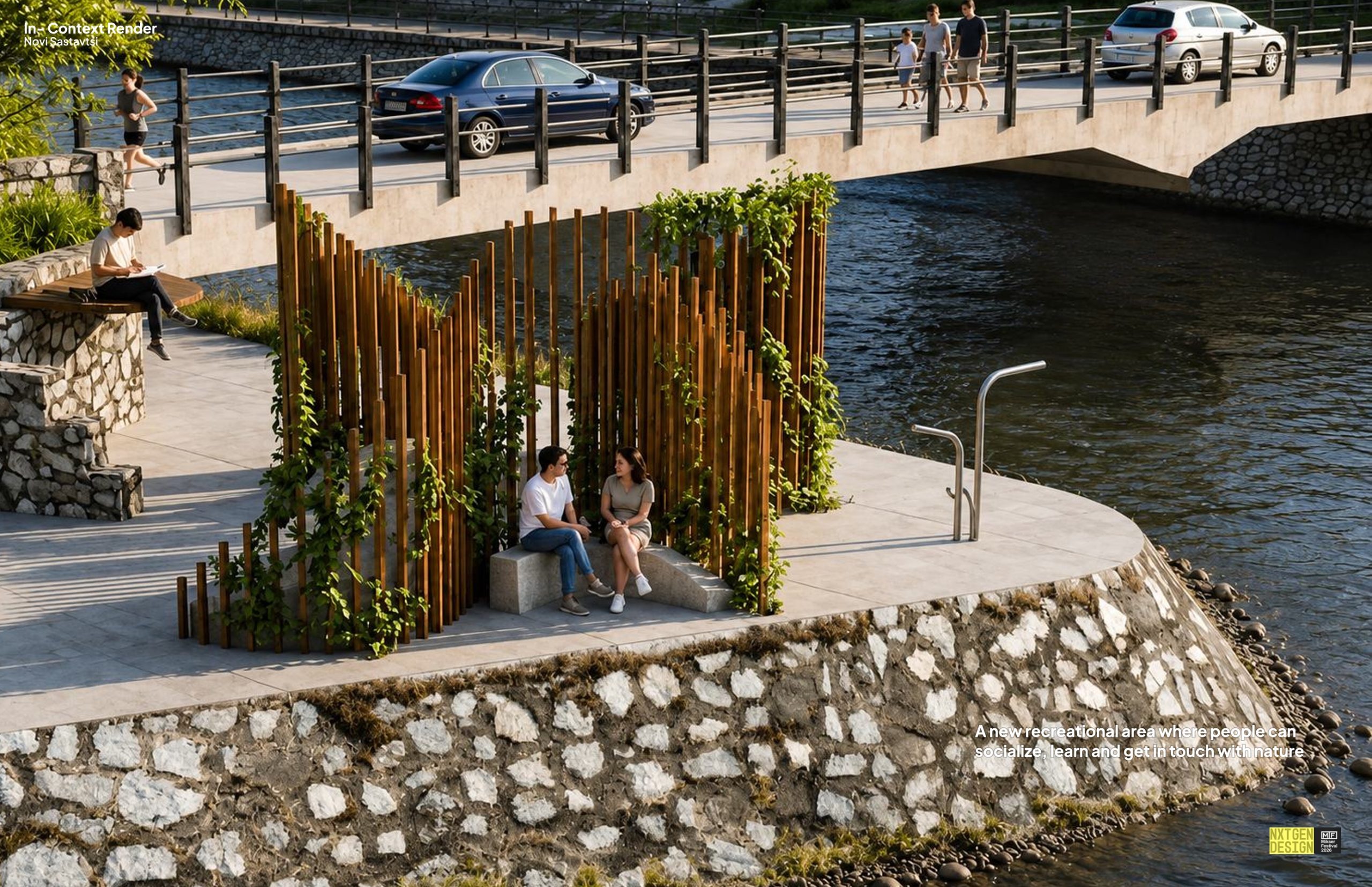
Novi Sastavci was born from a simple but important question: why are the rivers disconnected from the everyday lives of the people of Novi Pazar? Our goal was to develop a project that could strengthen the relationship between citizens and their natural environment.
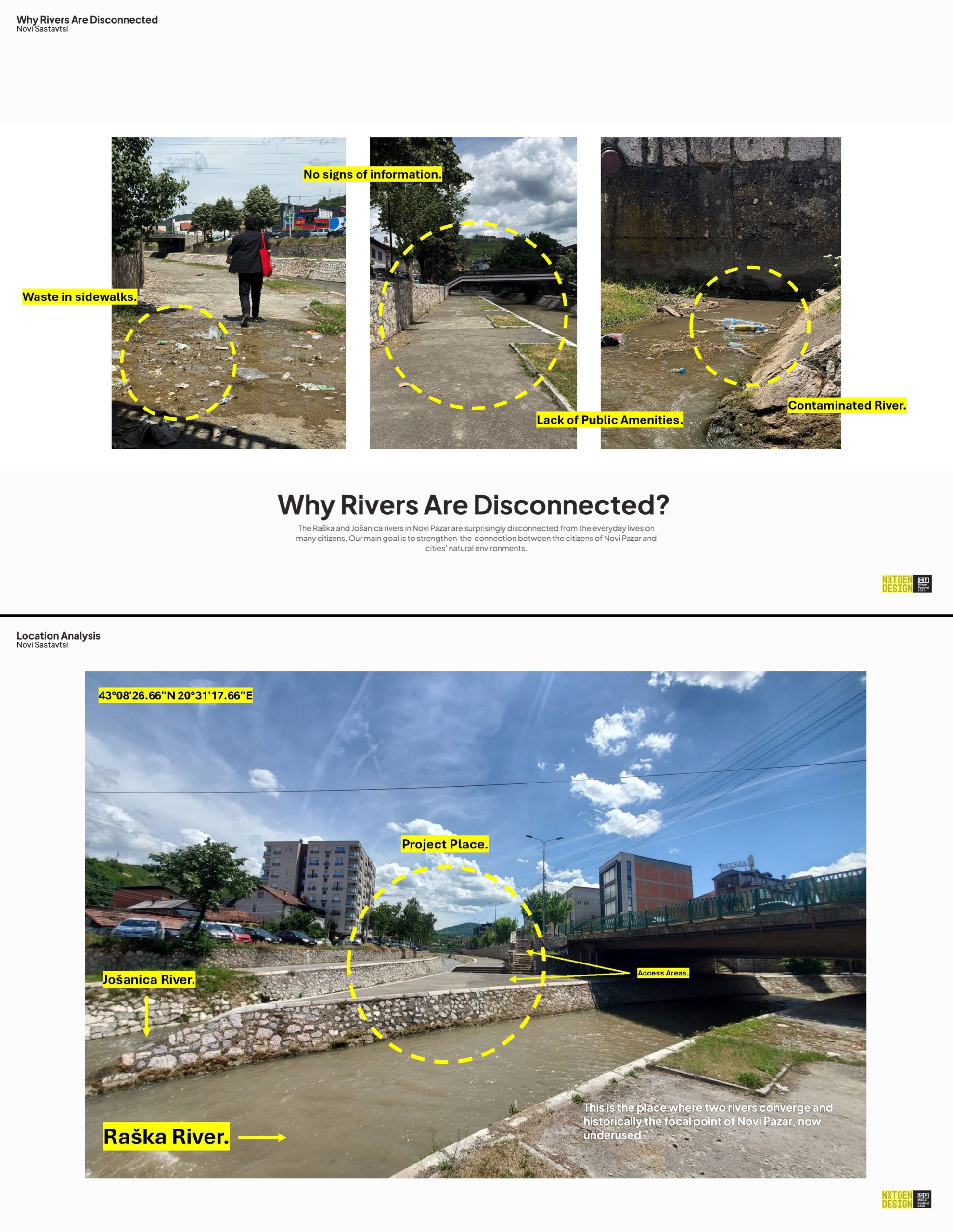
During our site analysis, we observed polluted water, waste accumulation, a lack of public amenities, and almost no information about the history or ecological importance of the Raška and Jošanica rivers. These observations led us to imagine a space that reconnects people with the natural environment while transforming an underused area into an active public meeting point.
Inspired by the movement of water and the cultural convergence that defines Novi Pazar, the design creates different atmospheres for gathering, resting, learning, and interacting with water, encouraging citizens to rediscover the rivers as an essential part of the city’s identity.
TEAM
Emotions shape our actions and how we engage with space, while space, in turn, evokes sensations that influence how we live and feel within it.
I am an Interior Designer graduated from LCI Barcelona in 2025, with a background in scenic and performance lighting; disciplines that shape my understanding of space as an experience rather than an object. My starting point is always analysis and drawing: every line is a way of thinking, exploring and testing each decision before materializing it. I seek to create living, authentic and deeply memorable spaces, transforming every space into a sensory experience with purpose and intention.
I design to uncover how materials, objects, and systems quietly shape human experience.
I am an industrial designer educated at Istanbul Technical University and Politecnico di Milano, where I completed a Master’s in Integrated Product Design alongside a business degree at Alta Scuola Politecnica. My work spans appliances, furniture, and packaging, including experience at De’Longhi. I have received eight international design awards and was recently selected as a finalist in the emerging design category of Design Doha Biennale. I focus on material exploration, usability, and building ideas that extend beyond single products. Recently, I have been developing custom furniture and independent concepts around circularity and modularity. By the end of this year, I will continue my studies in Rome with a specialized Master’s in Designing for Children.
PROCESS
Research & Site Analysis
Our design process began with direct observation of Novi Pazar. By walking along the rivers, documenting site conditions, and speaking with local residents, we identified key issues affecting the area: polluted water, accumulated waste, limited accessibility, and a lack of public spaces connected to the rivers.
The selected site, located at the convergence of the Raška and Jošanica rivers, stood out because of its visibility, accessibility, and symbolic importance. Although historically significant, the area is currently underused and lacks a clear purpose for Novi Pazar.
Concept & Inspiration
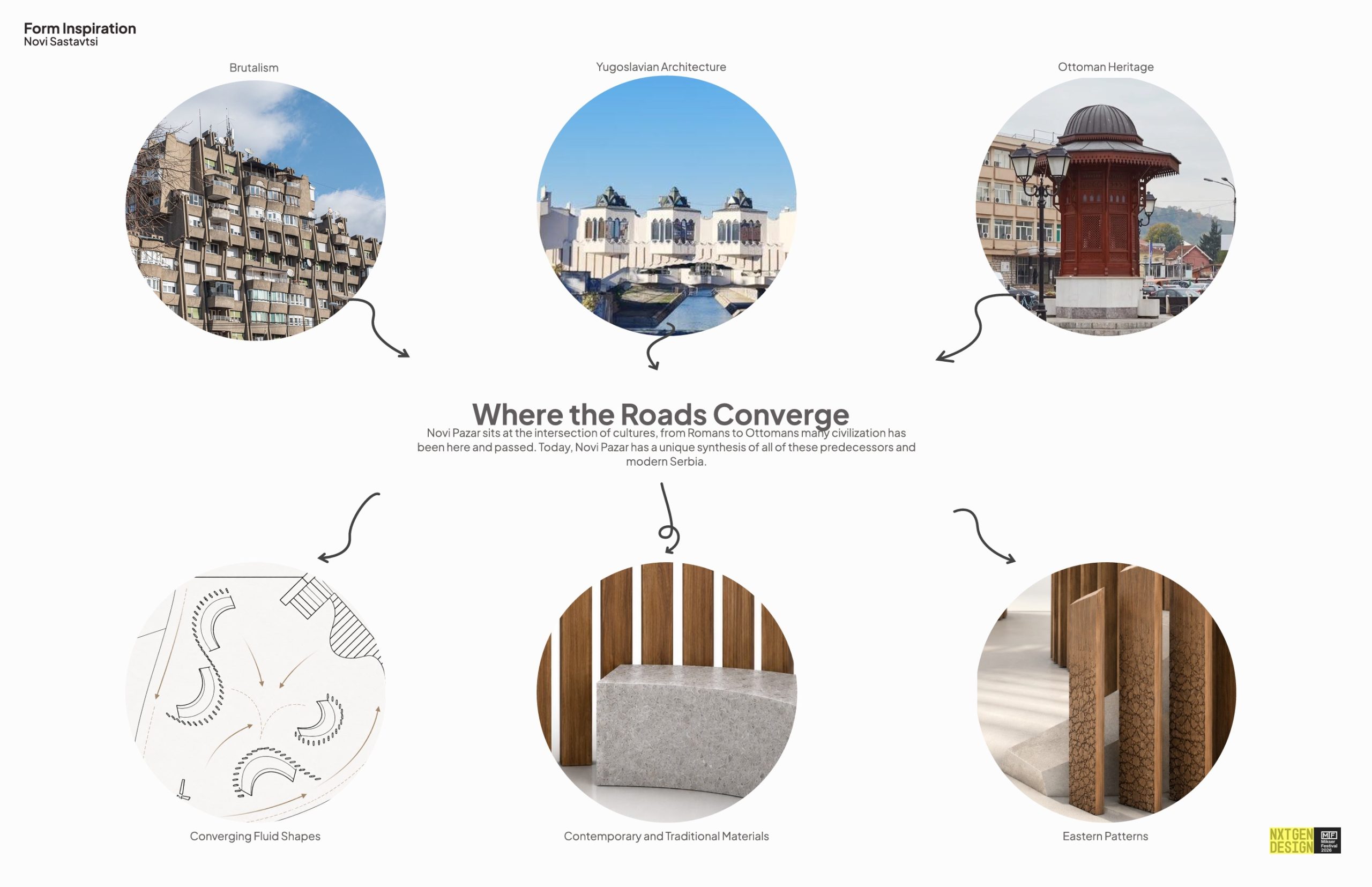
The main inspiration came from the idea of convergence. Novi Pazar is a city shaped by overlapping cultures, histories, and architectural languages. Roman, Ottoman, Yugoslav, and contemporary Serbian influences coexist within the city and create a unique identity.
We translated this into a design language based on fluid geometries, open circulation, traditional materials, and patterns inspired by Balkan and eastern ornamentation. The project aims to express both movement and belonging. The convergence of the Raška and Jošanica rivers became a direct metaphor for this idea, where movement, connection, and different identities meet in one shared space.
User Experience & Spatial Strategy
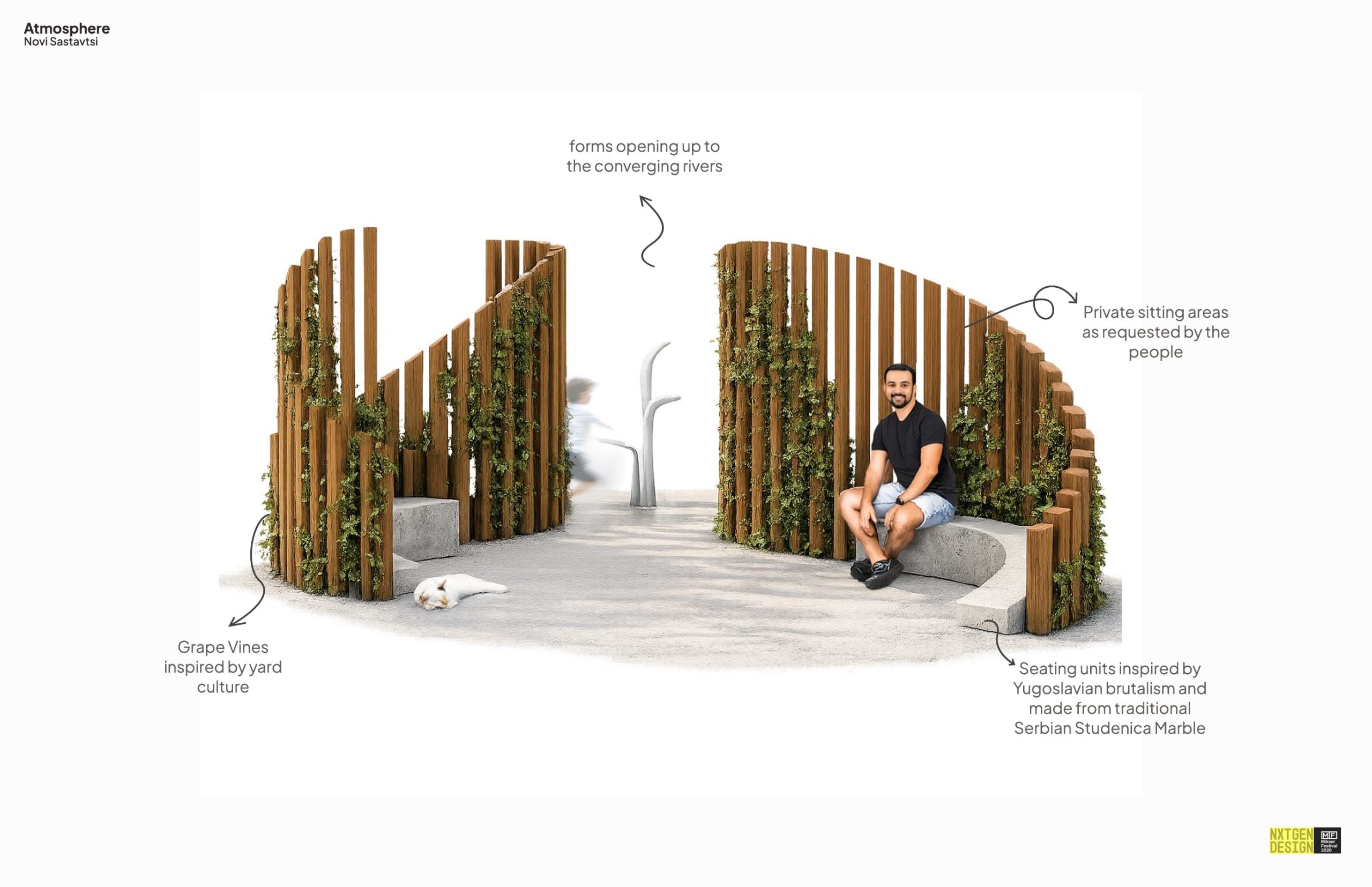
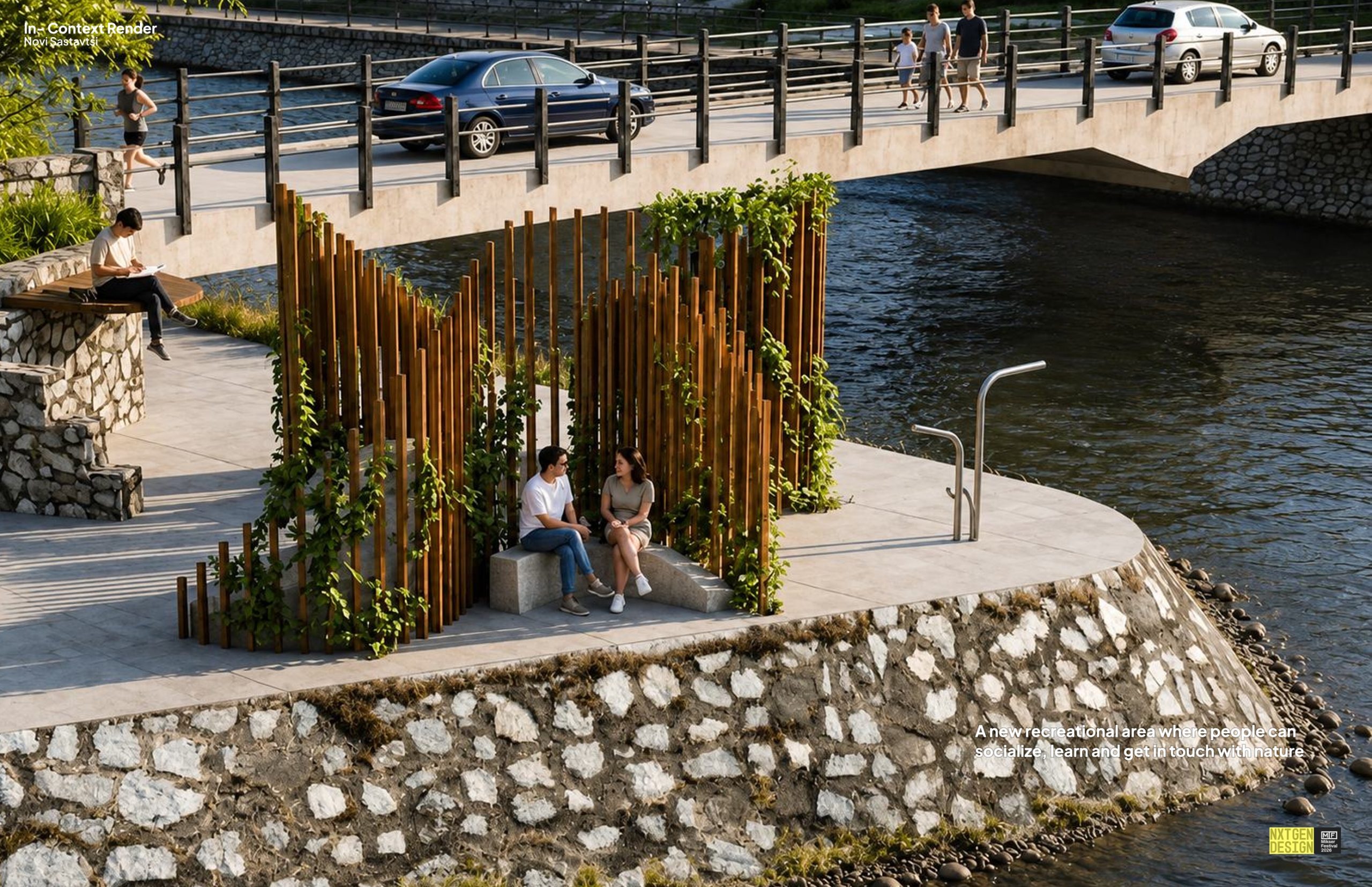
The design focuses on creating multiple atmospheres for different user needs. Inspired by the movement of the rivers, we designed wooden structures with changing heights and rhythmic patterns that generate shadows, privacy, and spatial variation.
Private sitting areas were included in response to local feedback, as many residents expressed the need for calmer spaces away from noise and crowds. The arrangement allows users to choose between gathering, resting, observing, or interacting.
A central fountain reinforces the connection with water and offers a playful sensory experience, especially for younger users.
Materials & Sustainability
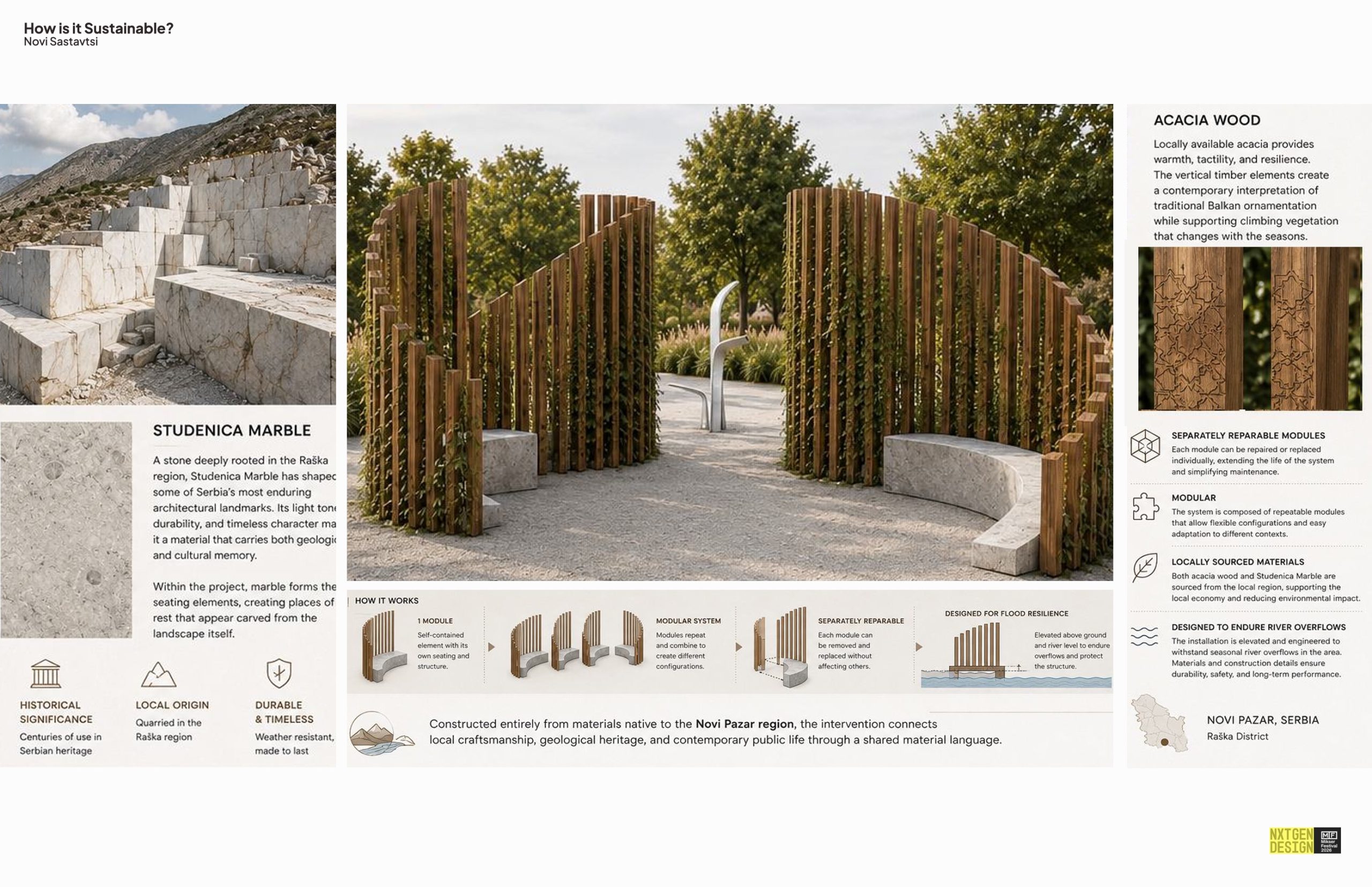
Material selection was guided by durability, local identity, and environmental conditions. Because the rivers flood seasonally, the project required resilient materials capable of withstanding humidity and water exposure.
Studenica marble, a traditional stone from the Raška region, was chosen for the seating elements because of its durability and cultural significance. Acacia wood provides tactility, resilience, and a natural character while shaping the vertical structures.
Climbing grape vines provide shade and reference the local yard culture, introducing vegetation as both a functional and symbolic element. Together, these materials create a sustainable intervention rooted in the identity of Novi Pazar.
Project Conclusion
Novi Sastavci proposes a new way of connecting people with the rivers by transforming an unused space into a public area for gathering, resting, learning, and interacting. Through materials, atmospheres, and spatial design, the project strengthens the connection between citizens, water, and the identity of Novi Pazar.
EXPERIENCE
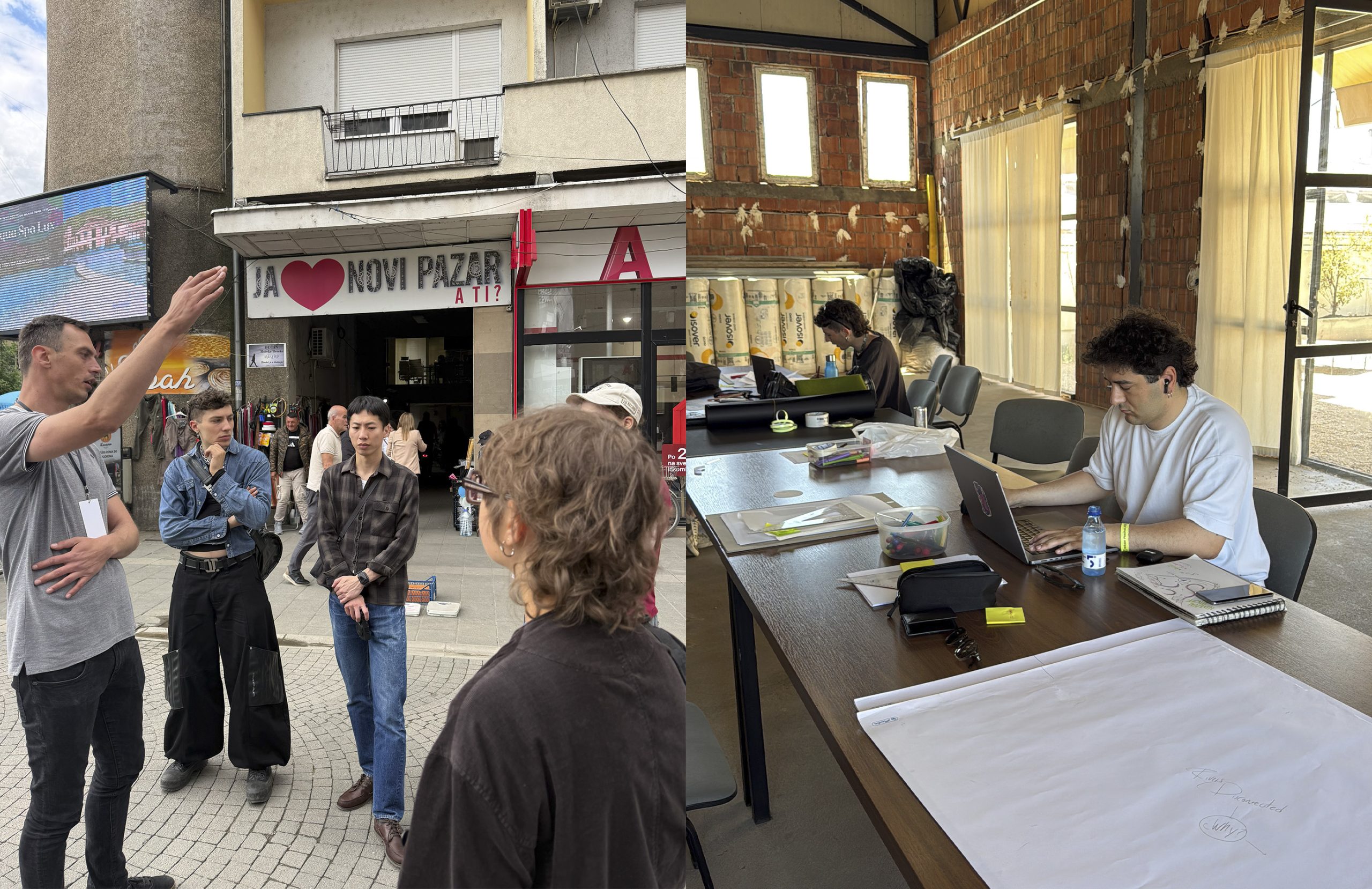
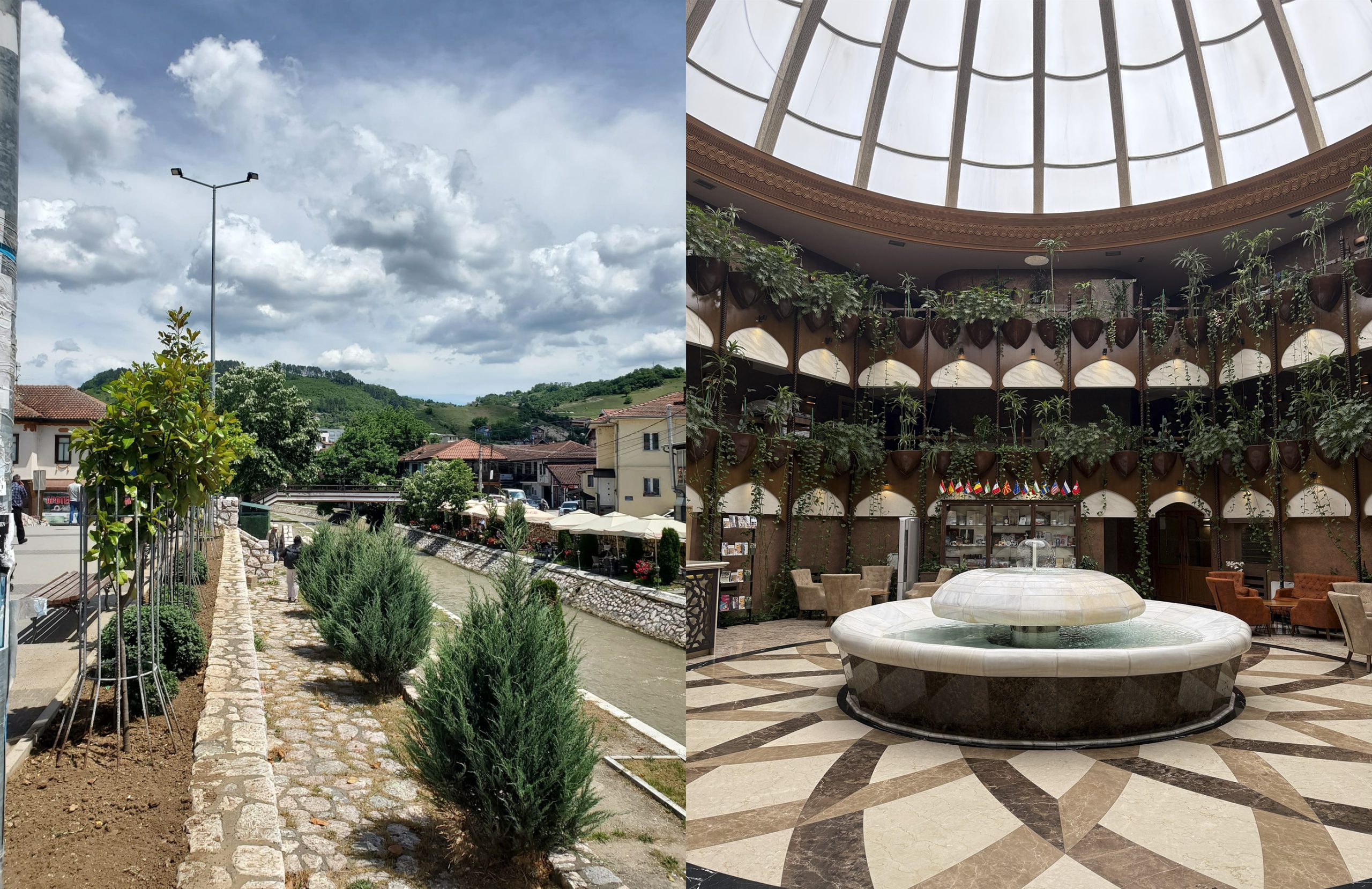
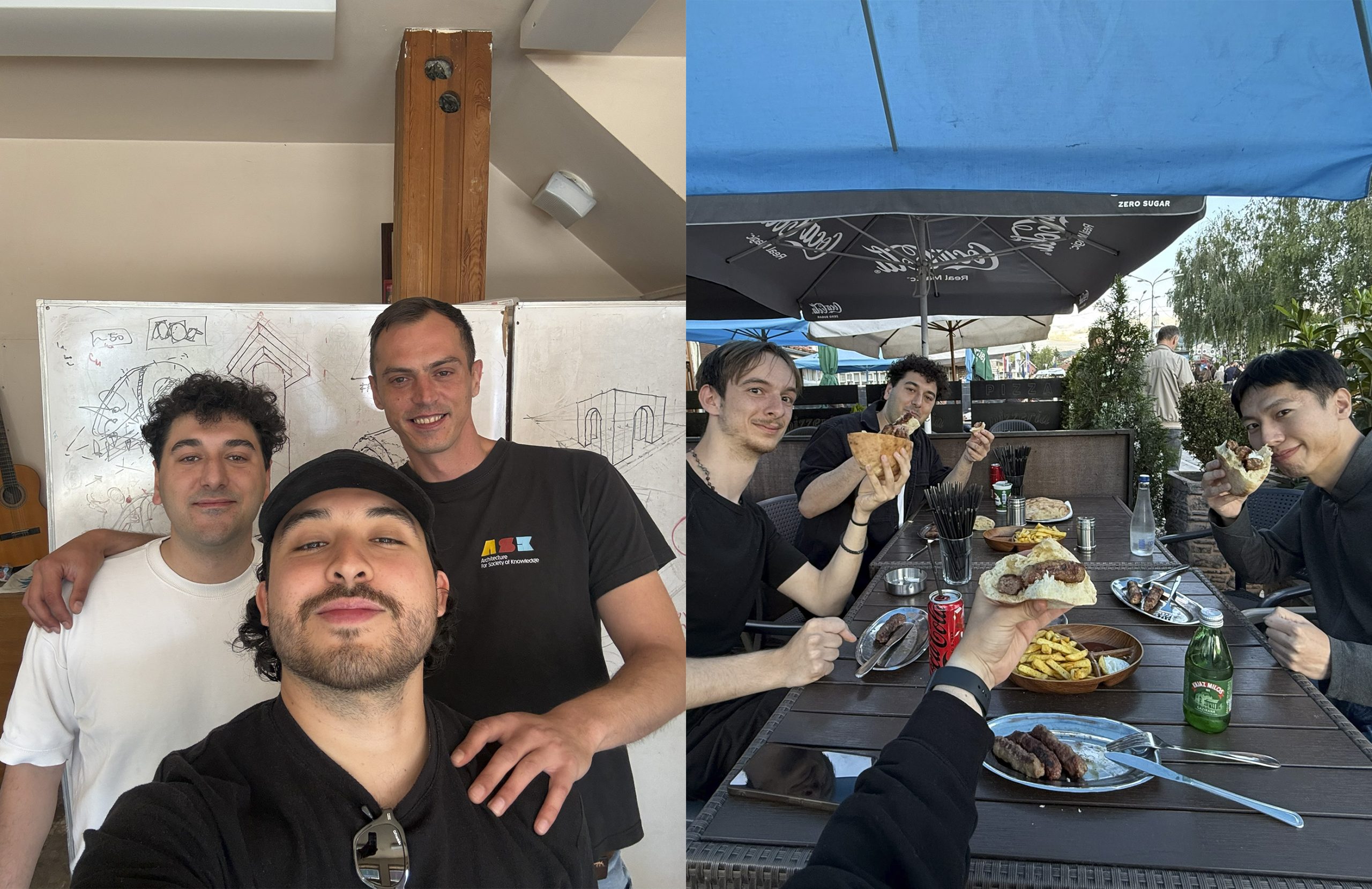
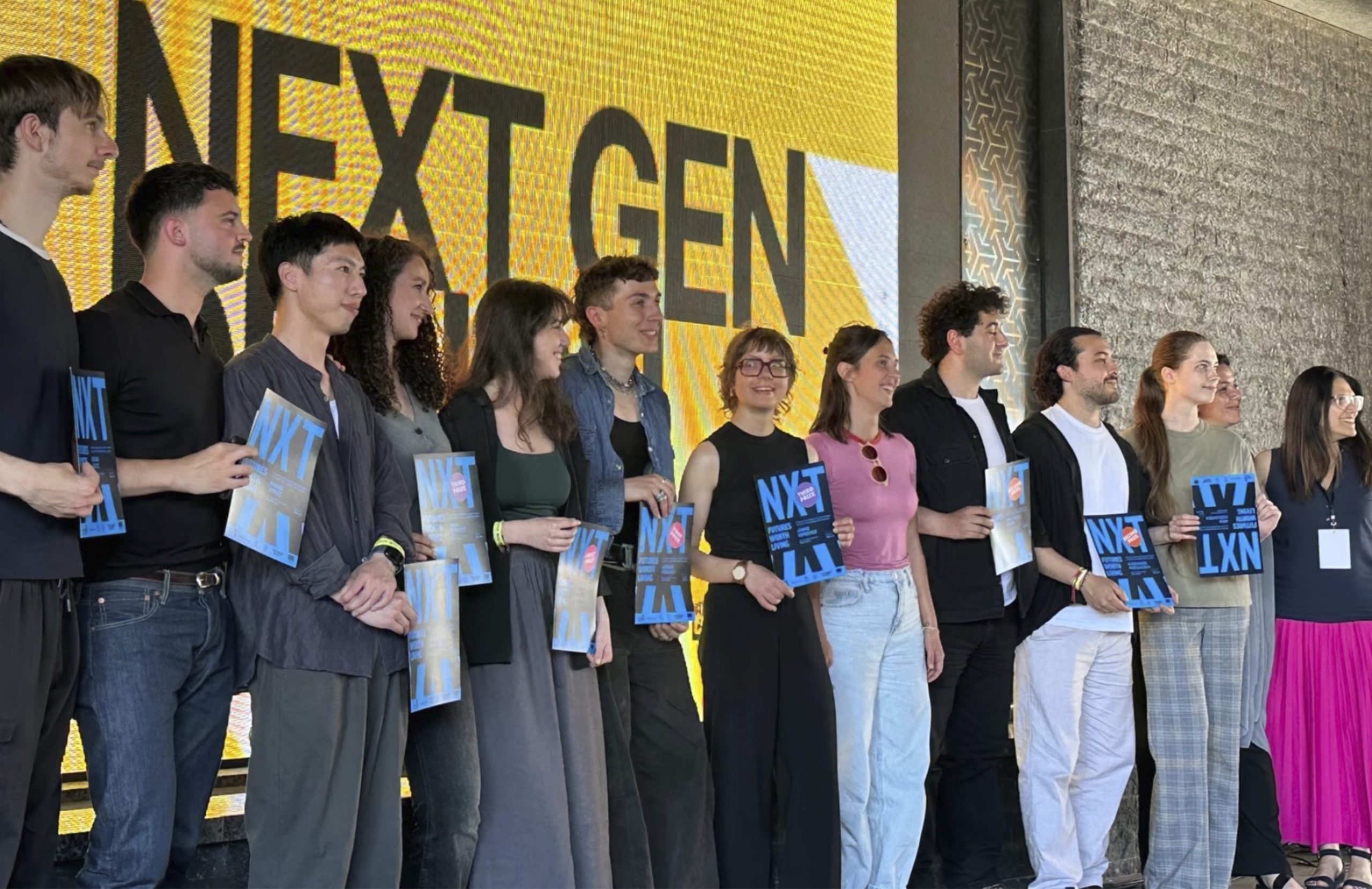
I’m deeply grateful to Next Gen Design for the opportunity to be part of the Mikser Festival in Novi Pazar. This experience allowed me not only to design and learn, but also to connect with amazing people from different countries and cultures. Special thanks to the Mikser team for creating such an inspiring residency and festival, and for giving us the opportunity to develop a project for Novi Pazar alongside local architects, designers, and many talented professionals.
Alessandro Pantoja Esna
First of all, I would like to thank everyone for the organization. We spent a few days in a rather unexpected place in Serbia for a foreigner, Novi Pazar. Moreover, staying at Novi pazar has also been an unexpected journey to my family heritage in many ways. As my grandparents being from Bulgaria, that was all I could tell about Balkans. Spending time with locals, exchanging a few words of Turkish here and there was truly unexpected. Also it turned out, my great grandpa actually lived in Novi Pazar for a few years! I am deeply grateful for Mikser festival for introducing me this part of Serbia, it was a true pleasure to get to know fellow designers both all around EU and Serbia. I feel contempt with the project we came up with just within a span of two days but also left a mental bookmark to be returned back to this project some time after, especially if anyone from the local community shows interest.
Ekim Güney Öztürk