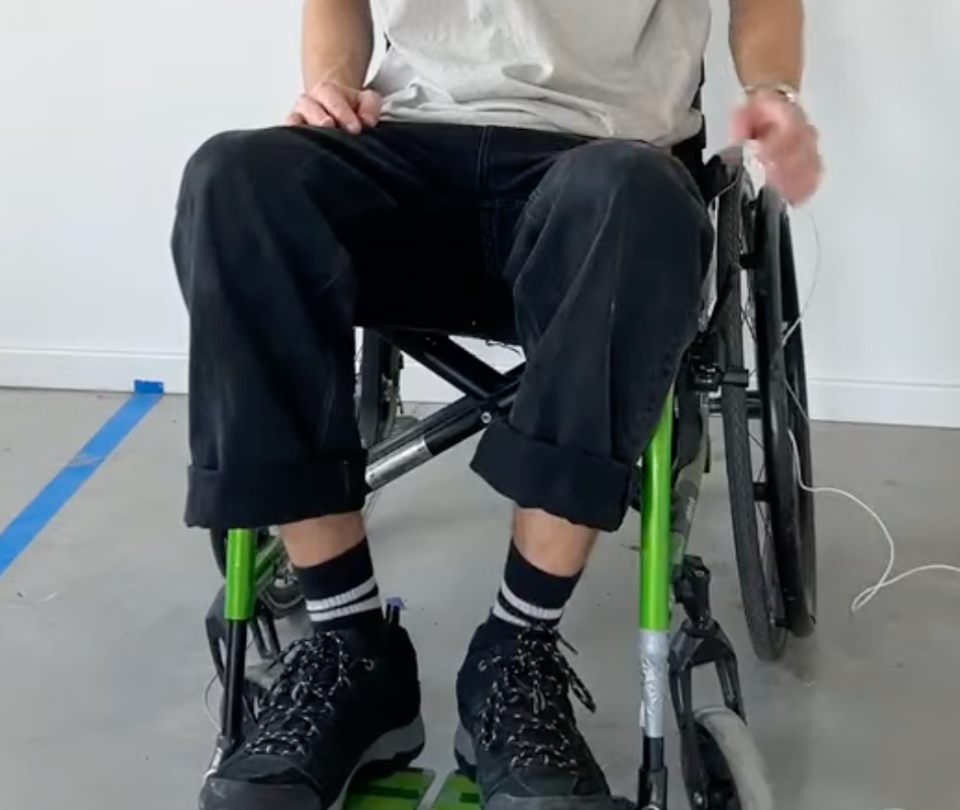
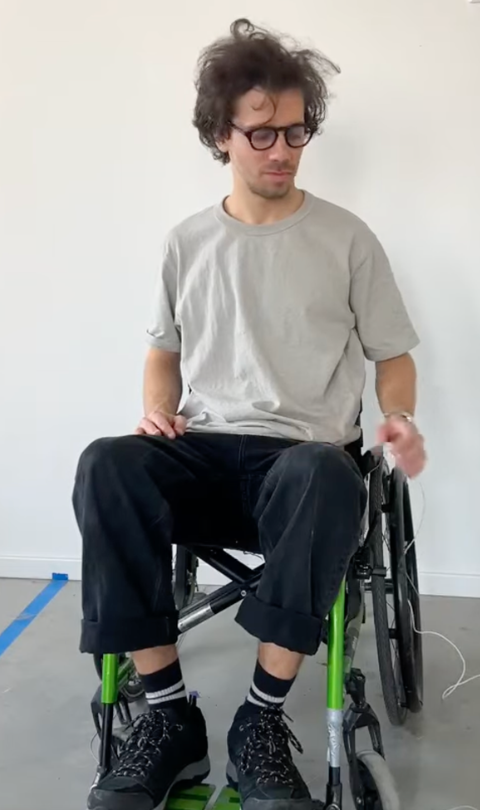
Transforming wheelchairs into conductive musical instruments, this project enables children with disabilities to turn physical touch into creative expression and social connection, redefining mobility aids as empowering tools for artistic identity.
Define the problem/need you are solving or addressing with your project. How does it address the Open Call criteria, such as environmental impact, social engagement, circularity, user experience, resource efficiency, and community-driven solutions?
The project addresses the physical and social isolation of wheelchair users by transforming their mobility aids from symbols of limitation into instruments of creative expression. Many children with severe disabilities lack accessible tools for spontaneous interaction and artistic agency, leading to a sense of “otherness.”
Social Engagement & Community: By converting the conductive metal frame into a multi-channel interface, I enable collaborative music-making, turning a solitary device into a shared social catalyst for institutions like the Csillagház School. User Experience & Empowerment: The “plug-and-play” tactile system replaces technical barriers with intuitive physical gestures, fostering a positive connection between the body and the machine. Resource Efficiency & Circularity: This solution utilizes the existing material properties of the wheelchair (conductivity) rather than requiring complex new hardware, promoting a low-footprint, additive approach to assistive technology. It redefines resource efficiency by giving “cold” medical equipment a secondary, high-value function as an empowering interface.
Please describe your project, reflecting on the concept, inspiration, materials, technical aspects, methods and process(es).
Inspired by my personal journey with hearing impairment and my work with children at an elementary school, this project transforms wheelchairs into conductive musical interfaces. The concept redefines mobility aids, evolving them from medical constraints into empowering tools for artistic agency. Technically, the system leverages the wheelchair’s metal frame and wheel spokes as capacitive sensors. By converting physical touch into electrical signals, the interface triggers 4-6 layers of complex musical textures.
Methods center on iterative co-design with students to ensure tactile accessibility and facilitate collaborative interaction. By treating the chair as an extension of the body, the project fosters a positive Human-Machine identity, turning physical contact into a creative gesture and bridging the gap between physical limitation and expressive freedom.
What do you think makes your project innovative compared to the existing efforts and ideas in the field it addresses?
The innovation lies in the seamless integration of assistive technology and creative agency by utilizing the wheelchair’s own material properties. Unlike traditional MIDI controllers that require external pads or buttons, this project leverages the inherent conductivity of the metal frame and spokes as the interface itself. It transforms a “cold” medical device into a tactile, resonant extension of the body. It shifts the focus from individual rehabilitation to collective social orchestration. By enabling multi-user interaction, it breaks the isolation often found in institutional settings, turning the wheelchair into a catalyst for spontaneous human connection. Finally, it addresses the psychological stigma of disability. By repurposing a symbol of limitation into a high-value artistic tool, it fosters a positive Human-Machine identity. This “plug-and-play” solution democratizes digital expression, making complex musical creation accessible through intuitive physical gestures rather than technical expertise.
Does it impact or reflect young people need(s) and how?
This project directly impacts young people with severe disabilities by addressing the profound need for agency, social belonging, and a positive self-image. For youth in institutional settings like the Csillagház School (I collaborate with them), physical barriers often lead to social isolation and a sense that their equipment—the wheelchair—is a clinical necessity rather than an extension of their identity. By transforming the wheelchair into a musical instrument, the project turns a “medical object” into a “creative subject.” This shifts the narrative from what a young person cannot do to what they can create. The multi-user interface specifically targets the need for peer-to-peer connection, allowing spontaneous, collaborative play that bypasses the need for verbal or complex motor skills. Ultimately, it reflects the universal youth need for self-expression and autonomy, providing a “plug-and-play” pathway to digital literacy and artistic participation that feels intuitive, empowering, and, most importantly, fun.