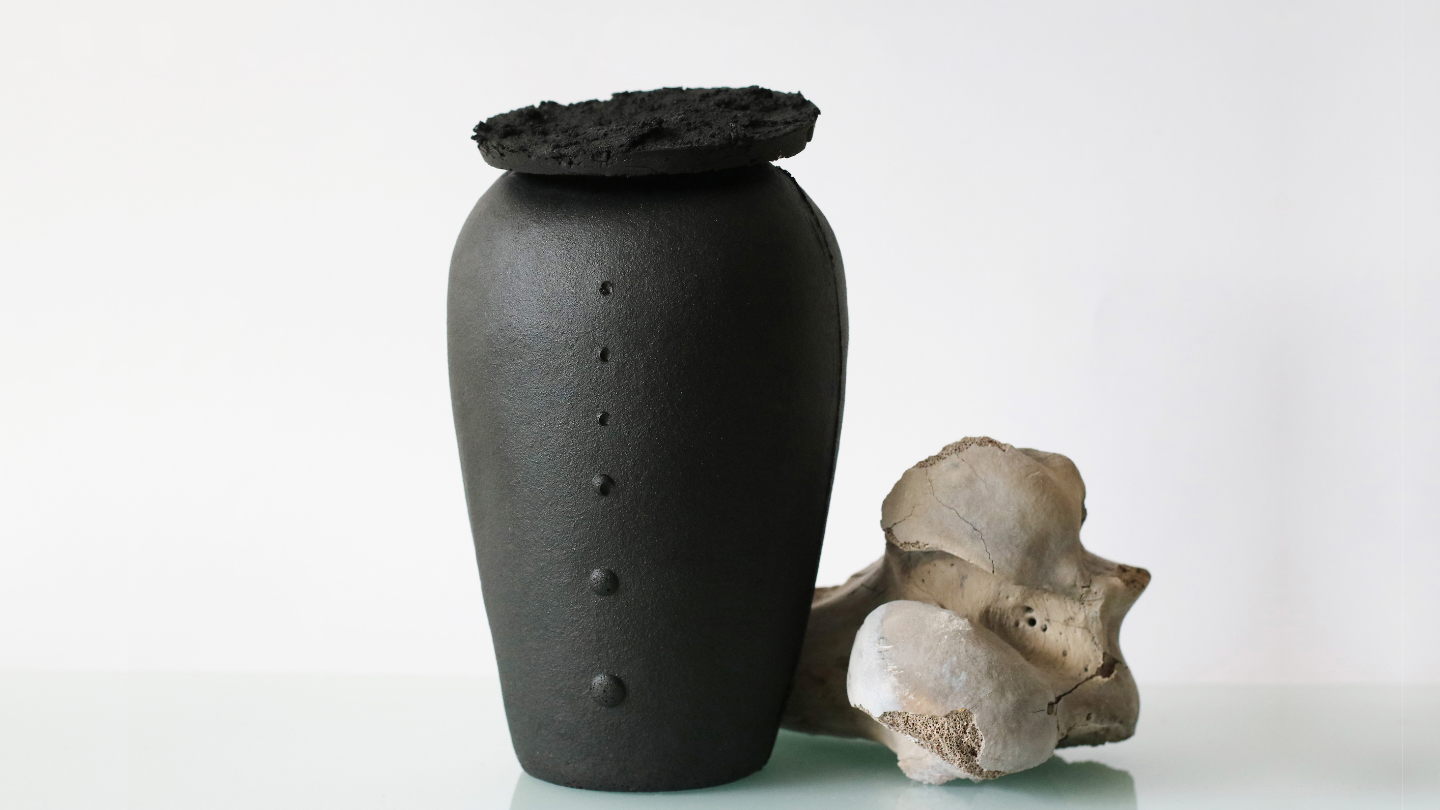
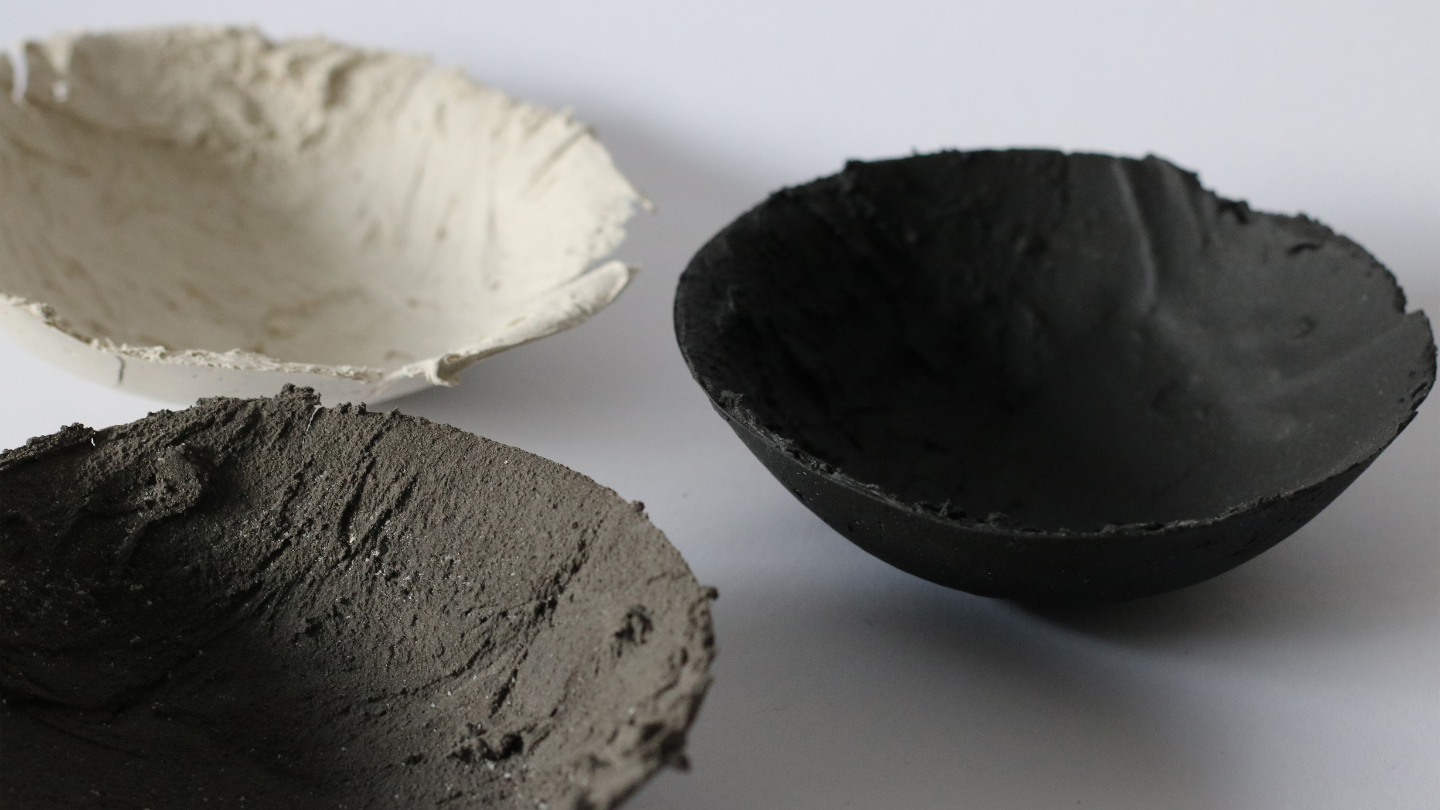
Just Bones is a material research project that transforms discarded animal bones into a biodegradable material, rooted in Iceland’s tradition of utilising bones as part of everyday life.
Define the problem/need you are solving or addressing with your project. How does it address the Open Call criteria, such as environmental impact, social engagement, circularity, user experience, resource efficiency, and community-driven solutions?
Modern meat production generates large quantities of waste, while society simultaneously struggles with the environmental cost of non-biodegradable materials. Just Bones addresses both challenges by transforming discarded animal bones into a durable, biodegradable material, similar in strength to MDF, capable of being moulded, drilled, sawn, and laser-cut.
The project is rooted in Icelandic heritage. Historically, survival in Iceland demanded extreme resourcefulness. For example, bones were used in everyday life, carved into buttons, used as toys, and as tools because nothing was wasted. Just Bones is a modern expression of this tradition.
Living on an island creates an awareness of materials, or perhaps the very lack of materials available. It’s important to explore discarded matter from different perspectives and find new opportunities for utilization.
Rather than creating new demand for animal products, the project works with what already exists. Just Bones strives to transform cultural memory into a modern material future.
Please describe your project, reflecting on the concept, inspiration, materials, technical aspects, methods and process(es).
Just Bones is a material research project developing a strong, natural biomaterial made entirely from animal bones. The process involves two methods: bones are heated and ground into a fine powder, and are separately processed into bone glue, which acts as a binder. Mixed together, the result is a material comparable in strength to MDF. It is liquid when mixed, allowing it to be moulded like ceramics, and once hardened, it can be drilled, sawed, and laser cut. Different heating methods produce colour variations in the material.
Objects made so far include urns and miniature toy horses, each referencing Icelandic cultural history.
The material is prepared entirely by hand. This deliberate slowness is central to the work, ensuring each bone, often dismissed as waste, is handled with intention and care throughout the entire process.
What do you think makes your project innovative compared to the existing efforts and ideas in the field it addresses?
If we make the choice to consume meat, it is our responsibility to utilize the whole animal and do it with as little pollution to our planet as possible. Just Bones reflects on society’s meat consumption and the question of waste that follows it. The project is an example of how various opportunities are hidden in our immediate environment. By exploring familiar materials from different perspectives, new opportunities for utilisation can be found. The material is strong for as long as you need it to be, and is designed to disappear when it is no longer needed. It can be dissolved in water and returned to nature. The project draws on the Icelandic heritage of utilising bones and translates this into a contemporary material practice. The project suggests that innovation for the future can come by looking back, finding answers in the resourcefulness of those who came before us.
Does it impact or reflect young people need(s) and how?
Just Bones invites people to reconsider where materials come from and what happens to them after use, a question that feels increasingly relevant in a world of mass production and disposable culture. Just Bones hopefully inspires people to seek material alternatives in unsuspected places, in what is already around us, waste that, with care and curiosity, can become something to treat as precious treasures.