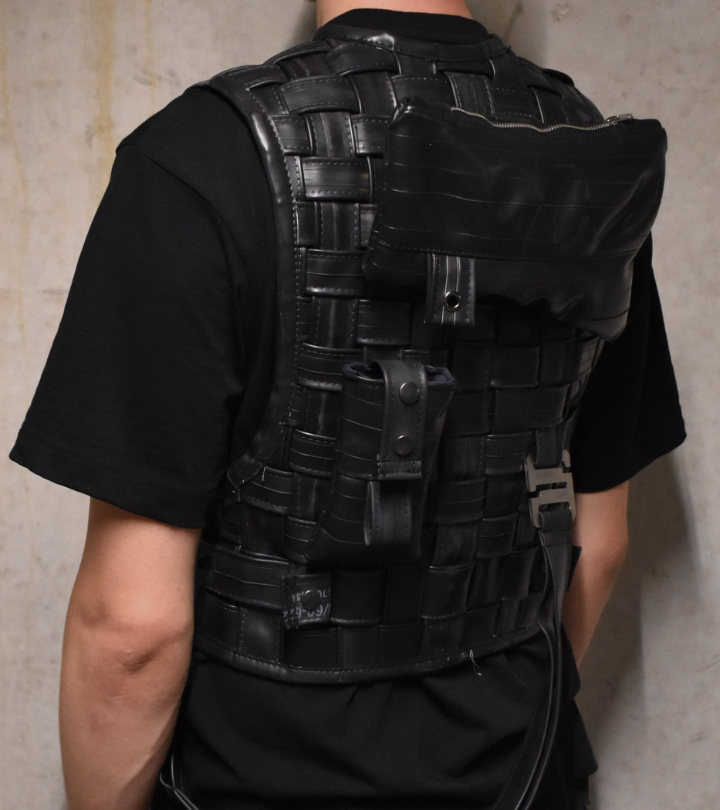
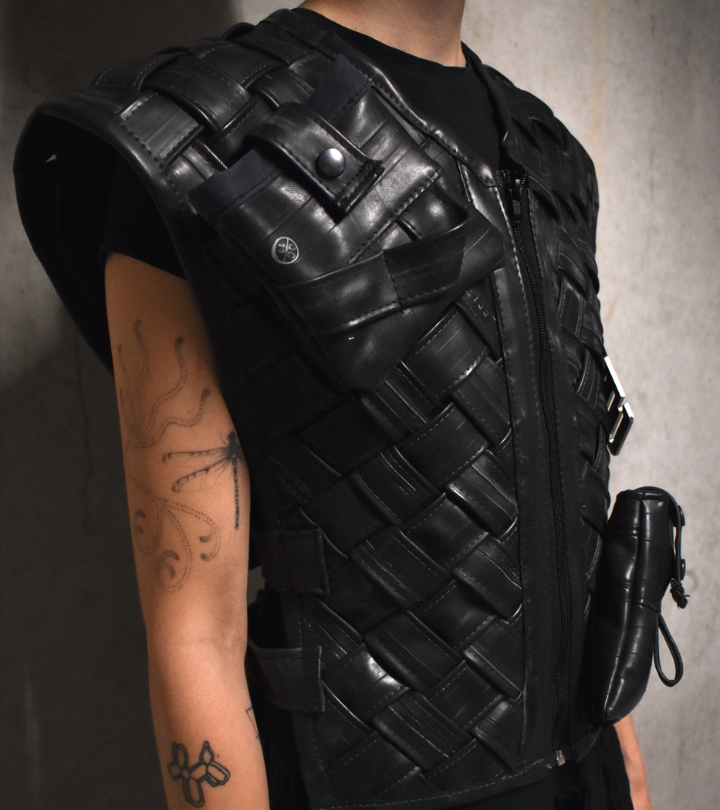
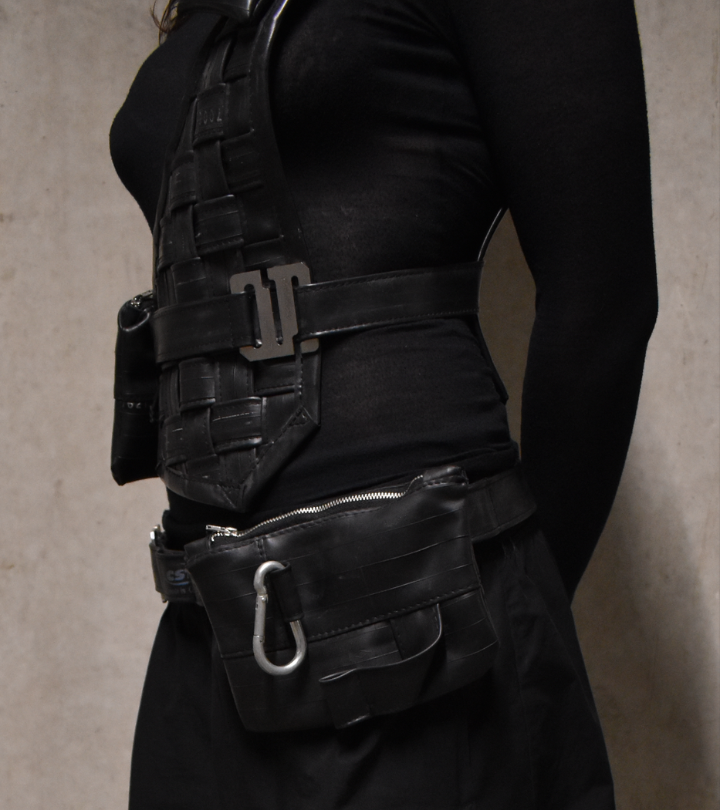
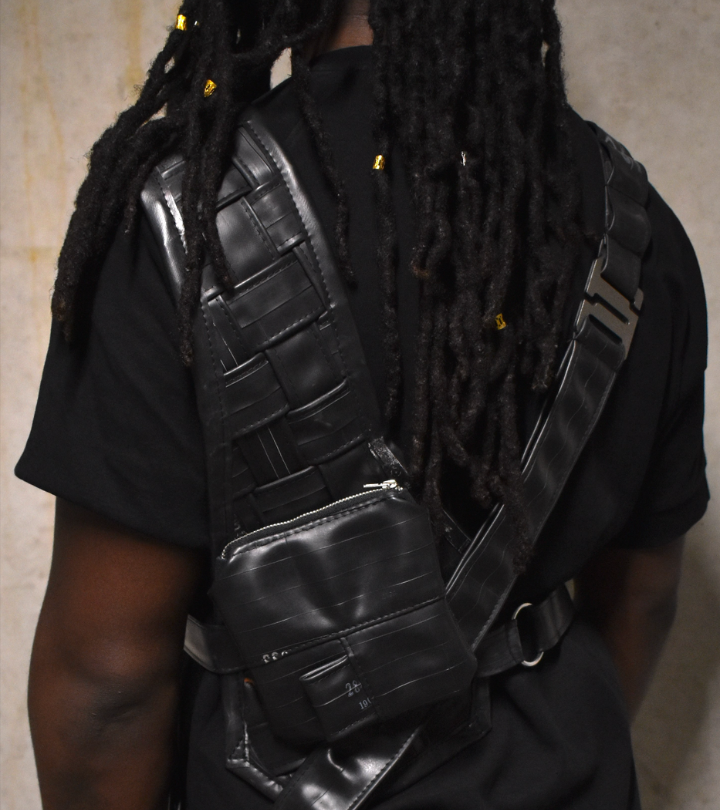
INTERLOOM turns discarded inner bike tubes into adaptable wearables built for people who move through the world on their own terms.
Define the problem/need you are solving or addressing with your project. How does it address the Open Call criteria, such as environmental impact, social engagement, circularity, user experience, resource efficiency, and community-driven solutions?
Most products are designed to be replaced, not repaired. INTERLOOM challenges that by working with a material that is already at the end of its life, discarded inner bike tubes, and turning it into something durable and adaptable. The modular system means components can be swapped, repaired, or resized rather than discarded, keeping the product in use longer. Materials are sourced locally in Eindhoven, keeping the supply chain short and energy use low. Beyond the material, the project is connected to a real community, free party and sound system culture, where function and adaptability matter because conditions are unpredictable. The pieces respond to that. INTERLOOM is not about sustainability as a trend. It is about making well-crafted objects from discarded materials. Craftsmanship is also part of the equation. Through an internship in Haute Couture, Josquin developed a precise understanding of garment construction, a standard he carries into every piece.
Please describe your project, reflecting on the concept, inspiration, materials, technical aspects, methods and process(es).
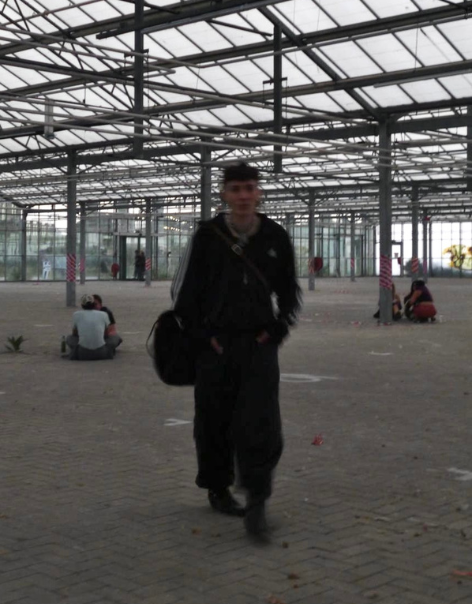
INTERLOOM started from a personal need. Coming from free party and sound system culture meant long journeys, walking through forests, and sometimes having to move fast. That reality drove the need for wearables that are functional, adaptable, and built for unpredictable situations. The material came from that same world of overlooked things, inner bike tubes collected from local shops in Eindhoven. They are durable, water resistant, and widely discarded. The core technique is hand weaving, structuring the tubes into a rigid yet flexible surface. The weave used as an adaptable system allows components to be attached, detached, resized, and replaced. There are products designed for similar situations, but INTERLOOM also speaks to the people who use them those who exist outside the mainstream, much like the material itself. Each piece is made by hand with a level of craft informed by Josquin’s experience in Haute Couture garment construction.
What do you think makes your project innovative compared to the existing efforts and ideas in the field it addresses?
Most products made from recycled materials use sustainability as a selling point while the object itself remains conventional. INTERLOOM doesn’t lead with that. The recycled material is a starting point, not a marketing angle.
What makes it different is the combination of things it brings together, a modular system that genuinely extends the life of the product, a material that is locally sourced and otherwise discarded, and a level of craft that makes it hard to believe where it comes from. The pieces are also connected to a real community and a real set of needs, not a trend.
It is not the first product made from bike tubes, and it doesn’t claim to be. But the intersection of function, craft, cultural context, and a system designed to last rather than be replaced is what sets it apart.
Does it impact or reflect young people need(s) and how?
I work with materials that are thrown away for a culture that doesn’t fit in. The goal is to make something so well-crafted you forget where it came from because both deserve a second look.