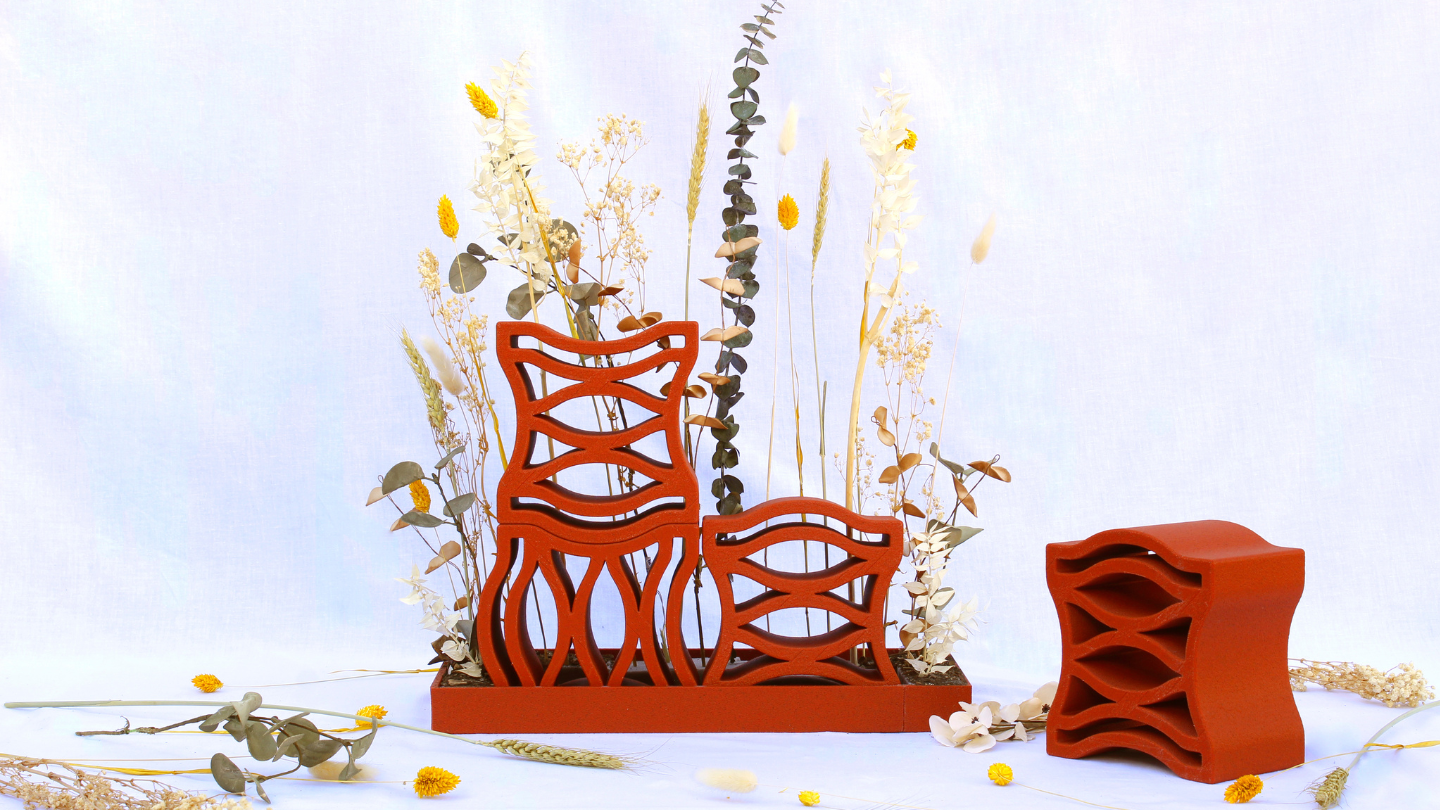
Botijo is a modular furniture system made of terracota that cools spaces through natural evaporation, reinventing tradition to create a versatile climate control solution that merges southern Spanish heritage with function and contemporary design.
Define the problem/need you are solving or addressing with your project. How does it address the Open Call criteria, such as environmental impact, social engagement, circularity, user experience, resource efficiency, and community-driven solutions?
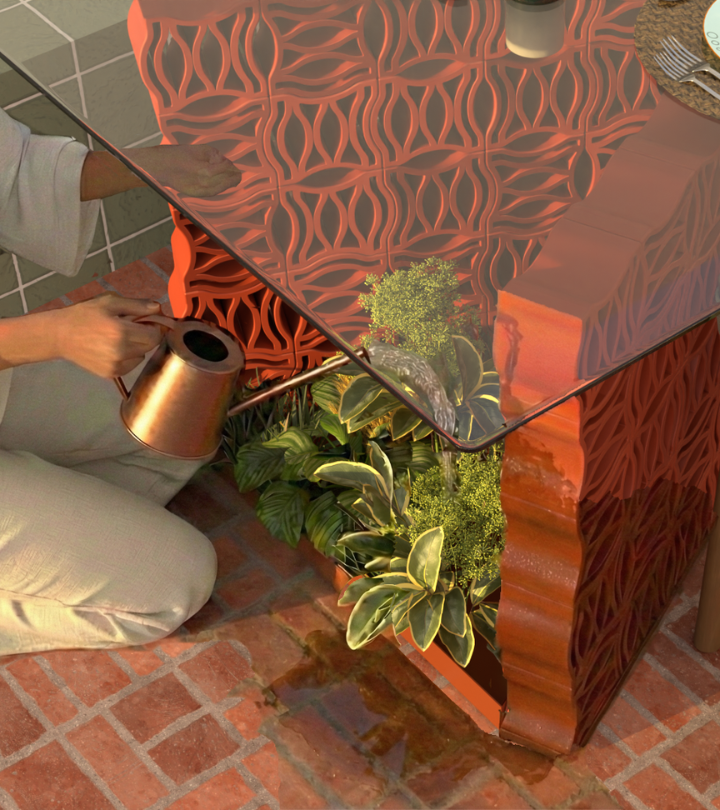
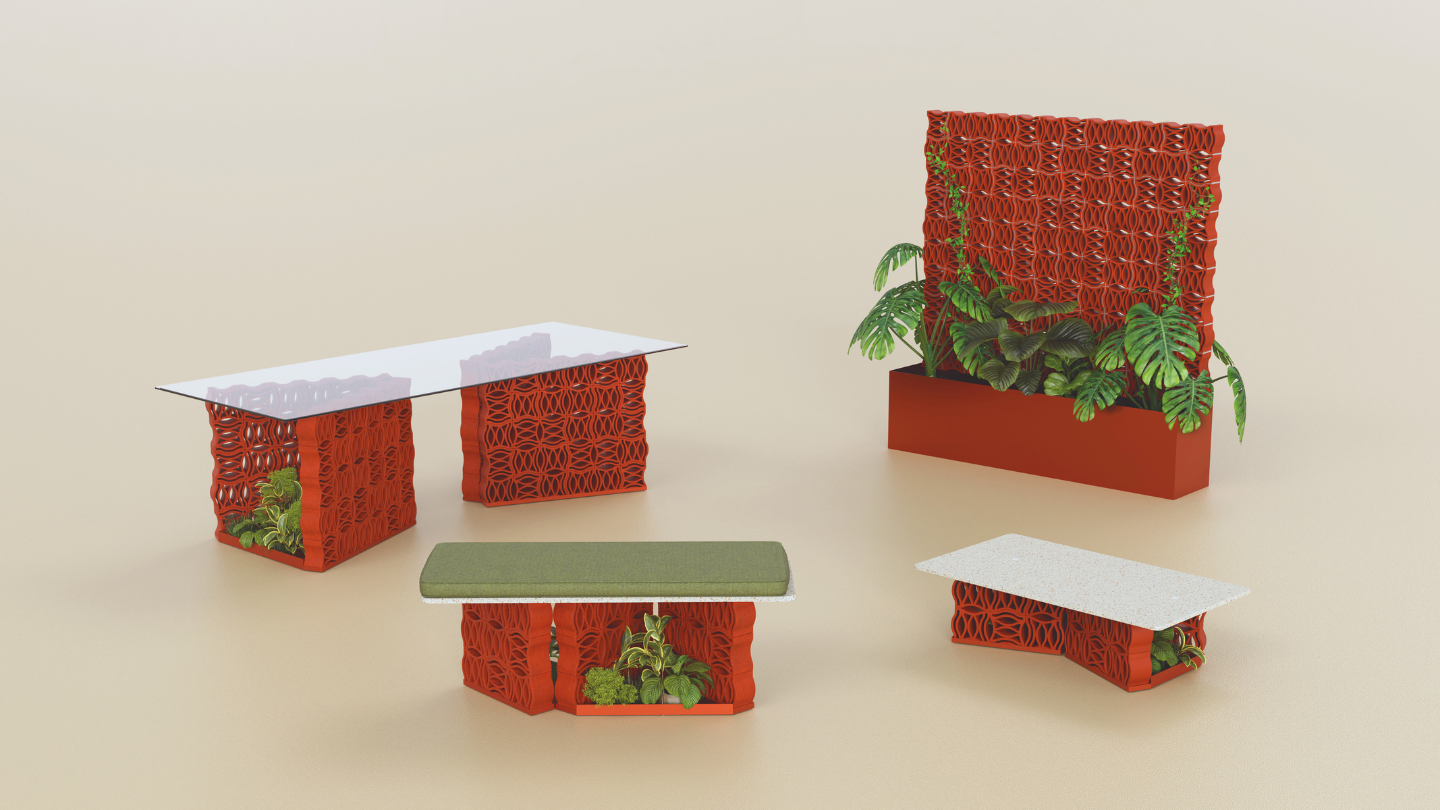
Due to pollution and frequent heatwaves, rising global temperatures are making life in hot climates increasingly difficult. Although evaporative air conditioners exist to alleviate this discomfort, their manufacture and installation are often complex. Botijo solves this problem by creating a simple, modular terracotta piece that can be easily used to make versatile furniture, such as tables, benches and room dividers, which also function as evaporative coolers. This type of cooling reduces environmental impact, as it simply involves wetting the piece with water — which is reused to water plants — and allowing it to evaporate. Circularity is guaranteed thanks to the material used, terracotta, which is natural, durable and recyclable, and can also be reused as raw material if a piece breaks. These accessible modules allow people to build bespoke pieces, thereby enhancing the user experience and enabling endless configurations to suit any space.
Please describe your project, reflecting on the concept, inspiration, materials, technical aspects, methods and process(es).
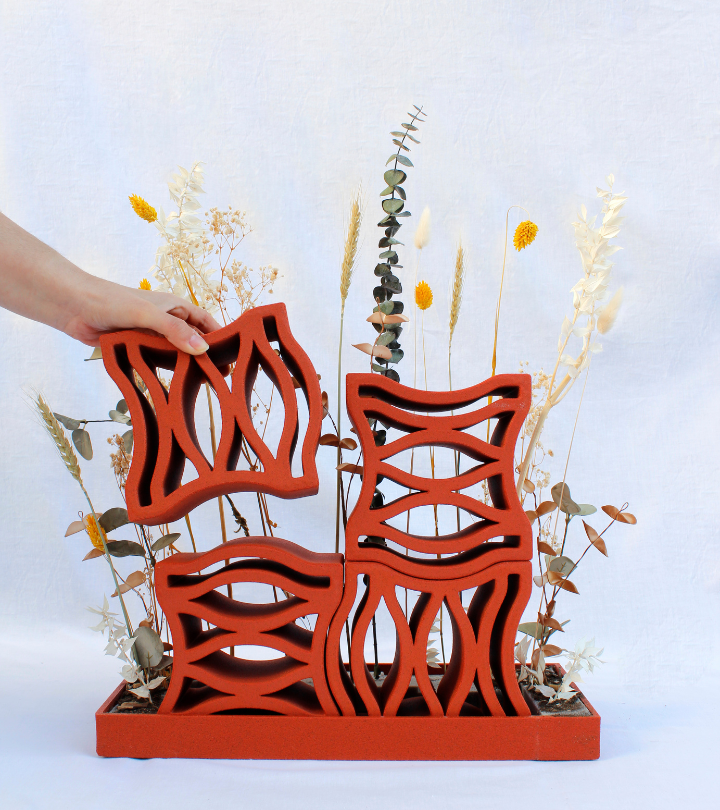
The project aims to transform the concept of the traditional Spanish water jug into a functional piece of furniture. The decision to choose terracotta as the primary material draws inspiration from both the jug and traditional architecture, as it is a durable and resistant material, yet porous enough to absorb water and allow it to evaporate. The shape was chosen following extensive research into sustainable cooling methods, during which I discovered adiabatic coolers and how they use curved cellulose pads to absorb as much water as possible. This specific geometry increases the surface-to-volume ratio and forces the air to change direction, maximising contact time with the wet clay to achieve optimal evaporative cooling. At the same time, the pieces are designed to be stacked in any orientation and joined with mortar, allowing users to create endless configurations. The dimensions also allow for heights that are ergonomically suitable for any type.
What do you think makes your project innovative compared to the existing efforts and ideas in the field it addresses?
Botijo is innovative because it transforms the concept of furniture, shifting from a passive object for use and decoration to becoming an active part of the space, which benefits both the environment and users. Furthermore, it changes the paradigm of climate control, since, rather than viewing a cooling device as a machine that needs to be hidden away, it integrates it directly into domestic life as an aesthetically pleasing piece of furniture. It solves two problems at once: furnishing a space and cooling it. Unlike traditional cooling devices, which can only be installed in specific areas of a room, Botijo’s modularity and versatility allow for endless configurations and customisations, demonstrating that climate control technology can be sculptural, customisable and seamlessly integrated into interior design. On top of all this, the simplicity of its construction, compared to other furniture, makes it much more affordable than most.
Does it impact or reflect young people need(s) and how?
Young people require solutions that match both their ecological awareness and their dynamic lifestyle. Botijo directly addresses their needs offering an affordable, simple and energy saving solution to combat extreme heat, in line with the shared concern for the future of the planet. Furthermore, its modularity speaks to their need for adaptable living, since the system can be scaled up or down, functioning as a small stool or a large room divider, depending on the user’s available space and budget. It encourages young people to take sustainable climate action in their own homes, whilst continuing to create aesthetically pleasing spaces where nature takes centre stage. This project aims to create iconic pieces that can also spark conversation and help mitigate the effects of climate change, either through their function or by changing people’s way of thinking.